Should Photographers Offer Video? What You Need to Know
By Richard Wakefield
For photographers looking for ways to expand their business, video can seem like an obvious next step.
Modern cameras make it easier than ever to record high-quality video, and many photographers already have skills that transfer across: composition, lighting, working with people, understanding lenses and telling stories visually.
But there’s an important distinction to make.
Video isn’t simply photography with movement.
The moment you start offering video professionally, you’re taking on a different set of skills, equipment, workflows and client expectations.
That doesn’t mean photographers shouldn’t do it. For some businesses, adding video can be a natural extension of their existing services. The key is understanding what you’re taking on before you start selling it.
Start with the service, not the equipment
One of the easiest mistakes to make is buying equipment first and working out what to do with it afterwards.
Video equipment can quickly become expensive. Cameras, lenses, stabilisation, microphones, recorders, lighting, monitors, storage and editing hardware can all add up.
Before spending money, decide what sort of video you actually want to produce.
Are you thinking about:
- wedding films?
- promotional films for businesses?
- social media content?
- interviews?
- product videos?
- short films?
- behind-the-scenes content?
- video alongside your existing photography packages?
Each requires a slightly different approach.
A photographer producing short social media videos for local businesses doesn’t necessarily need the same equipment or workflow as someone producing a full wedding film.
Start with the job you want to do and work backwards from there.
Your photography skills are useful — but they’re not enough
Photographers already understand many of the visual fundamentals required for good video.
You know how light affects a subject.
You understand composition.
You know how different focal lengths change the way a scene looks.
You have experience working with people and anticipating moments.
Those are valuable skills.
But video introduces several new areas that need to be learned properly.
Movement matters.
Sound matters.
The order of shots matters.
Timing matters.
Editing matters.
And unlike a single photograph, a video is experienced over a period of time.
A beautifully composed shot can still be useless if it doesn’t connect with what comes before and after it.
Learn to think in sequences
A photograph can tell a story in one frame.
Video usually needs several.
Imagine filming a wedding couple walking into a room.
You might start with a wide shot showing the room and the people in it. Then you might capture a closer shot of the couple. You could cut to their hands, the reaction of a guest, or another detail that helps establish what is happening.
Individually, these clips may not say very much.
Together, they can tell a story.
This is why video requires you to think in sequences rather than simply collecting attractive shots.
Before pressing record, ask yourself:
What information does the viewer need?
And then:
What shot could give them that information?
Audio is just as important as the picture
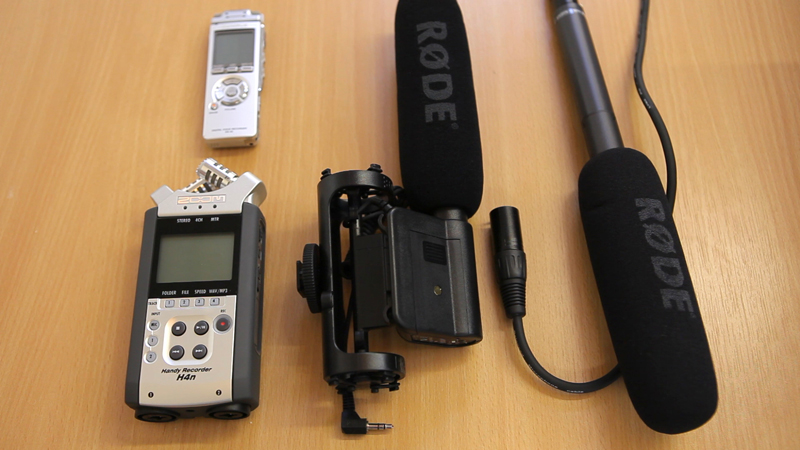
Photographers moving into video often concentrate heavily on image quality.
That’s understandable, but poor audio can ruin otherwise good footage.
A viewer will often forgive a slightly imperfect image.
They are much less forgiving of speech that is difficult to hear, distracting background noise or badly recorded sound.
If you’re filming interviews, speeches, ceremonies or anything where people are speaking, audio needs to be treated as an essential part of the production rather than an afterthought.
Think about where the sound is coming from.
Think about background noise.
Think about what happens if the microphone fails.
And, wherever appropriate, have a backup.
The exact equipment will depend on the type of work you’re producing, but the principle is universal:
Good video needs good sound.
Don’t forget lighting
Your existing knowledge of lighting can be a major advantage when moving into video.
However, lighting a moving subject or a moving camera is different from lighting a single still image.
A setup that looks excellent for one photograph may become awkward when the subject moves through the space.
You therefore need to think about how the light behaves throughout the shot.
For documentary-style work, you may also need to work with the available light rather than completely controlling the environment.
This is particularly important at weddings and events, where the action doesn’t stop while you set up a perfect lighting arrangement.
The ability to recognise good available light can be just as valuable as owning additional lighting equipment.
Be prepared to work unobtrusively
For some types of video, particularly weddings and events, the best approach is to interfere as little as possible.
People behave differently when they know they’re being filmed.
If you are constantly moving around them, giving instructions or asking them to repeat things, you can quickly turn a genuine event into a production.
Sometimes that is exactly what the client wants.
Sometimes it isn’t.
Before the job begins, understand what the client expects.
If they want a cinematic production with carefully directed shots, that’s a different service from documentary coverage.
Neither is inherently better.
They simply require a different approach.
Solo shooting and multi-person production are different
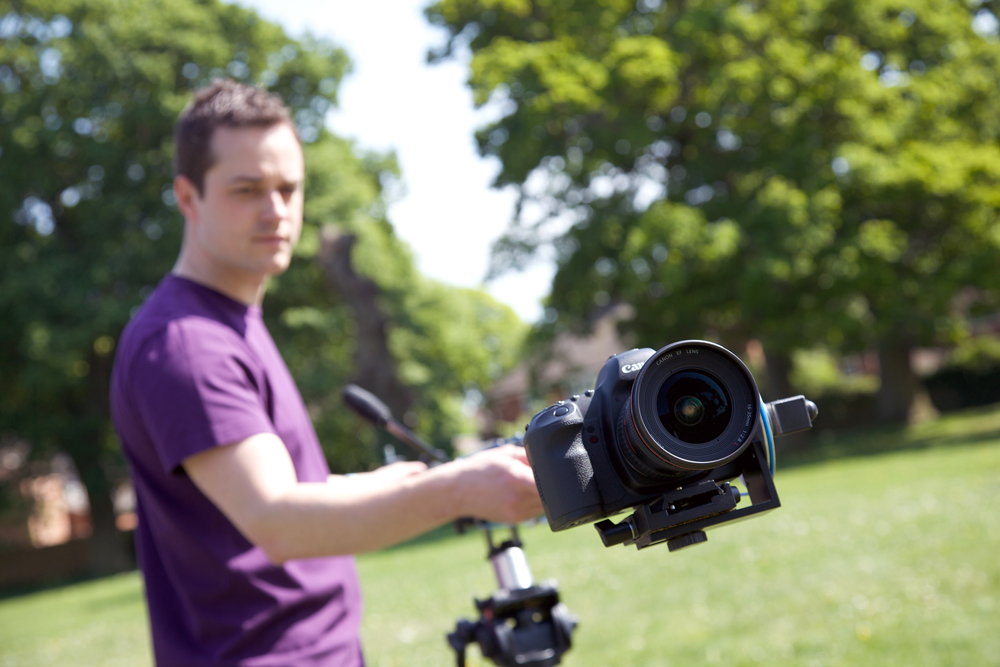
It’s possible to produce impressive video as a solo operator, but you need to understand the limitations.
When you’re working alone, you can’t operate several cameras, monitor multiple audio sources and control lighting simultaneously in the same way that a crew can.
That means making decisions about priorities.
What absolutely needs to be captured?
Where should you position yourself?
Which camera angle matters most?
How will you record sound?
What happens if something goes wrong?
For larger productions, adding another person can make an enormous difference.
A second operator can concentrate on another angle.
Someone can monitor audio.
Someone can manage lighting.
Someone can concentrate on the technical side while another person concentrates on the story.
Don’t assume that every video job should be treated as a solo shoot simply because you’re a photographer used to working alone.
Editing is part of the photography — and part of the job
Pressing record is only the beginning.
Once you start producing video professionally, you’ll need a workflow for organising footage, selecting clips, editing sequences, working with audio, adding music where appropriate, colour correction and grading, exporting and delivering the finished film.
This can take considerable time.
That’s particularly important when pricing video services.
A two-hour shoot doesn’t necessarily mean a two-hour job.
There may be hours of preparation beforehand and many more hours spent reviewing and editing footage afterwards.
If you don’t account for this time, it’s easy to underprice the service.
Your workflow therefore needs to be designed before you start taking on regular video work.
Think about delivery before you start
Different clients may want very different things.
A wedding client might want a longer finished film as well as shorter highlights.
A business might want several short videos for social media.
A commercial client may need different versions for different platforms.
Think about the final delivery requirements when planning the production.
It can affect how you shoot in the first place.
The aspect ratio, duration, framing, audio and amount of footage you need may all be influenced by where the final video will be used.
Understanding the destination helps you make better decisions at the beginning.
Don’t try to become a videographer overnight
If you already have a successful photography business, there’s no need to suddenly offer every possible video service.
Start small.
Choose one type of video that fits naturally alongside your existing work.
Learn the skills properly.
Produce some projects.
Review the results.
Work out how long they actually take.
Then decide whether the service makes commercial sense.
You can also use personal projects as a safe place to experiment.
Try different editing techniques, movement, audio, lighting and storytelling without having a paying client waiting for the finished result.
The more experience you gain before selling the service, the more confident you’ll be when you eventually do.
Don’t underestimate the business side
Adding video may create new opportunities, but it also creates new responsibilities.
You need to consider:
- how you price the service
- what is included
- how many hours of filming and editing are covered
- how revisions are handled
- what the client receives
- how long delivery takes
- what happens if additional filming is required
- how files are stored and backed up
- whether you need additional insurance or contracts
- whether you need to bring in another person for larger productions
The business model needs to work just as well as the creative side.
Photography and video can complement each other
The biggest advantage for an established photographer is that you already understand many of the things that make visual storytelling work.
You know how to find good light.
You understand people.
You know how to compose a frame.
You know how to anticipate a moment.
You already have experience dealing with clients.
Video gives you another way of putting those skills to work.
It can also create opportunities to work with existing clients in different ways. A business that hires you for photography may also need short promotional films. A wedding client may want both still photographs and a film. A commercial client may need photographs for a website alongside video for social media.
That doesn’t mean you have to offer everything.
It means there may be opportunities sitting alongside the work you’re already doing.
Decide whether video is right for your business
Video can be an excellent addition to a photography business, but it isn’t automatically the right move for everyone.
Ask yourself:
Do I enjoy video?
Am I prepared to learn the parts of production I don’t already understand?
Can I produce work to a professional standard?
Do my existing clients actually need it?
Can I price it profitably after allowing for filming, preparation and editing?
Do I have the time to take it on without damaging my photography business?
If the answers make sense, video could become a useful extension of what you already offer.
But the camera isn’t the reason to do it.
Start with the client, the story and the service you want to provide.
Then choose the equipment, workflow and skills needed to deliver it properly.
That’s a much more sustainable way to move from photography into video.