
How to Develop Your Own Photography Style
By Richard P Walton
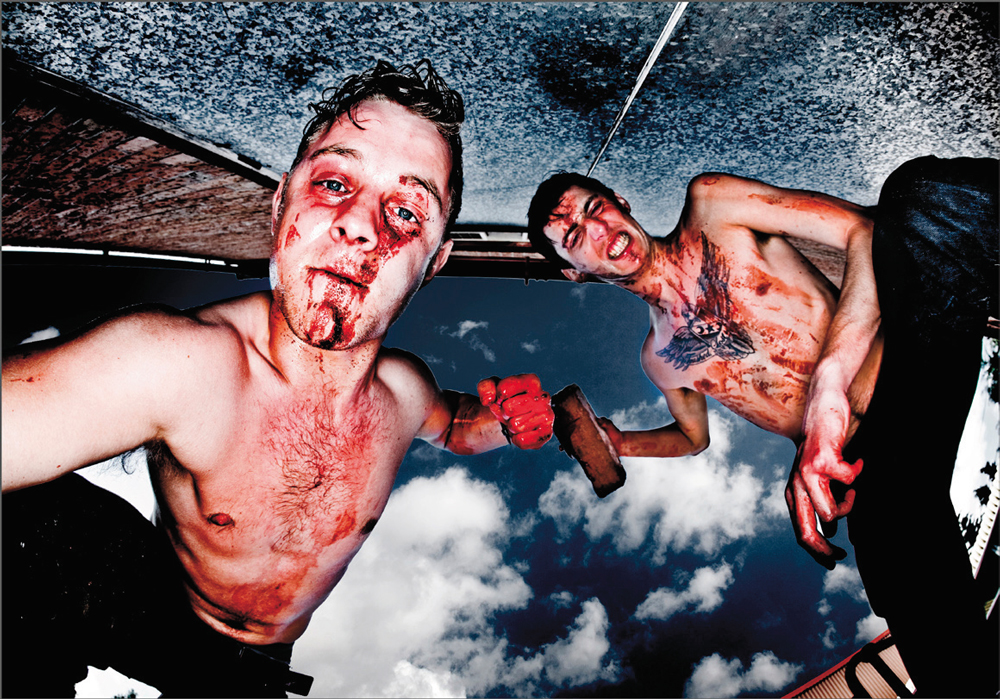
There are plenty of rules in photography.
Some are technical. We learn about exposure, focus, lighting, composition and colour because they help us create better photographs.
But there is another set of rules that can be much harder to recognise.
They are the rules we create for ourselves.
We look at what other photographers are doing, see what clients seem to expect and gradually develop an idea of what a “proper” photograph should look like.
Before long, we can find ourselves producing photographs that are technically good but don’t necessarily say anything about us.
So how do you develop your own photography style?
Learn the rules, then question them
There is nothing wrong with understanding conventional photography.
Good technique gives you control. Knowing how light behaves, how to compose a group photograph or how to work within the limitations of your equipment allows you to make deliberate decisions.
The problem comes when we stop seeing those techniques as tools and start treating them as rules that can never be broken.
A technically perfect photograph isn’t automatically an interesting photograph.
Equally, a photograph that breaks a technical convention isn’t automatically creative.
The question should always be: does the decision help create the image I want?
That is a much more useful question than simply asking whether something is “right”.
Stop looking for the photograph everyone else is taking
Photographers naturally look at other photographers’ work.
It’s one of the best ways to learn.
The danger is that inspiration can quietly become imitation.
You see a particular lighting style becoming popular, so you try it. You notice a certain editing style everywhere, so you adopt it. You see photographers posing their subjects in a particular way and start doing the same.
None of this is necessarily wrong. Every photographer is influenced by somebody.
But if you continually follow what is already popular, it becomes difficult to develop something recognisably yours.
Spend time looking at other photographers, but don’t only look at photographers.
Look at cinema, painting, architecture, fashion, books, music, travel, nature and everyday life.
The wider your sources of inspiration, the less likely your work is to become a simple reflection of whatever is currently popular in photography.
Ask what you want to say
Instead of beginning with:
“What photograph should I take?”
try asking:
“What do I want this photograph to say?”
That small change can completely alter the way you approach a shoot.
Perhaps you want to create something dramatic.
Perhaps you want the subject to feel powerful, vulnerable, joyful or mysterious.
Perhaps you simply want to show an ordinary scene from an unusual perspective.
Once you know what you are trying to communicate, your technical decisions become easier.
The lighting, composition, location, lens and direction of your subject all become tools for achieving an idea.
Don’t be afraid to experiment
One of the simplest ways to develop a style is to give yourself permission to try things that might not work.
Change your viewpoint.
Move closer.
Move further away.
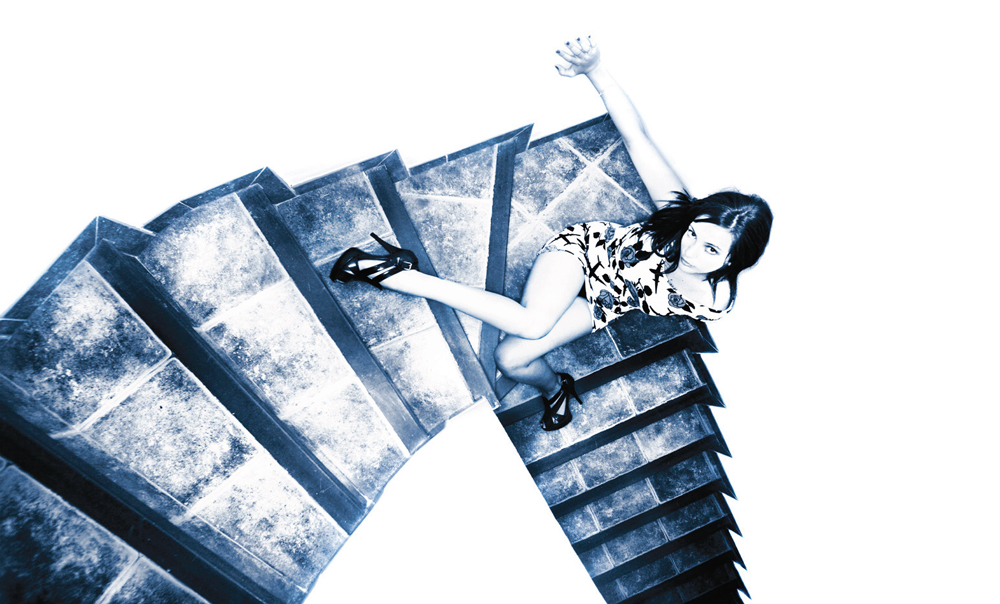
Shoot from above or below.
Try a different lens.
Use light in a way you wouldn’t normally consider.
Change the location.
Introduce movement.
Try a different composition.
Not every experiment will produce a successful photograph.
That’s fine.
The point of experimentation isn’t to produce a masterpiece every time you press the shutter. It is to discover what you like, what you don’t like and what possibilities you hadn’t previously considered.
Over time, those discoveries start to influence your style.
Look at the environment differently
One of the most useful lessons is to stop treating the environment as something you simply work around.
Look at what is available to you.
A wall, staircase, doorway, reflection, window, tree or architectural feature could completely change an image.
Richard P Walton described once climbing a tree to gain height for a large wedding group photograph because the venue didn’t offer another suitable option.
It worked, but the more important lesson wasn’t the tree.
It was the willingness to look at the environment and ask:
“What else could I do here?”
That mindset can be incredibly useful.
Instead of accepting the obvious viewpoint, actively search for another one.
Make the experience part of the photography
Photography isn’t only about the finished image.
For many clients, particularly in portrait and wedding photography, the experience of being photographed becomes part of the memory.
A technically excellent photograph of an unpleasant experience isn’t necessarily going to mean as much to someone as an imperfect photograph that reminds them of a brilliant day.
That doesn’t mean technical quality doesn’t matter.
It does.
Your clients have paid you because they expect professional photographs.
But the experience you create around those photographs also matters.
If your subjects feel comfortable, involved and able to enjoy themselves, that can influence the photographs you produce as well.
Relaxed people generally give you more to work with than people who are simply waiting for the shoot to finish.
Give people something they didn’t expect
Clients will often have an idea of what they want from a photography session.
That’s useful information.
But they may not know every possibility available to them.
This is where your experience as a photographer becomes valuable.
If someone asks for a straightforward portrait, that doesn’t mean you have to produce only one straightforward portrait.
Give them what they asked for, but consider whether there is an opportunity to offer something different as well.
Perhaps you find an unusual location.
Perhaps you change the lighting.
Perhaps you create a dramatic silhouette or use an unexpected viewpoint.
You aren’t ignoring the client’s wishes. You are bringing your own expertise and creativity to the brief.
That can be one of the most valuable things a professional photographer offers.
Develop your own rules
Eventually, the aim isn’t simply to break other people’s rules.
It is to develop your own.
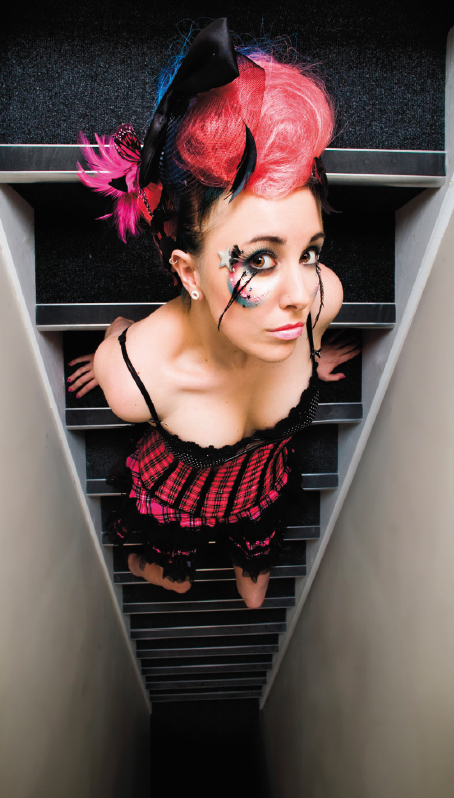
You might decide that you always want to look for an unusual viewpoint.
You might become known for dramatic lighting.
Perhaps your work is built around movement, unusual compositions, bold colour or quiet, natural portraits.
These decisions become part of your visual identity.
Your style doesn’t have to be something you invent overnight.
It develops through repeated choices.
The more consistently you make creative decisions based on what you believe rather than simply what is currently popular, the more recognisable your work can become.
Shoot for yourself as well as your clients
Professional photography inevitably involves commercial considerations.
You have bills to pay, clients to satisfy and a business to run.
But if every photograph you take is dictated entirely by what you think will sell, there is a danger that your creativity becomes increasingly narrow.
Personal projects can provide a useful counterbalance.
Give yourself assignments where there is no client.
Photograph something simply because it interests you.
Try an idea that may never become commercially useful.
Work on a project over several months and see where it takes you.
Some of the ideas developed through personal work will never make it into your commercial photography.
Others might eventually become exactly what differentiates you from other photographers.
Don’t confuse originality with being different for the sake of it
There is an important distinction between having your own style and deliberately trying to make every photograph unusual.
Being different isn’t automatically being creative.
If an unusual angle makes the photograph stronger, use it.
If a conventional composition tells the story better, use that instead.
The goal isn’t to make photographs that nobody has ever seen before. That is an almost impossible standard.
The goal is to make photographs that reflect your way of seeing.
Sometimes that will mean doing something unconventional.
Sometimes the most personal photograph will come from something very simple.
Think before you shoot
Modern cameras make it incredibly easy to take photographs.
That can be a blessing, but it can also encourage us to shoot without thinking.
Before pressing the shutter, take a moment.
Look at the light.
Look at the background.
Look at your subject.
Look at the edges of the frame.
Ask yourself what you’re trying to communicate.
Then decide whether the obvious photograph is actually the photograph you want.
That few seconds of thought can make a bigger difference than taking another hundred frames.
Your style comes from your decisions
There is no single formula for developing a photography style.
It comes from the decisions you make repeatedly.
What you photograph.
How you light it.
Where you position yourself.
How you direct your subjects.
What you include.
What you leave out.
How you edit.
Most importantly, why you make those choices.
Learn from other photographers, but don’t let their work become a template for your own.
Technical knowledge gives you the ability to control your camera. Creativity gives you a reason to do something with that control.
The aim isn’t simply to become a better photographer.
It is to become a photographer whose work looks and feels like it could only have come from you.