Personal Photography Projects: How to Improve Your Skills and Creativity
By Juli-Ann Cialone
Photography can become a strange mixture of creativity and routine.
When photography is your job, much of your time is spent fulfilling somebody else’s brief. A wedding has a schedule. A portrait client has expectations. A commercial client has a particular message they need to communicate.
You may be taking hundreds of photographs every week, but that doesn’t necessarily mean you’re exploring your own photography.
Sometimes the best thing you can do is pick up your camera with no client, no deadline and no invoice waiting at the end of it.
Start a personal photography project.
Why personal projects matter
It’s easy to become so focused on producing photographs for clients that you forget why you started taking photographs in the first place.
Personal projects give you permission to experiment.
There is no client to please and no particular image you have to deliver. You can try a different lens, change your approach to composition, work in unfamiliar light or spend an entire afternoon photographing something that would never have appeared on a client brief.
That freedom can be valuable.
It can also make you a better working photographer.
Trying something different in your own time gives you an opportunity to develop skills without the pressure of a paid assignment. You may discover a way of using light, composition or storytelling that eventually finds its way into your client work.
You don’t need to travel
Travel can be a fantastic source of inspiration.
A new city, a different landscape or simply an unfamiliar environment forces you to look more carefully. You’re surrounded by things you’ve never photographed before, so you naturally pay attention.
But you don’t need to travel halfway around the world to start a personal project.
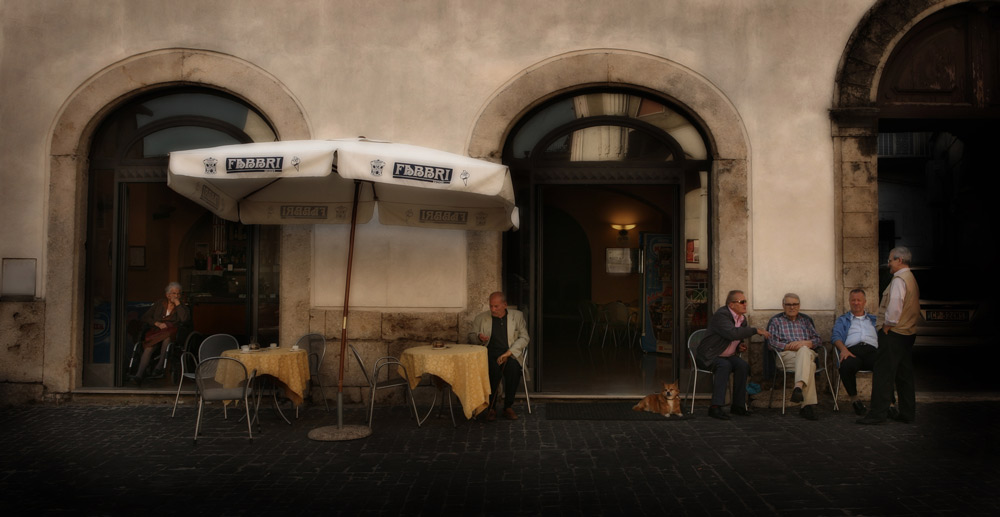
In fact, one of the best challenges is to photograph somewhere you already know extremely well.
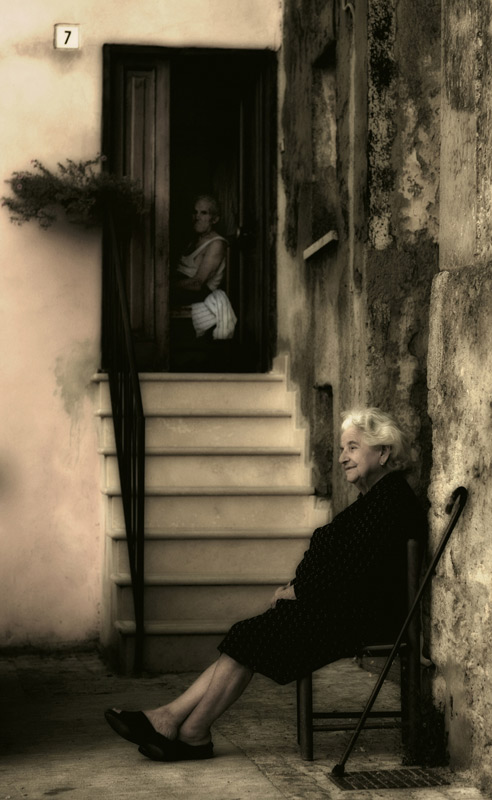
Go for a walk around your own town.
Visit a street you’ve walked down hundreds of times.
Photograph your local high street, park, coastline, village or neighbourhood.
The challenge is to look at it as though you have never seen it before.
What have you stopped noticing?
Where does the light fall at different times of day? Which details normally pass you by? How do people use the space? What changes when the weather changes?
Familiar places can become surprisingly interesting when you deliberately change the way you look at them.
Give yourself a brief
A personal project becomes much easier to approach when you give yourself some boundaries.
You don’t need a complicated plan. A simple brief is enough.
For example:
- Photograph one street for a month.
- Create a series of images showing your town at dawn.
- Photograph the same location in different weather.
- Document a local business or community.
- Photograph one person over a period of time, with their permission.
- Make a series using only one focal length.
- Photograph ordinary objects in unusual ways.
- Create a black-and-white project.
- Tell the story of a place without photographing its obvious landmarks.
- Make ten photographs from one walk.
The restriction is often what makes the project interesting.
When you have unlimited possibilities, it’s easy to wander around taking unrelated photographs. A simple brief gives you something to concentrate on.
Try using equipment differently
A personal project is also a good opportunity to use equipment that doesn’t normally get much attention.
If you photograph weddings with a particular combination of lenses, take a different lens out for your project.
Try a wide-angle lens if you normally work with a telephoto.
Try a prime lens if you normally use a zoom.
Use a tripod.
Leave the tripod at home.
Try a flash.
Work only with available light.
The point isn’t to use different equipment simply for the sake of it. The restriction changes the way you approach the subject.
A fixed focal length, for example, forces you to think more carefully about your position rather than simply zooming in and out.
Tell a story rather than collecting pictures
One of the most useful challenges you can give yourself is to create a series that says something.
Don’t simply aim to make ten good photographs.
Ask what you want the viewer to understand.
If you’re photographing a person, what can you show about their character or environment? If you’re photographing a place, what makes it distinctive? If you’re documenting an activity, what photographs are needed to explain what is happening?
Think beyond the obvious photograph.
A story might include:
- a wide establishing image
- details
- people
- close-ups
- moments of activity
- quiet or transitional moments
- unusual viewpoints
- photographs that reveal atmosphere
You don’t need every one of these in every project. The point is to think about how individual images work together.
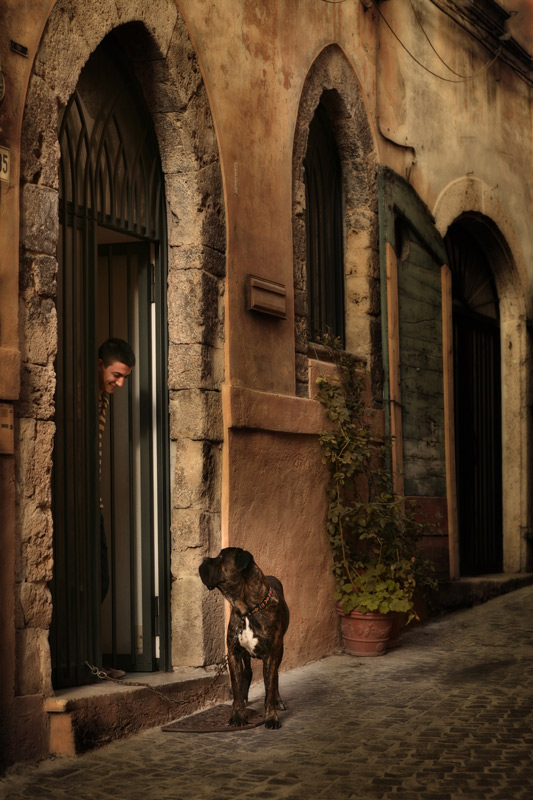
Photograph beyond the obvious
When we arrive somewhere new, we naturally photograph the obvious things.
The landmark.
The view.
The sunset.
The person standing in front of it.
There’s nothing wrong with those photographs, but challenge yourself to go further.
What happens around the obvious subject?
What does the place look like before sunrise? What happens when the weather changes? What details would somebody who lives there notice? What would you photograph if you weren’t allowed to make the standard postcard image?
This is where a personal project can become particularly valuable.
You are training yourself to look beyond the first photograph that presents itself.
Make time for photography without a commercial purpose
One of the biggest barriers to personal projects is the feeling that there isn’t enough time.
There may not be enough time for a week-long photographic trip.
There may be enough time for an hour.
You don’t need to disappear for days to make meaningful work.
Put an afternoon in the diary. Take an early morning walk. Spend an hour after work photographing a local area. Give yourself one day each month to work on a project.
The important part is making the time deliberately.
If you are always waiting until the business becomes quiet, you may be waiting a very long time.
Don’t judge the photographs too quickly
A personal project doesn’t have to produce a portfolio of masterpieces.
Some experiments won’t work.
Some ideas will look much better in your head than they do on the back of the camera.
That’s part of the process.
Look through the photographs afterwards and ask yourself what you learned.
Which compositions worked?
Where was the light successful?
Which images have something you didn’t expect?
Did using a different lens change your approach?
Did you become more aware of details?
Were you trying to make a particular type of photograph, or did something completely different emerge?
The lessons can be more valuable than the final photographs.
Look at the work as a series
Don’t only judge each photograph individually.
Put the images together and look at them as a body of work.
Do they belong together?
Is there a consistent idea?
Are some photographs repeating information that another image already communicates?
Is there a stronger sequence hiding within the collection?
Editing a personal project teaches you to be more selective.
You may have taken 200 photographs, but the finished project might contain only ten.
That isn’t a failure.
Knowing what to leave out is an important part of photography.
Let personal work influence your professional photography
The benefits of a personal project don’t have to stay within the project.
Perhaps you discover a different way of using natural light.
Maybe you become more comfortable photographing people who aren’t posing for a formal portrait.
Perhaps you develop a stronger understanding of environmental storytelling or discover a style of composition that suits your commercial work.
You may even find that the project changes the direction of your photography.
That’s one of the most useful things about making photographs without a client brief: you get to discover what interests you.
Personal projects don’t have to be complicated
Your project could last a year.
It could last a weekend.
It could be ten photographs made on one afternoon.
There is no correct size or duration.
What matters is that you are making photographs because you want to explore something, rather than because somebody has paid you to produce a particular result.
Take your camera somewhere familiar and try to see it differently.
Give yourself a simple challenge.
Use a lens you don’t normally use. Work in unfamiliar light. Photograph something you usually walk straight past.
Most importantly, give yourself permission to experiment.
Photography is a business for many of us, but it is still a creative pursuit.
Making photographs purely because you want to can be a useful reminder of that — and it may just make you a better photographer when the next client comes along.