Psychology for Photographers: Understand Yourself, Your Clients and Your Business
By Joe Lenton

Building a successful photography business isn’t just about taking great photographs. It also involves understanding people — including your clients, your target market and, perhaps most importantly, yourself.
Photographers are often encouraged to study their ideal clients, analyse their target market and adapt their marketing to appeal to the people they want to work with. That’s good business advice, but there’s another part of the equation that is sometimes overlooked.
You need to understand yourself, too.
Your personality, motivations, strengths and preferences can all influence the way you run your photography business. Understanding these things can help you make better decisions about marketing, networking, pricing, client relationships and even the type of photography you choose to pursue.
There isn’t one perfect way to run a photography business. The approach that works brilliantly for one photographer may be completely unsuitable for another.
Why self-awareness matters in photography
It’s easy to look at successful photographers and assume that their methods are a blueprint for success.
Perhaps a photographer you admire has built a large following on social media. Maybe they regularly attend networking events, make videos, send email newsletters or spend a considerable amount of time creating content.
It can be tempting to copy what they do.
Learning from successful photographers is valuable, but copying their entire business model can be a mistake.
Their personality, circumstances, goals and motivations may be completely different from yours.
If you’re naturally comfortable speaking to large groups of people, for example, networking events may be an enjoyable and productive part of your marketing strategy.
If you find large social gatherings exhausting, trying to spend every week networking could have the opposite effect. You may become frustrated, lose motivation and eventually stop marketing altogether.
That doesn’t mean you are bad at business.
It may simply mean that you need a different approach.
Build a photography business that fits you
Every photography business needs to make money. Without sufficient income, a photography business isn’t sustainable.
But financial success isn’t necessarily the only reason photographers choose to work for themselves.
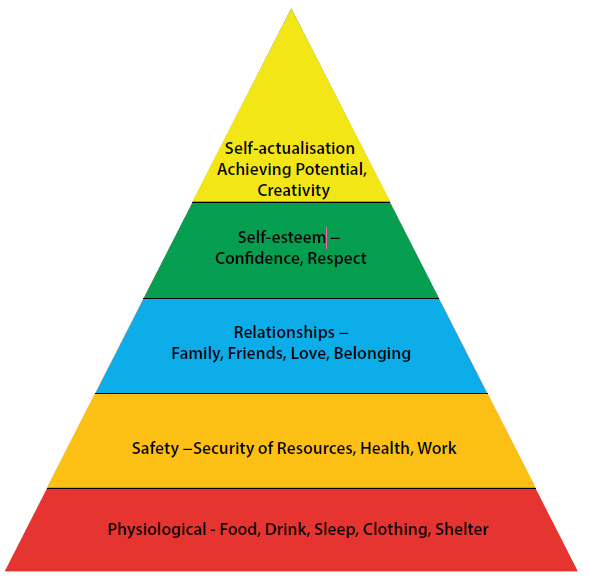
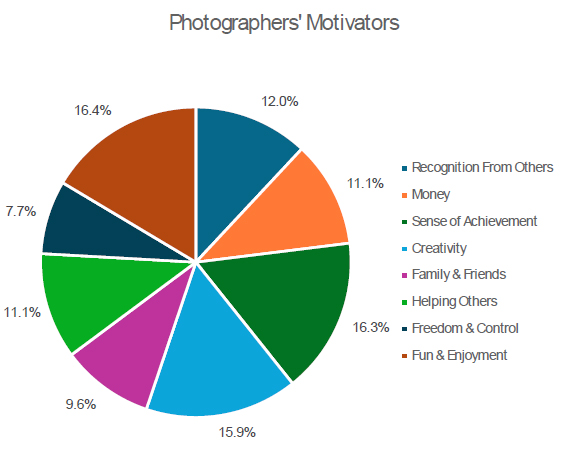
You might be motivated by:
- Creativity
- Financial security
- Freedom and flexibility
- Building relationships
- Helping other people
- Recognition and achievement
- Learning new skills
- Working outdoors
- Contributing to your local community
- Having control over your working life
Most photographers will have a mixture of motivations, but the balance will be different from person to person.
Understanding what motivates you can help you decide what sort of business you actually want to build.
For example, imagine two photographers who are equally talented at portrait photography.
One wants to maximise their income and build a large studio business. They may be happy to photograph a high volume of clients and employ additional photographers.
The other wants a slower-paced business that gives them time for personal projects and family life. They may deliberately limit the number of bookings they accept and charge more for a more personal service.
Neither approach is inherently better.
The right business model is the one that works for your goals, circumstances and clients.
Don’t confuse someone else’s success with your own roadmap
Photography is full of advice.
There are templates for websites, social media strategies, pricing structures, sales funnels, email marketing, advertising campaigns and business plans.
These resources can be incredibly useful. There’s no reason to reinvent everything from scratch when other photographers and businesses have already tested different approaches.
The danger comes when we stop thinking about why something works and simply copy it.
A pricing structure that works for a high-volume wedding photographer may not work for a fine-art photographer.
A social media strategy that works for a photographer with a naturally outgoing personality may be exhausting for someone who prefers one-to-one communication.
A marketing technique that works brilliantly for commercial photographers may be completely irrelevant to a photographer specialising in family portraits.
Use templates as starting points, not rules.
Take the useful parts, adapt them to your circumstances and discard anything that doesn’t make sense for your business.
Authenticity matters to photography clients
Photography is a personal service.
Clients aren’t simply buying a file or a collection of photographs. Depending on the type of photography you provide, they may be trusting you with their wedding, family, business, memories or personal image.
That makes trust particularly important.
Your website and social media presence should therefore give potential clients a reasonably accurate impression of what it will be like to work with you.
If your online personality is completely different from the person a client meets, that disconnect can become a problem.
You don’t have to share everything about yourself online, and you don’t need to create a fake personality simply because you think it will sell more photography.
Instead, think about how you can communicate your genuine strengths.
If you’re calm and reassuring, make that part of your client experience.
If you’re energetic and enthusiastic, let that show.
If you’re technically minded and clients value your expertise, explain the processes behind your work.
If your strength is building relationships, make personal service part of your proposition.
Authenticity doesn’t mean refusing to develop. It means developing without pretending to be someone you’re not.
Understanding your ideal photography client
Self-awareness is only half of the equation.
You also need to understand the people you want to photograph.
Ask yourself:
- Who are my ideal clients?
- What do they value?
- What problems are they trying to solve?
- What are they looking for from a photographer?
- Where do they look for information?
- What questions do they ask before booking?
- What makes them choose one photographer over another?
- What concerns might stop them from enquiring?
The answers should influence your marketing.
For example, if your ideal clients spend their time researching photographers through Google, creating useful website articles could be a better investment than spending hours trying to create viral social media videos.
If your clients are heavily influenced by recommendations, developing a strong referral strategy may be more effective.
If your target market is active on LinkedIn, concentrating your efforts there could make more sense than trying to maintain accounts on every social platform.
The objective isn’t to be everywhere.
It’s to be where your clients are.
You don’t have to use every social media platform
One of the easiest ways for photographers to become overwhelmed is to believe they need to maintain a presence everywhere.
Facebook. Instagram. TikTok. YouTube. LinkedIn. Pinterest. Threads. X. Email. Blogging. Networking. Advertising.
Trying to do everything can quickly become a full-time marketing job.
Instead, identify the channels that give you the best combination of:
- Reaching your target audience
- Producing useful results
- Being manageable for you
If you hate appearing on camera, you don’t necessarily need to build your entire marketing strategy around video.
If writing comes naturally to you, blogging and SEO may be a particularly good fit.
If you enjoy meeting people, networking and face-to-face events could be powerful.
If you prefer quieter, more deliberate communication, email marketing, SEO and one-to-one conversations may suit you better.
There is no prize for using the most marketing channels.
Know your strengths — and your limitations
Self-awareness also means recognising the things you aren’t naturally good at.
Perhaps you’re brilliant at photography but struggle with bookkeeping.
Maybe you’re excellent with clients but find writing website content difficult.
You might love shooting but dislike editing.
You may be highly creative but struggle to maintain consistent administrative systems.
Recognising these weaknesses isn’t admitting failure.
It allows you to decide whether you need to:
- Improve the skill
- Create a system
- Use software
- Outsource the task
- Delegate it
- Or simply accept that it isn’t where you should be spending most of your time
A successful business doesn’t require the owner to be brilliant at everything.
Avoid building a business that leads to burnout
There is another reason understanding yourself matters: sustainability.
Photography can be an incredibly rewarding career, but running a photography business can also involve long hours, irregular income, demanding clients, editing late into the night and constantly having to market yourself.
If your business model continually requires you to behave in ways that drain you, eventually something may have to change.
Pushing yourself outside your comfort zone can be a positive thing. Learning to speak in public, improve your sales skills or try a new marketing channel can help you grow.
But there’s a difference between developing a skill and building your entire business around something you fundamentally dislike.
If a particular activity consistently leaves you exhausted without producing meaningful results, question whether it really belongs in your business.
Try a simple self-assessment
Take some time to write down the answers to these questions:
What do I enjoy?
Which parts of photography and running your business give you energy?
What am I good at?
Consider both photography skills and business skills. What do clients or colleagues regularly compliment you on?
What do I dislike?
Which tasks do you continually put off or find draining?
What motivates me?
Is it money, creativity, freedom, recognition, relationships, security, helping others or something else?
Who do I want to work with?
Be as specific as possible. “Anyone who wants photographs” isn’t an effective target market.
Where are those clients?
Think about their habits rather than simply choosing the social media platform you personally prefer.
What does success actually mean to me?
A six-figure photography business isn’t necessarily more successful than a smaller business if it doesn’t provide the lifestyle or satisfaction you want.
Test, adjust and repeat
You don’t need to understand everything about yourself and your clients before taking action.
Business is an ongoing process of testing and learning.
Try a marketing approach.
Measure the response.
Talk to your clients.
Pay attention to which enquiries convert.
Notice which jobs you enjoy and which ones leave you questioning your career choices.
Then adjust.
Your target market can change. Your own priorities can change. Technology changes. Social media platforms change. Your circumstances can change.
A marketing strategy that worked five years ago may not be the best strategy today.
That’s why self-awareness shouldn’t be treated as a one-off exercise.
Keep asking questions.
Don’t copy another photographer’s definition of success
There is enormous value in learning from other photographers.
Look at how successful photographers market themselves. Study their websites. Listen to their experiences. Learn from their mistakes.
But don’t assume that their route is your route.
Successful photographers can have completely different personalities, motivations, business models and lifestyles.
Some thrive on large events and constant interaction.
Others prefer quiet, one-to-one relationships.
Some want to build large companies.
Others deliberately keep their businesses small.
Some are motivated primarily by income.
Others place creativity, freedom or helping people higher on their list.
Success doesn’t require you to become somebody else.
The most useful business advice is often a starting point rather than a set of instructions.
Take what works.
Adapt it.
Test it.
And, where necessary, change it.
Your photography business should ultimately serve both you and your clients.
The better you understand yourself, the better positioned you are to decide what kind of business you want to build — and how you want to build it.