The Best Lenses for Wedding Photography: A Practical Guide
By Jen Stitt FSWPP
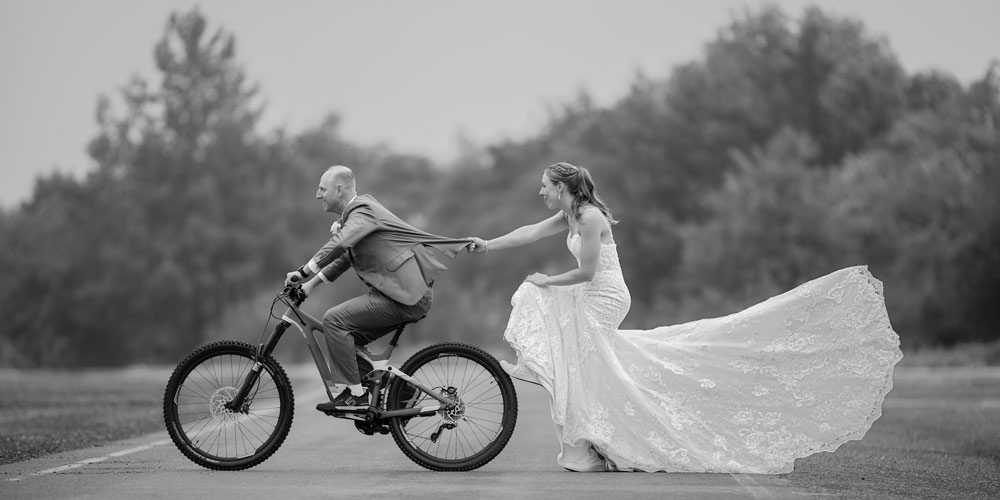
Choosing the best lenses for wedding photography can make a huge difference to the way you work throughout the day. From intimate moments while the couple are getting ready to fast-moving action on the dance floor, wedding photographers need equipment that can handle changing subjects, lighting conditions and locations.
The good news is that you don’t need to own every lens available. A carefully chosen combination of lenses can give you the flexibility to capture everything from wide venue shots to intimate portraits and tiny wedding details.
Here are some of the most useful lenses and focal lengths to consider when building a wedding photography kit.
1. 50mm and 85mm Prime Lenses
A fast 50mm or 85mm prime lens is a popular choice for wedding photographers, particularly for portraits, candid moments and working in low light.
Prime lenses have a fixed focal length, which means you can’t zoom in or out. What they lack in flexibility, however, they often make up for with wide maximum apertures, excellent image quality and the ability to create a shallow depth of field.
When to use a 50mm lens
A 50mm lens is one of the most versatile prime lenses for wedding photography. It provides a natural-looking perspective while allowing you to work relatively close to your subjects.
It can be particularly useful for:
- Getting-ready photographs
- Candid moments
- Environmental portraits
- Couples portraits
- Speeches and reception photographs
- Low-light photography
A 50mm can also encourage you to move around and consider your composition rather than relying on a zoom.
When to use an 85mm lens
An 85mm prime is particularly well suited to portraits. The longer focal length allows you to create flattering perspectives while giving you more separation between your subject and the background.
A wide aperture such as f/1.8 or f/1.4 can also produce a beautifully shallow depth of field, helping the couple stand out from a busy background.
For photographers who enjoy creating romantic, atmospheric portraits, an 85mm can be an excellent addition to a wedding kit.
2. The 24-70mm Zoom Lens
If you could only take one general-purpose zoom lens to a wedding, a 24-70mm f/2.8 would be a strong contender.
The combination of wide and short telephoto focal lengths makes it incredibly versatile. You can photograph a group of guests at 24mm and then quickly zoom towards 70mm for a tighter portrait without changing lenses.
A 24-70mm can be useful throughout almost the entire wedding day, including:
- Getting-ready photographs
- Family groups
- Ceremony photographs
- Couple portraits
- Speeches
- Reception photographs
- Dancing and evening celebrations
For photographers who prefer to travel light or work quickly, a fast 24-70mm zoom can form the backbone of their wedding kit.
3. The 70-200mm Telephoto Lens
The 70-200mm f/2.8 is another extremely useful lens for wedding photography.
Its longer focal lengths allow you to photograph people from further away, making it particularly valuable during ceremonies when you don’t want to be physically close to the couple.
It is ideal for capturing natural expressions and emotional moments without interrupting what is happening.
A 70-200mm can be particularly useful for:
- Wedding ceremonies
- Candid photographs
- Speeches
- Emotional moments
- Outdoor portraits
- Close-up details from a distance
The longer focal length can also produce attractive background compression and subject separation, making it a popular choice for wedding portraits.
The downside is size and weight. A 70-200mm f/2.8 is considerably larger and heavier than many prime lenses, so photographers working long wedding days should take this into account.
4. A Wide-Angle Lens
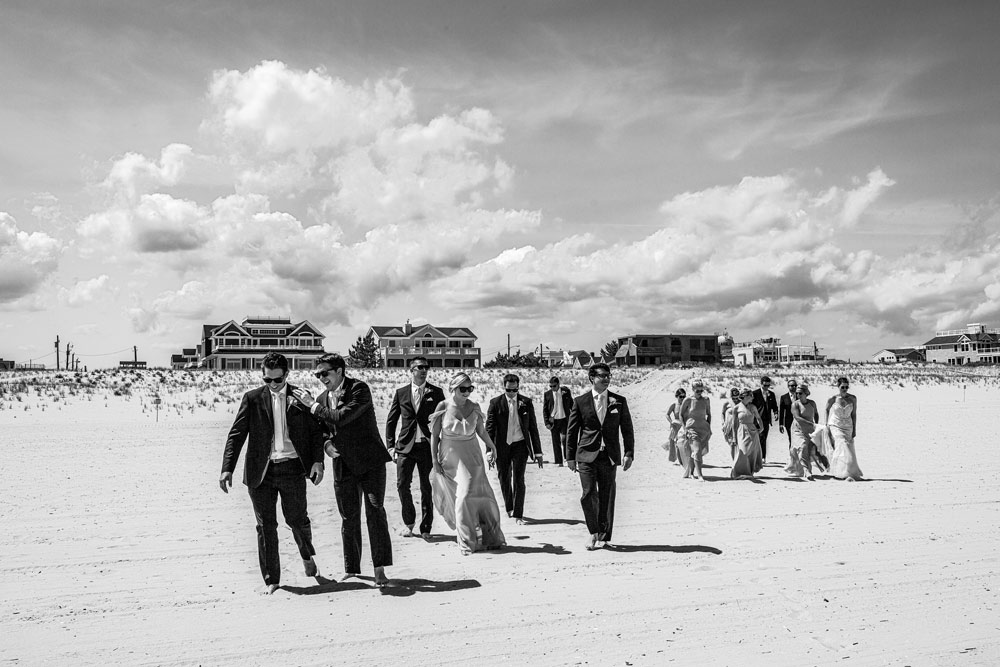
Wide-angle lenses are important when you need to show the bigger picture.
Something around 24mm is often wide enough to capture large groups, architectural interiors and dramatic wedding venues while still offering a relatively natural perspective.
A wide-angle lens can be particularly effective for:
- Large ceremony venues
- Church and cathedral interiors
- Outdoor ceremonies
- Reception rooms
- Large group photographs
- Dance floors
- Environmental portraits
Be careful when photographing people close to the edges of the frame, particularly at very wide focal lengths. Perspective distortion can become noticeable, especially when the camera is close to your subjects.
Rather than using a wide-angle lens for every portrait, think of it as a storytelling tool that helps establish the environment around the couple.
5. A Macro Lens for Wedding Details
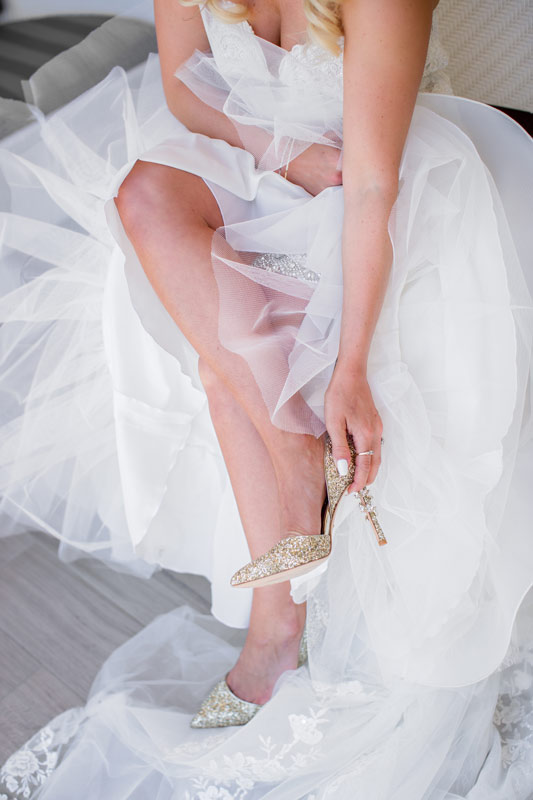
Weddings are full of small details that deserve to be photographed.
Rings, jewellery, invitations, flowers, dress details and decorations all contribute to the story of the day.
A dedicated macro lens, such as a 90mm, 100mm or 105mm macro, allows you to focus very closely while retaining excellent sharpness and detail.
Macro lenses are particularly useful for:
- Wedding rings
- Jewellery
- Dress details
- Flowers
- Invitations and stationery
- Decorations
- Cake details
You don’t necessarily need to carry a dedicated macro lens if your existing equipment can produce the results you want. Some standard or telephoto lenses can also produce excellent detail photographs.
However, if photographing wedding details is an important part of your style, a macro lens can give you considerably more flexibility.
6. Specialist Lenses for Creative Wedding Photography
Once you have your essential lenses covered, specialist lenses can be a fun way to introduce something different to your wedding photography.
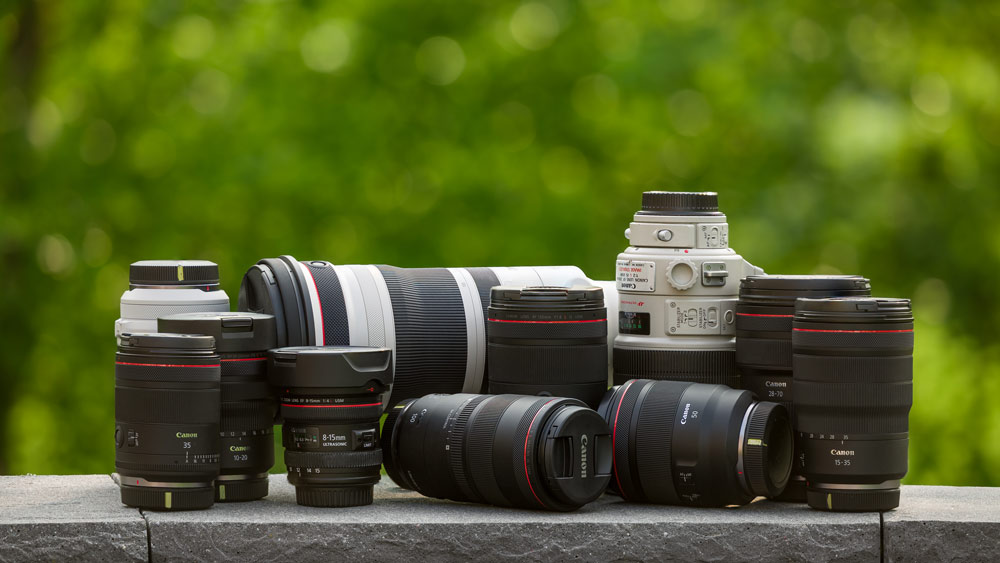
A very fast 200mm lens, for example, can create exceptionally strong subject separation and a distinctive look, although lenses of this type are expensive and relatively specialised.
A fisheye lens can also be used creatively for dance floors, dramatic interiors or unusual group photographs.
These lenses aren’t essential for photographing a wedding successfully. They are tools for photographers who want to develop a distinctive visual style.
How Many Lenses Do You Really Need?
You don’t need a huge collection of lenses to photograph a wedding professionally.
A relatively simple kit might consist of:
Option 1: A versatile two-lens kit
- 24-70mm f/2.8
- 70-200mm f/2.8
This combination provides a huge range of focal lengths and allows you to move quickly between wide and telephoto compositions.
Option 2: A zoom and prime combination
- 24-70mm f/2.8
- 85mm f/1.8
This gives you a versatile general-purpose lens alongside a lightweight, fast portrait lens.
Option 3: A prime-focused kit
- 35mm prime
- 50mm prime
- 85mm prime
Working primarily with primes can be particularly appealing to photographers who prefer their lenses to have a distinctive look and enjoy moving around to find compositions.
There is no single correct setup. The best wedding photography lens kit is the one that suits your shooting style, budget and the way you work.
Consider Renting Before You Buy
If you’re considering adding an expensive lens to your kit, renting it before committing to the purchase can be a sensible approach.
A lens that looks perfect on paper might feel too heavy after several hours of photographing a wedding. Equally, a focal length that seems unnecessary in the shop could become one of your most-used pieces of equipment once you’ve tried it in practice.
Testing equipment at a real wedding, where possible, can tell you much more than simply reading specifications.
Don’t Forget Your Backup Equipment
Wedding photography is a high-pressure environment because the important moments cannot simply be repeated.
Your lens choices are therefore only one part of preparing your kit. Professional wedding photographers should also think carefully about backup camera bodies, batteries, memory cards and other essential equipment.
If your primary lens develops a problem during the ceremony, having a second body with another lens ready can make all the difference.
Choosing the Right Wedding Photography Lenses
The best lenses for wedding photography aren’t necessarily the most expensive ones. What matters is having equipment that allows you to capture the moments you want, in the conditions you are likely to encounter.
A 24-70mm zoom can provide exceptional versatility, while a 70-200mm is invaluable for ceremonies and candid moments. Fast 50mm and 85mm primes can offer beautiful portraits and excellent low-light performance, while a macro lens can bring the smaller details of the wedding day to life.
Start with the lenses you genuinely need rather than trying to build the biggest possible collection. As your experience, bookings and photographic style develop, you can add specialist lenses when they offer something your existing kit cannot.
Ultimately, the best wedding photography lens is the one that helps you tell the story of the day in your own way.
About the Author
Jen Fox is an award-winning wedding photographer and co-founder of Fox & Brazen. With a background in photojournalism, film, and animation, she creates storytelling imagery that blends cinematic style with timeless moments. An Associate of The Society of Photographers and WPPI, Jen is passionate about empowering photographers and elevating the wedding industry through education.