
How Professional Sports Photographers Capture Football: Lessons from the World Cup
By Paul Zammit Cutajar
The Societies is blessed with a number of accomplished sports photographers. In the last issue we featured the work of Ian Cook and Domenic Aquilina, both of whom attended the UEFA Champions League Cup Final in Lisbon. Also there, but not featured in the article, was member Paul Zammit Cutajar of Malta.
Paul was off on his travels right after the UEFA final but promised to provide some work from his extensive coverage of the World Cup.
Professional Imagemaker caught up with him on his return from the Commonwealth Games in Glasgow, and we also feature his work and that of Ian Cook from these Games.
Capturing the key moments
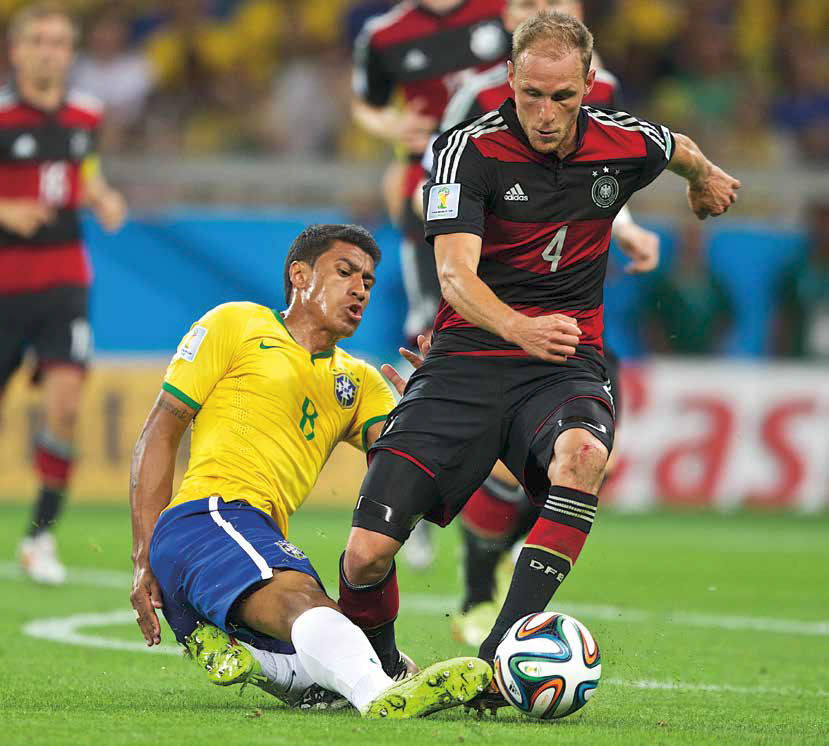
Paul’s images from the World Cup capture many of the key moments. While a photographer can’t be everywhere, he did collect such iconic moments as Pepe getting rather too personal with Thomas Muller during Germany’s comprehensive dismantling of Portugal, with its subsequent red card.
I am always curious about the camera settings used by sports photographers and the way this defines the look of their images.
More specifically, I am also interested in the way this differentiates the pros’ images from some of the work I see in competitions and magazines from enthusiasts.
The importance of lens choice and aperture
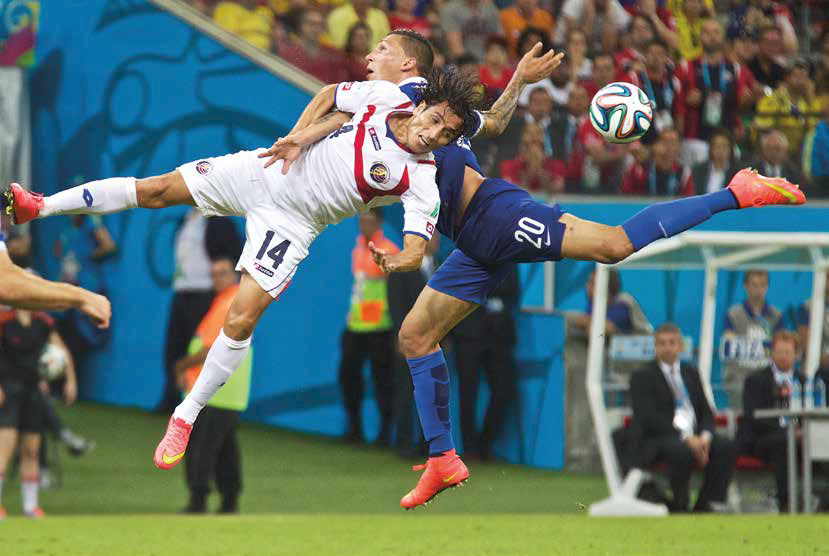
Of the 147 images Paul provided for selection, 118 were taken with a 400mm lens. Of the 147 images, 137 were shot at f/2.8.
Combined, these two parameters show why Paul’s shots are so ‘tight’, which enhances the higher sense of drama.
The use of a long 400mm lens and a wide f/2.8 aperture gives the images a distinctive look, isolating the players and action against the background. It is a good illustration of how equipment choices and camera settings can contribute to the visual character of a professional sports photographer’s work.
Framing for publication
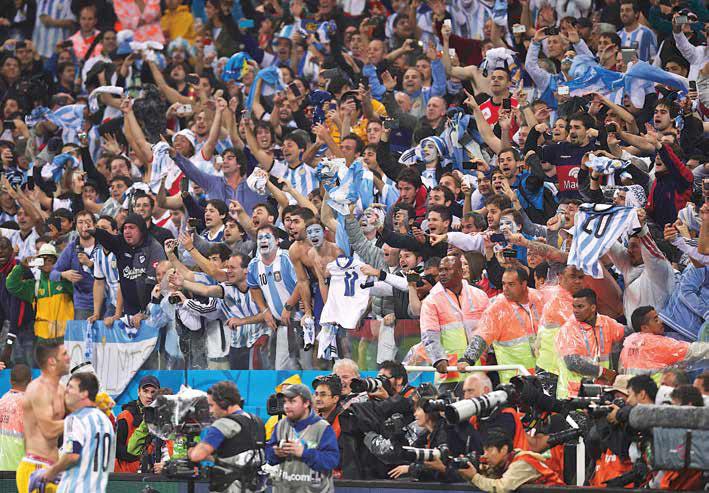
It also provides a frequent problem to be solved by magazine page designers – the tightly cropped image always seems to be the wrong format.
Give us a landscape and we want a vertical; give us a portrait format and we always have a double-page spread to fill!
The football tight against the edge of the frame looks great in a competition print but not when it is in the bleed area of a page design.
This, to some extent, reveals the difference between producing for newsprint and magazine. The newspaper rarely pushes an image into the bleed area. They also, in many cases, use images of dubious quality; I often ponder why they did not source something a little sharper before pushing it over the whole broadsheet.
Present company excepted, one wonders if the photographer took a proper look at the images before transmission sometimes.
No such problems here, though; we have, from our featured photographers, an absolute feast of work and, by hook or by crook, we will get it onto the pages!