
How to Develop Your Own Photography Style
By Ruben Buhagiar
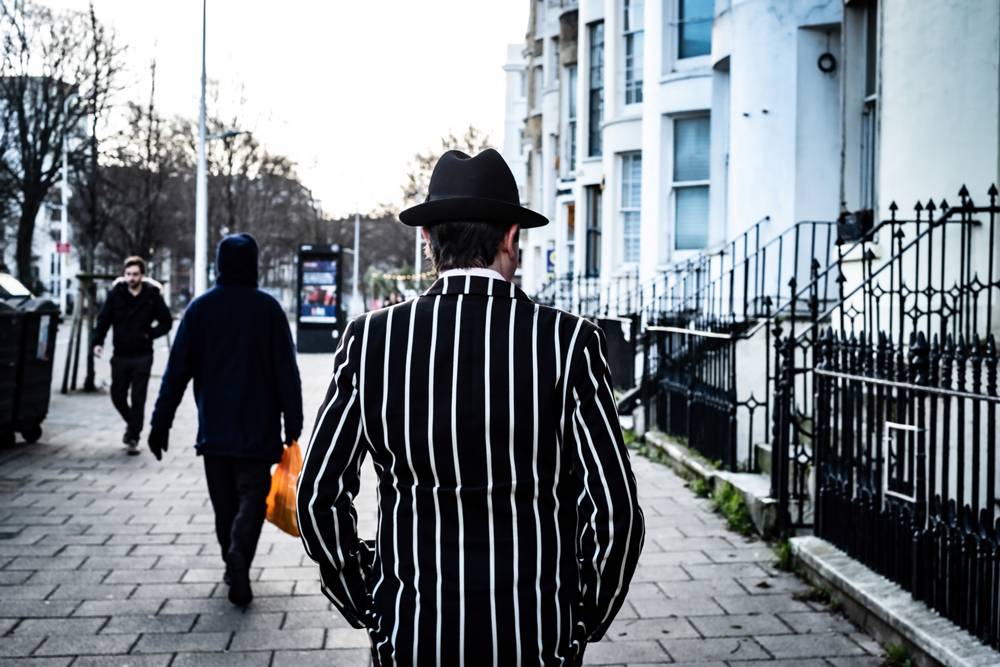
Studying the work of great photographers can teach us far more than camera settings and technique. Ruben Buhagiar explores how looking closely at the masters can help photographers discover their own visual voice.
Every day, millions of photographs are taken around the world.
Photography has become one of the most accessible creative mediums ever developed. Almost everyone carries a camera in their pocket, and taking a photograph has become an effortless way to record places, people and experiences.
But taking photographs and creating meaningful photographs are two very different things.
For photographers who want to develop their craft, one of the most interesting questions is not simply “How can I take a better photograph?”
It is:
“What do I want my photography to say?”
That question takes us beyond camera settings and technical perfection and towards something much more personal — developing our own photographic style.
What makes a photographic style?
A photographic style isn’t simply a particular editing preset, camera or lens.
It develops from the choices a photographer repeatedly makes.
The subjects you are drawn towards, the way you use light, your preferred compositions, the moments you choose to photograph, the colours you favour and even the things you deliberately leave out all contribute to your visual identity.
Two photographers can be given exactly the same camera and photographed in exactly the same location, yet produce completely different bodies of work.
The equipment is the same.
The photographer isn’t.
That is why studying photography history is so valuable.
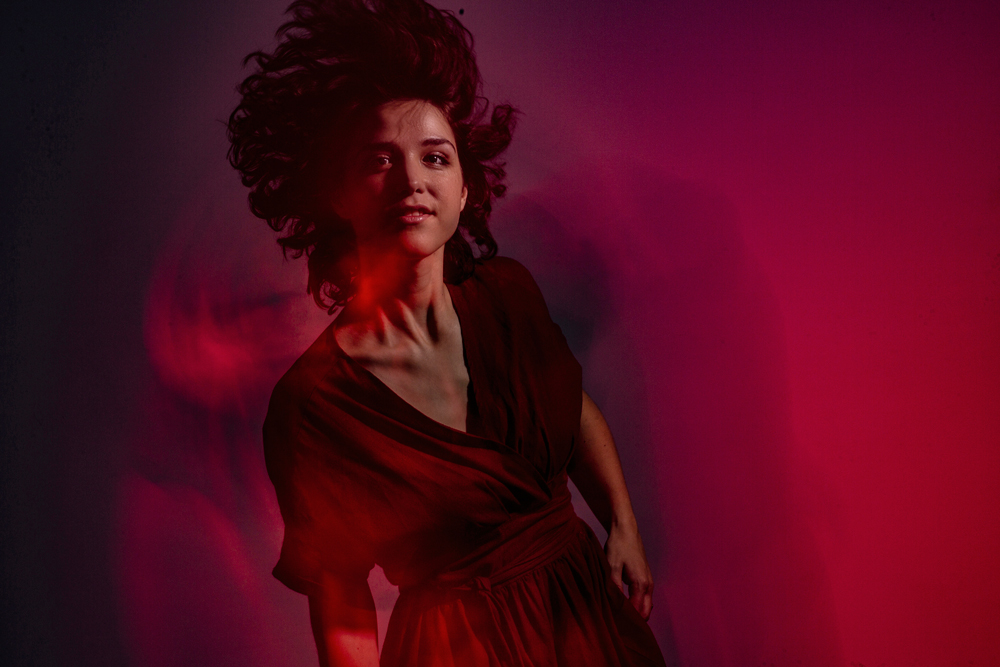
Learn from the great photographers
Photography has a rich history filled with photographers who used the technology available to them in highly individual ways.
Henri Cartier-Bresson and André Kertész, for example, both embraced the possibilities offered by the 35mm camera, but their approaches and bodies of work were very different.
Richard Avedon and Irving Penn became particularly well known for fashion photography, yet both also produced significant portrait and documentary work.
The lesson isn’t that there is one correct way to use a camera.
It is that the photographer’s vision matters more than the equipment.
Technology gives us possibilities. Creativity determines what we do with them.
Build your visual library
Every photographer has a visual library in their mind.
It might include a photograph that frightened you as a child, a portrait of a musician you admired, an image from a newspaper, an advertising campaign that caught your attention or a photograph you’ve simply never forgotten.
We often remember the photograph without remembering who created it.
That is worth exploring.
When an image stays with you, find out who made it.
Then start looking at their wider body of work.
You may discover that the photograph you initially admired makes much more sense when viewed alongside everything else they created.
You begin to see recurring themes, ways of using light, approaches to composition and ideas that run through their work.
This is how your visual library grows.
Start with photographs you love
You don’t need to begin with an art history textbook.
Start with a photograph that genuinely interests you.
Ask yourself:
Why do I like this photograph?
Don’t settle for “because it’s beautiful.”
Look more closely.
Is it the lighting?
The composition?
The subject?
The expression?
The timing?
The colours?
The atmosphere?
The story?
The simplicity?
The emotion?
Perhaps it’s something you can’t immediately explain.
That’s fine too.
The important thing is to become curious about your own response to an image.
Find out who made it
Once you’ve found an image that interests you, research the photographer.
Look at their biography and, more importantly, look at their wider body of work.
Try to understand the circumstances in which they worked.
Where did they live?
What subjects interested them?
What was happening in their life?
What social or cultural environment surrounded their work?
What equipment and photographic processes were available to them?
Understanding the context can change the way you see a photograph.
An image isn’t created in isolation. It is the product of a particular photographer, at a particular point in their life, responding to a particular situation.
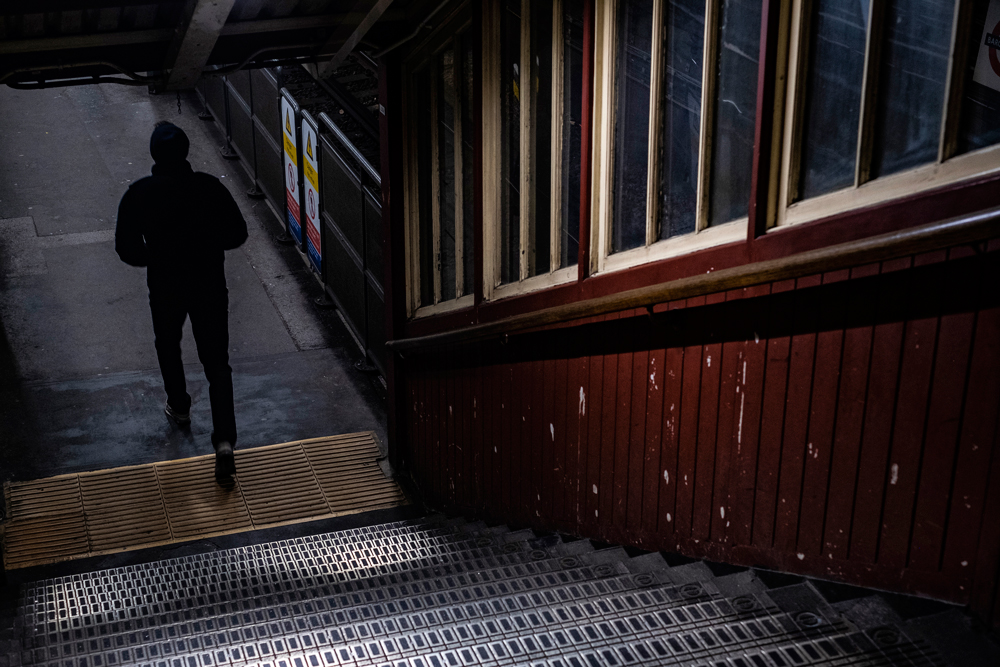
Study the lighting
Look carefully at the light.
Where is it coming from?
Is it hard or soft?
Natural or artificial?
Front-lit, side-lit or backlit?
Does it create strong shadows?
Are the highlights important?
Does the photographer use darkness deliberately?
Most importantly, ask yourself:
What does the lighting make you feel?
This moves your analysis beyond technique.
You aren’t simply identifying where the light came from. You’re considering why the photographer chose to work with it that way.
Study the composition
Next, examine how the photographer has arranged the elements within the frame.
Look at:
- Lines
- Shapes
- Negative space
- Symmetry
- Balance
- Perspective
- Foreground and background
- Subject placement
- Repetition
- Contrast
Try looking at the photograph without initially considering what it depicts.
Instead, see it as a collection of shapes, tones and relationships.
This can reveal compositional decisions that aren’t immediately obvious.
Study the moment
For photographs involving people, movement or events, timing can be everything.
Why was the photograph taken at that particular instant?
What happened immediately before?
What happened immediately afterwards?
Would the photograph have worked if the shutter had been pressed half a second earlier?
Or half a second later?
Thinking about the moment helps us understand that photography isn’t always about finding the perfect subject.
Sometimes it is about recognising the perfect instant.
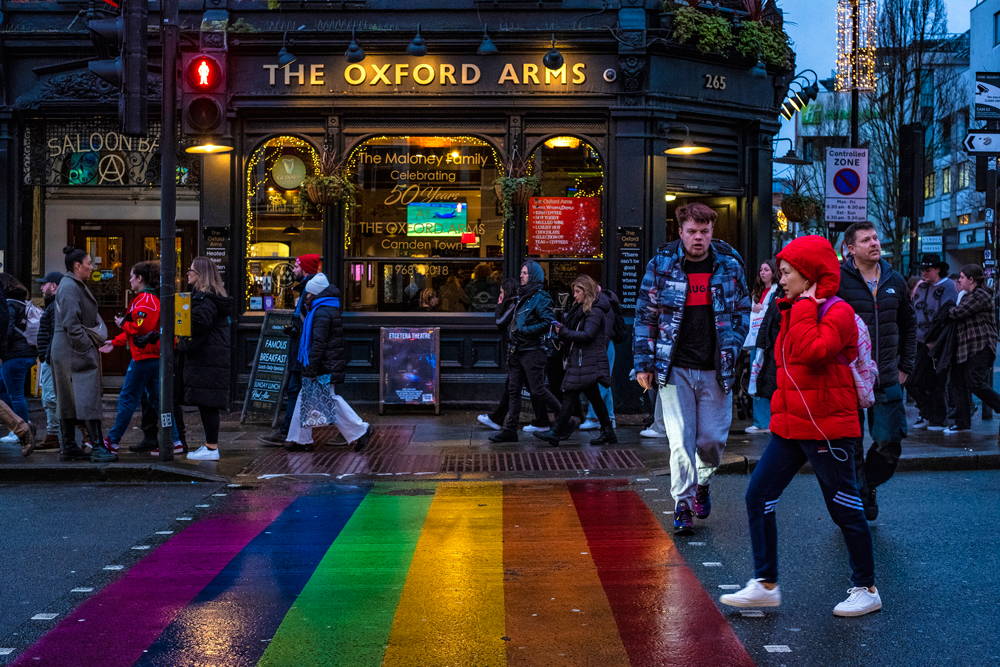
Try to replicate — but don’t copy
One of the most useful exercises when studying another photographer is to attempt to recreate some aspect of their approach.
This doesn’t mean copying their photograph and presenting it as your own.
Instead, use the photograph as a learning exercise.
If you admire the way a photographer uses shadows, try making a photograph where shadows play a similar role.
If you admire their compositions, explore similar compositional principles.
If they photograph ordinary objects in an unusual way, try doing the same with subjects from your own environment.
The objective is to understand how their decisions produce a particular visual effect.
Once you’ve understood that, move away from the original.
Let the influence take you somewhere else
This is where imitation becomes experimentation.
You might begin by studying another photographer’s use of light.
You then try the technique yourself.
But instead of recreating their photograph, apply the idea to your own surroundings, interests and experiences.
The result will inevitably be different.
And that’s exactly what you want.
The purpose of studying other photographers isn’t to become another Henri Cartier-Bresson, Annie Leibovitz, Ansel Adams or any other celebrated photographer.
It is to discover what their work can teach you.
Take the lesson.
Leave the photograph behind.
Your photography should become personal
Developing a photographic style takes time.
It isn’t something you can manufacture over a weekend.
As you photograph more, you’ll begin to notice patterns in your own work.
Perhaps you repeatedly photograph people in isolation.
Perhaps you are drawn to strong geometric compositions.
Maybe you prefer muted colours, dramatic black and white, soft natural light or high-contrast shadows.
You might discover that you’re fascinated by abandoned buildings, ordinary streets, landscapes, family relationships or small details that other people overlook.
These recurring choices are clues.
Pay attention to them.
Your style may already be developing without you consciously trying to create it.
Look outside photography
Photography doesn’t exist in isolation from other forms of art.
If you want to expand your visual understanding, visit galleries and exhibitions and study painting, sculpture, film and design.
Look at artists from different periods and cultures.
The relationship between light and shadow in a painting may influence your photography.
A film’s use of colour might change the way you think about a portrait.
A sculpture might make you notice shape and form differently.
Don’t restrict your sources of inspiration to photography.
Great ideas rarely respect artistic boundaries.
Don’t chase trends
Photography has never been more influenced by trends.
Social media can make particular editing styles, subjects and compositions appear almost universal.
It’s easy to look at successful photographers online and conclude that you need to photograph the same subjects in the same way.
But following trends can make it harder to discover your own voice.
Instead, ask yourself what genuinely interests you.
If you keep returning to a particular subject even when nobody is asking you to photograph it, that’s worth paying attention to.
Your curiosity is more valuable than an algorithm.
Give your style time
There is no deadline for developing a photographic style.
Some photographers discover a distinctive visual voice relatively quickly.
For others, it takes decades.
Your photography will also change as you change.
The subjects that interest you today may not interest you in ten years. Your experiences will alter the way you see the world, and your photography will reflect those changes.
Don’t treat this as a competition.
There is no prize for discovering your style first.
Photography is a journey rather than a race.
Ask what you want to say
Ultimately, developing a photographic style is about more than making attractive images.
Photography gives us a way to explore the world and our place within it.
A successful photograph can communicate an idea, emotion, question or experience without using a single word.
So when you pick up your camera, don’t only ask:
“What can I photograph?”
Try asking:
“What do I want to say?”
That small change in thinking can have a profound effect on your photography.
Ten exercises to help develop your photography style
If you’re unsure where to begin, try these exercises.
1. Choose five photographs you love
They don’t have to be famous photographs. Choose images that genuinely affect you.
2. Identify what attracts you
Write down exactly what you like about each photograph.
3. Research the photographers
Find out who created them and explore their wider bodies of work.
4. Compare the images
Look for similarities in lighting, composition, subject matter and mood.
5. Recreate one element
Choose one aspect of an image — perhaps the lighting or composition — and experiment with it yourself.
6. Photograph your own environment
Don’t try to recreate the original scene. Apply the idea to somewhere familiar.
7. Break the rules
Once you’ve understood the technique, deliberately experiment with doing the opposite.
8. Review your own work
Look back through your photographs and identify recurring patterns.
9. Create a small project
Choose a subject or idea and photograph it consistently over several weeks.
10. Give it time
Don’t worry if your style isn’t immediately obvious.
Keep photographing.
Photography is a way of seeing
The great photographers leave us with more than individual photographs.
They leave us ways of seeing.
Studying their work can help us understand how photography can communicate ideas, emotions and experiences, but the ultimate goal isn’t to reproduce what they did.
It is to use what we learn to discover what we want to say.
Technical knowledge will always be valuable. Understanding your camera, lenses, exposure and lighting gives you the tools to turn an idea into an image.
But the tools aren’t the art.
Your experiences, curiosity, emotions and observations are what make your photography personal.
As Ernst Haas put it:
“I am not interested in shooting new things – I am interested to see things new!”
That is perhaps one of the most useful principles a photographer can carry with them.
Don’t simply look for new subjects.
Learn to see familiar things differently.
And then photograph what you see.