
Minimalist Photography: How to Create Powerful Images with Less
By Joe Lenton
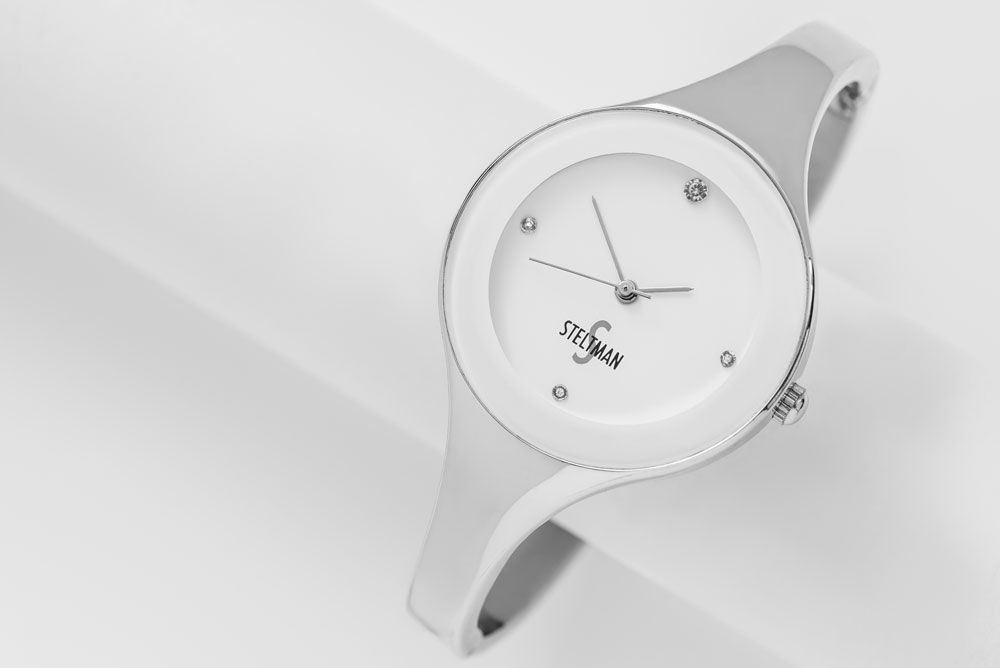
Minimalist photography is based on a deceptively simple idea: remove everything that isn’t necessary and let the essential elements of the image do the work.
The approach can be applied to almost any genre of photography. Still life, product photography, landscapes, architecture, street photography, portraits and wildlife can all benefit from a minimalist approach.
A minimalist photograph might contain little more than a single subject, a simple background and plenty of empty space. It can look effortless when finished, but creating a successful image from so few elements can be surprisingly difficult.
When there is very little in the frame, every detail matters.
A misplaced object, distracting background, poorly controlled highlight or slightly awkward composition can become immediately obvious. That is one reason minimalism is such a useful discipline for photographers: it forces you to pay attention to the fundamentals of composition, lighting and subject placement.
What is minimalist photography?
Minimalist photography is about reducing a scene to its essential visual elements.
That might mean photographing a single object against a plain background, isolating a person within a large architectural space, using negative space around a wildlife subject or turning a complicated seascape into an almost abstract arrangement of water and sky.
There isn’t a single formula for creating a minimalist photograph.
You can simplify an image by:
- Removing unnecessary objects from the frame
- Using negative space
- Restricting the colour palette
- Shooting in monochrome
- Simplifying backgrounds
- Using shallow depth of field
- Employing long exposures to remove distracting detail
- Using strong geometric shapes and lines
- Controlling light and shadow
- Carefully positioning the subject within the frame
The objective isn’t simply to make a photograph look empty. The remaining elements need to work together to create a strong visual statement.
Why is minimalist photography difficult?
Minimalist photographs can give the impression that they were easy to make.
A single object sitting against a plain background might appear straightforward compared with a complicated studio production or a busy street scene. In reality, reducing a composition to its essentials makes mistakes much more noticeable.
There is nowhere to hide.
When only a few elements are present, the position of the subject, the quality of the light, the amount of empty space and even small distractions around the edges of the frame become important.
This makes minimalist photography an excellent exercise in visual discipline.
Rather than asking what else you can add to a photograph, you start asking:
What can I remove?
That simple question can dramatically improve your approach to composition.
Start with a simple subject
One of the easiest ways to experiment with minimalism is through still life or product photography.
A tabletop setup gives you control over almost every variable. You can use a tripod, position your lights precisely and make tiny adjustments to the subject until everything is exactly where you want it.
Simple materials can work particularly well as backgrounds. A sheet of paper, piece of wood, tile or plain surface can provide a clean environment in which the subject becomes the dominant element.
Try photographing a single object rather than building a complicated still-life arrangement.
Look at its shape, texture and outline. Consider whether it works better in colour or monochrome. Move it slightly within the frame and observe how the balance changes.
Sometimes a tiny adjustment can make a significant difference.
Use negative space deliberately
Negative space is one of the most powerful tools available to the minimalist photographer.
It refers to areas of the photograph that contain little or no significant detail. Rather than treating this empty space as wasted area, minimalist photography uses it as an active part of the composition.
A small subject surrounded by empty space can create a feeling of:
- Calm
- Isolation
- Scale
- Simplicity
- Solitude
- Peacefulness
The subject doesn’t necessarily need to be large in the frame to command attention.
In fact, reducing its size can make it more visually powerful when there are no competing elements around it.
When composing an image, don’t automatically try to fill the frame. Consider what happens when you give your subject room to breathe.
Experiment with monochrome
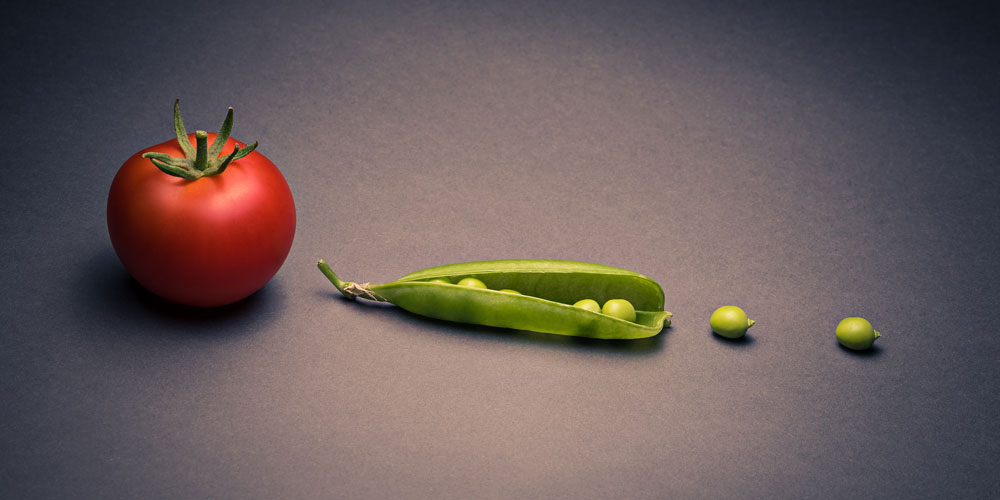
Colour can be useful in minimalist photography, but removing colour altogether can simplify an image even further.
Black-and-white photography naturally emphasises:
- Shape
- Form
- Texture
- Tone
- Contrast
- Lines
This can be particularly effective in street and architectural photography, where removing colour helps the viewer concentrate on the relationship between people, buildings, shadows and geometric shapes.
A limited colour palette can achieve a similar effect without converting the photograph to monochrome.
For example, a predominantly blue scene containing a single contrasting subject can provide a minimalist composition while retaining colour as an important part of the visual message.
Look for simple shapes and lines
Architecture provides endless opportunities for minimalist photography.
Modern buildings often contain strong geometric forms, repeated patterns and clean lines that can be isolated from their surroundings.
Rather than photographing the entire building, look for a small section that contains an interesting relationship between shape, light and space.
Symmetry can also be particularly effective.
A carefully balanced composition can create a sense of order, while deliberately placing the subject away from the centre can introduce tension.
The important thing is to look beyond the obvious subject and consider the underlying shapes within the scene.
Creating minimalist landscapes with long exposures
Landscape photography often contains a huge amount of visual information: waves, rocks, clouds, vegetation and changing light can all compete for attention.
Long-exposure photography provides a way to simplify some of that complexity.
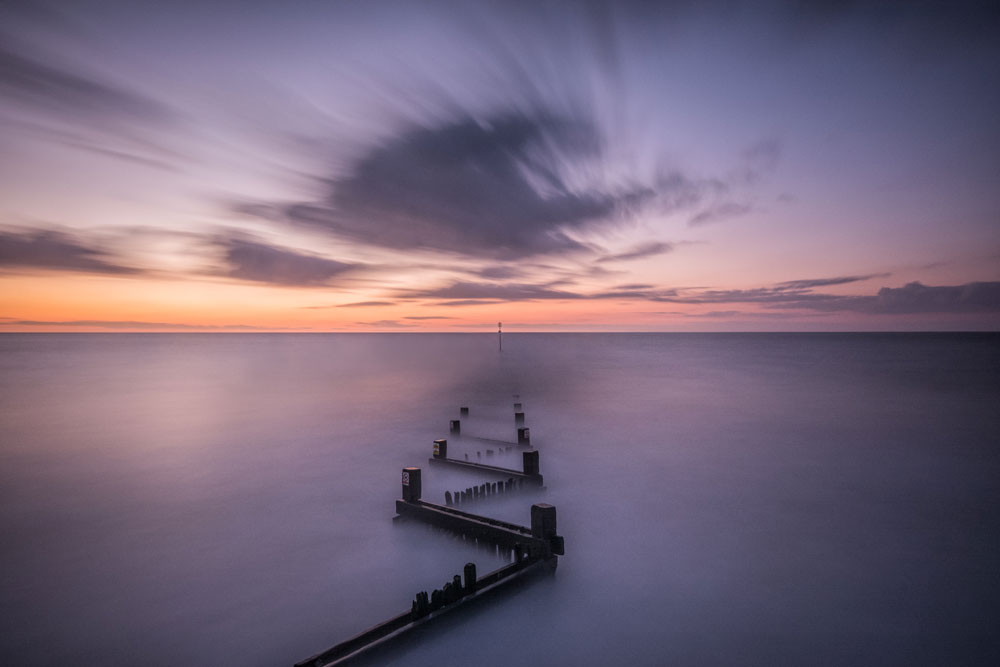
A moving sea, for example, can be transformed from a collection of individual waves into a smooth, almost mist-like surface.
A relatively short exposure of a few seconds may soften the movement, while much longer exposures can produce an extremely smooth and abstract appearance.
When light levels are low, you may be able to achieve a long exposure without a filter. During daylight, however, a strong Neutral Density filter may be required. A 10-stop ND filter, for example, can dramatically reduce the amount of light reaching the sensor and allow much longer shutter speeds.
Long exposures can also be useful for simplifying urban and street scenes.
If people continue moving throughout a long exposure, they may disappear or become sufficiently blurred that they no longer dominate the composition.
This can be particularly useful when you’re trying to isolate architecture or create a cleaner, more minimalist cityscape.
Minimalism in street photography
Busy cities might seem like the opposite of minimalist environments.
There are people, vehicles, signs, buildings, advertising and countless other distractions everywhere you look.
Yet that complexity can make minimalism even more rewarding.
One approach is to patiently wait for the right combination of subject and background. Another is to use slow shutter speeds, narrow apertures or multiple exposures to simplify the scene.
The goal is to find order within the chaos.
A useful technique is to identify an interesting background or architectural element and wait for a person to enter the composition at exactly the right point.
Persistence is important. The perfect minimalist street photograph may require many attempts.
Rather than accepting the first photograph that looks interesting, keep refining the position of the subject, the timing and the relationship between the different elements.
Use photography to remove distractions
Minimalism doesn’t necessarily mean that everything has to be perfect in camera.
Whenever possible, it is worth simplifying the scene during capture, but post-production can also help remove distractions that undermine the composition.
Small elements such as stains, litter, cigarette ends, graffiti or other irrelevant objects can attract attention away from the main subject.
Careful editing can remove these distractions when appropriate.
You can also use post-production to adjust contrast, saturation, colour temperature and tonal balance.
The key is to make these adjustments support the photograph rather than becoming the subject themselves.
Minimalist wildlife photography
Wildlife photography presents a different challenge because you often have very little control over the subject.
You cannot simply move a wild animal into the perfect position or rearrange its surroundings.
Instead, the photographer has to look for opportunities where the environment naturally provides a minimalist composition.
Snow can be particularly effective.
A bird, hare or other animal against an expanse of snow can create an image with enormous amounts of negative space while keeping the animal as the clear focal point.
Water and sky can provide similarly uncluttered backgrounds.
The subject can be relatively small within the frame and still remain visually dominant because there is so little competing information.
Use selective focus
Depth of field can also be used to simplify wildlife photographs.
By focusing precisely on the animal’s eyes or head and allowing the rest of the subject and environment to fall out of focus, you can reduce the amount of distracting detail.
The background is therefore almost as important as the animal itself.
Look for backgrounds that are sufficiently distant to become completely blurred. Sky, water, snow and grass can all work well.
Foreground blur can be effective too. Shooting through nearby vegetation or another foreground element can create a soft, indistinct area around the subject.
This combination of sharp subject, soft foreground and soft background can produce a very clean and minimalist result.
Think about colour contrast
Colour can also become the central element of a minimalist wildlife photograph.
A brightly coloured subject against a relatively uniform background can create a strong visual contrast.
Complementary colours can be particularly effective, but even a simple difference in brightness or saturation can separate the subject from its surroundings.
The important thing is to avoid allowing other colours to compete for attention.
Control the light
Lighting can make or break a minimalist photograph.
Because there are so few elements in the frame, changes in brightness and shadow can have a dramatic effect on the image.
You might use light to:
- Highlight a particular shape
- Separate the subject from its background
- Push unwanted areas into deep shadow
- Create a high-key appearance
- Produce strong geometric shadows
- Emphasise texture or form
Strong contrast can make lines and shapes more obvious, but it isn’t essential.
Low-contrast lighting can produce a softer and more ethereal minimalist image.
There are no rules that say minimalist photography has to be stark, black and white or highly contrasted. The right treatment depends on the story and mood you want to create.
Composition matters more than ever
Minimalist photography isn’t about simply removing objects until the frame is empty.
The remaining elements need to have a strong relationship with one another.
Think carefully about:
- Subject placement
- Balance
- Symmetry
- Lines
- Shapes
- Scale
- Negative space
- Colour
- Contrast
- Visual weight
Traditional compositional techniques such as the rule of thirds can be useful, but they should be treated as starting points rather than restrictions.
A minimalist image can be symmetrical, deliberately off-centre or even almost entirely empty.
What matters is whether the composition directs the viewer’s attention where you want it to go.
Develop your own minimalist style
Minimalism is less a photographic genre than an approach to seeing.
You can apply it to almost anything.
Try taking a familiar subject and deliberately reducing it to its simplest form. Photograph a building without showing the whole structure. Photograph a landscape with only one dominant element. Photograph wildlife against an uncluttered background. Try a monochrome version of a scene that normally relies heavily on colour.
Most importantly, slow down.
Look at the edges of the frame. Check for distractions. Consider whether the subject really needs to be where you have placed it. Ask whether removing something would make the photograph stronger.
Minimalism rewards patience and observation.
The power of less
A successful minimalist photograph can be incredibly powerful precisely because it doesn’t give the viewer too much information.
There is space to look, think and interpret.
The challenge for the photographer is to decide what deserves to remain in the frame — and what doesn’t.
Whether you’re working with a studio still life, a dramatic landscape, urban architecture or wildlife in a snowy environment, the same principle applies:
Remove the unnecessary and make the essential elements count.
That is the real skill behind minimalist photography.