Orotone Photography: How to Create a Dry Plate Gold-Toned Print
By Tom Lee
Digital photography has made it possible to produce thousands of images without giving much thought to what happens between pressing the shutter and seeing the finished photograph.
Sometimes the opposite approach can be refreshing.
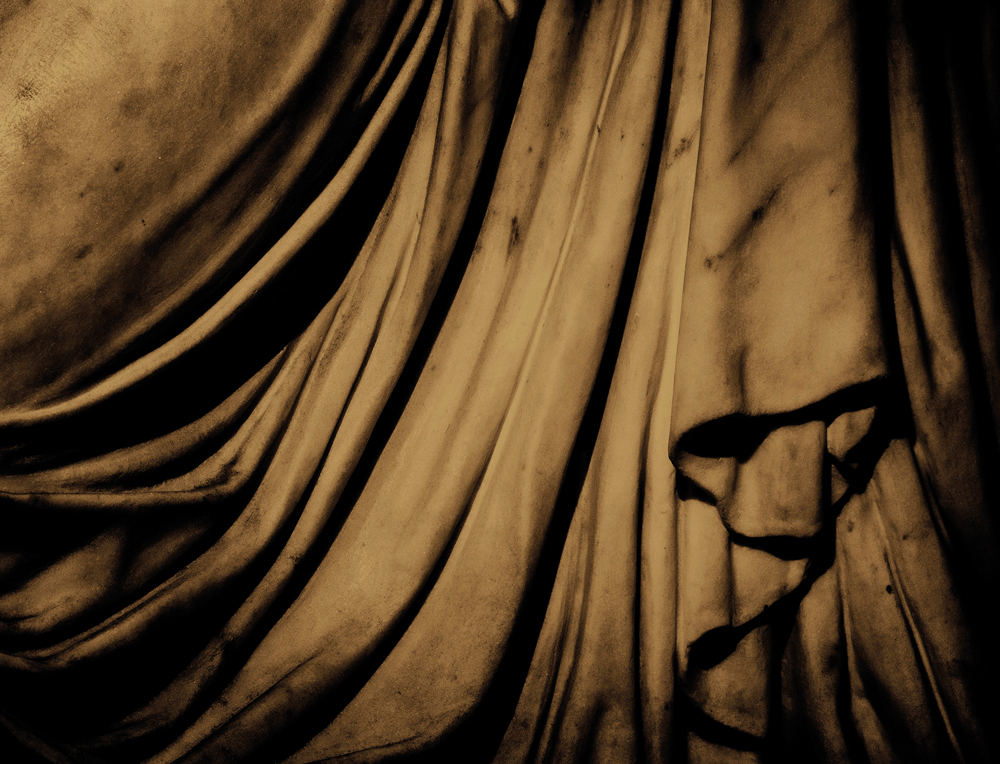
Photographer Tom Lee FRPS became fascinated by historical photographic processes and decided to create a contemporary body of work using dry plate orotones – a painstaking process involving glass plates, digital negatives and a metallic-toned finish.
The result was Sculptural Intimacy, a series of photographs of classical sculptures that Tom created as part of his successful RPS Fellowship submission.
It took almost three years to complete.
For Tom, however, the finished panel was only part of the achievement. The process itself became a way of exploring what happens when photography is slowed down and physical craft becomes part of making the image.
What is an orotone?
An orotone is a photographic print with a metallic gold or gold-like appearance.
The process has its origins in the early twentieth century and is particularly associated with American photographer Edward Sheriff Curtis, who produced and sold orotones from his studios in Seattle and later Los Angeles.
Curtis became famous for his extensive photographic documentation of Native American life, and his orotones became sought-after objects in their own right.
The distinctive appearance of an orotone comes from the metallic coating applied to the back of the photographic image. Traditionally, gold was involved in some versions of the process, although other metallic colours and finishes can also be used.
The result is much more than simply a photograph printed in a different colour.
The appearance of the finished image can change as the viewing angle changes, while the imperfections introduced by a handmade process become part of the object.
That physical quality was central to Tom’s project.
Why use an historic photographic process?
Tom had already retired from paid photography after around 40 years, but retirement didn’t mean retiring from photography.
Quite the opposite.
He wanted a new challenge that would force him to continue developing as a photographic artist.
Competitions can certainly encourage photographers to improve, but Tom felt that working towards a distinction required something different: the sustained development of a coherent body of work.
That led him towards a Fellowship in Visual Arts with the Royal Photographic Society.
The project needed to have a clear artistic purpose, rather than simply being a collection of technically accomplished photographs.
Tom decided that an alternative photographic process could become an important part of that idea.
Combining sculpture and photography
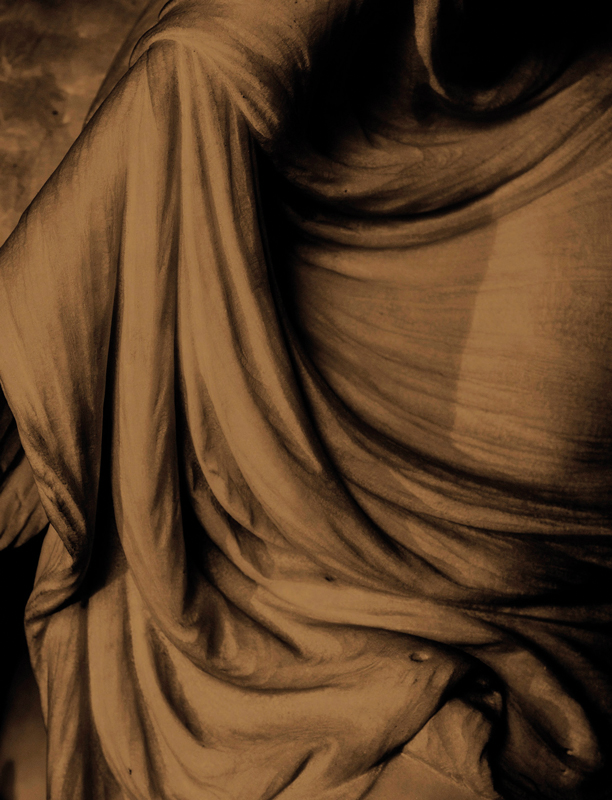
The starting point for Sculptural Intimacy was classical Greek and Roman sculpture.
Rather than simply photographing complete statues, Tom wanted to isolate intimate sections of them.
A curve, a hand, part of a face or a small area of textured stone could become the subject.
This allowed him to move away from conventional documentary photographs of sculpture and towards something more abstract.
There was also a conceptual connection between the two forms.
The sculptures had been created by hand, with the small variations and imperfections that come with physical craftsmanship.
Tom’s glass plates would also be handmade objects, with their own tiny imperfections.
The process therefore became part of the meaning of the finished work.
Start with the idea, not the photographs
One of the most useful lessons from Tom’s project has little to do with orotones.
It is the importance of deciding what you are trying to say before you make the work.
Tom worked with a mentor familiar with the type of project he wanted to create and developed his Statement of Intent before taking the photographs.
That helped him define the direction of the project.
A statement shouldn’t simply explain how difficult the work was to produce or list the techniques involved. It should explain the purpose of the work.
What are you trying to communicate?
Why have you chosen this subject?
What do you want the viewer to see or feel?
How do the visual decisions support that idea?
These questions can be useful whether you’re working towards a Fellowship, building a personal project or simply trying to develop your photography.
Photographing in galleries presents its own problems
The original idea involved using large-format cameras and glass plates at the locations where the sculptures were displayed.
There was one fairly significant problem.
The galleries wouldn’t allow it.
Tom had to work within the restrictions imposed by the institutions, which included requirements such as:
- No tripods
- No studio lighting
- The gallery remaining open during photography
- No disruption to visitors
- Photography taking place during normal opening hours
That immediately changed the practical approach.
Rather than photographing directly onto large-format glass plates, Tom captured the images digitally and planned to transfer them to the glass plates later.
It was a useful reminder that a photographic project doesn’t always survive contact with reality unchanged.
Sometimes the restrictions force you to find another way of achieving the original idea.
Using light without a studio
Although Tom couldn’t use conventional studio lighting in the galleries, he was able to use a small handheld torch to direct light where he wanted it, with the assistance of another person.
This gave him some control over the illumination of the sculptures while still working within the gallery’s restrictions.
The resulting photographs were therefore not simply records of sculptures under whatever light happened to be available.
Light became part of the design.
That is particularly important when photographing three-dimensional objects. A small change in the direction of light can alter the apparent depth, texture and shape of a surface.
Creating a digital negative
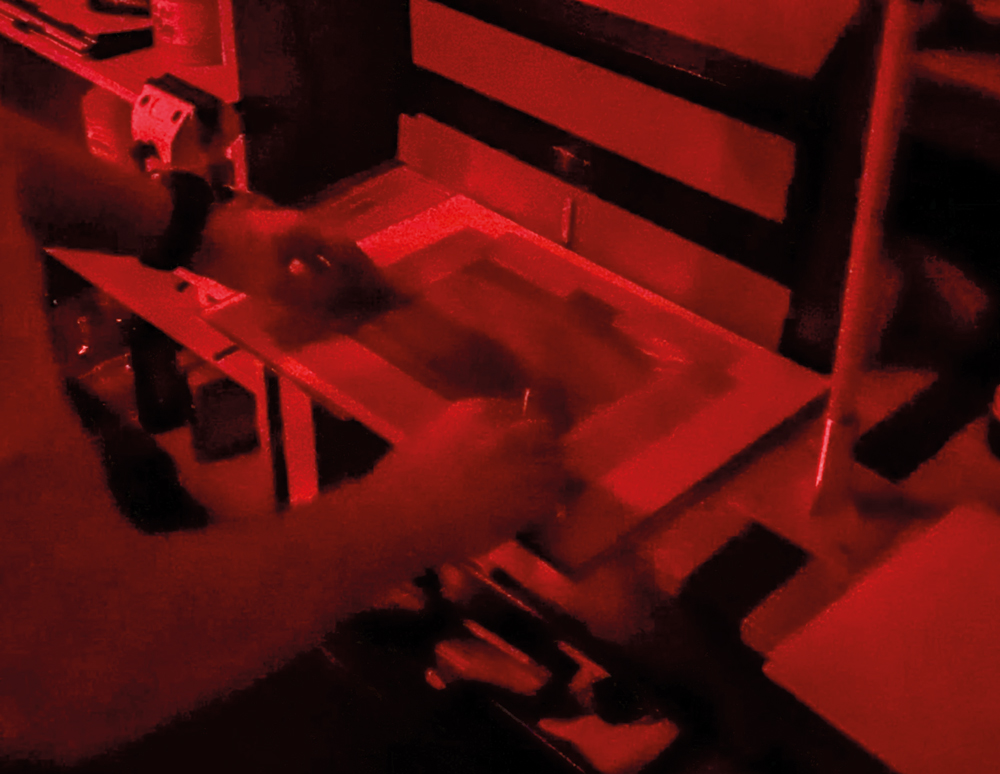
Once the photographs had been captured, the next stage was to turn the digital files into negatives suitable for contact printing.
The process began with a digital negative made from the original photograph.
The negative is then used to make a contact print onto a sensitised glass plate.
Unlike a conventional digital print, where the final image exists primarily as an image on paper, the glass plate becomes part of the finished object.
That distinction was important to Tom’s concept.
The photographic image wasn’t simply being reproduced using an old-fashioned technique. The physical characteristics of the process were deliberately contributing to the appearance of the work.
Printing onto glass dry plates
Dry plate photography was an important development in the history of photography.
Instead of preparing wet photographic plates immediately before exposure, commercially prepared dry plates made photography considerably more practical.
Tom used sensitised glass plates as the basis for his modern interpretation of the orotone process.
The digital negative is placed against the sensitised surface and exposed to create the photographic image.
Once the plate has been processed, the metallic coating is applied to the reverse of the photographic image.
This is what produces the characteristic golden appearance.
The exact colour can vary, from warm yellow and gold through to other metallic-looking tones.
Some historic and contemporary variations of the process can also involve genuine gold leaf.
The viewing angle becomes part of the photograph
One of the intriguing characteristics of a metallic photographic print is that it doesn’t necessarily look identical from every viewing position.
The reflective surface can cause subtle changes in tone and brightness as the angle of the light and the viewer changes.
That became particularly appropriate for Sculptural Intimacy.
The photographs were already concerned with the physical form of sculpture. The glass and metallic finish then added another physical dimension to the photographs themselves.
The viewer isn’t simply looking at a flat reproduction.
They are looking at a photographic object.
Consistency is one of the biggest challenges
Creating one successful handmade print is one thing.
Creating an entire coherent body of work is something else.
Tom’s aim was to achieve consistency across the complete set of plates.
Every stage therefore needed careful control.
The exposure, processing, coating and finishing all had to be considered.
With a digital workflow, making another version of an image is relatively straightforward.
With a handmade photographic process, mistakes can mean repeating significant amounts of work – and wasting expensive materials.
That changes the way you approach the photograph.
Every stage matters.
Why alternative photographic processes are still interesting
There are plenty of reasons to explore historical photographic processes even if you have no intention of abandoning your digital camera.
They force you to slow down.
They make you think about the physical nature of the photograph.
They can introduce characteristics that are difficult to reproduce precisely with software.
And, perhaps most importantly, they can change the way you think about making an image.
Photography doesn’t have to mean pressing the shutter, processing a RAW file and producing a JPEG.
It can be a physical craft as well as a digital one.
Processes such as cyanotype, platinum/palladium printing, wet plate collodion, salt printing and orotone can all provide photographers with very different ways of thinking about the final image.
The value of working towards a long-term project
Tom’s project took almost three years.
That’s a long time in photographic terms.
It would have been easy to become distracted, change direction or abandon the idea altogether.
Instead, the restrictions of the project helped give it structure.
The subject was defined.
The process was defined.
The intended outcome was defined.
And the Statement of Intent provided a constant reference point.
That kind of discipline can be valuable even if you aren’t applying for a distinction.
A long-term personal project can push you beyond the photographs you would normally make.
Don’t confuse technical difficulty with artistic purpose
There is another important lesson in Tom’s approach.
The fact that something is difficult to produce doesn’t automatically make it a successful photograph.
A complicated technique can be fascinating to the photographer while being completely irrelevant to the viewer.
That’s why the technique needs to support the idea.
In Sculptural Intimacy, the physical characteristics of the orotone process were not simply there to demonstrate that Tom could make an unusual print.
They reinforced the relationship between the handmade photographic object and the handmade sculptures.
That’s a much stronger reason for choosing an alternative process.
Developing your own photographic voice
Tom’s project demonstrates something that applies far beyond orotones.
Photographers often look for better cameras, better lenses or better software when what they really need is a new challenge.
Trying a completely different process can be one way of finding that challenge.
You might explore an alternative printing process.
You might restrict yourself to one lens.
You might create a project around a single subject.
You might work entirely in monochrome.
You might produce a physical exhibition rather than simply posting the photographs online.
The important thing is to create a reason to keep developing.
Never stop evolving
Tom’s successful Fellowship panel was the result of almost three years of experimentation, problem-solving and refinement.
The orotone process was unusual, but the most valuable part of the project may be the mindset behind it.
Don’t be afraid to move outside the way you normally work.
Give yourself a demanding project.
Find someone who can challenge your ideas.
Decide what you want the work to communicate before you start producing it.
And don’t assume that retirement, changing circumstances or the end of a particular photographic career means the end of your development as a photographer.
Photography can continue to evolve for as long as you do.
As Tom puts it: never stop evolving.