
How to Price Your Photography: Why Your Time Matters
By Anurag Sharma
How much should you charge for your photography?
It’s one of the first questions almost every photographer asks when turning professional.
Look at what other photographers charge. Work out what you need to earn. Add the cost of your equipment. Decide what feels reasonable.
But there is another question that is often overlooked:
How much of your time does each job actually take?
That’s where photography pricing can become complicated.
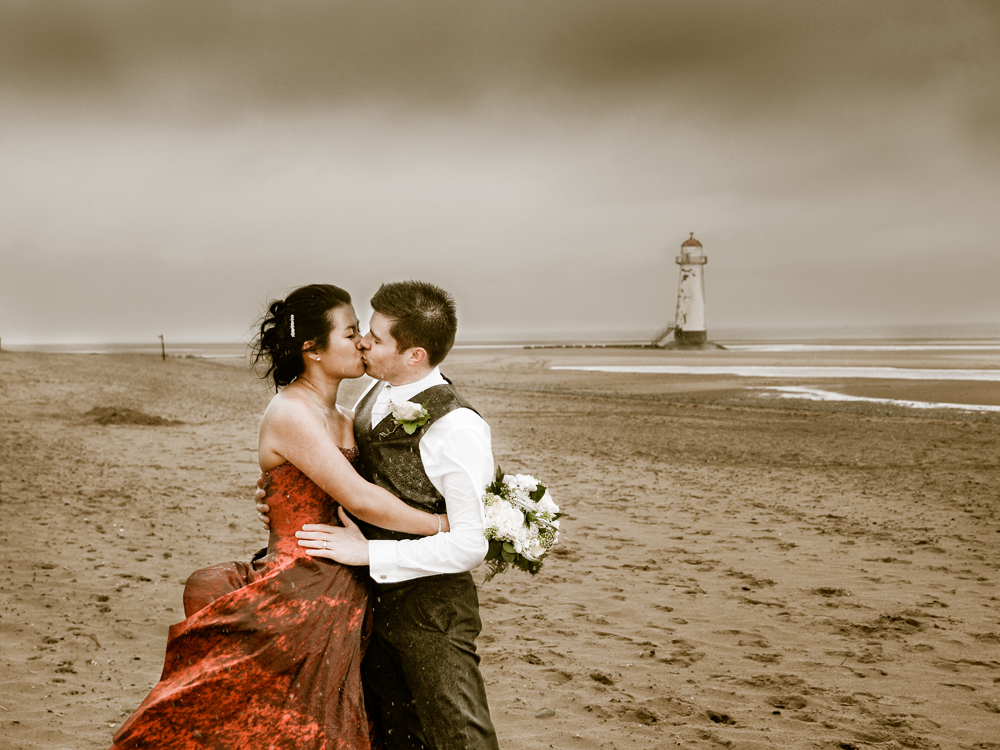
A wedding might appear to be a day’s work, but the day itself is only one part of the job. There may be meetings, emails, preparation, travel, photographing the wedding, backing up files, culling, editing, album design, client revisions, ordering, delivery and administration.
If you don’t account for all of that time, a job that looks profitable on paper can become much less attractive in reality.
Your photography price isn’t just paying for the shoot
One of the easiest mistakes to make is thinking about your price in terms of the hours spent holding the camera.
Imagine you photograph a wedding for eight hours.
That doesn’t mean you’ve worked eight hours.
You may have spent two hours meeting the couple beforehand, several hours travelling and preparing, another ten or fifteen hours selecting and editing photographs, and additional time dealing with album design, emails and delivery.
Suddenly, that “eight-hour wedding” has become a much larger commitment.
The same applies to almost every type of photography.
A one-hour portrait session might involve:
- responding to the enquiry
- discussing requirements
- arranging the booking
- preparing equipment
- travelling
- setting up
- photographing the client
- backing up the images
- culling
- editing
- preparing the final images
- delivering them
- dealing with follow-up questions
The photograph may have taken a second to create.
The service around it can take considerably longer.
Start recording your time
If you’re not sure where your working hours are going, stop guessing.
For several jobs, write down how much time you actually spend on them.
You don’t need sophisticated software.
A notebook or simple spreadsheet is enough.
Record the time spent on:
- enquiries
- client meetings
- preparation
- travel
- shooting
- downloading and backing up
- culling
- editing
- retouching
- album design
- ordering
- delivery
- administration
- marketing
- follow-up
Do this for a few jobs and the results may surprise you.
You might discover that a job you thought took ten hours actually takes twenty.
Or you may find that a particular service is very efficient and generates a good return for the time involved.
Either way, you now have information rather than assumptions.

Calculate the real cost of a job
Your time is only one part of the calculation.
A photography business also has costs such as:
- equipment
- insurance
- software
- storage and backups
- website and hosting
- marketing
- premises
- travel
- accounting
- professional memberships
- printing and products
- taxes and other business costs
You need to understand these costs before deciding whether a particular price works.
This doesn’t mean every job needs a complicated spreadsheet.
But you should have a reasonable understanding of what it costs you to operate your business.
Don’t base your prices entirely on other photographers
It’s useful to research the market, but another photographer’s price doesn’t tell you what your price should be.
They may have completely different costs.
They may have a different workflow.
They may take fewer photographs.
They may have assistants.
They may spend considerably more or less time editing.
They may offer different products.
They may be working to a completely different business model.
Copying another photographer’s price without understanding your own numbers is therefore risky.
Use the market to understand where your service sits, but build your pricing around your own business.
More photographs can mean more work
Digital photography makes it very easy to take large numbers of photographs.
That’s useful when it helps you capture the right moment.
But every image has a consequence once the shoot is over.
More photographs mean more files to back up, more images to review, more decisions to make and potentially more photographs to edit and deliver.
This doesn’t mean you should impose an arbitrary limit on the number of images you take.
It means you should understand your own shooting and editing habits.
If you regularly photograph far more than you need, experiment with becoming more deliberate.
Look at what you actually deliver.
Which images tell the story?
Which are duplicates?
Which are near-identical frames?
Could you achieve the same result with a more considered approach?
Being selective isn’t about missing photographs.
It’s about making each photograph earn its place.
Your workflow affects your profitability
Good workflow isn’t just about being organised.
It has a direct impact on how much time you spend delivering each job.
A slow workflow can quietly eat away at your profits.
For example, if you can reduce the time required to back up, organise, cull and edit a typical wedding by several hours, you have effectively created additional capacity without taking on another client.
Look at the process from start to finish.
Where are you repeatedly doing things manually?
Where are you creating unnecessary versions of files?
Where are you spending time searching for information?
Where are clients asking questions because your process isn’t clear?
Where are you doing work that doesn’t actually improve the finished product?
Small improvements can add up.
Don’t confuse being busy with being profitable
This is one of the most important lessons for any photographer running a business.
A full diary can feel like success.
But if every job takes an enormous amount of time and leaves very little money after expenses, you may simply have created yourself a very demanding job.
Look at each service you offer and ask:
How much does it generate?
How much does it cost?
How many hours does it take?
Do I actually want to spend those hours doing it?
Those questions can tell you much more than the number of bookings in your diary.
Increasing your prices isn’t the only answer
If you’re working too many hours for the income you’re generating, increasing your prices may be part of the solution.
But it isn’t the only option.
You can also look at reducing the time required to deliver the service.
For example:
- simplify your workflow
- reduce unnecessary editing
- improve your client communication
- standardise repetitive tasks
- review the products you offer
- reduce unnecessary travel
- outsource appropriate tasks
- improve your booking process
- stop offering services that consistently lose money
Sometimes the problem isn’t that you’re charging too little.
It’s that you’re spending too much time doing things that don’t need to be done.
Decide what you want your business to look like
There is no single correct way to run a photography business.
One photographer may want to photograph three weddings a month.
Another may want to photograph one.
Someone else may want to concentrate on commercial work during the week and weddings at weekends.
Another photographer may deliberately keep their business small so they have plenty of time for family, personal projects or other interests.
All of those can be valid business choices.
The important thing is to make the choice deliberately.
Don’t allow your business to grow simply because you keep saying yes to every enquiry.
More work isn’t automatically better.
Set boundaries around your time
Once you’ve established how much time you actually have available, protect it.
If you have a certain number of hours each week to work on the business, decide how you want to use them.
You might divide that time between:
- client work
- editing
- marketing
- administration
- business development
- training
Then work through the priorities.
When your working time is finished, stop.
There will always be another email you could answer, another photograph you could edit or another social media post you could write.
If you allow every task to expand indefinitely, your business will consume whatever time you give it.
Learn to say no
One of the hardest lessons when starting a photography business is that not every opportunity is a good opportunity.
A client may want work that isn’t profitable.
A job may involve a huge amount of travel.
A particular product may take hours to produce for very little return.
An enquiry may demand a level of service that isn’t reflected in the price.
It’s tempting to say yes because you don’t want to lose the work.
But every job you accept uses time that could be spent elsewhere.
Sometimes saying no creates the capacity to say yes to something better suited to your business.
Invest in improving your skills
There is another way to improve the value of your time: become better at what you do.
Training can improve your photography, but it can also improve your workflow and business practices.
The better you understand lighting, composition, posing, shooting technique and editing, the more efficiently you can work.
That doesn’t mean rushing.
It means developing enough skill and confidence that you’re not spending hours trying to solve problems that could have been avoided with better preparation or technique.
Build a business around the life you actually want
It’s easy to become obsessed with the idea that a successful photographer must always be busier, book more clients and earn more money.
But business success isn’t simply a bigger number of bookings.
You also need to decide what you want your business to give you.
More income may be important.
So might flexibility.
Time with family may be important.
So might creative freedom, personal projects or simply having enough time away from work to enjoy your life.
Your business should support the life you want rather than automatically consuming it.
Your time has a cost
Photography is an enjoyable profession, which can make it particularly easy to work too much.
If you love photography, editing another wedding at midnight can feel less like work than it would in another profession.
But your time still has a value.
The fact that you enjoy something doesn’t make the hours unlimited.
Before accepting another booking, look beyond the fee.
Consider the whole job.
How many hours will it require?
What will it cost?
What will it prevent you from doing?
And will the return justify the commitment?
Once you start thinking about photography in those terms, pricing becomes much clearer.
You aren’t simply charging for pressing the shutter.
You’re charging for your experience, your skills, your equipment, your preparation, your business costs, the finished service — and the considerable amount of time required to deliver it.
Learn to value that time.
You can’t create more of it, and once you’ve spent it, you can’t get it back.