
Why Enter Photography Competitions? How They Can Improve Your Photography
By Gerald Hardage
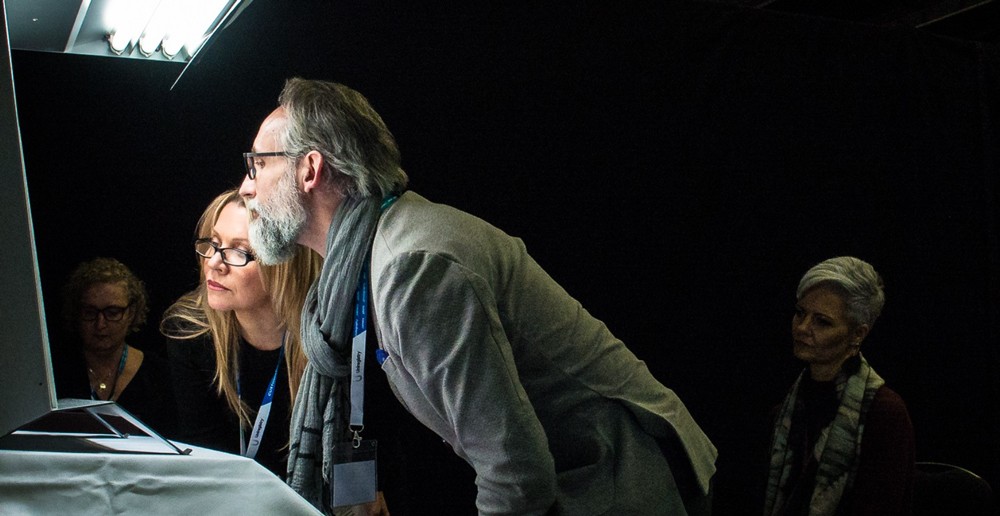
Entering a photography competition can be a daunting experience.
You may look at the previous winners and think your work isn’t good enough. You may wonder what the judges will think, whether your image really stands up against other photographers, or whether there is any point entering at all.
Those feelings are perfectly understandable.
But photography competitions can be about much more than winning an award. Used properly, they can become a useful part of your development as a photographer, encouraging you to look more critically at your own work, experiment with different subjects and styles, and push yourself beyond what feels comfortable.
You don’t have to think you’re good enough
One of the biggest barriers to entering a competition is the belief that your photography isn’t ready.
It’s easy to look at highly accomplished photographers and assume that everyone entering a competition must already be working at that level.
They aren’t.
Every photographer started somewhere, and entering a competition can be part of that journey.
You don’t need to believe that you are going to win before you enter. In fact, it can be much more productive to approach your first competition as an opportunity to learn.
Choose an image you are proud of, enter it and see what happens.
You may be surprised.
Competition makes you look at your own work differently
When you are photographing for yourself or for a client, you can become attached to an image.
You remember how difficult it was to create. You remember the location, the people involved, the weather or the amount of work that went into editing it.
A competition image has to stand on its own.
That makes selecting an image a useful exercise.
Instead of asking:
“Do I like this photograph?”
try asking:
- Does the photograph immediately attract attention?
- Is there a clear subject?
- Is the composition working?
- Is the lighting helping the image?
- Is the subject separated effectively from the background?
- Is the image technically sound?
- Does the processing enhance the photograph?
- Is there anything distracting from the main idea?
Those questions can change the way you look at your own photography.
Learn to be less emotionally attached to your images
This can be one of the hardest lessons.
You may have a photograph that means a great deal to you but doesn’t necessarily make the strongest competition image.
Conversely, an image you almost overlooked may have much greater potential.
Try to separate the experience of making the photograph from the photograph itself.
A competition judge doesn’t know how much effort went into creating an image. They see the finished photograph.
That can be a valuable lesson for anyone working professionally, because clients and viewers also experience the finished image rather than the process that produced it.
Use competitions to step outside your comfort zone
It’s easy to photograph the subjects you already know.
A wedding photographer may rarely photograph landscapes. A portrait photographer may not spend much time photographing wildlife. A landscape photographer may rarely think about people, events or documentary photography.
Competitions can encourage you to experiment.
Entering a category that isn’t part of your normal work can make you approach photography differently. You may discover a new subject, technique or way of working that eventually finds its way back into your main style.
Even if the resulting image doesn’t receive an award, you’ve gained experience.
That is still valuable.
Don’t only enter your favourite photograph
One useful exercise is to take a small selection of your strongest images and compare them objectively.
You might have three photographs that you particularly like. Instead of automatically choosing the one you are most emotionally attached to, examine all three.
Which has the strongest composition?
Which has the clearest visual idea?
Which has the best use of light?
Which holds your attention for longest?
Which one would still work if you knew nothing about the story behind it?
This process can reveal weaknesses in your work that aren’t obvious when you simply scroll through a collection of images.
Read the competition rules and category definitions
If you decide to enter a competition, don’t treat the rules as an afterthought.
Read them before choosing your image.
Different competitions can have very different requirements, and categories may have specific definitions about the type of image that is eligible.
For example, The Society of Photographers’ Monthly Image Competition has category definitions covering subjects ranging from portraits, weddings and events to wildlife, landscapes, documentary, sport and more. The definitions also explain what the judges are looking for in each category.
Taking a few minutes to understand the category can prevent you from entering an otherwise good photograph in the wrong place.
It also helps you think about your image in the same terms that the judges will be using.
Look at previous competition results
Another useful way to learn is to study successful images.
Don’t simply look at which photographs won. Ask yourself why they work.
Look at the composition, lighting, subject, timing, colour, expression and use of space.
Then compare those characteristics with your own work.
This isn’t about copying somebody else’s style. It is about developing your visual vocabulary and understanding what makes an image effective.
The Society’s Monthly Image Competition publishes Gold and Highly Commended results, providing members with the opportunity to see the range of work being recognised by its judges.
Use competition as a reason to experiment
One of the most useful ways to approach competitions is to make them part of your regular photographic practice.
Instead of waiting until you have what you believe is a “competition image”, look for opportunities to create something specifically for a category.
Try a different lighting setup.
Photograph a subject you normally ignore.
Experiment with composition.
Try working in monochrome.
Spend more time considering the background.
Or simply slow down and become more deliberate about the photograph you are making.
The competition then becomes a reason to keep photographing rather than simply a destination at the end of the process.
Don’t let one result define your photography
A competition result is one assessment of one photograph at one point in time.
Don’t allow a result to determine how you feel about yourself as a photographer.
If an image doesn’t receive the result you hoped for, look at it as information rather than rejection.
Ask yourself whether there is something you could improve.
Perhaps the composition could be stronger. Maybe the lighting doesn’t quite work. Perhaps the processing is distracting from the subject.
Equally, there may be nothing fundamentally wrong with the photograph. It simply may not have connected with the judging panel in the way you hoped.
The important thing is to keep learning.
Entering can build confidence
Confidence in photography doesn’t necessarily come from believing that every photograph you make is good.
It often comes from being willing to put your work in front of other people.
The first time you enter a competition can feel uncomfortable. The second time may feel easier. Eventually, submitting your work becomes a normal part of your photographic development.
That willingness to show your work can also be valuable professionally.
Photographers who regularly assess and present their work tend to become more comfortable discussing their images, explaining their decisions and accepting constructive criticism.
Use mentoring alongside competition
If you are new to photographic competitions, you don’t have to work everything out alone.
A mentor or experienced photographer can help you understand competition categories, identify strengths and weaknesses in your work and suggest areas for development.
The Society of Photographers’ mentoring programme is another resource available to members who want guidance on improving their photography.
A useful combination is to choose an image, enter it, review the result and then discuss the photograph with someone whose opinion you trust.
That creates a much more useful learning cycle than simply entering an image and forgetting about it.
Make competition about improvement, not just awards
Winning is obviously rewarding, but it shouldn’t be the only reason to enter.
A competition can give you a deadline, a reason to photograph, a reason to experiment and an opportunity to look critically at your work.
It can also introduce you to subjects and techniques outside your normal comfort zone.
The real benefit may be the photograph you make six months from now because of something you learned while preparing for a competition today.
So if you’ve been thinking about entering but keep telling yourself that you’re not good enough, choose one photograph and give it a try.
You may win.
You may not.
But either way, you’ll have taken another step in developing your photography.