How to Start a Food Photography Business: Lessons from Emma Dunham
Angela Adams talks to Emma Dunham
Turning a love of food and photography into a successful food photography business takes more than knowing how to make a plate of food look attractive.
You need to understand your market, build a portfolio that attracts the right clients, learn how to promote yourself and, perhaps most importantly, convince businesses that professional photography is worth paying for.
Food photographer Emma Dunham knows that transition well. After spending more than a decade working as a portrait photographer, she moved into food photography and built a commercial business around photographing food, drink, restaurants and hospitality brands.
Her experience offers some useful lessons for anyone thinking about starting — or developing — a food photography business.
Find a niche you genuinely enjoy
Emma had been interested in photography from an early age, but her professional career initially took her in a different direction.
After working in sales and marketing before becoming a photographer, she spent many years photographing people, including families, children, theatre, dance and corporate work.
Eventually, food became the subject she wanted to pursue.
That change is a useful reminder that you don’t necessarily have to start again from scratch when you change direction as a photographer. The skills you have already developed — working with clients, understanding light, directing people and running a business — can all transfer into a new specialist area.
The important thing is to find something you genuinely enjoy photographing.
Emma’s enthusiasm for food is obvious. She describes food, drink, restaurants, cafés and cakes as the subjects she most enjoys photographing.
That enthusiasm matters because building a new photographic specialism takes time.
Build the portfolio you want to be commissioned for
One of Emma’s most useful lessons is simple:
You sell what you show.
When she was developing her food photography business, she bought food specifically so she could photograph it.
That meant photographing cakes, brownies, afternoon teas and other products even before the relevant clients came along.
It also meant that potential clients could look at her portfolio and immediately see that she understood the kind of photography they needed.
This is one of the biggest mistakes photographers can make when trying to move into a new market.
If you want to photograph food for restaurants, don’t fill your portfolio with unrelated portrait work and hope restaurant owners will imagine what you could do for them.
Create the work first.
If you want to photograph drinks, photograph drinks. If you want to work with restaurants, create restaurant-style images. If you want to work with food brands, produce images that look like they could belong in a food advertising campaign.
Your portfolio should make the client’s decision easy.
You don’t need to wait for a client to create good work
Building a portfolio can feel like a chicken-and-egg situation.
You need clients to create commercial work, but clients want to see commercial work before they hire you.
The solution is often to create your own assignments.
Buy the ingredients. Find an interesting dish. Work with a local café or independent food producer. Collaborate with a food stylist. Create a series of images that demonstrate what you can do.
Personal projects can be particularly valuable when you’re establishing a new specialism because you control the brief.
You can experiment, make mistakes and produce exactly the sort of work you want future clients to see.
Understand what your clients actually need
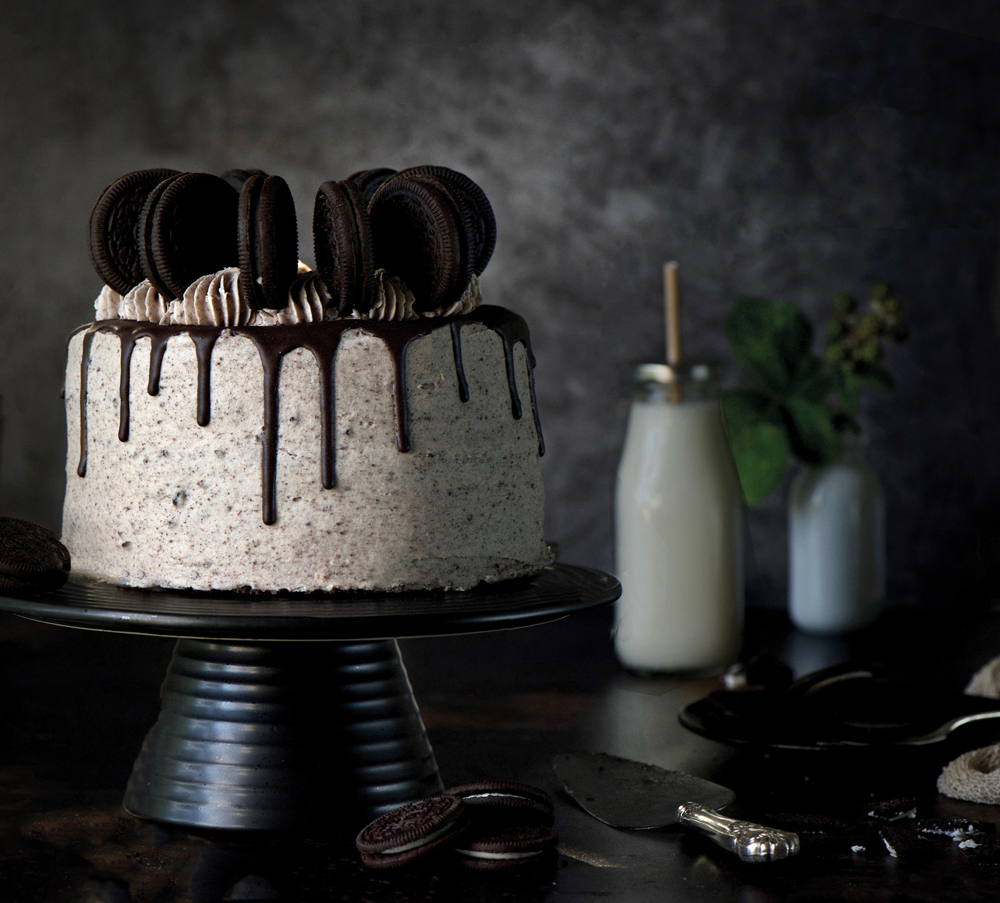
Emma particularly enjoys dark and moody food photography, but she also recognises that this isn’t necessarily what every commercial client wants.
That’s an important distinction.
A photographer can have a strong personal style while still understanding the client’s requirements.
Commercial photography isn’t simply about producing the photographs you like best. It is about solving a visual problem for somebody else.
A restaurant might need bright, welcoming images for its website.
A drinks company might want something sophisticated and atmospheric.
A food producer might need photographs that clearly show the product and packaging.
A chef might want images that communicate the personality and story behind their food.
The ability to adapt without losing your own photographic judgement is a valuable commercial skill.
Show businesses the value of good photography
One of the biggest challenges Emma identifies is persuading food businesses to understand the value of professional photography.
This is a problem photographers encounter across many areas of commercial work.
A client may know that they need photographs, but that doesn’t necessarily mean they understand why one set of photographs is worth considerably more than another.
That’s where the photographer needs to think beyond the camera.
Good commercial photography can help a business present its products professionally, communicate its brand and attract the sort of customers it wants.
The conversation therefore shouldn’t only be about how many photographs you will take or how many hours you will spend shooting.
It should also be about what those photographs are going to do for the client.
Find where your clients actually spend their time
For Emma, LinkedIn became an important source of commercial opportunities.
That’s particularly relevant to food photography because there are so many potential clients on the platform: restaurants, hotels, chefs, food producers, drinks companies, bakeries, cafés and hospitality businesses.
The wider lesson is more important than any particular social network.
Go where your potential clients are.
Photographers sometimes spend enormous amounts of time posting images to platforms populated mainly by other photographers.
That’s useful for networking and inspiration, but it doesn’t necessarily put your work in front of the people who can commission you.
Identify your ideal clients and work out where they actually look for suppliers, inspiration and information.
Then consistently show up there.
Authenticity matters when you’re marketing yourself
Emma manages much of her own website, SEO, marketing, social media and PR because she wants her communication to sound authentic.
That’s a good principle for photographers.
Your website shouldn’t sound like it was written by a marketing department if you’re a sole trader.
Potential clients aren’t only buying photographs. They are choosing the person they will have to work with.
Your personality, reliability, communication and approach all form part of the proposition.
That doesn’t mean every piece of marketing has to be informal. It means it should sound like you.
If you do need help with copywriting, editing or marketing, make sure the finished result still sounds like the photographer behind the business.
You don’t need a huge amount of equipment
When asked which pieces of equipment she wouldn’t want to be without, Emma chose two relatively straightforward items: a macro lens and a tripod.
That makes sense for close-up food photography.
A macro lens allows you to get close to your subject while retaining the detail that makes food photography so appealing, while a tripod gives you stability and makes it easier to maintain consistent framing while you adjust the food, lighting and composition.
And then there is the rather less glamorous piece of equipment Emma always keeps nearby: a paintbrush.
It can be used to remove crumbs, flour and other tiny pieces of unwanted debris from the scene.
It’s a good example of something that matters in food photography: attention to detail.
Sometimes the difference between a good photograph and a polished commercial image is not another expensive piece of equipment. It’s noticing the tiny things that shouldn’t be there.
Build a network of photographers
Although Emma works independently, she doesn’t work in complete isolation.
She has developed a network of people who can help with areas such as technology, design, administration and proofreading, as well as a circle of fellow photographers who share advice and support.
That can be particularly important when you’re self-employed.
Photography can be an isolating profession. There is nobody sitting next to you to bounce an idea off, check a problem or tell you that you’re overthinking something.
A network of photographers can provide practical help, referrals, honest feedback and, sometimes, simply somebody who understands the challenges of running a photography business.
Collaboration doesn’t make you less competitive. In many cases, it makes everyone better.
Use your commercial work to keep developing
Emma also enters photography competitions, using a mixture of client work and images created specifically for competitions.
There can be a useful relationship between commercial photography and personal development.
Client work teaches you how to solve somebody else’s problem.
Personal work gives you room to experiment.
Competitions can encourage you to think critically about your images and compare your work with photographers working at a high level.
And occasionally, a client will provide something visually unusual that gives you an opportunity to create something particularly distinctive.
The important thing is not to let competitions replace the commercial work that pays the bills.
Use them as another way of developing your photography.
Consistency is more important than overnight success
Emma’s business advice is straightforward: keep going and don’t give up.
That sounds simple, but it is one of the hardest parts of building a photography business.
There will be weeks when enquiries don’t arrive.
There will be posts that get almost no attention.
There will be photographs you thought were brilliant that don’t generate any work.
And there will be photographers who appear to be progressing faster than you.
Building a reputation takes time.
Consistency means continuing to improve your photography, continuing to show your work, continuing to contact potential clients and continuing to learn what works.
You may not see the results immediately.
That doesn’t mean nothing is happening.
Let your personality show through your photography business
Perhaps one of the most revealing parts of Emma’s portfolio is the description she gives it herself: down-to-earth, quirky, fun and adaptable.
That’s useful because a portfolio isn’t just a collection of technically competent photographs.
It should communicate something about the photographer behind it.
What sort of work do you enjoy?
How do you use light?
What subjects attract you?
What sort of clients are you trying to work with?
What makes your approach different?
You don’t necessarily need to invent a unique photographic style overnight. Your style develops through repeatedly making work, looking critically at it and understanding what you naturally return to.
The more deliberate you are about the work you put into your portfolio, the more clearly that personality can emerge.
Food photography is about more than making food look delicious
The strongest food photography doesn’t simply record what is on the plate.
It creates a reaction.
It can make us hungry, curious, nostalgic or excited. It can communicate the atmosphere of a restaurant, the personality of a chef or the values of a food brand.
That’s why food photography combines so many different photographic disciplines: lighting, composition, colour, styling, storytelling and an understanding of the viewer.
Emma’s own approach puts a strong emphasis on the emotional response to food imagery and the story the photograph is trying to tell.
That is perhaps the biggest lesson for photographers entering this field.
Don’t just ask:
“How can I photograph this food?”
Ask:
“What do I want the viewer to feel?”
Once you start thinking that way, you’re no longer simply photographing a plate of food. You’re creating an image with a purpose.
Starting your own food photography business
Emma Dunham’s move from portrait photography into food demonstrates that changing direction doesn’t necessarily mean throwing away everything you’ve learned.
The transferable skills are considerable.
You need to understand your subject, build a portfolio, identify your ideal clients, communicate your value and consistently put your work in front of the right people.
The food itself is only part of the equation.
A successful food photography business is built around photography, creativity, marketing, relationships and business knowledge — and the willingness to keep improving all of them.
And if you’re wondering whether you need a huge studio full of equipment before you begin, Emma’s approach suggests otherwise.
Start with the food.
Make the photographs.
Show people what you can do.
Then keep going.