How Lighting Creates Emotion: Using Light to Influence Mood
By Dave Montizambert
Light does more than reveal a subject. It can make a space feel warm or cold, intimate or imposing, exciting or relaxing. Understanding how light influences emotion can help photographers create images with greater atmosphere and impact.
Photographers spend a great deal of time learning how to control light technically.
We learn about exposure, direction, contrast, modifiers, colour temperature and the position of the light.
But there is another question worth asking:
How does the light make the viewer feel?
Light is one of the most powerful tools available to a photographer because it can influence our emotional response before we have consciously analysed what we are seeing.
The same room, person or object can feel completely different depending on how it is illuminated.
Light is part of the message
When you photograph a subject, the lighting becomes part of the visual message.
Bright, even illumination can suggest cleanliness, openness and practicality. Low levels of illumination can create intimacy, mystery or relaxation. Strong directional light can introduce drama, while soft light can feel gentle and flattering.
None of these approaches is automatically better than another.
The right lighting depends on the emotion you want the viewer to experience.
This is particularly important in commercial and environmental photography, where the atmosphere surrounding a subject can be just as important as the subject itself.
Start with the overall level of light
One of the simplest ways to influence atmosphere is to consider the overall brightness of a scene.
Imagine a restaurant illuminated uniformly by very bright overhead lighting.
Everything is visible, but the result may feel functional rather than intimate.
Now reduce the overall illumination and introduce carefully positioned brighter areas.
The room immediately becomes more layered.
This principle can be applied to photography as well.
Rather than lighting everything equally, consider establishing a relatively restrained base level of illumination and then introducing brighter areas where you want the viewer’s attention to go.
This creates a hierarchy within the image.
Fill and accent lighting
Dave Montizambert describes this approach as fill and accent lighting.
The fill provides the underlying illumination. It prevents the darker areas of a scene from becoming completely lost while establishing the overall atmosphere.
The accent lighting is more selective.
It draws attention to particular areas of the scene.
This could be:
- A person’s face
- A piece of artwork
- An architectural feature
- A product
- A textured wall
- A table or display
- An important detail within the composition
The key difference is that the fill establishes the environment while the accent lighting helps determine where the viewer looks.
This is just as relevant to a photograph as it is to the space being photographed.
Brighter areas attract attention
Human vision is naturally drawn towards areas of contrast and brightness.
That gives photographers a powerful compositional tool.
If everything in an image is equally bright, there may be little visual hierarchy.
If one area is brighter, the eye is more likely to move towards it.
This doesn’t mean that your main subject always needs to be the brightest object in the frame. Sometimes deliberately placing a bright area away from the main subject can create tension or guide the eye through the composition.
The important thing is to understand what the light is doing.
Don’t just light the subject. Light the viewer’s journey through the photograph.
Use light to reveal texture
The direction of light also changes how we perceive surfaces.
Light striking a textured surface from the side creates shadows that emphasise its irregularities.
This is known as grazing or skim lighting.
A wall that appears relatively flat under frontal illumination can suddenly become full of texture when illuminated from an angle.
The same principle works with:
- Brick
- Stone
- Wood
- Fabric
- Metal
- Skin
- Architectural surfaces
- Industrial objects
If texture is important to your photograph, consider the direction from which the light reaches the surface.
Light can create depth
Photography reduces a three-dimensional world to a two-dimensional image.
Lighting can help restore some of that sense of depth.
Brighter areas can appear to come forward while darker areas can recede, particularly when the lighting is carefully controlled.
This can be especially effective when photographing interiors.
Rather than attempting to make every part of the room equally bright, allow areas of light and shadow to create layers.
Foreground, middle ground and background can then have different levels of illumination, helping the viewer understand the space.
Colour temperature changes the mood
Brightness isn’t the only consideration.
The colour of the light can dramatically alter the emotional impression of an image.
Warm light can suggest:
- Comfort
- Intimacy
- Relaxation
- Nostalgia
- Warmth
Cooler light can suggest:
- Modernity
- Cleanliness
- Distance
- Calm
- A more clinical or minimalist atmosphere
There is no universal emotional response to every colour, of course. Context matters.
But photographers can use differences in colour temperature deliberately to establish the character of an image.
One of the simplest rules is consistency.
If several lights illuminate the same scene, mixing significantly different colour temperatures can create unwanted colour casts and make the lighting appear accidental rather than intentional.
Warm and cool light can work together
Mixing colour temperatures isn’t necessarily a mistake.
Used deliberately, it can create contrast.
For example, a warm practical light inside a scene can be contrasted with cooler ambient light coming through a window.
The colour difference helps separate the two sources and can create a strong sense of atmosphere.
The important distinction is between intentional contrast and accidental inconsistency.
If you mix light sources, make sure the difference contributes to the image.
Lighting isn’t only about photography
The principles of lighting also apply when photographers work outside the traditional studio.
Dave encountered this while discussing restaurant design and atmosphere with Dr Stephani Robson, a specialist in restaurant design and psychology.
The conversation led him to consider how his decades of experience shaping photographic subjects with light could be applied to the design of real environments.
A restaurant provides an excellent example.
People aren’t simply responding to the food. The environment contributes to the experience.
The lighting, layout, sound, materials and atmosphere all influence how a space feels.
For a photographer, this reinforces an important principle:
Light can communicate before words do.
Photographing interiors
When photographing an interior, it is tempting to make every part of the room visible.
That isn’t always the best approach.
Instead, consider the mood that the space is intended to communicate.
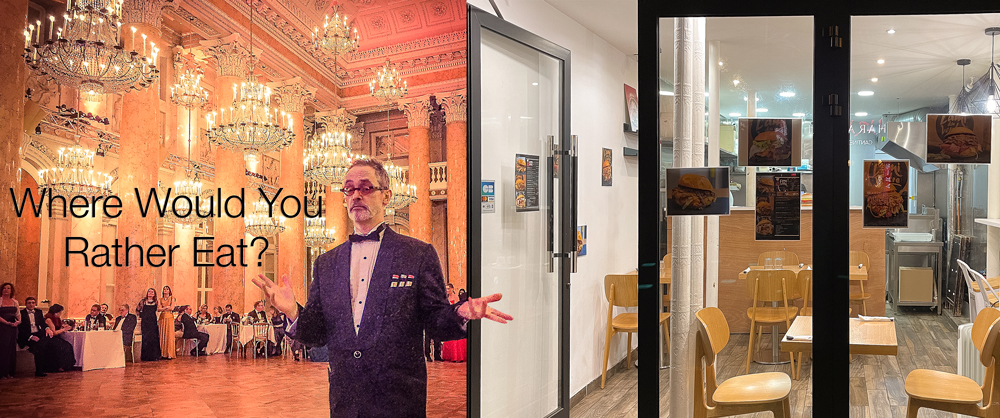
A luxury restaurant might benefit from controlled pools of light and deeper shadows.
A modern workspace might suit brighter, cleaner illumination.
A bar or entertainment venue might use stronger colour and contrast.
A hotel bedroom may benefit from soft, warm illumination that communicates comfort.
Your job as the photographer is not necessarily to reproduce the lighting exactly as your eyes see it.
Your job is to communicate the atmosphere of the space.
Lighting can communicate value
Lighting can also influence how we perceive quality and positioning.
A brightly illuminated environment with uniform lighting can feel functional and efficient.
Controlled pools of light, carefully illuminated features and restrained contrast can create a more sophisticated impression.
This is particularly relevant to commercial photography.
The lighting becomes part of the brand message.
If the subject is intended to communicate luxury, exclusivity or craftsmanship, the lighting should support those qualities.
If the subject is intended to communicate accessibility, energy or practicality, a different lighting strategy may be more appropriate.
Think like a lighting designer
One of the most useful habits a photographer can develop is to stop thinking only in terms of individual lights.
Instead, think about the whole lighting environment.
Ask:
What should be bright?
What should be subdued?
Where should the viewer look first?
Where should the eye go next?
What surfaces need texture?
What needs to recede?
What colour should the light be?
What emotion should the final image create?
These questions turn lighting from a technical exercise into a creative decision.
Build the atmosphere before adding detail
When lighting a complex scene, start with the overall impression.
Establish the general level of illumination first.
Then introduce accents.
This is often easier than attempting to perfect every individual light from the beginning.
For a studio photograph, that might mean establishing the ambient or base exposure before adding a key light, rim light or background accent.
For an interior, it might mean establishing the overall brightness before deciding which architectural details deserve emphasis.
Think of the lighting as a hierarchy.
Base level first. Important details second.
Don’t confuse more light with better light
A common mistake is assuming that adding more light will improve a photograph.
More light simply gives you more illumination.
It doesn’t necessarily give you more atmosphere.
Sometimes reducing the overall illumination creates a much stronger image because the brighter areas become more meaningful.
This is why photographers should be comfortable working with shadows.
Darkness isn’t necessarily a problem that needs to be eliminated.
Shadow is one of the tools that gives light meaning.
From photographer to lighting consultant
Dave’s experience also demonstrates how specialist photography skills can be transferred beyond traditional photography.
A photographer who understands how light shapes a face, reveals texture, creates depth and directs attention already possesses many of the principles required to think about architectural and environmental lighting.
The same underlying knowledge can be applied to different industries.
That is an important lesson for photographers at a time when technology and markets continue to change.
Your most valuable asset isn’t necessarily the camera in your bag.
It is the knowledge and creative problem-solving ability you have developed while using it.
The photographer’s lighting checklist
Before taking the photograph, ask yourself:
- What emotion should this image create?
- Is the overall illumination appropriate?
- Where do I want the viewer to look first?
- Is the subject sufficiently separated from its surroundings?
- Can directional light reveal useful texture?
- Could stronger shadows create depth?
- Is the colour temperature supporting the mood?
- Are different light sources working together or fighting each other?
- Are there areas that are unnecessarily bright?
- Is the lighting telling the same story as the subject?
These questions are often more useful than simply asking whether the exposure is correct.
Light, life and emotion
Photographers often talk about light as a technical resource: exposure, contrast, colour and direction.
But light is also emotional.
It can make an ordinary environment feel inviting. It can turn a simple object into something dramatic. It can make a portrait feel intimate or distant.
The skill is learning to recognise the emotional possibilities before you press the shutter.
Once you start looking at light in this way, you begin to see opportunities everywhere — not just in the studio.