
Photographing Industrial Heritage: A Guide to Ironbridge Gorge
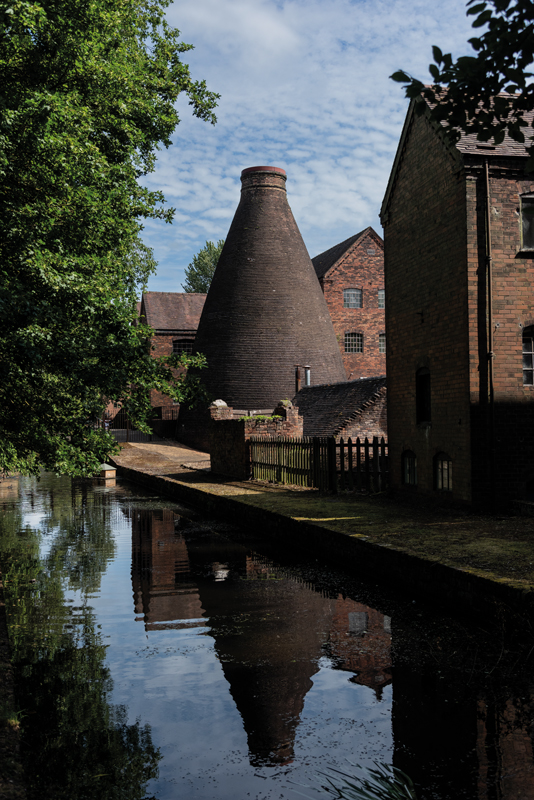
Historic industrial sites can be remarkably rewarding photography locations. At Ironbridge Gorge, the remains of Britain’s industrial past provide opportunities for landscape, architectural, documentary, detail and even macro photography.
Photography can take you to some fascinating places. Sometimes the attraction is an obvious landscape or landmark; sometimes it is the story behind a location.
For photographer and author Mike McNamee, a visit to the Ironbridge Gorge in Shropshire offered both.
Recognised as one of the world’s most important industrial heritage landscapes, Ironbridge provides an extraordinary mixture of historic buildings, industrial structures, waterways, woodland, machinery and remnants of the industries that once transformed the valley.
For a photographer, however, the most interesting question isn’t simply what is there?
It is how do you photograph it?
Look beyond the obvious landmark
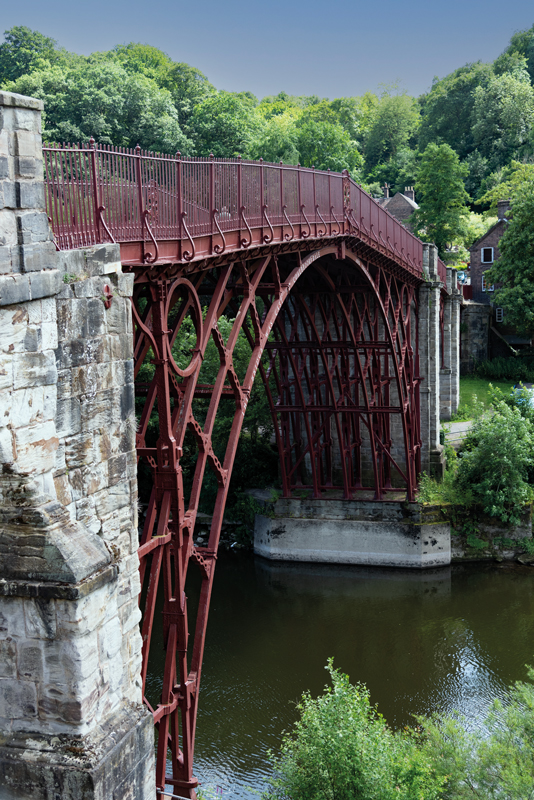
The Iron Bridge itself is an obvious starting point. Opened in 1781, it became one of the defining symbols of the Industrial Revolution and remains an impressive photographic subject.
But concentrating solely on the bridge would mean missing much of what makes the area interesting.
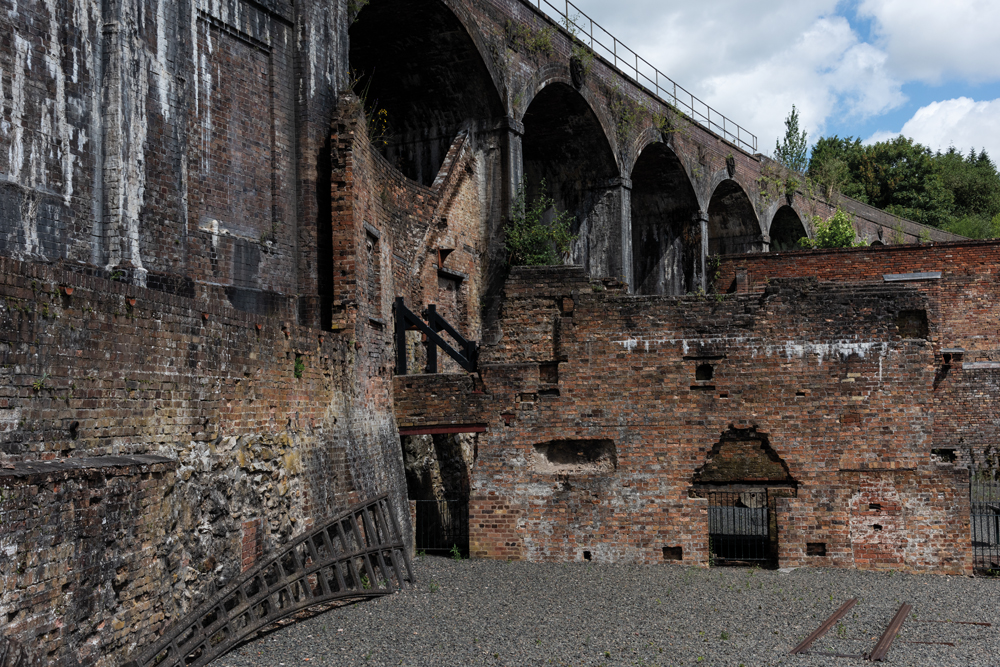
Industrial heritage locations often contain layers of visual information: old furnaces, warehouses, wharves, workshops, chimneys, machinery, walls, pathways, bridges and fragments of structures that have survived long after their original purpose disappeared.
The landscape itself is part of the story.
Vegetation has reclaimed areas that were once heavily industrialised, creating an interesting contrast between natural and man-made forms.
That contrast can provide much stronger photographs than a straightforward record shot.
Look for:
- Strong architectural shapes
- Repeating patterns
- Old brick and stonework
- Rust and weathered metal
- Industrial machinery
- Textures and surface detail
- Reflections in water
- Leading lines created by paths, walls and structures
- The relationship between historic buildings and the surrounding landscape
- Evidence of how people once worked in the area
Photograph the story, not just the building
One of the challenges of photographing historic locations is avoiding a collection of disconnected snapshots.
Instead, try to create a visual story.
A wide photograph might establish where the location is. A medium shot can show a building or industrial structure, while close-up photographs reveal details that might otherwise be overlooked.
Think of the sequence almost like a documentary project:
Where is it? What happened here? What remains? What does it look like today?
A photograph of an old wall might initially appear unremarkable. Add the context of a surviving furnace, a river once used to transport raw materials, or machinery that powered the manufacturing process, and the image becomes part of a much larger story.
Use light to reveal texture
Industrial heritage sites are particularly suited to photographs that make use of directional light.
Low-angle sunlight can emphasise:
- Brickwork
- Rust
- Stone
- Rough metal
- Cracks and weathering
- Repeating architectural details
Side lighting can transform an apparently flat surface into something full of texture.
Overcast conditions can also be valuable. Soft light reduces harsh contrast and can suit documentary images of old buildings, while mist, rain and wet surfaces can add atmosphere.
Don’t automatically wait for a sunny day.
A historic industrial site photographed in flat midday sunshine can look very different from the same location photographed early in the morning or late in the afternoon.
Look for patterns and repetition
Industrial architecture frequently contains strong geometric structures.
Beams, windows, pipes, roof lines, brickwork and machinery can all provide repeating shapes.
Try moving away from the conventional viewpoint and deliberately search for patterns.
A telephoto lens can compress layers of industrial structures, while a wide-angle lens can emphasise scale and the relationship between a building and its surroundings.
Your choice of focal length can therefore change the story you are telling.
Don’t ignore the small details
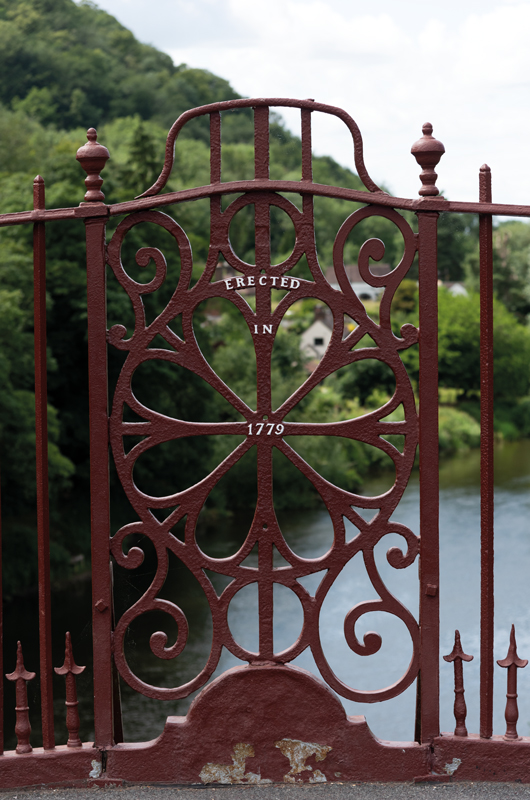
Industrial photography doesn’t have to be about enormous structures.
Some of the most interesting images may be found by looking closely.
Rust patterns, worn surfaces, bolts, rivets, old lettering, timber, stone, discarded machinery and fragments of industrial equipment can all become subjects in their own right.
These details can also provide a visual connection between the present-day landscape and its industrial past.
A close-up photograph may tell a different story from a wide landscape, but both can belong to the same photographic project.
Research before you visit
One of the most useful lessons from a project like Ironbridge is that research can improve photography.
Understanding how a location was used can help you recognise what is visually important.
Historical maps are particularly useful.
The National Library of Scotland provides an extensive collection of historical maps that can be used to investigate how places looked in previous generations.
This can be fascinating when planning a photography project.
You can compare an old map with the modern landscape and ask:
- Where did the original buildings stand?
- Which roads or paths have survived?
- Where were industrial sites located?
- Has the river changed?
- Which structures have disappeared?
- What remains today?
- Can you photograph the same viewpoint from which an older photograph or map was made?
This approach turns a simple visit into a photographic investigation.
You aren’t simply photographing what you find. You are discovering why it is there.
Photographing industrial heritage as a landscape
Ironbridge also demonstrates how industrial photography can overlap with landscape photography.
The valley contains woodland, water, hills and open spaces alongside its industrial remains.
Look for compositions where the natural landscape and industrial structures occupy the same frame.
The contrast can be particularly effective:
nature reclaiming industry.
A large historic structure surrounded by trees tells a different story from the same building photographed in isolation.
Try different compositions and consider how much of the surrounding environment you need to include.
Sometimes the landscape provides context; sometimes removing it produces a stronger graphic image.
Look for changes in scale
A useful technique when photographing historic sites is to deliberately vary the scale of your images.
Start with an establishing photograph.
Then move closer.
Photograph the building.
Then photograph a doorway, window, piece of machinery or section of wall.
Finally, look even closer at textures and small details.
This creates a hierarchy of images and gives you considerably more material when putting together a portfolio, article or photographic project.
From industrial landscape to microscopic detail
Mike McNamee’s interest in Ironbridge goes further than the visible remains of the industrial revolution.
His background in science and metallurgy also provides an opportunity to consider what is happening inside the materials themselves.
Iron production and steelmaking depend heavily on the relationship between iron, carbon and other elements. Changes in composition and the way materials cool and are subsequently treated can dramatically alter their physical properties.
Under a microscope, those changes can produce remarkably intricate structures.
What appears to be an ordinary piece of metal at normal viewing distance can reveal a completely different world when magnified.
This is a useful reminder for photographers:
There can be photographs at every scale.
The landscape can be photographed from hundreds of metres away. A building can become the subject. A piece of machinery can provide the detail. And the material from which that machinery was made can become a macro or microscopic subject.
Changing scale can completely change the way you see a subject.
Create a photographic project rather than a collection of pictures
Industrial heritage locations are particularly suitable for long-form photographic projects.
Rather than trying to photograph everything, give yourself a brief.
For example:
“The remains of the Industrial Revolution”
or:
“Nature reclaiming industry”
or:
“Ironbridge: from industry to heritage”
A project gives your photography direction.
It also encourages you to look for relationships between images rather than judging every photograph individually.
You might combine landscapes, architecture, portraits of visitors or workers, close-up details, historical references and abstract images.
The resulting collection can become much more compelling than a series of conventional tourist photographs.
Photographing places with a sense of history
The real attraction of industrial heritage photography is that the photographer is working with more than just shapes and light.
Every structure has a story.
Every piece of machinery had a purpose.
Every path, wall and building exists because people once worked there.
That knowledge can influence the way you compose an image.
Instead of asking only:
“Does this look interesting?”
ask:
“Why is this here, and how can my photograph communicate that?”
That change in thinking can make a significant difference.
Planning your own industrial photography project
You don’t need to visit Ironbridge to apply these ideas.
Industrial heritage sites can be found throughout the UK, from former mines and mills to railway works, docks, factories and engineering sites.
Before visiting, research the location and find out what existed there historically.
Then build a simple shot list:
- An establishing landscape
- The main architectural subjects
- Interesting details and textures
- Machinery and industrial remains
- Evidence of human activity
- The relationship between industry and nature
- Abstract or experimental images
- Close-up photographs showing materials and surfaces
Most importantly, give yourself time to explore.
The first photograph you see is rarely the only photograph worth making.
Photography can take you somewhere unexpected
The Ironbridge Gorge demonstrates why photography can be such a rewarding way to explore the world.
A visit that begins with a camera and a historic bridge can lead into industrial archaeology, engineering, geology, mapping, metallurgy, landscape photography and macro photography.
That is part of the attraction.
Photography encourages us to look more closely at places that we might otherwise simply pass through.
And sometimes, the more you understand about a subject, the more photographs you discover.