How to Be More Creative in Photography: 20 Exercises for Photographers
By Adrian and Bergit Barnett
Creativity isn’t something that only belongs to naturally gifted photographers.
It is something you can develop, practise and strengthen.
Just as we exercise our bodies to keep them healthy, photographers can exercise their creative thinking. The more you experiment, question, observe and try new things, the easier it becomes to approach photography differently.
As Ursula K. Le Guin famously put it:
“The creative adult is the child who survived.”
Perhaps that’s the key.
As we get older, many of us become less curious. We learn how the world works and stop questioning it. We become more concerned with getting things right than discovering what might happen if we did something completely different.
Photography gives us an excellent excuse to rediscover that curiosity.
You don’t need expensive equipment, a new camera or a week off work.
You can start exercising your creativity in just a few minutes a day.
Here are some practical photography exercises to get you started.
1. Start asking “What if?”
One of the simplest ways to develop creativity is to become more curious.
Instead of accepting something as it is, ask yourself:
What if I did this differently?
What if you photographed a familiar subject from ground level?
What if you used only one focal length?
What if you removed colour?
What if you deliberately underexposed the image?
What if you lit a portrait from behind?
What if you photographed something ordinary and tried to make it look extraordinary?
The question doesn’t need to produce a brilliant answer.
The important thing is that you’re asking it.
2. Study photographs rather than simply looking at them
When you see an image you love, don’t just decide that it’s a great photograph.
Ask yourself why.
What attracted you to it?
Look at the composition.
Study the lighting.
Consider the colours.
Look at the photographer’s choice of lens.
Examine the position of the subject.
Think about the use of negative space.
Ask yourself what emotion the image creates and how the photographer achieved it.
Then try applying one of those principles to your own photography.
The aim isn’t to copy another photographer’s work.
It’s to understand why something works.
3. Study art outside photography
Some of the best inspiration for photographers can come from artists who never picked up a camera.
Study paintings, sculpture, illustration, graphic design, architecture and cinema.
Look at how artists use light, colour, shape, perspective and composition.
The great masters can be particularly useful.
For example, studying the dramatic lighting and deep shadows of Caravaggio can make you look differently at portrait lighting.
You aren’t trying to recreate a painting.
You’re training yourself to recognise visual principles that can then be applied to photography.
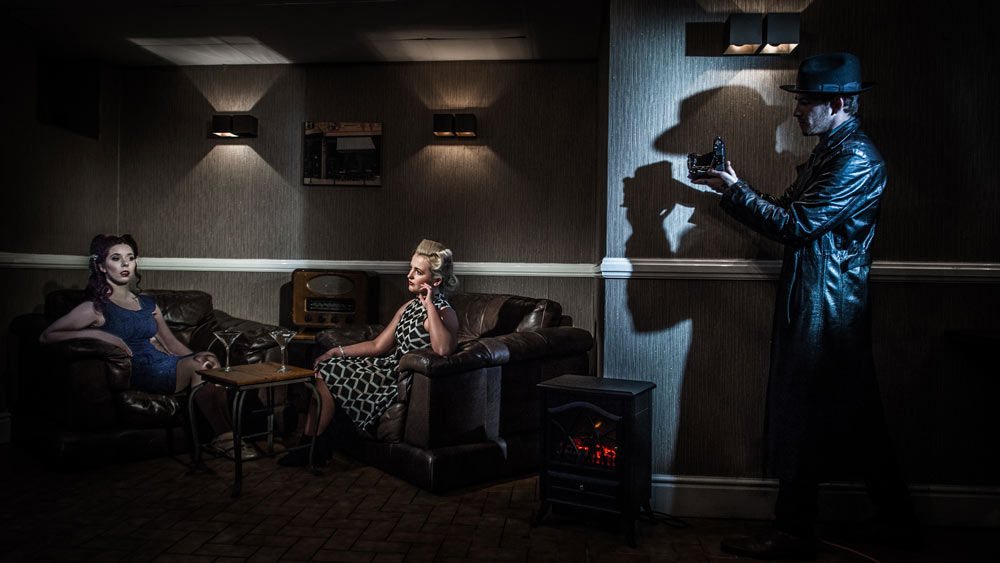
4. Watch films like a photographer
Film is an incredible source of photographic inspiration.
Don’t just watch the story.
Look at how the cinematographer has constructed each scene.
Where is the light coming from?
How has the colour been used?
Is the scene warm or cool?
How much of the frame is occupied by the subject?
What focal length might have been used?
How does the lighting change the mood?
Try watching a film you’ve already seen and concentrate entirely on its visual language.
You may never watch films in quite the same way again.
5. Experiment with your lenses
If you have several lenses, don’t simply use whichever one seems appropriate.
Give each lens a workout.
Take the same subject and photograph it using different focal lengths.
If you only have a zoom lens, choose a focal length and deliberately leave it there.
Photograph the same subject at different apertures.
Look carefully at how perspective, depth of field and background rendering change.
Prime lenses can be particularly useful for this exercise because their fixed focal lengths encourage you to think about where you stand rather than simply zooming.
The more familiar you become with your equipment, the less you have to think about the technical decisions when you’re working on a real assignment.
6. Photograph emotions rather than objects
Instead of asking what you want to photograph, ask what you want the photograph to make someone feel.
How would you photograph excitement?
Sadness?
Fear?
Joy?
Romance?
Loneliness?
Confidence?
This exercise works across almost every genre.
A wedding photographer can think about romance and intimacy.
A portrait photographer can explore confidence or vulnerability.
A wildlife photographer can look for tension or drama.
A landscape photographer can create tranquillity or isolation.
The subject is only part of the photograph.
The feeling matters too.
7. Slow down
One of the easiest ways to become more creative is to take fewer photographs.
Slow down.
Use a tripod.
Choose a focal length.
Think about the composition.
Look at the light.
Then make the photograph.
Digital photography makes it incredibly easy to fire off hundreds of frames without really considering any of them.
Try doing the opposite.
Give yourself a limit of perhaps ten photographs.
Make every frame count.
You may be surprised at how much more carefully you start seeing.
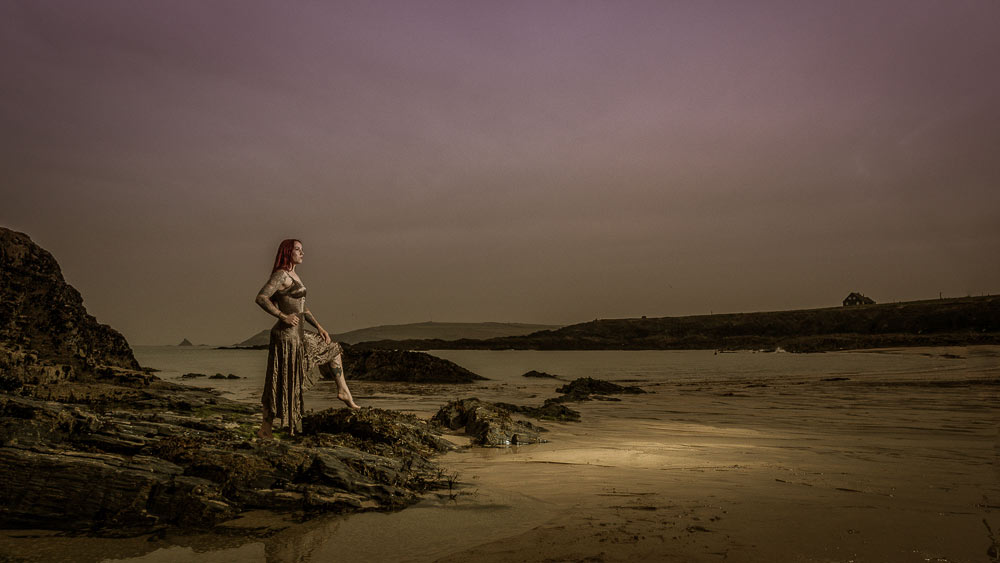
8. Change your environment
Your surroundings can have a huge influence on your creativity.
Visit somewhere you’ve never photographed before.
Take your camera into a coffee shop, park, library, museum or unfamiliar part of your town.
Leave your normal routine behind.
Even better, occasionally take a day away from your phone, social media and normal workload.
A change of scenery can allow your mind to make connections that simply don’t happen when you’re constantly surrounded by the same distractions.
And don’t underestimate the creative value of simply sitting somewhere and thinking.
Sometimes the best photographic ideas arrive when you’re not actually taking photographs.
9. Keep a notebook
Carry a notebook.
Write down ideas.
Sketch compositions.
Record lighting setups.
Write down photographs you’ve seen that inspired you.
Make notes about things you’d like to try.
Don’t worry about whether an idea seems silly.
Write it down anyway.
You can return to your notes weeks or months later and discover an idea that suddenly makes sense.
A notebook can also help turn an abstract idea into something you can actually photograph.
10. Create photographic mind maps
Start with an idea in the middle of a page.
For example:
PORTRAIT
Then branch out.
Lighting.
Colour.
Location.
Emotion.
Props.
Wardrobe.
Composition.
Movement.
From each of those, create further ideas.
You may quickly find yourself somewhere completely unexpected.
That’s the point.
Creativity often comes from connecting two ideas that wouldn’t normally be connected.
11. Give yourself photographic challenges
A creative challenge is one of the easiest ways to force yourself out of a routine.
Try:
- One lens for a week
- Black and white only
- One subject every day
- One photograph a day
- Only natural light
- Only artificial light
- Only shadows
- Only reflections
- Only abstract images
- Ten photographs of one object
- Photographing the same location at different times of day
The restrictions are useful because they remove some of the decisions you’re normally faced with.
Instead of wondering what to photograph, you have a problem to solve.
12. Try macro photography
You don’t need an exotic subject to make interesting photographs.
Look closely.
Flowers.
Moss.
Leaves.
Tree bark.
Ferns.
Shells.
Everyday objects around your home.
Macro photography forces you to pay attention to detail and can reveal shapes, textures and patterns that are normally invisible.
Try photographing your subject in black and white.
Removing colour can make you concentrate on shape, texture and form.
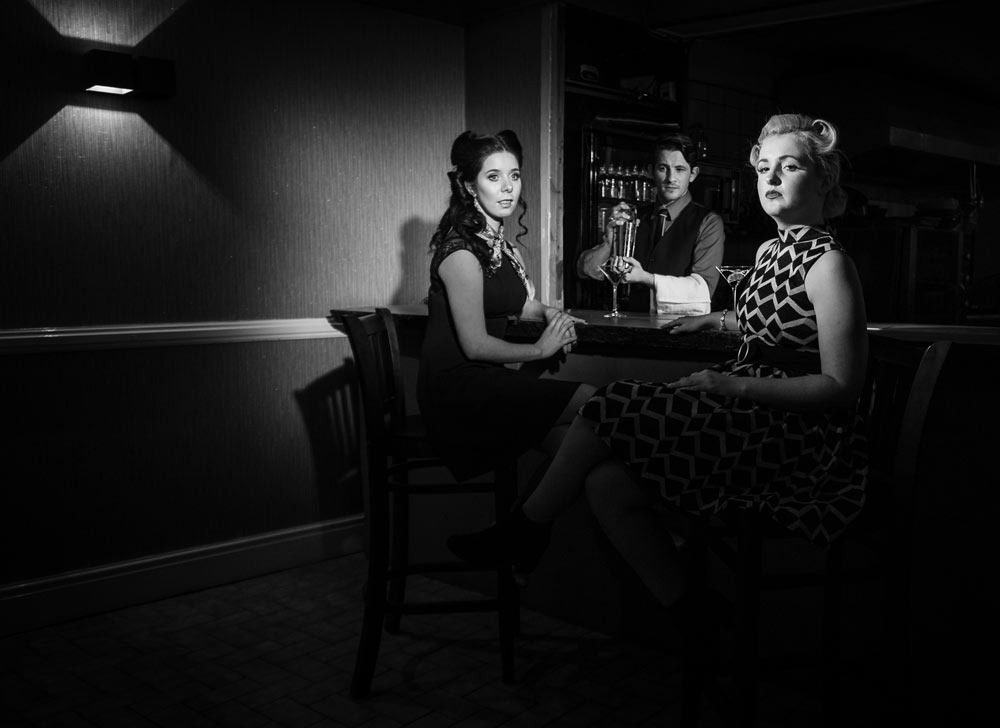
13. Try abstract photography
Look for patterns, textures, shapes and reflections rather than obvious subjects.
A building might become a collection of geometric lines.
A piece of machinery could become an abstract study in metal and light.
A puddle might become a distorted landscape.
A close-up of fabric might become almost unrecognisable.
The objective is to stop asking:
“What is this?”
and start asking:
“What does this look like?”
14. Experiment with light
Photography literally means drawing with light, so experimenting with light is one of the best ways to develop your creativity.
Try photographing the same subject using:
- Hard light
- Soft light
- Side lighting
- Backlighting
- Top lighting
- Low-level lighting
- Coloured light
- Reflected light
- Natural light
- Studio lighting
Don’t immediately decide that one result is better.
Instead, study how the light changes the mood.
Even something as simple as changing the colour temperature can dramatically alter an image.
For example, if you’re using daylight-balanced studio lighting, deliberately setting your camera to a much warmer or cooler colour temperature can produce dramatically different results.
You can change the emotional character of an image before you even open your editing software.
15. Photograph reflections
Reflections provide endless creative possibilities.
Look for them in:
- Water
- Mirrors
- Windows
- Polished metal
- Cars
- Buildings
- Glass
- Puddles
Don’t simply use reflections to make a straightforward photograph more interesting.
Try making the reflection the main subject.
Turn the camera upside down.
Shoot through glass.
Combine the real subject and its reflection.
Look for symmetry.
Photography becomes much more interesting when you start seeing ordinary surfaces differently.
16. Remove light instead of adding it
Photographers often think about adding light.
But sometimes the most effective lighting technique is to take light away.
Black cards, flags and negative fill can be used to absorb or block light, creating deeper shadows and greater contrast.
Try placing a black card close to the shadow side of a subject.
Compare the result with and without it.
You’ll quickly see how much control you can gain by removing unwanted reflected light.
It’s a simple technique, but it can completely change the appearance of a photograph.
17. Revisit something you’ve photographed before
Take a subject or idea you already know and photograph it again.
But don’t simply repeat the original photograph.
Change something.
Change the lighting.
Change the location.
Change the lens.
Change the mood.
Change the colour palette.
Change the composition.
Ask yourself:
How can I make this idea mine?
Creative work doesn’t happen in a vacuum. Artists have always been influenced by the work that came before them.
The important distinction is between inspiration and imitation.
Take an idea, understand why it works, and then transform it into something of your own.
18. Work with other creatives
Creativity rarely improves in isolation.
Work with models, make-up artists, stylists, designers, filmmakers, musicians or other photographers.
Listen to their ideas.
A throwaway comment from someone else can sometimes lead to an entirely new photographic concept.
And remember to give people credit for their contribution.
The best creative collaborations aren’t about one person having all the ideas.
They’re about ideas evolving between people.
19. Allow yourself to fail
This might be one of the most important creative exercises of all.
Give yourself permission to make bad photographs.
Experiment with an idea knowing that it might not work.
Try something ridiculous.
Use a lighting setup that you’ve never attempted.
Photograph something you’ve never photographed before.
If it fails, ask why.
What went wrong?
What did you learn?
What would you change?
Failure isn’t the opposite of creativity.
It’s part of the creative process.
The important thing is to learn from it rather than allowing it to stop you experimenting.

20. Give yourself a deadline
One of the biggest enemies of creativity is procrastination.
We all have ideas.
The problem is turning those ideas into photographs.
Give yourself a deadline.
It could be tomorrow.
It could be the end of the week.
It could be a personal photographic project that you complete over a month.
The deadline doesn’t have to be serious.
It simply needs to create enough pressure to make you actually do something.
Sometimes the difference between an idea and a photograph is simply making yourself start.
Your photographic creativity needs exercise
Creativity isn’t something you either have or don’t have.
It develops through experimentation, observation and practice.
The more you challenge yourself, the more connections you begin to make.
You start seeing possibilities in ordinary subjects.
You notice light differently.
You become more confident experimenting.
You develop a stronger understanding of your own visual preferences.
And, perhaps most importantly, photography becomes fun again.
That’s the idea behind thinking of creativity as a Photographer’s Gym.
You don’t have to spend hours there.
You don’t need expensive equipment.
You don’t even have to produce a great photograph every time.
Just keep exercising those creative muscles.
Try something different.
Make mistakes.
Ask questions.
Look at the work of other artists.
Take your camera somewhere new.
And occasionally give yourself permission to photograph something simply because you have no idea what will happen.
Creativity isn’t something you find. It’s something you practise.
So, what are you going to photograph differently today?