
How Photographers Can Feel More Confident in Front of the Camera
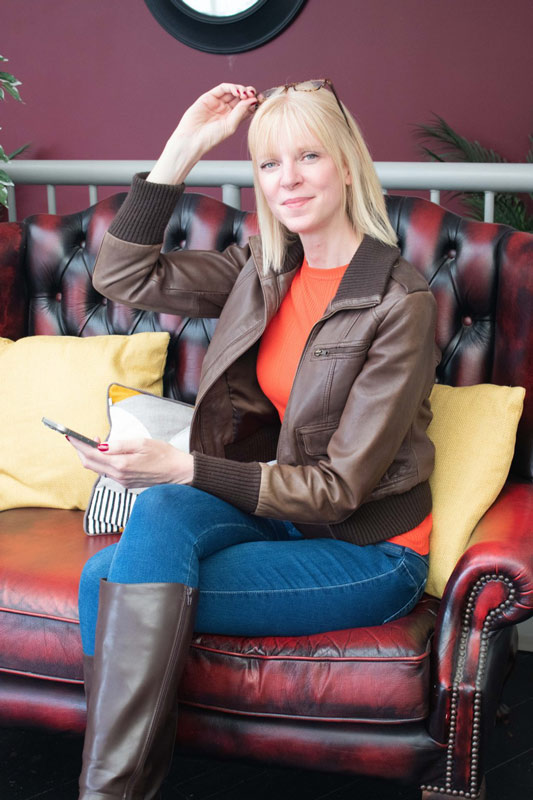
By Samantha Davies
As photographers, we’re used to being behind the camera. We know how to find the light, choose the right angle, direct a subject and make someone else feel comfortable in front of the lens.
But ask us to swap places and suddenly things can feel very different.
For years, I hid behind my camera. It was my comfort zone and my happy place. I was perfectly happy helping other people look confident, but when it came to being photographed myself, I would find almost any excuse to stay out of the frame.
The problem was that as my photography business grew, I kept giving my clients the same advice:
“People need to see you.”
Eventually, I realised I wasn’t following my own advice.
If I wanted my clients to be visible, authentic and confident in their own images, I needed to be willing to do the same.
So I set myself a challenge: one morning every month would be dedicated to creating images of myself. It could be a self-portrait session, branding images or even something more creative, but it had to happen.
No excuses.
And, initially, it was awkward.
Why photographers can struggle in front of the camera
You might think that being a photographer automatically makes you comfortable being photographed. In reality, the opposite can sometimes be true.
We know exactly what we’re looking for in an image. We notice the lighting, composition, pose, expression and every tiny detail that somebody else might never see.
That knowledge can make us extremely critical of our own photographs.
When I first started taking self-portraits, I discovered that what I thought I was doing with my pose wasn’t necessarily what was actually happening in front of the camera.
I started with simple headshots and gradually experimented with different angles, expressions and poses.
The first results weren’t perfect. But then something happened.
I used one of the photographs on social media and received a positive response.
People weren’t analysing the tiny details I had been worrying about. They were simply pleased to see me.
That was an important lesson.
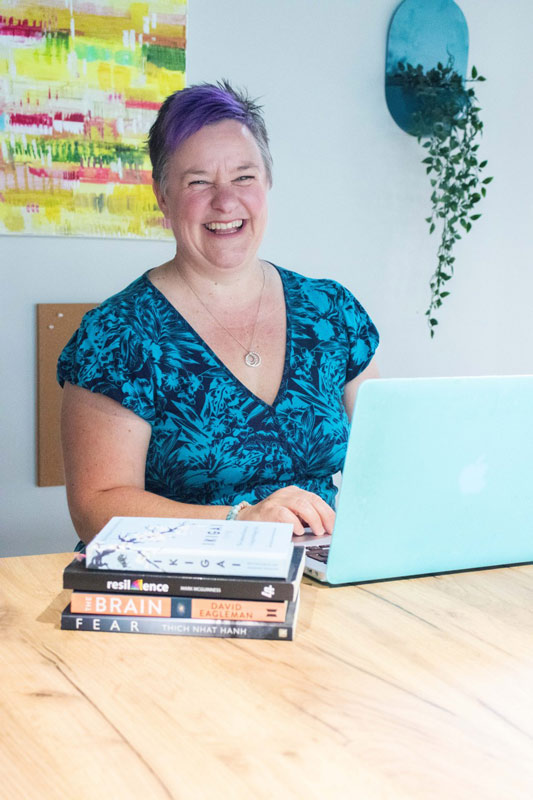
Self-portraits are a great way to practise
One of the easiest ways for photographers to become more comfortable in front of the camera is to start with self-portraits.
You don’t need an elaborate studio setup.
Try using:
- A tripod
- A remote trigger
- Natural window light
- Your phone’s video mode
- A mirror to help you understand your positioning
Because you’re working alone, there is no pressure to get everything right immediately.
Experiment.
Try different poses. Change your expression. Move around. Review the images and work out what you like and what you don’t.
You’re effectively becoming your own client.
And that can teach you a surprising amount about posing.
Learn what it feels like to be your client
One of the biggest benefits of photographing yourself is that you experience the process from the other side of the lens.
I discovered this when I had to photograph myself for a Valentine’s boudoir set after my model cancelled at the last minute.
There was no other option, so I became the model.
It was uncomfortable and vulnerable, but it also gave me a much better understanding of what my clients experience.
What does it feel like when somebody asks you to change position?
How easy is it to understand posing instructions?
How vulnerable do you feel when you’re being photographed?
Where do you naturally look?
What makes you relax?
Those experiences can make us better photographers because we gain empathy for the people standing in front of our cameras.
Stop judging every photograph at 100% zoom
Photographers are particularly good at pixel-peeping.
We zoom in.
We inspect.
We find the tiny thing that nobody else would ever notice and decide that the photograph isn’t good enough.
But that’s rarely how people experience an image.
Your audience isn’t looking at your photograph at 200% magnification.
They’re seeing the whole image.
They’re seeing your expression, personality, energy and the overall impression you’re giving.
Try stepping back from the photograph and asking yourself:
“What would I think of this image if it were somebody else’s?”
You might be surprised by the answer.
Book a photography session for yourself
Self-portraits are useful, but there is something different about having somebody else photograph you.
After several months of taking my own photographs, I booked a session with a videographer I knew.
I was nervous.
Very nervous.
But I soon realised that the session wasn’t simply about producing promotional material. It was about building confidence.
Every time I put myself in front of the camera, I became a little more comfortable.
I started to understand that I didn’t have to be perfect.
I just needed to be present.
The result was two promotional videos that I was genuinely proud of.
If you have a photographer friend whose work you admire, consider arranging a shoot together. You could trade sessions or simply offer to photograph each other.
You’ll get useful images for your own business while experiencing the client journey yourself.
Remember that your audience wants to see you
For photographers, being visible isn’t just about having a nice profile photograph.
Your potential clients want to know who they’re going to work with.
They want to see your personality.
They want to understand what you’re like.
They want to feel that they can trust you.
That’s particularly important for photographers working in areas such as weddings, portraits, boudoir, newborn photography and personal branding, where the relationship between photographer and client is such an important part of the experience.
For me, being more visible has made a real difference.
I try to remind myself:
“When I’m not working, I’m networking.”
That doesn’t mean constantly selling.
It means being present — online, at events and in conversations with other people.
The more I do it, the more natural it becomes.
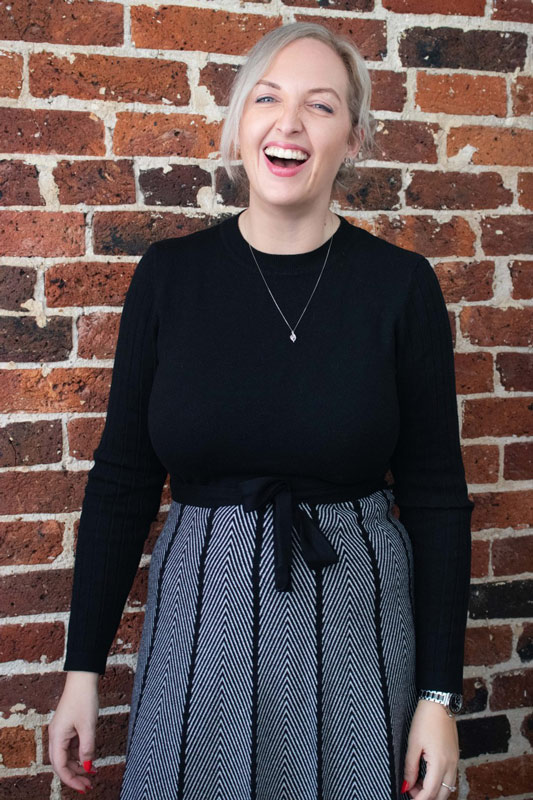
Five ways photographers can build confidence in front of the camera
1. Start with self-portraits
Don’t wait until you need a new headshot.
Schedule a self-portrait session and experiment.
Use natural light, a tripod and a remote, or even record video on your phone and pull still frames from it.
The goal isn’t to create a perfect photograph. It’s to become familiar with being in front of the camera.
2. Treat yourself like a client
Think about the advice you give nervous clients.
Be patient with yourself.
Don’t expect to understand every pose immediately.
Don’t criticise yourself for feeling awkward.
If you wouldn’t speak to a client that way, don’t speak to yourself that way either.
3. Stop pixel-peeping
Look at the entire photograph rather than one tiny detail.
Ask whether the image communicates the personality and feeling you want it to communicate.
Your audience is interested in you, not whether one strand of hair is out of place.
4. Have a professional shoot
Book a photographer whose work you admire.
If you’re nervous, tell them.
Being honest about how you feel can make the experience much easier, and you’ll also learn what it is like to be directed by somebody else.
That experience can feed directly back into your own client work.
5. Allow yourself to be awkward
You don’t have to suddenly become a professional model.
You might laugh.
You might pull strange faces.
You might dislike some of the photographs.
That’s okay.
Some of the most engaging images are the ones that feel genuine rather than perfectly polished.
Show some of the behind-the-scenes moments. Share the bloopers. Let people see the person behind the business.
Authenticity is often more valuable than perfection.
Confidence comes from doing it
I’ve learned that confidence in front of the camera doesn’t necessarily arrive before you start.
It comes from doing it.
The first self-portrait might feel uncomfortable.
The next one might feel slightly less awkward.
After a few sessions, you’ll understand your angles better. You’ll become more comfortable posing. You’ll learn what expressions feel natural. You’ll become less critical of every photograph.
And eventually, being visible starts to feel normal.
You don’t need to look a certain way to deserve to be photographed.
You don’t need to be a model.
And you certainly don’t need to wait until you feel completely confident.
Put yourself in front of the camera, embrace the awkwardness and give people the opportunity to see the person behind the photographs.
They’ll probably be far less critical of your images than you are.
About the Author

Samantha Davies is a portrait and branding photographer passionate about helping women feel confident and visible in front of the camera. With a background in visual arts and a creative approach that blends authenticity with style, she founded Branding with Personality, a relaxed and empowering experience designed to capture who you truly are.
When she’s not behind the lens, you’ll find her kayaking, paddleboarding or walking her border terrier.