
Three Essential Tips for Sports Photography: Back-Button Focus, Shutter Speed and Anticipation
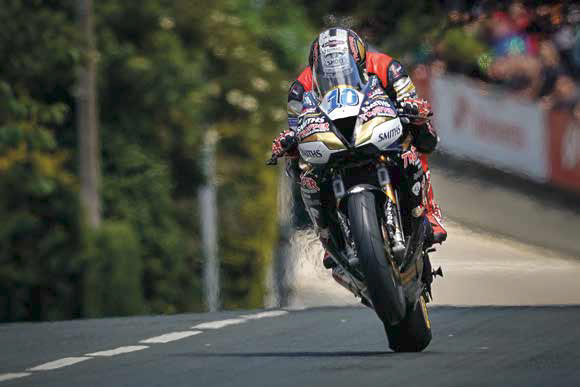
Sports photography is one of the most demanding genres due to the largely uncontrolled environment we find ourselves in and the limits to which we have to push our gear. Shooting indoors and outdoors brings different challenges, from difficult lighting and inclement weather (I’m being polite here!) to allocated shooting positions which are rarely the best.
There is nothing more satisfying, though, than nailing a shot regardless of the challenges we come across.
Here are my top three tips for shooting sport which can really make a difference to your photography – I hope that you will find them useful.
1. Back-Button Focus (BBF)
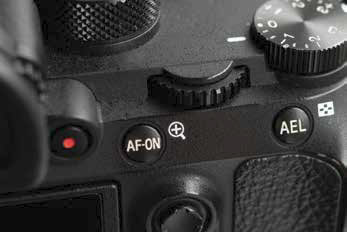
The vast majority of professional sports photographers use BBF; in actual fact, I cannot think of a single one I know who doesn’t. So, let me explain what BBF is and the advantages of using it.
When you press the shutter release button halfway down on a camera, it locks focus and, if shooting in a program mode, also locks exposure value. When you press the button all the way down, the camera takes a picture.
The idea behind BBF is that we detach the focus operation from the half-press of the shutter button, leaving the shutter button only with the task of firing the camera when fully pressed.
We then reprogramme the focus activation to a separate button on the rear of the camera, hence the name “back-button focus”. The rear AE-L or AF-ON buttons are usually a good choice for this as they tend to be positioned near where your thumb rests.
Now this may seem a strange thing to do, but it has several benefits and offers much more control.
Understanding the focusing modes
On a camera we have three focusing modes, broadly speaking – within each mode there are variants:
- Manual focus: generally involves you moving a focus ring on the lens to find focus.
- Single-shot autofocus: an autofocus mode that finds focus and locks focus at that point.
- Continuous autofocus: a system that finds focus and tracks the subject it has locked focus onto as it, or you, move. Depending on your camera brand and model, this could be called AF-C, Servo mode or Tracking Mode.
You usually switch between the three focus modes mentioned by changing a dial, a switch or by entering a menu system to change modes. This can be cumbersome and time-consuming, especially when shooting under pressure or in bad weather conditions in which we need to wear gloves!
What BBF allows us to do is have all three focus functions available to us at all times, and here is how this would work.
First, your camera needs to be set to continuous autofocus mode. Because we have removed the focusing operation from the shutter button, if we want single-shot autofocus (without tracking), we would hit the rear button we have reprogrammed to deal with focus. Once the camera had locked focus, we would then release that button and press the shutter button to fire the camera.
If we want continuous autofocus tracking, we would press the rear button we have reprogrammed to deal with focus. Once the camera finds focus, we would keep this button pressed and the camera would track the subject until we stop pressing the rear button.
That gives us two of the three focus modes.
The third focus mode is manual focus; in essence, the camera is in manual focus mode until we press the rear button we have reprogrammed. In manual mode, we would generally focus the camera by turning the focus ring on the lens, then press the shutter button at the desired time to take a picture.
BBF gives us all three focusing modes without needing to enter a menu system or change dials or switches.
Editor’s note: Camera controls and autofocus behaviour vary between manufacturers and models, so check your camera’s manual for the exact procedure for assigning and using back-button focus.
BBF is also a much more intuitive way to shoot sport; it is much easier to press the rear button to activate focusing and press the shutter button when you want to take a picture.
This may well seem a strange way to shoot initially, but once you try it and get used to it, you will really feel the benefit.
Check your camera’s manual or handbook to see how to reprogramme or assign a rear button to focus mode, and don’t forget to disable the focus mode from the shutter-release button.
2. Shutter Speed
Sports photography lives or dies by use of the appropriate shutter speed.
Selecting an appropriate shutter speed depends on the sport in question and a lot on the conditions you are working in.
As sports photographers, we get what we are dealt with in terms of available light, weather conditions and shooting locations. They are mainly out of our control.
We have three things that affect exposure in the camera: shutter speed, ISO and aperture. All three are really important, but for now I want to only speak about shutter speed and let’s assume we have plenty of light available at the time of shooting.
Depending on the sport, we may want a slow shutter speed or a fast shutter speed.
Using a slow shutter speed
A slow shutter speed in a lot of circumstances is useful and preferable, for instance when shooting motorsport.
By using a slow shutter speed we can show movement of the wheels of a car or motorcycle. Combine that with good panning technique and we can blur the background as well.
All this adds dynamism to the sports picture and gives a real sense of movement and feeling of speed to the shot.
If a motorsport picture is taken with a high shutter speed, then the wheels can be frozen as well as the background, and it makes for a really static-looking picture.
How slow a shutter speed you choose depends on a number of things:
- your skill level
- your camera – some models have image stabilisation on the lens, sensor or both, which allow for lower shutter speeds hand-held
- your own personal preference on the style of picture you wish to take
- how “arty” you wish to become
Using a high shutter speed
So that’s an instance of when a slow shutter speed is preferred, but what about high shutter speeds?
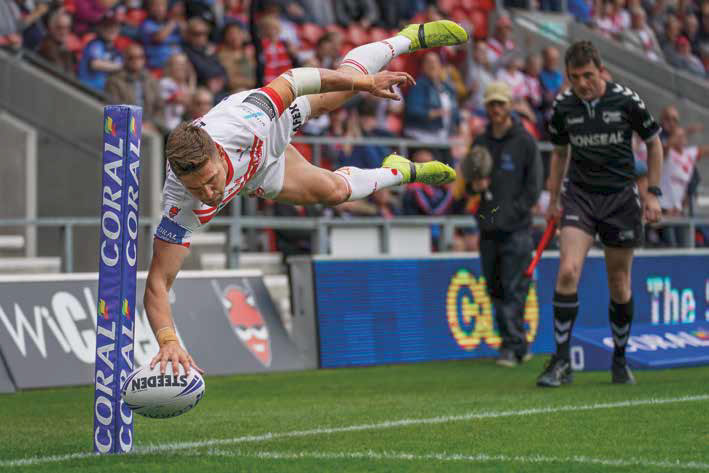
Well, the way we freeze action is by using a high shutter speed.
Sports such as football, rugby, cricket, etc., which involve high-speed action during play, benefit from high camera shutter speeds to freeze the action and give a clear, crisp image.
Historically, a shutter speed of 1/1000s has been the general starting point for freezing action, but each camera differs, so it is worth experimenting with your own camera to see what shutter speed freezes the action best on your camera.
3. Anticipation – Know Your Sport
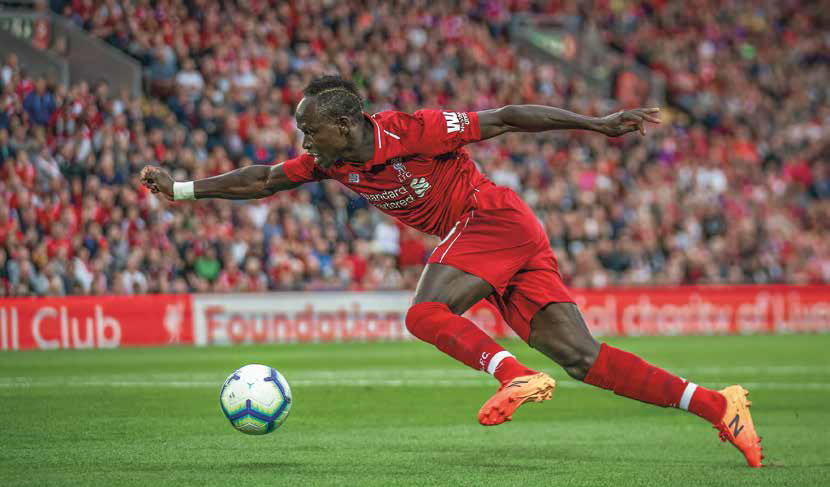
At times, sports can be played at breakneck speed and being able to anticipate the next phase of play is imperative if you are to catch that perfectly timed shot at peak action.
The only way you can anticipate the play as it unfolds is to understand the sport you are shooting. If you do not understand these basics, then you have an uphill struggle and will be relying on getting lucky with a shot.
My camera fires 20 frames per second and during peak action in top-flight football I may have the ball in shot once or twice from 20fps at peak action, so it is really important to be able to anticipate the play or you may miss the action completely.
Now you may think, how do I anticipate what way a player will run or pass a ball?
Well, the answer is that if you understand the rules and purpose of the sport you are shooting and have experience of shooting it, then anticipation becomes much easier.
You get accustomed to anticipating the options a player has and which way they are likely to run or pass a ball.
You won’t get it right all of the time, but if you know the sport you are shooting, you have a much higher chance of anticipating play and being in position to get that shot.
So, if you are shooting a sport for the first time, research it and watch it online to get a greater understanding and appreciation of the way the sport moves.
This, of course, will never replace shooting pitch-side, where things seem to happen a lot faster – you are closer to the action, often shooting through a long lens with a narrow view.
Final Thoughts
So that’s my top three tips for shooting sports photography.
Back-button focus can give you greater control over how and when your camera focuses, shutter speed allows you to decide whether to freeze or emphasise movement, and anticipation can be the difference between being in position for the decisive moment and simply hoping to get lucky.
Most importantly, get to know the sport you are photographing. The better you understand what is happening in front of you, the better prepared you will be to capture the moment when it happens.
About the Author
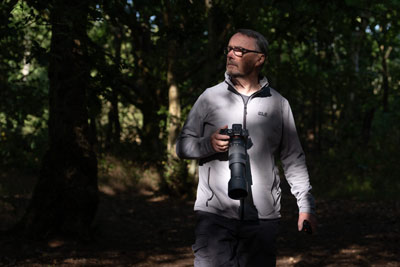
Terry Donnelly is a UK-based photographer whose work regularly appears in national newspapers, magazines, and international publications such as Sports Illustrated.
Since 2014, Terry has earned two Master titles and five Fellowships in photography, alongside 23 Photographer of the Year awards and a win in the 20×16” Print Competition. His accolades include four Societies of Photographers ‘Sports Photographer of the Year’ awards from 13 nominations.
In 2023 and 2024, Terry was also a finalist in the World Sports Photography Awards, further cementing his reputation as one of the UK’s leading sports photographers.
Published: 1 October 2019
Updated: 17 August 2026