
The Photography Magazine Isn’t Dead – But It Is Changing
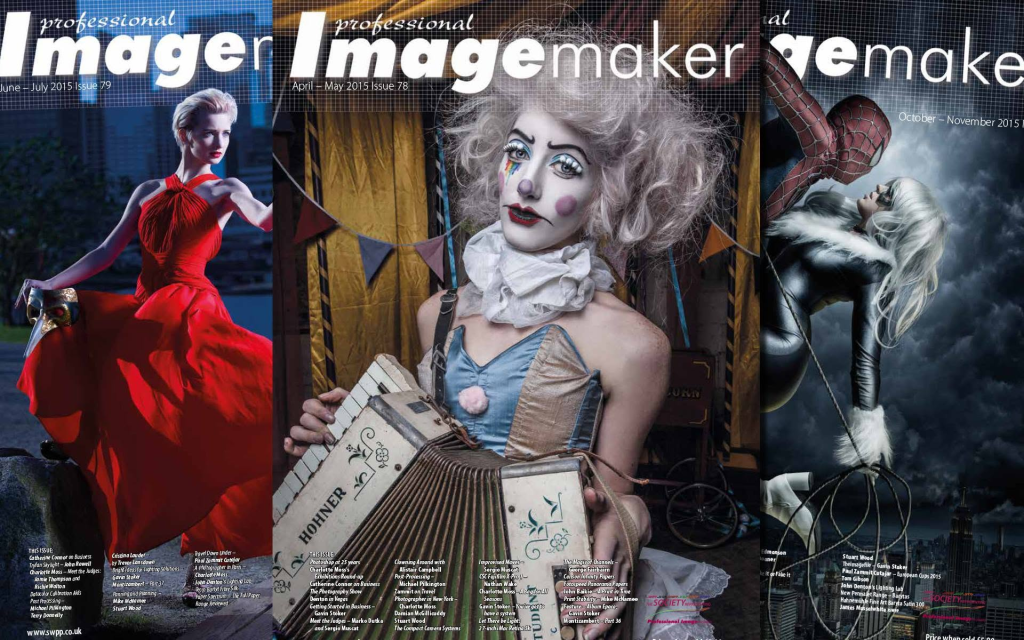
The closure of Photography News is the latest sign of a rapidly changing photography publishing landscape. But is this the death of the photography magazine – or the end of an old publishing model?
The announcement that Photography News is to cease publication with immediate effect will be a sad moment for many photographers.
For years, the magazine has been part of the UK photographic landscape, covering cameras and equipment, techniques, competitions, business and the people behind the images. Its closure is another significant change in an industry that has already seen a remarkable number of photography publications disappear, reduce their frequency or move away from print.
But perhaps the most interesting question isn’t why another photography magazine has closed.
It is what the changes tell us about where photographic publishing is going next.
Because while it would be easy to conclude that photographers no longer want magazines, the evidence doesn’t really support that.
What appears to be happening is something more complicated.
The traditional photography magazine is changing.
A remarkable period of change
Over the past six years, the UK photography publishing landscape has contracted considerably.
Practical Photography ended publication in 2020, during a period when the publishing industry was already under enormous pressure from the COVID-19 pandemic.
In 2021, Digital SLR Photography also ceased publication, bringing an end to a title that had served digital photographers for many years.
Then came a series of closures from some of the industry’s largest publishers.
Future closed N-Photo in 2024 after 168 issues and subsequently ended PhotoPlus: The Canon Magazine in 2025, with its Spring 2025 issue becoming the title’s final edition. Subscribers to PhotoPlus were transferred to Digital Camera.
Digital Photographer also ended publication in 2025 after more than two decades.
And now, in August 2026, Photography News has announced that its current issue will be its last.
Individually, each of these decisions will have had its own commercial circumstances. It would be wrong to suggest that every closure has a single cause.
Collectively, however, the pattern is difficult to ignore.
It isn’t just about magazines closing
The changes are not limited to publications disappearing altogether.
Some magazines have changed the way they are produced.
Amateur Photographer, one of the world’s longest-established photography magazines, moved from a weekly to a fortnightly publishing schedule in May 2026.
That is a significant change for a title with such a long publishing history, but it also demonstrates something important: adaptation doesn’t necessarily mean closure.
Elsewhere, publications have moved from print into digital publishing.
Professional Photo moved to its online format, while Professional Imagemaker published its final printed issue in October/November 2025 before continuing as a quarterly digital magazine.
For Professional Imagemaker, that was not a decision to stop publishing. It was a decision to change how the publication reaches its audience.
And that distinction is becoming increasingly important.
The end of print isn’t necessarily the end of the magazine
For much of the twentieth century, the physical magazine was the product.
It had to be printed, distributed through wholesalers and retailers, displayed on shelves, posted to subscribers and produced to a fixed schedule.
Digital publishing removes many of those physical constraints.
It also introduces a completely different set of challenges.
A digital publication is no longer competing only with other magazines.
It is competing with everything.
A photographer looking for advice can watch YouTube. They can follow a photographer on Instagram or Facebook. They can read a manufacturer’s website, join a Facebook group, browse a forum, listen to a podcast, subscribe to a newsletter or ask an AI tool for an answer.
There has never been more photographic information available.
And that makes the role of a professional publication both harder and, arguably, more important.
Digital isn’t a magic solution
It would be tempting to suggest that the answer to the decline of print is simply to move everything online.
The experience of Photography Week provides an interesting counterpoint.
The publication was already a digital-only photography magazine, yet it published its final issue in September 2024 after more than 600 issues.
That matters.
It demonstrates that removing the costs associated with printing and physical distribution doesn’t, by itself, solve the fundamental challenge facing specialist publishing.
The issue isn’t simply how the content is delivered.
It is why someone should choose to consume it.
The value of trusted editorial
This may be the biggest change facing photography publishing.
For generations, magazines acted as gatekeepers.
If you wanted to discover a new camera, learn a technique, read about a photographer or understand what was happening in the industry, magazines were among the most accessible and trusted sources available.
Today, there are no gatekeepers in the same way.
Anyone can publish.
That has enormous benefits, but it also creates an extraordinary amount of noise.
Some content is excellent. Some is poorly researched. Some is little more than advertising dressed up as editorial. Increasingly, some is generated or assisted by artificial intelligence.
In that environment, trust becomes a valuable commodity.
A specialist publication should not simply repeat information that readers can find elsewhere.
It should provide experience, expertise, context, independent thinking, curation and access to people and stories that matter to its audience.
In other words, its value is not necessarily in being first with information.
Its value can be in helping readers understand what matters.
Fewer titles, stronger propositions
There is also evidence that the market is becoming more concentrated.
The closure of N-Photo and PhotoPlus didn’t mean that their publishers abandoned photography altogether. In both cases, audiences were directed towards other titles within the publisher’s portfolio, including Digital Camera.
That suggests something important.
Perhaps publishers aren’t necessarily concluding that photographers no longer want photographic content.
They may instead be concluding that the market cannot support the same number of separate publications it once did.
The future may therefore involve fewer titles, with clearer identities and broader or more strongly defined audiences.
Rather than a newsstand containing dozens of specialist photography magazines, we may increasingly see a smaller number of publications that have built strong relationships with particular communities.
But print isn’t dead
There is another important point.
Despite the closures, there are still photography magazines publishing in print.
Digital Camera continues to publish a print edition in 2026. Outdoor Photography, Black+White Photography and other specialist titles also continue to serve audiences through print and digital formats.
The British Journal of Photography is another example of a publication that has undergone major change while continuing to operate.
So the story isn’t simply:
Print is dead.
Nor is it:
Photography magazines are dead.
The reality is much more nuanced.
Print can still work when the proposition is right, the audience is sufficiently engaged and the economics make sense.
Digital can work when the content and relationship with the audience justify continued attention.
And some publications will inevitably find that neither model is commercially sustainable.
What does this mean for photographers?
For readers, the changes are not necessarily all negative.
The collapse of a magazine can mean losing a familiar source of inspiration and information. But the wider transformation of publishing has also created opportunities that simply didn’t exist when print was the dominant medium.
Photographers now have access to more education, more international voices and more specialist knowledge than ever before.
The challenge is filtering it.
That makes trusted communities particularly important.
A photographer doesn’t necessarily need more information.
They need better information.
They need people with genuine experience.
They need inspiration.
They need education that works in the real world.
And they need somewhere to discover what is happening within their industry.
Professional Imagemaker is part of that story
It would be disingenuous for us to discuss these changes without acknowledging that Professional Imagemaker has experienced them too.
Our final printed issue was published in October/November 2025.
The magazine has subsequently continued as a quarterly digital publication.
That wasn’t the end of Professional Imagemaker. It was a change in the way we produce and deliver it.
Moving away from print gives us opportunities that a physical magazine doesn’t.
We can think differently about the relationship between the magazine, our website, our members, our events and the wider photographic community. We can respond more quickly, develop different types of content and make the publication accessible without the limitations of physical distribution.
But the underlying purpose hasn’t changed.
We still want to showcase great photography, share knowledge, highlight the people and businesses shaping the industry and provide our readers with content that is genuinely worth their time.
The format has changed.
The purpose hasn’t.
So, is the photography magazine dying?
Probably not.
But the old definition of a photography magazine may be.
The model in which a publisher produces a general-interest title on a predictable schedule, sells it through traditional retail channels and relies heavily on print advertising and circulation is becoming increasingly difficult.
The audiences haven’t disappeared.
They have fragmented.
The competition hasn’t disappeared.
It has multiplied.
And the way people consume information has changed dramatically.
The publications that survive and thrive will therefore need to understand their audiences more deeply than ever.
They will need a clear reason to exist.
They will need to offer something that cannot easily be replaced by a search engine, a social media feed or an AI-generated answer.
And perhaps most importantly, they will need to build trust and community.
A changing industry, not a dying one
The closure of Photography News deserves recognition. It was part of the photographic landscape for many years, and the people who produced it should be proud of what they created.
But perhaps its closure shouldn’t be viewed simply as another sign that photography magazines are dying.
Instead, it is another marker in a much larger transition.
Over the last few years we have seen publications close, others reduce their frequency, some move from print to digital and publishers consolidate their audiences around fewer titles.
At the same time, other publications continue to publish successfully, demonstrating that photographers haven’t stopped wanting professional, curated and trusted content.
The photography magazine isn’t dead.
It is evolving.
The winners in the next chapter of photographic publishing may not necessarily be the biggest magazines, the most frequently published or the ones with the largest distribution.
They may be the publications that understand one simple principle:
Give photographers something worth their time.
Something useful.
Something inspiring.
Something they can trust.
And, perhaps above all, something they cannot get quite as easily anywhere else.
That is the challenge facing photographic publishing.
And it is a challenge worth embracing.