
Meet the Judges: Claire Osborne on Photography, Creativity and Finding Emotion in an Image
For Claire Osborne, photography began with a simple family photograph.
Almost two decades later, that early fascination has developed into an award-winning career specialising in family and newborn photography, a Fellowship project exploring trauma and healing, and a role as one of The Societies’ photography judges.
We caught up with Claire to talk about her journey into photography, her approach to newborn and family portraiture, the creative process behind her Fellowship-winning project Endless, and what she looks for when judging other photographers’ work.
From family photographs to professional photography
Claire’s connection with photography began with her family.
“I bought my first DSLR back in 2008 when my third son was born, but the spark came even earlier.”
The arrival of her first son had already changed the way she thought about photographs.
One particular image remains a favourite because it made Claire realise just how quickly moments with people disappear.
Unlike a landscape or architectural scene, a particular family moment cannot simply be recreated years later. The people change, children grow and circumstances move on.
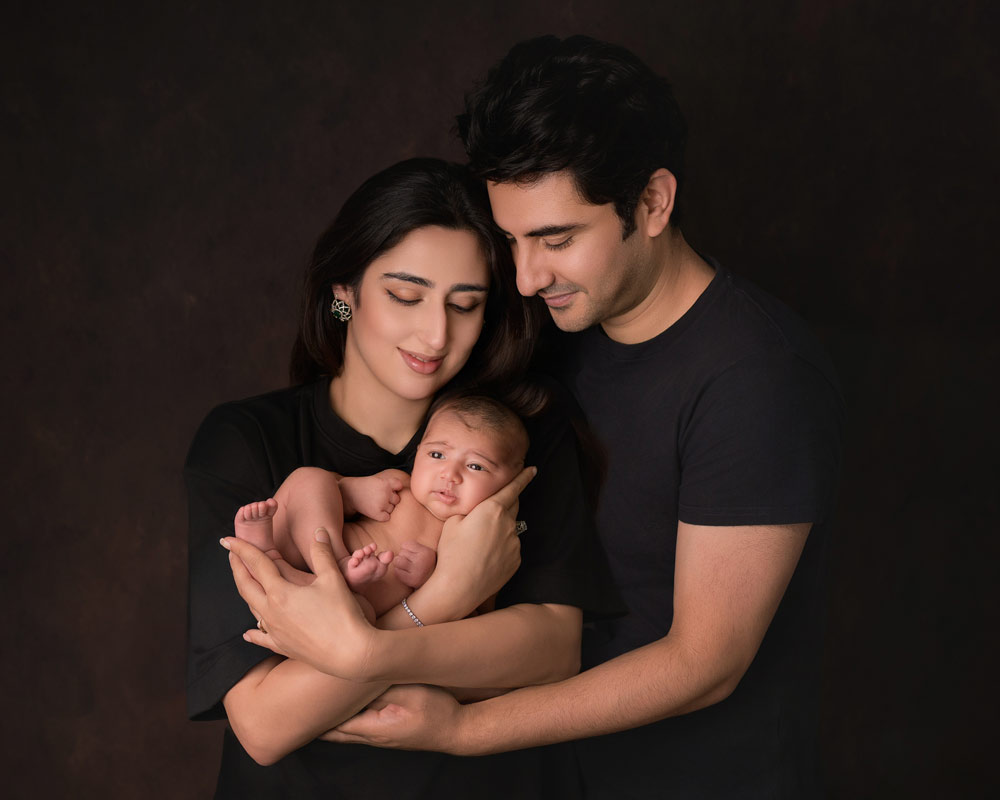
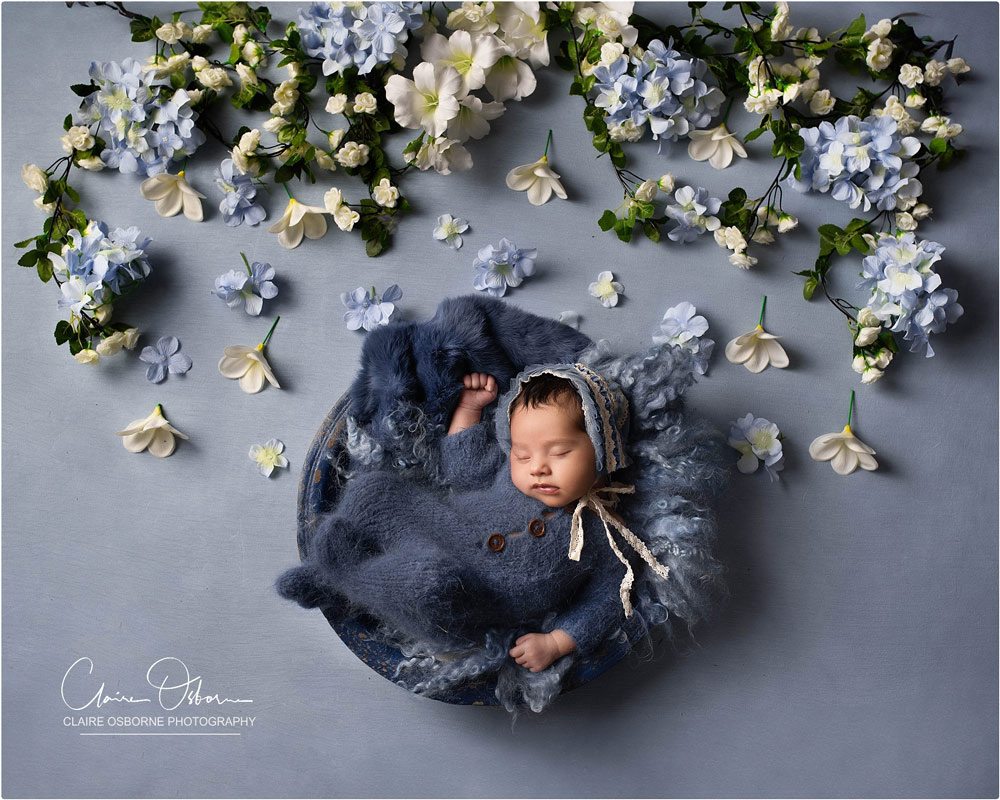
That understanding eventually drew Claire towards family and newborn photography.
In 2013, she took a career break from her IT job to see whether she could turn photography into a career.
What was initially intended to be a one-year experiment has now developed into more than a decade of professional photography.
Creating timeless family and newborn portraits
Claire describes her photography as timeless, but that doesn’t mean she ignores contemporary styles.
For her, timeless photography is about creating photographs that remain meaningful long after current trends have disappeared.
“I want them to look back with pride, not embarrassment, decades from now.”
Her own experience as a parent also influences the way she approaches family photography.
Children grow incredibly quickly, and family photographs can become visual milestones — reminders of particular stages of life that cannot be recreated.
That sense of preserving a moment is central to Claire’s approach.
Newborn photography: creativity must come with safety
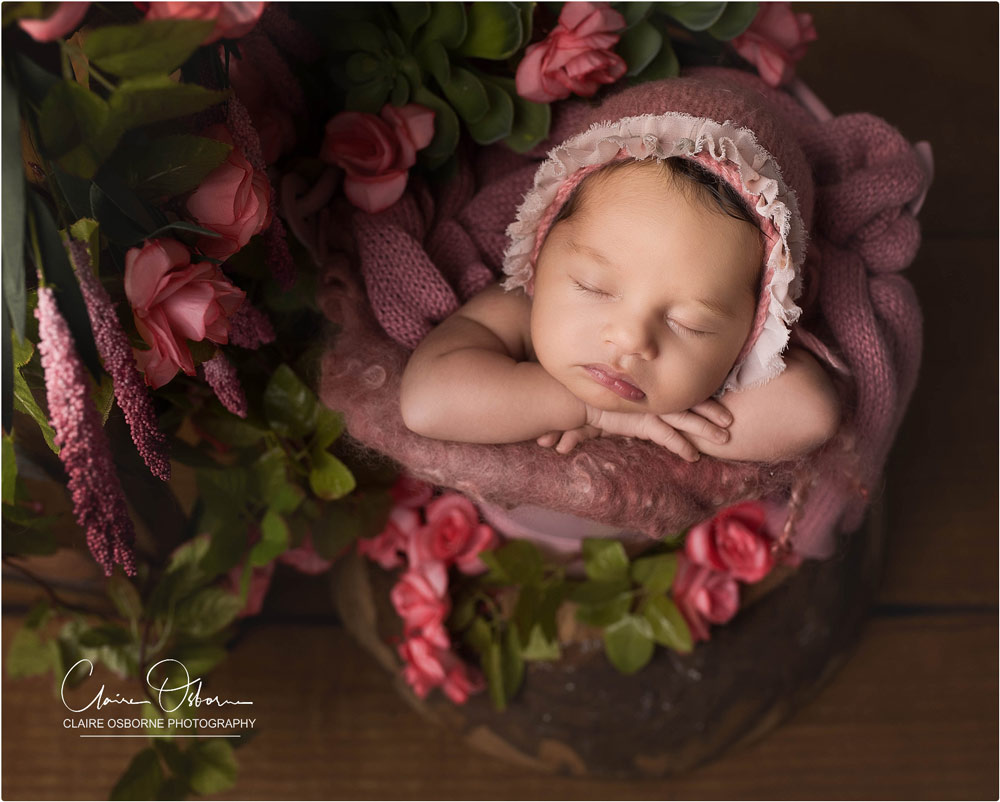
Newborn photography requires more than an understanding of lighting, posing and composition.
Safety has to come first.
Claire places particular emphasis on ensuring babies are never put at unnecessary risk when creating more complex images.
Where a pose requires additional support, a parent or assistant can act as a spotter. Other photographs can be created as composites, combining multiple safely captured images in post-production.
This approach allows photographers to achieve creative results without compromising newborn safety.
Claire describes her sessions as baby-led.
Some babies settle quickly; others need considerably more time.
Rather than forcing a session to follow a rigid timetable, she adapts to the baby.
That relaxed approach also helps parents feel comfortable.
For Claire, one of the biggest compliments is when parents become so relaxed during a session that they are able to switch off completely.
Discovering the possibilities of digital composites
Claire’s interest in digital compositing developed from a particularly memorable commission.
A family wanted an image of their baby inside a motorcycle helmet as a tribute to a late grandfather.
Obviously, placing a newborn directly inside the helmet would not have been safe.
Instead, Claire photographed the parents holding the baby and photographed the helmet separately, combining the images during post-production.
The experience demonstrated the creative possibilities of composite photography.
It also established an important principle in Claire’s work: the finished image doesn’t have to dictate how the photograph is physically created.
By combining photography, lighting and post-production, photographers can create images that would otherwise be impossible — while keeping their subjects safe.
Claire has since explored composites for client work, competitions and personal projects.
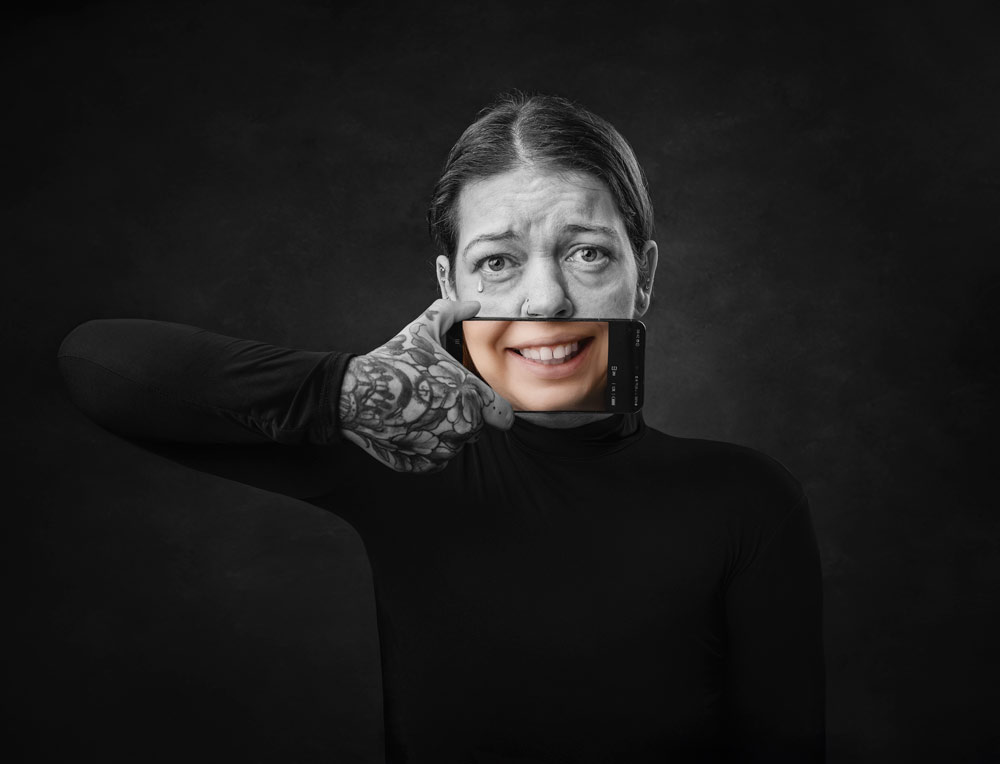
One self-portrait, for example, used a phone held over her face to explore the difference between the image we present to the world and the way we see ourselves.
For Claire, the appeal of compositing is the combination of creativity and technical precision.
Lighting, perspective, masking and environment all have to work together if the finished image is to appear believable.
Endless: photography as a way of telling a personal story
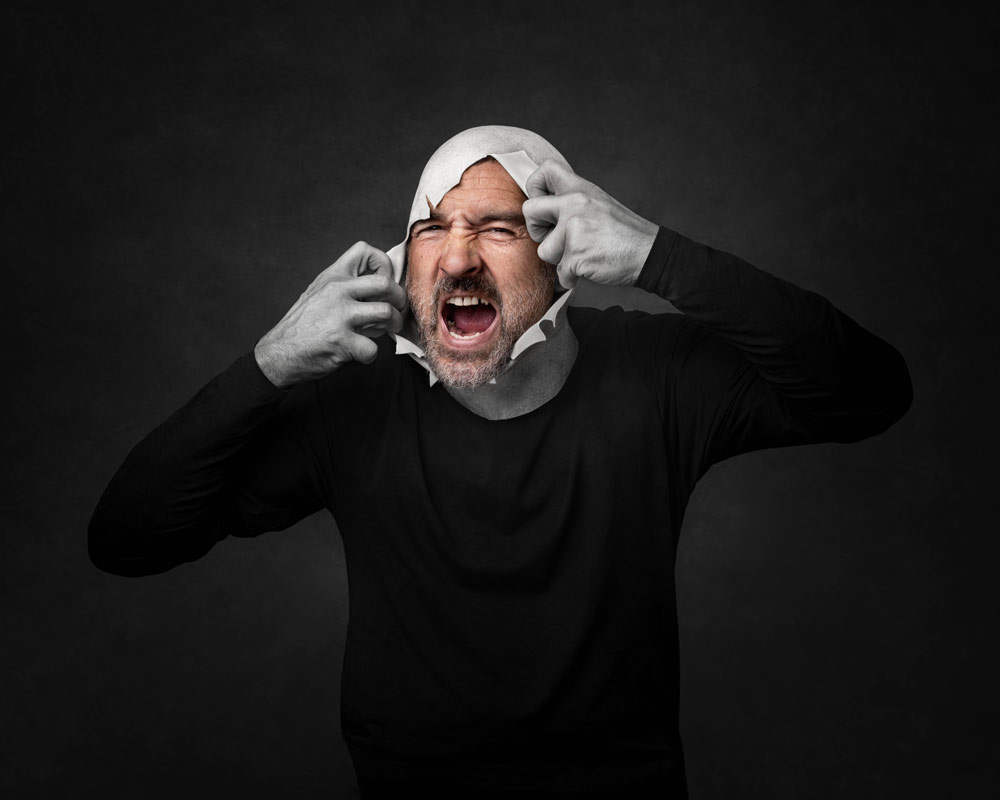
Perhaps Claire’s most significant creative project is her Fellowship-winning series, Endless.
The project explores her husband Tom’s experience of combat-related post-traumatic stress following his military service.
The idea developed during the COVID-19 pandemic, when Claire had no client work to photograph.
She began photographing Tom.
The camera became a way for them to explore something they had previously found difficult to talk about.
“It allowed him to open up visually in a way he couldn’t do verbally.”
The project became much more than a photography exercise.
It gave Claire and Tom a way of exploring their experiences together while also raising awareness of combat-related PTSD and the difficulties faced by people living with trauma.
Claire deliberately chose not to make Tom’s identity the central focus of the photographs.
Instead, he appears as a faceless figure, allowing the images to represent something broader than one person’s story.
Creating a visual narrative
The images within Endless were arranged as a linear journey.
Each photograph needed to work independently while also contributing to the wider narrative.
That structure reflected almost ten years of their lives and gave the Fellowship panel a clear visual progression.
Even the title has multiple meanings.
Endless refers to the seemingly endless waiting for treatment, the number of people affected and the ongoing nature of living with PTSD.
The project doesn’t offer a simple beginning, middle and happy ending.
Instead, it reflects the reality that healing can be an ongoing process.
From Fellowship entrant to photography judge
Claire’s route into judging began with her own experience of having a Fellowship panel judged.
Hearing the feedback and observing the judging process made her curious about what happened on the other side of the table.
She subsequently attended The Society of Photographers’ Judging School.
She knew quickly that judging was something she wanted to pursue.
For Claire, one of the most rewarding aspects is seeing photographers at very different stages of their careers put their work forward.
Entering a competition requires photographers to make themselves vulnerable.
Whether it is someone’s first competition entry or an established photographer submitting a major body of work, there is always an element of risk in allowing other people to critique something you have created.
Claire sees judging as an opportunity to recognise that effort and encourage photographers to continue developing.
What does a photography judge look for?
Interestingly, Claire expected that her judging style would be heavily focused on technical considerations.
She discovered that emotion plays a much greater role.
“I’m very much an emotional judge.”
For family and newborn photography in particular, storytelling and connection are important.
A technically excellent photograph can still feel cold if there is no emotional connection.
Conversely, a relatively simple photograph can be extremely powerful if it makes the viewer feel something.
Does a photograph have to be original to stand out?
Originality is another factor Claire considers when judging photography.
But originality doesn’t necessarily mean creating something nobody has ever seen before.
Portrait photography can be particularly challenging in this respect because photographers are working with subjects, poses and lighting approaches that have been explored countless times.
Sometimes the strongest image is the simplest one.
Beautiful light, genuine emotion and strong storytelling can be more effective than adding complexity simply for the sake of being different.
For Claire, originality should have a purpose.
The photograph needs to make the viewer connect with the subject.
The stories behind competition photographs
One of the things Claire finds most powerful about judging is discovering the story behind an image.
She remembers judging a maternity portrait dealing with domestic abuse.
Although she had no personal experience of the circumstances depicted, the image had an immediate emotional impact.
The photographer and Claire were both moved to tears during the judging process.
For Claire, moments like that reinforce an important point:
Photography competitions aren’t only about technical ability. They’re also about people and their stories.
Judging can make you a better photographer
Claire believes that judging doesn’t just benefit the photographers whose work is being assessed.
It also changes the way she looks at her own photography.
Studying hundreds of images and considering their strengths and weaknesses encourages her to become more objective about her own work.
It provides an opportunity to step outside her normal creative process and see photographs from a different perspective.
That process of critical evaluation can be valuable for any photographer.
Claire’s advice before entering a photography competition
One of Claire’s simplest pieces of advice is to step away from your images.
Photographers can become too familiar with their own work after spending hours editing it.
What looked perfect at the end of a long editing session might reveal a distraction, processing issue or compositional problem when viewed again several days later.
Give yourself some distance.
Then look again.
Fresh eyes can reveal things you no longer notice when you’ve been staring at the same photograph for hours.
From pain to healing
Looking back at Endless, Claire is understandably proud of what the project achieved.
The work received Gold Awards, earned her Fellowship and was recognised with Judges’ Choice.
But perhaps the most significant achievement was more personal.
The project gave Claire and Tom a shared creative experience and a new way of communicating.
Something that began during an incredibly difficult period became a story about connection and healing.
And that, ultimately, reflects what Claire values most about photography.
It isn’t simply about creating technically impressive pictures.
It is about people, emotion, stories and moments that cannot be recreated.
Whether she is photographing a newborn, creating a composite or judging a competition entry, those principles continue to shape Claire’s work.