
James Musselwhite on Portrait Photography, Lighting and Creating Impact
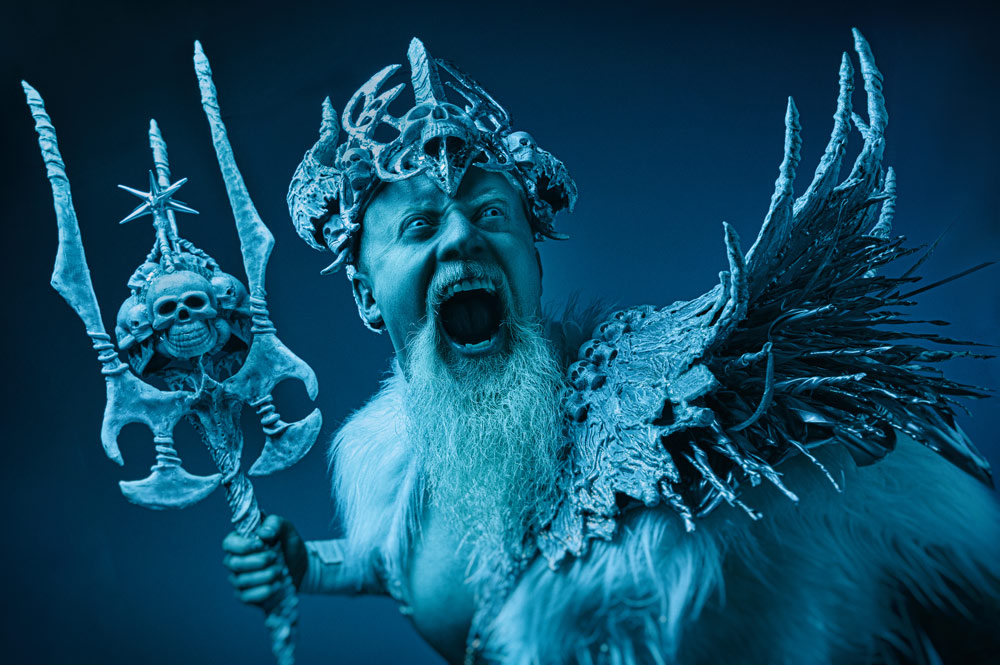
When it comes to bold, high-impact portrait photography with storytelling at its heart, James Musselwhite has developed a distinctive approach.
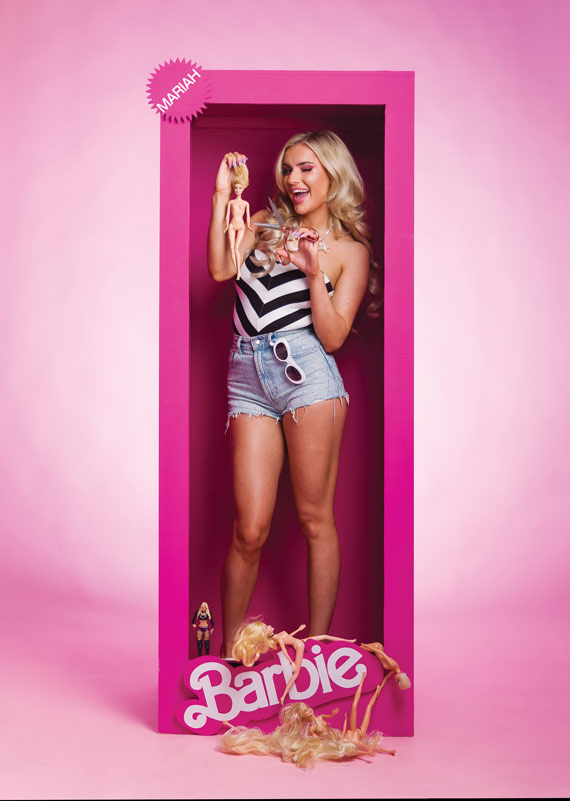
Based in Portsmouth, James has gained international recognition for his striking studio portraiture and his acclaimed A Portrait of a Wrestler project. Alongside his work behind the camera, he is also an experienced photography competition judge, giving him a unique perspective on both creating and evaluating images.
We caught up with James to discover more about his photographic journey, his approach to lighting and communication, his celebrated wrestling portraits, and what he looks for when judging photography competitions.
Finding His Voice Through Portrait Photography
James’s photographic journey began at school, where he discovered the darkroom.
“The darkroom gave me a space to be away from teachers twice a week.”
It was later, when a tutor introduced him to the work of Diane Arbus, that his understanding of portrait photography began to change.
He started to see portraits differently — not simply as photographs of the people standing in front of the camera, but as an expression of the photographer’s own perspective as well.
“It’s about finding meaning and character in both,” he explains.
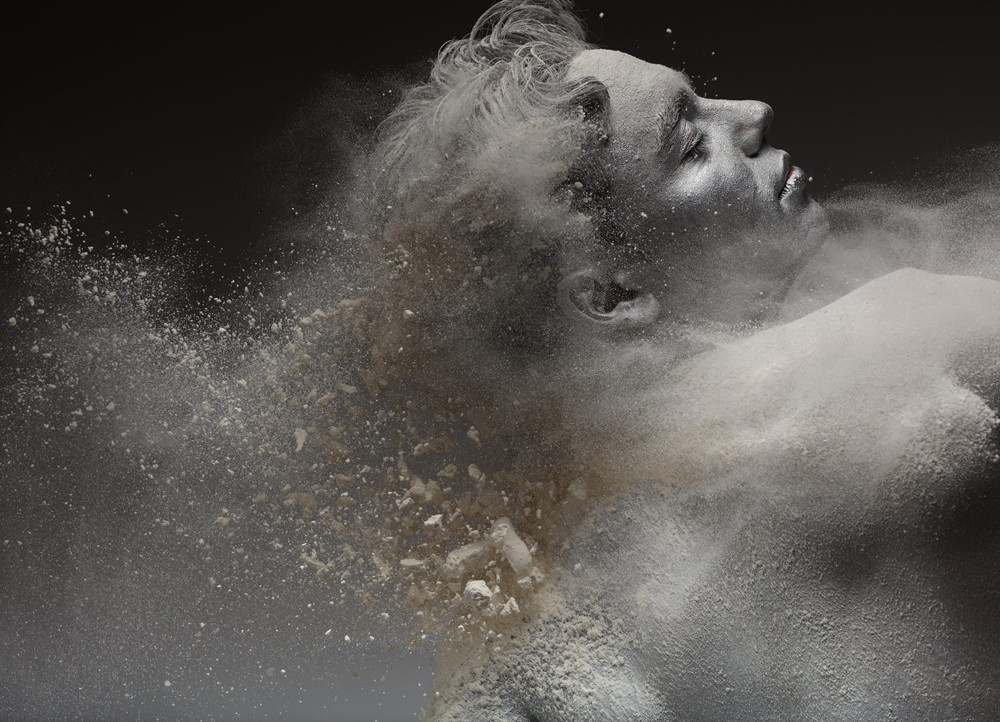
That idea continues to influence James’s work today. His approach combines an understanding of lighting with a strong emphasis on character, connection and the emotional response created by an image.
For James, there is something particularly satisfying about seeing an idea that exists in his head become a finished photograph.
“I love when what’s in your head becomes a reality,” he says.
But the reaction of the subject is equally important.
“I love the reaction clients have when they see themselves as we do — honestly and powerfully.”
The Story Behind A Portrait of a Wrestler
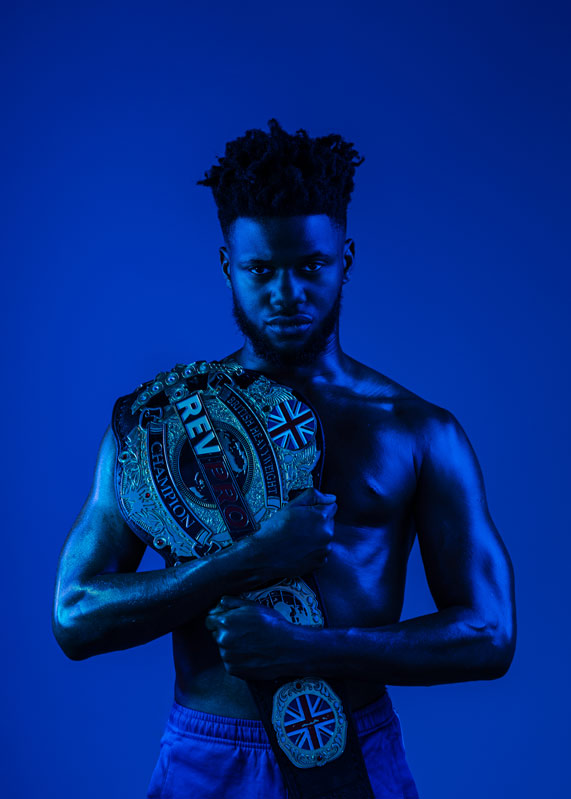
James’s A Portrait of a Wrestler series has become one of his best-known bodies of work, but the project began with a very specific goal.
He wanted to create a panel that would stand out when working towards his Fellowship.
Having grown up as a wrestling fan, James already understood the larger-than-life personalities and characters involved in the sport.
“I knew I needed a panel that stood out. I’d been a wrestling fan growing up and knew those characters would translate brilliantly on camera.”
Getting access to the wrestlers, however, proved considerably more difficult.
It took around six months of contacting people before one wrestler finally agreed to sit for a portrait.
“I nearly gave up. Then one guy replied… and I’ve been photographing wrestlers every week since.”
The resulting photographs are about much more than dramatic characters and carefully controlled studio lighting. James is particularly interested in the unexpected human moments that happen around the photography.
During one shoot backstage in Chicago, wrestler Adam Page was preparing mentally for an important match when a fan accidentally wandered backstage.
The fan spotted Page, stopped in amazement and asked for a photograph. Page smiled, agreed and then helped the fan back to his seat.
For James, it was precisely the kind of small, authentic moment that makes photography meaningful.
Building Trust With Your Subject
Technical knowledge and lighting skills are important aspects of portrait photography, but James believes communication is just as important.
That becomes particularly relevant when photographing people who are accustomed to performing in front of an audience.
“Trust is huge, and it starts with body language and communication.”
For James, building that trust isn’t something that happens instantly. It develops through consistent actions and reputation.
Do what you say you’ll do. Communicate clearly. Pay attention to the small things as well as the major decisions.
“Clear communication — on both big and small levels — really is step one to taking better portraits.”
It’s a simple principle, but one that can have a significant impact on the relationship between photographer and subject.
What Makes a Portrait Stand Out?
James’s experience as a photography competition judge has given him the opportunity to see an enormous range of photographic work.
So what makes an image stand out?
For him, the answer starts with impact.
“No successful competition photo lacks impact. I want to feel something.”
Technical skill, craft and intent all matter, but the emotional response created by the photograph is ultimately what draws him in.
Originality is important too, but James believes photographers should avoid trying to be different simply for the sake of being different.
He compares it to a margherita pizza: the ingredients might be simple, but when they work together, the result can be exceptional.
“You can be original, but it still has to taste good. Don’t be different just to be different. Ask yourself why.”
It’s useful advice for photographers who sometimes become preoccupied with creating increasingly complicated images.
What Does a Photography Judge Look For?
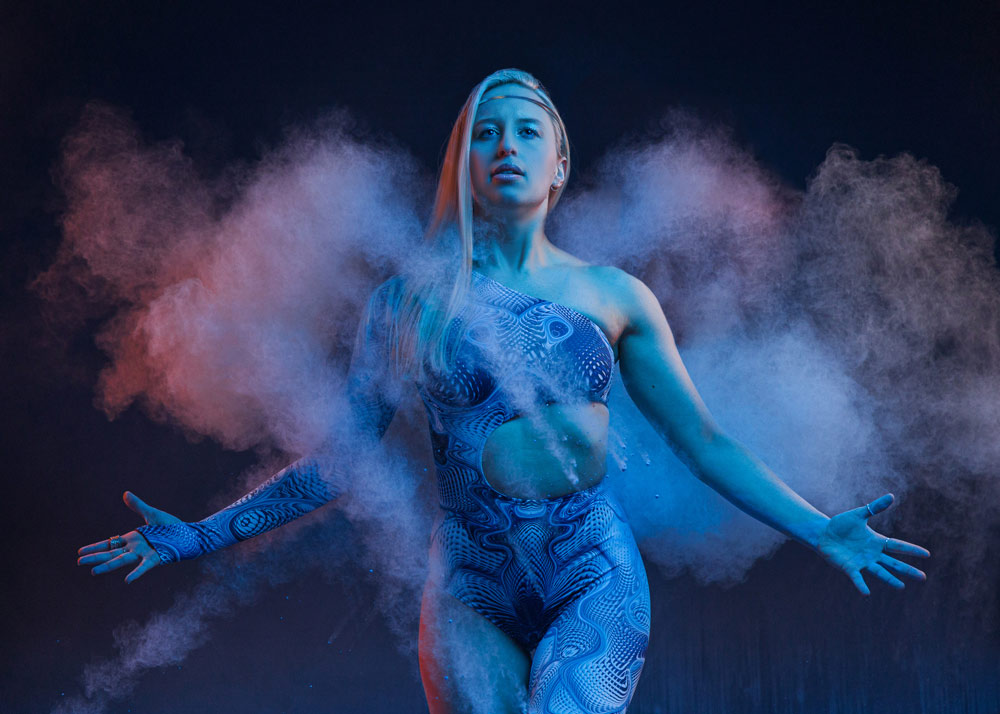
James approaches judging with the same enthusiasm he brings to creating photographs.
“I just really enjoy photography. Looking at and trying to understand images is something I love.”
He also believes anyone who submits their work deserves respect for having the confidence to put their photography forward.
Being part of a judging team has also helped James develop his own photography.
Seeing how other judges interpret and respond to images provides another opportunity to learn.
“Being around other judges teaches me so much — it improves my own photography by osmosis. We learn from each other.”
One competition panel particularly stayed with him: a collection of documentary portraits taken in a circus during the pandemic.
The photographs were raw and authentic rather than heavily polished, and that honesty created a strong emotional response.
“The authenticity shone through.”
Don’t Chase Someone Else’s Style
One of the biggest dangers for photographers developing their own style is becoming too influenced by what has worked for others.
James believes it’s easy to look at successful competition images and attempt to reproduce the same approach.
But portrait photography is fundamentally about the relationship between photographer and subject.
“You have to leave something of yourself in it — even if it’s just 1%.”
That personal element can be the difference between an technically impressive photograph and one that makes a viewer stop and look.
Go Back to One Light
For photographers looking to develop a stronger portrait style, James has a surprisingly simple recommendation: experiment, then strip things back.
He regularly returns to one-light photography because it forces him to concentrate on the fundamentals.
With fewer technical variables to worry about, the photographer has to focus more heavily on communication, connection, character and impact.
“Simplicity reveals strength.”
It’s a useful exercise for any photographer. Rather than continually adding lights, props and effects, removing some of those elements can reveal whether the underlying portrait works on its own.
From Studio Portraits to Billboards in Chicago
James’s career has provided some memorable moments, but two stand out.
One involved getting into a taxi heading towards Chicago airport and seeing one of his wrestling portraits displayed on a billboard above the freeway.
Another was receiving a photograph showing one of his portraits displayed on the Las Vegas Strip.
For someone who first discovered photography as a teenager, those moments were difficult to imagine.
“Thirteen-year-old me would never have believed it. But we got there — one step at a time.”
It’s perhaps an appropriate description of the journey itself.
Creating Better Portraits
James Musselwhite’s approach to portrait photography isn’t simply about sophisticated lighting or creating technically perfect images.
It’s about connection, communication, character and impact.
His experience as both a photographer and judge reinforces the importance of developing your own visual voice rather than simply following trends.
For photographers looking to improve their portraiture, his advice is refreshingly straightforward: experiment, communicate, simplify and make sure you leave something of yourself in every image.
Because ultimately, the strongest portraits aren’t simply photographs of people.
They’re photographs about people.