
DxO PureRAW 5: How DxO Pushes RAW Image Quality Further

Few companies work harder than DxO to extract every last drop of image quality from a camera capture.
For more than 20 years, DxO has been developing detailed mathematical models of camera and lens combinations, using them to correct the optical characteristics of individual systems and improve the quality of the resulting image.
That work is at the heart of DxO PureRAW 5, a RAW processing solution designed for photographers who want to get the very best possible starting point from their files.
More than 100,000 DxO Modules
A key part of DxO’s approach is its proprietary DxO Modules.
A DxO Module is a mathematical model describing the characteristics of a particular lens paired with a specific camera sensor. Rather than treating every lens and camera combination in the same way, DxO can use its laboratory measurements to understand the specific behaviour of each system.
That information can then be used by DxO software to optimise the image and compensate for the limitations of the equipment used to capture it.
At the time of the PureRAW 5 launch, DxO announced that its specialist laboratory in Paris had produced more than 100,000 DxO Modules – a significant milestone that illustrates the scale of the company’s optical testing and measurement programme.
The idea is simple: if the software understands exactly how a particular lens and sensor combination behaves, it can make more intelligent corrections.
Pushing RAW files further
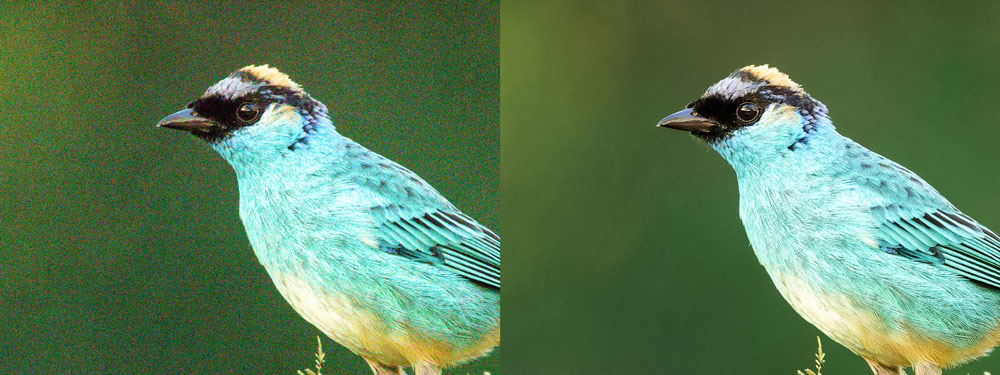
The attraction of PureRAW is particularly obvious when shooting conditions aren’t ideal.
A technically perfect exposure in good light may not need extensive correction, but photography rarely works that way.
You might find yourself working at high ISO, dealing with poor light, shooting with a lens at an extreme aperture or trying to recover an image captured in less-than-perfect conditions.
PureRAW is designed to improve the RAW file before it reaches the main editing stage.
Much of the heavy lifting is handled by DxO’s computational processing and artificial intelligence technologies, allowing the software to analyse the image and optimise aspects of its rendering that would otherwise require considerable manual intervention.
The result is intended to be a cleaner, more detailed and technically refined starting point for further editing.
DeepPRIME and noise reduction
One of the technologies at the centre of DxO’s processing is DeepPRIME.
Noise reduction is particularly important when working with high-ISO images, where increasing sensitivity can introduce luminance and colour noise while reducing fine detail.
Traditional noise reduction can improve noise levels but may also soften important details.
DeepPRIME is designed to take a more sophisticated approach, analysing image data to reduce noise while retaining as much genuine detail as possible.
For photographers who regularly work in difficult lighting conditions, this can be particularly valuable.
Correcting optical imperfections
DxO’s lens and camera measurements also allow PureRAW to address a range of optical characteristics.
Chromatic aberration, distortion, vignetting and other lens-specific effects can vary depending on the equipment being used.
Rather than applying a generic correction, DxO’s approach uses the relevant lens profile to understand how the particular combination behaves across the image.
This can be especially useful towards the edges and corners of a frame, where optical imperfections can become more noticeable.
Support for Fujifilm X-Trans
Fujifilm’s X-Trans sensor technology has traditionally presented particular challenges for RAW processing because of its unusual colour filter array.
DxO has continued to pay specific attention to X-Trans files, making this an important consideration for Fujifilm photographers who want to incorporate PureRAW into their workflow.
For users of supported Fujifilm cameras, dedicated processing can help address the characteristics of the X-Trans sensor rather than treating the RAW file like a conventional Bayer-pattern capture.
Local adjustments
PureRAW 5 also introduced local adjustments, giving photographers more control over where processing is applied.
This can be useful when different areas of an image require different levels of treatment.
For example, applying stronger enhancement to a subject while leaving the background less processed can increase the apparent separation between the two areas.
Used carefully, this can become another tool for directing attention within an image rather than simply applying the same treatment globally.
A revised interface and improved performance
PureRAW 5 also brought an updated interface, making the software easier to navigate and giving the application a refreshed appearance.
Speed improvements were another part of the update, addressing one of the practical considerations of increasingly sophisticated RAW processing.
As computational photography becomes more important, processing power and workflow efficiency matter almost as much as the quality of the final result.
Who is DxO PureRAW for?
PureRAW isn’t necessarily aimed at photographers who want to replace their entire editing workflow.
Instead, it can be viewed as a powerful first stage in the RAW processing process.
A photographer might use PureRAW to optimise a RAW file before continuing their editing in another application, allowing the resulting file to benefit from DxO’s optical corrections, noise reduction and image processing before further adjustments are made.
That makes it particularly interesting for photographers who already have an established workflow but want to improve the quality of the files entering that workflow.
Making the most of difficult captures
Photography is often about dealing with compromises.
You don’t always have the perfect light, the ideal shutter speed or the optimum ISO. Sometimes the moment matters more than technical perfection.
That’s where technologies such as those found in DxO PureRAW become particularly interesting.
The goal isn’t to break the laws of physics – but to use detailed optical measurements, sophisticated algorithms and modern computational processing to get as close as possible to the theoretical potential of the original capture.
For photographers who want to extract every possible detail and quality from their RAW files, that can make a significant difference.
And when you’ve managed to capture an important image in less-than-ideal conditions, having another layer of technology available to help make the most of that file can be very reassuring.