Building a Lifestyle Photography Business: A Full-Time Focus on a Part-Time Basis
By Chris Miller
Not everyone who wants to make money from photography wants to become a full-time professional photographer.
For some photographers, the real goal is to build a business that fits around the rest of their life – whether that means retirement, family commitments, caring responsibilities or simply wanting to escape the pressures of a traditional career.
That was certainly the case for me.
I joined the Societies in 2016 as an avid amateur photographer. At the time, I was travelling around the world in my corporate career in the technology industry and taking travel photographs for stock image libraries.
Every year, I thoroughly enjoyed attending the Annual Convention, and I have attended every one since 2017. I kept an open mind and was inspired by so many of the Masterclass speakers.
I was keen to find a way to do more photography in my future retirement years and began wondering whether an “Encore Lifestyle Career” might eventually be possible.
While continuing in my full-time job, I spent as much of my spare time as possible developing my photography and learning more about the business side of the industry. Each year, the Convention gave me new ideas and insights, and gradually my focus shifted towards building something that could become more than a hobby.
I also decided to specialise in on-location dog photography.
In 2022, aged 58, I retired early from the technology industry and dedicated myself to MIL Pet Photography.
My ambition wasn’t to build a traditional full-time photography career. I wanted a lifestyle photography business that would allow me to enjoy photography while still having time for the other priorities in my life, including being a grandparent.
Starting a photography business in retirement – are you crazy?
I’ve had a few people suggest that I was slightly mad to start a photography business in the 2020s!
But as I approach the end of my third year, I’ve realised that not everyone wants to become a full-time professional photographer.
For me, the objective was to leave the technology industry and full-time employment while maintaining a full-time focus on photography – but on a part-time basis and on the days and hours that suited me.
That distinction is important.
Whether you’re returning to work after caring for others, approaching retirement, have been made redundant, or simply want to take control of how you spend your time, a profitable lifestyle photography business can be a realistic option.
The key is learning from people who have already made the journey.
The Societies has played a major role in that for me. Through the organisation and its network of photographers, educators and friends, I’ve been able to learn, experiment and gradually build the business I wanted.
I strongly believe that if you’re committed, you can develop a part-time lifestyle photography business at any stage of your life.
Perhaps you’re a hobbyist looking to develop a side hustle. Maybe retirement is approaching and you want something meaningful to move towards. Or perhaps you simply want a business that fits around the life you already have.
There are many reasons people make the change, including:
- They’ve simply had enough of the rat race.
- They’re fed up with the politics of the corporate world.
- Retirement is approaching and they want something else to do.
- They’ve been made redundant and see an opportunity to do something for themselves.
- They’ve been a full-time carer and now have the opportunity to start something new.
- They simply need a completely fresh start.
From side hustle to lifestyle photography business
I always knew that I would eventually leave the technology and IT industry and do something different.
The challenge was turning MIL Pet Photography from a three-year side hustle into a credible and sustainable brand.
Looking back, I think the most important thing was recognising that the journey didn’t have to follow the traditional definition of a photography career.
My aim was never to become a photographer who worked every hour available.
Instead, I wanted a full-time focus on a part-time basis.
That became my version of an “Encore Lifestyle Career”.
The transition from a traditional career to a more flexible and fulfilling lifestyle can also provide an opportunity to reconnect with your passions, interests and the parts of your identity that may have been overshadowed by the demands of your previous career.
For me, that made sense – and I believe it can make sense for many other photographers too.
Creating Your Journey
The first thing to consider when setting off on any journey is having a map, or at least some general directions.
Building a photography business is no different.
Because everyone’s circumstances are different, I believe there are three important questions to answer before setting off:
1. Who are your key influencers?
Think about the photographers, educators, business people and coaches who inspire you.
I made a list of photographers who influenced me as well as business coaches whose approach I admired. I then attended one-to-one coaching sessions, listened to podcasts and went to events so that I could absorb as much knowledge and experience as possible.
2. What is your true desire?
Be honest about what you actually want from photography.
Do you want a full-time career? A side hustle? A business that generates additional income? Or simply a flexible business that gives you more control over your time?
For me, it was never about having a full-time career in photography.
I wanted a full-time focus on photography, but on a part-time basis.
3. What is your passion?
Finally, consider what you genuinely care about.
While some photographers are happy working across multiple genres, I wanted my lifestyle photography business to be built around something authentic to me.
Dog photography is in my DNA.
If you can choose a genre that you’re genuinely passionate about, that enthusiasm tends to come through in everything you do – and your potential clients can see it.
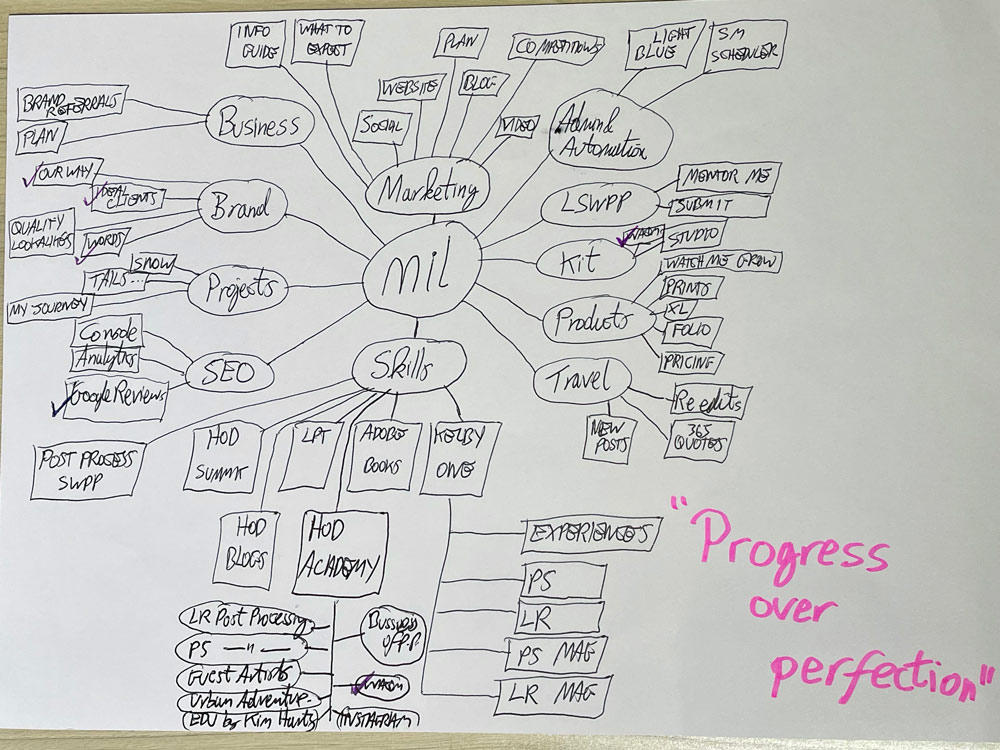
Build your own business map
Over several years of attending the Societies Conventions, I mapped out my own journey on paper.
For a long time, I would use that map and tick elements off as I completed them.
But I quickly realised something important: progress is more important than perfection.
Your journey doesn’t need to look like mine.
The core elements may be similar, but the priorities and order will be different for every photographer.
Think about a holiday. We might all travel to the same destination, but we won’t necessarily visit the same sights, stay in the same hotels or take the same route.
Your photography business is exactly the same.
Your map might include:
- Marketing
- Equipment
- Business planning
- Branding
- Photography projects
- SEO
- Administration
- Automation
- Client products
- Photography skills
- Continuing professional development
You can also choose whether to make the journey yourself or invest in a guide.
Books, courses, coaching and mentoring can accelerate your learning by allowing you to benefit from someone else’s experience.
Building a Photography Brand
You could write an entire article about branding, but there are a few fundamentals that I believe are particularly important when building a lifestyle photography business.
One of the best places to start is with your Why.
Simon Sinek’s well-known “Start With Why” philosophy is useful here. Once you understand why your business exists, your How and What can follow naturally.
At MIL Pet Photography, our previous brand framework was:
Our Why
We believe that every dog lover deserves permanent memories of their dog being themselves.
Our How
Capturing your dog’s true personality in stunning and emotive imagery.
Our What
Beautiful pet photography to treasure forever.
Once you’ve established your Why, think carefully about your ideal client.
Where do they spend their time? What do they value? What motivates them to buy?
For us, we have three customer avatars:
- Dog lovers without children
- Mature couples with grown-up children
- Affluent adult children who want the best for their parents
A young family with children and a dog isn’t our ideal client.
That doesn’t mean we couldn’t work with them. It simply means that our marketing and brand are designed around the people we most want to attract.
Decide what you want your brand to represent
For us, everything is about quality and experience.
We focus on artwork and albums rather than simply selling prints and digital files. In fact, we gift the digital files and place the value on the physical artwork and albums.
It’s also important to understand the language of your brand.
We have ten keywords that describe our work, our personality and the things we like. We use these words consistently across our emails, website and social media.
Consistency helps potential clients understand who you are.
Set Goals – and Measure Progress
The approach I’ve described above has been the barometer for my business since the early days.
One resource I have found particularly useful is Jeff Brown’s The Ambitious Photographer’s Journal. It provides a practical way to set and measure goals while keeping your progress visible from day to day and week to week.
But don’t underestimate the value of accountability either.
Having an accountability partner can make a huge difference.
This might be a business coach or another photographer who you meet with quarterly to review your progress. Ideally, you can reciprocate and provide the same support to them.
Sometimes simply having to explain what you’ve achieved, what hasn’t worked and what you’re going to do next is enough to keep you moving forward.
Your Digital Presence: Keep It Simple
Every lifestyle photography business needs an effective digital presence, but that doesn’t mean it needs to be complicated.
Your website remains the hub of your business. It should clearly communicate what you offer, who you work with and why potential clients should choose you.
Think about your content too.
A well-structured website with useful, relevant content can help potential clients find you through search engines and learn more about your photography before they ever make contact.
Google Business Profile is another essential tool.
It’s free, and completing as much information as possible can help people discover your business locally. I also reuse some of my social media content as Google Business Profile posts, helping keep the profile active while directing people back to my website.
Make social media manageable
I post five or six times a week across Instagram, Facebook, X, Pinterest and LinkedIn.
The important thing is that I don’t create every post from scratch.
I use the platforms’ native scheduling tools and have a theme for each weekday, with a more personal post on Sunday.
I prepare a year’s worth of content each December and then load it into the scheduling platforms once a month.
The result?
It takes me around two hours a month to maintain content across six days a week.
My advice is simple:
Have themes. Create evergreen content. Recycle your best ideas. Keep it simple.
Take Your Profit First
This is possibly the most important financial lesson I’ve learned.
Take your profit first.
The concept is explained in Mike Michalowicz’s book Profit First, and there are also coaching resources available through the Profitable Photographer.
Every other Friday, I separate the profit and other elements of the business into different bank accounts.
Since adopting the Profit First approach, the business has run much more smoothly.
For us, we’ve even created an account from the profit that funds an annual holiday – effectively allowing the business to pay for it.
Whatever approach you take, understanding your numbers and making sure your business is genuinely profitable is essential.
Revenue isn’t the same as profit.
Skills and Continuous Professional Development
Even during my corporate career, I believed in hiring the best people and surrounding myself with the best.
The same principle applies to photography.
There are some incredibly talented photographers who also provide education, coaching and mentoring. I recommend identifying the people who are outstanding in your chosen genre and investing in learning from those you respect and want to emulate.
That investment has accelerated my understanding and success.
It’s also an investment in your business.
“Always be learning” is a great motto.
I now have a good library of photography books and access to online learning from photographers I admire. It’s an investment of both time and money, but one that ultimately benefits both the business and our clients.
Leveraging the Power of the Societies
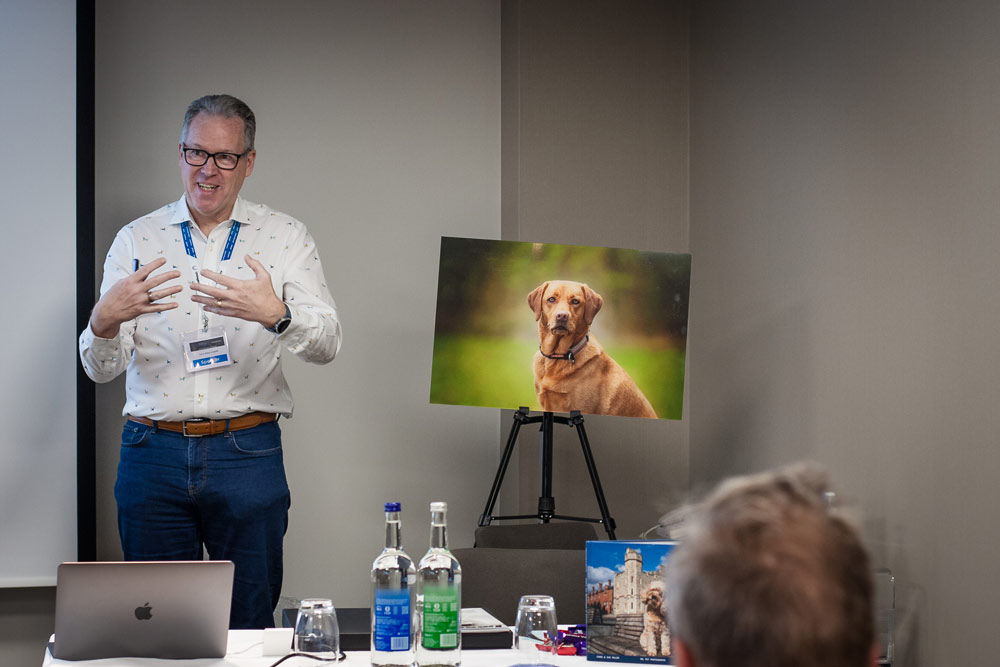
The Annual Convention and Roadshows provide tremendous opportunities to learn from and be inspired by some of the industry’s leading photographers.
The Trade Show is equally valuable, providing opportunities to meet manufacturers, suppliers and other business leaders – often with exclusive discounts available to members.
But for me, one of the greatest benefits has been the network of photographers I’ve met over the years.
The friendships and relationships I’ve developed are something I value enormously.
I’d like to give special thanks to Christina Lauder, Terry Donnelly, Kris Anderson, Belinda Richards, Hanna Neret, Maria Michael, Sarah Edmunds and Panikos Hajistilly, who have all taken time to support me and help me push through the imposter syndrome.
The Societies’ Mentor Me programme has also played an important role in my development.
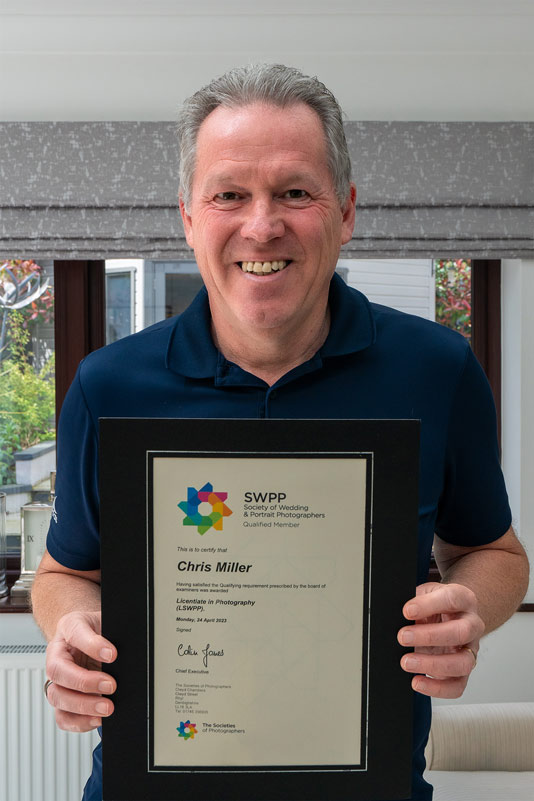
Through the programme, I was able to work towards my qualifications and ultimately achieve my Licentiate.
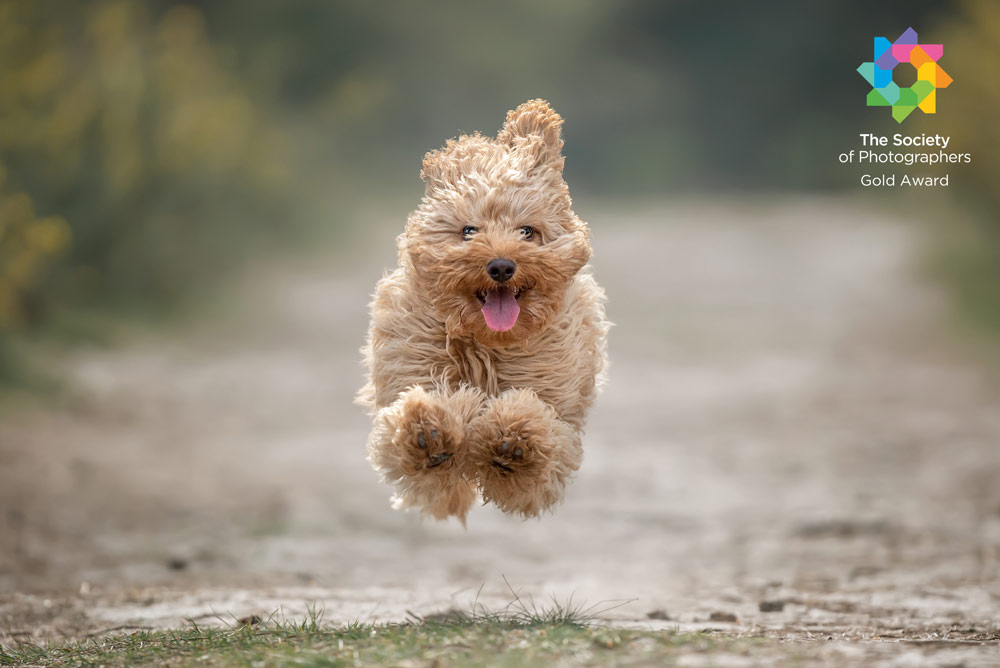
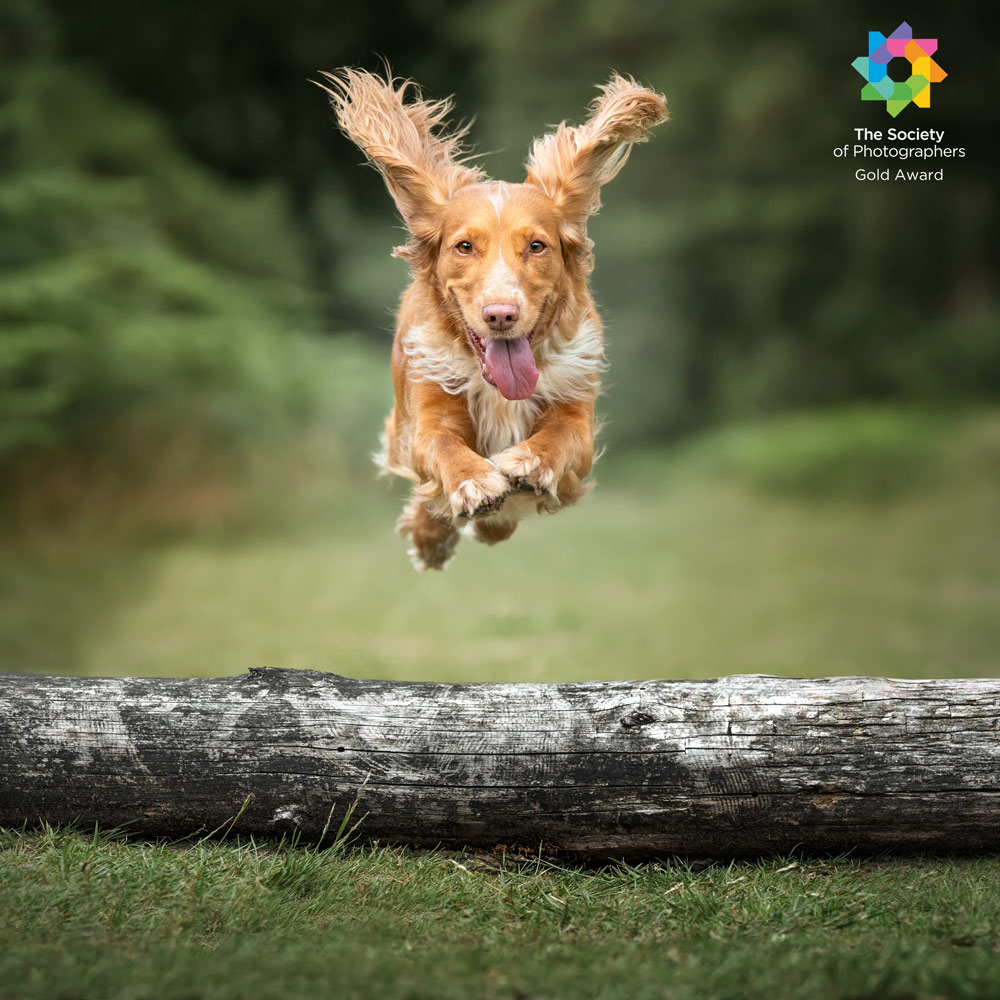
Once I had achieved my Licentiate, I felt ready to enter the Monthly Competitions. Two of my “dogs in action” images have since received Gold Awards.
For me, the Societies has been an important part of the journey from feeling like an imposter to believing that I genuinely belong in the photography industry.
Making a Difference Through Charity
Giving something back has always been important to me.
During my corporate career, I worked closely with charities including The Prince’s Trust, now known as The King’s Trust.
When I created my lifestyle photography business, I wanted to continue that commitment and find a charity that connected naturally with my Why.
I offer dog charities no-cost services as a professional dog photographer, but I also invest my own time and effort supporting Support Dogs.
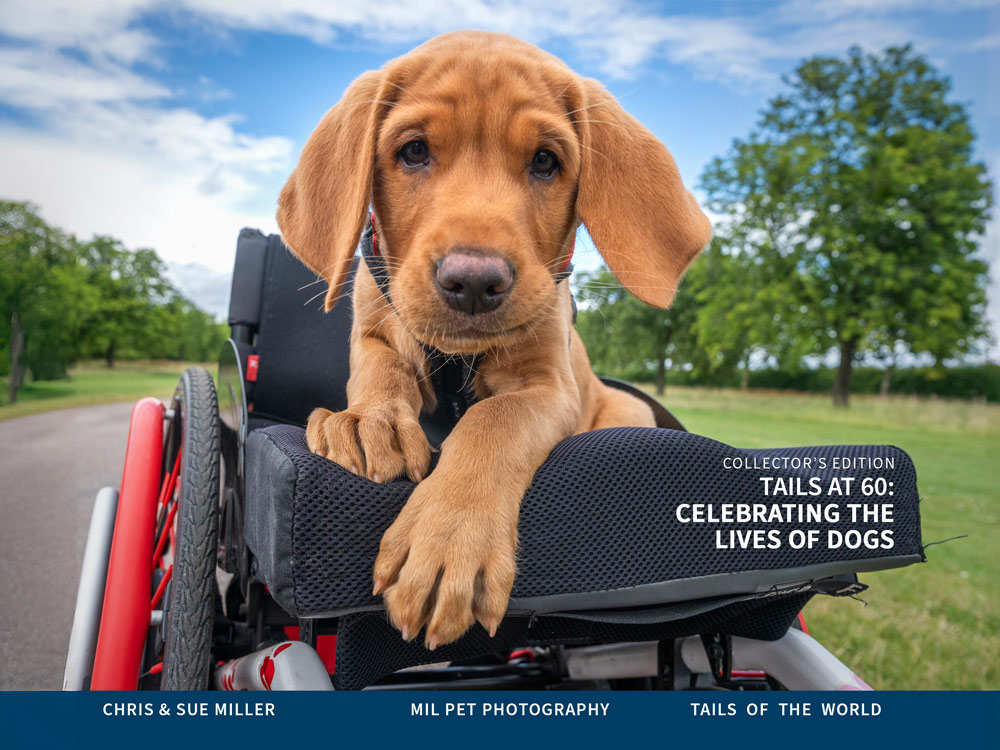
In 2024, I raised £3,000 for the charity through the Tails at 60: Celebrating the Lives of Dogs book project, part of the Tails of the World Collective.
The benefits go beyond simply raising money.
A charitable programme can create a pipeline of potential clients while also providing a genuine point of difference for your business.
In fact, my last two clients specifically told me that the charitable side of MIL Pet Photography was one of the reasons they chose me.
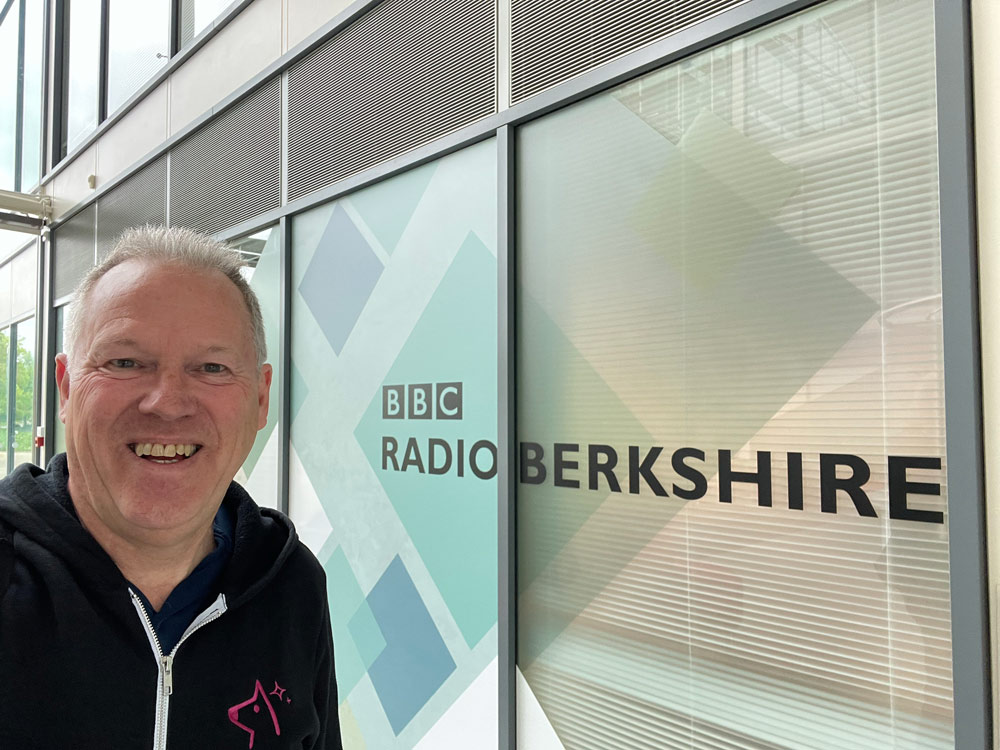
It even resulted in BBC Radio Berkshire interviewing me about my journey from a career in IT and corporate politics to photography and “belly rubs”.
Putting It All Together
Building a lifestyle photography business isn’t about following somebody else’s blueprint.
It’s about creating your own map for your journey.
For several years, I used photography as a side hustle while gradually building the skills, knowledge, brand and business structure I would need when I eventually left my corporate career.
My biggest lessons are simple:
Focus on progress, not perfection.
Set achievable but stretching goals and review them regularly.
Invest in your education.
Use books, courses, mentors and coaches to learn from people who have already achieved what you’re trying to achieve.
Choose a genre you’re passionate about.
Let your personality, behaviour and genuine enthusiasm come through in everything you do.
Build a brand around your ideal client.
Understand who you want to work with, what they value and why they should choose you.
Make your business fit your life.
A successful photography business doesn’t have to mean working full-time. You can design it around the hours, commitments and lifestyle you want.
Find someone who will hold you accountable.
A good friend, mentor, coach or fellow photographer can provide honest feedback and keep you moving forward.
And perhaps most importantly, don’t assume it’s too late.
If I can start and build a lifestyle photography business at my age, continue to win awards for both photography and business, and create something that gives me income, purpose and flexibility, then I believe it’s possible for many other photographers too.
You don’t have to choose between photography and the rest of your life.
With the right approach, photography can become part of the life you want to lead.