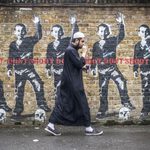
Street Art Around the World: Inspiration for Photographers and Urban Photography Projects
Street art can transform an ordinary city street into something completely unexpected.
A blank wall can become a huge photorealistic portrait, a political statement, an optical illusion or an explosion of colour. For photographers, street art provides both a subject in its own right and an ever-changing backdrop for urban and street photography.
One of the best ways to appreciate the sheer scale and variety of the genre is to look beyond your own town or country.
World Atlas of Street Art, by Lachlan MacDowall and Rafael Schacter, provides an impressive introduction to the international street art scene, covering hundreds of examples across around 400 pages.
For photographers interested in urban art, it also highlights just how much creative potential exists in the streets around the world.
Street art is a global art form
Street art is no longer something that can be associated with a handful of major cities.
Artists working in very different cultural and political environments have adopted murals, stencils, installations, lettering and other forms of public art to communicate ideas and transform their surroundings.
Some works are purely decorative. Others are political, social or deliberately provocative.
In some parts of the world, artists can also face serious consequences for expressing their views publicly.
That variety is part of what makes street art such an interesting subject for photographers.
The artwork itself can be compelling, but the environment in which it exists can tell an equally important story.
From graffiti lettering to photorealistic murals
Not every piece of street art demonstrates the same level of artistic skill.
Traditional graffiti lettering has its own history, techniques and culture, but the broader street art scene now encompasses an enormous range of styles.
Some large-scale murals demonstrate extraordinary technical ability.
Photorealistic faces, convincing three-dimensional effects and complex compositions can require exceptional planning and craftsmanship, particularly when the artist is working freehand on a huge vertical surface.
For photographers, these large murals present an interesting challenge.
Their scale can be difficult to communicate in a straightforward reproduction, which is why including people, vehicles or architecture within the photograph can sometimes provide useful context.
Street art can be surprisingly small
Street art isn’t necessarily about enormous walls.
One of the interesting aspects of the genre is the sheer range of scales and techniques used by artists.
Some interventions occupy an entire building. Others are tiny additions to the urban environment that could easily be missed unless you’re actively looking for them.
This presents an interesting challenge for photographers.
Instead of concentrating exclusively on the biggest and most spectacular murals, try looking for smaller pieces of urban art hidden within the environment.
A small artwork incorporated into a wall, pavement or piece of street furniture can make a fascinating subject when photographed in context.
Why street art is so interesting for photographers
Street art has several characteristics that make it particularly suitable for photographic projects.
It changes constantly
Murals can disappear almost as quickly as they appear.
Buildings are demolished, walls are repainted, businesses change and new artists move into an area.
A photograph can therefore become a historical record of a place that no longer exists in the same form.
It provides colour and texture
Urban environments can sometimes appear visually repetitive.
A brightly coloured mural can completely change the character of a street and provide strong shapes, patterns and colour combinations for photographers to work with.
It creates opportunities for street photography
A mural doesn’t have to be the subject of the photograph.
People interacting with the artwork can provide a completely different image.
Look for someone walking past in contrasting clothing, a person stopping to study the mural, a cyclist passing at exactly the right moment or a reflection that incorporates the artwork.
The possibilities are endless.
Use street art as inspiration for a photographic project
If you’re looking for an idea for a long-term photography project, documenting street art in a particular location can be surprisingly rewarding.
You could photograph every significant mural in your town.
Alternatively, concentrate on a particular theme:
- Portrait murals
- Political street art
- Graffiti lettering
- Optical illusions
- Animal murals
- Community projects
- Temporary artworks
- Street art festivals
- The work of individual artists
- The changing walls of a particular neighbourhood
The key is to give the project a clear purpose.
Rather than simply collecting photographs of attractive murals, think about what you are trying to document.
Photographing street art around the world
One of the attractions of street art photography is that it can give you a reason to explore a destination.
Many cities have established street art areas, mural trails and annual festivals.
Before travelling, research what’s available at your destination.
Look for local street art guides, artist websites, photography groups and community organisations. Maps can also be extremely useful because the most interesting work isn’t necessarily found in the obvious tourist locations.
A little research before you travel can turn an ordinary city break into a photographic project.
Look beyond the artwork
One of the biggest mistakes photographers can make when photographing street art is concentrating exclusively on the artwork.
If you’re producing a catalogue-quality reproduction, that’s exactly what you may need to do.
But if you’re creating a photographic project, the surroundings are often just as important.
Ask yourself:
Who uses this space?
What is happening around the artwork?
How does the mural interact with the building?
Does the surrounding architecture add something to the photograph?
Can I use a person to show the scale of the artwork?
These questions can lead to much more interesting photographs than simply making a perfectly straight record of the wall.
Street art and the changing city
Perhaps the most interesting aspect of photographing urban art is that it provides a way of documenting change.
A photograph of a mural doesn’t just show paint on a wall.
It shows the building, the street, the businesses, the vehicles, the people and the surrounding environment at a particular moment in time.
Years later, the artwork may have disappeared and the neighbourhood may have changed completely.
Your photograph becomes a record of that place.
This is one reason street art can make such a strong subject for documentary photography.
A world of photographic possibilities
World Atlas of Street Art demonstrates just how extensive the international street art scene has become.
The book’s strength is its breadth, bringing together examples from cities and countries around the world and showing the extraordinary variety of approaches artists have taken to public art.
For photographers, however, its greatest value may be the inspiration it provides.
You don’t necessarily need to travel to another country to start.
There could be an entire collection of fascinating work within a few miles of your home.
The next time you’re walking through your local town or city, look beyond the obvious landmarks.
Check the end walls of buildings. Look down side streets. Explore industrial areas and neighbourhoods away from the tourist routes.
You might be surprised by what you find.
And once you’ve found it, don’t just photograph the wall.
Photograph the story around it.
About World Atlas of Street Art
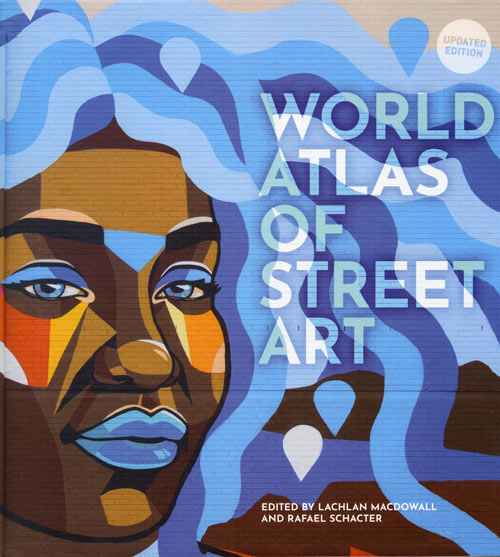
World Atlas of Street Art by Lachlan MacDowall and Rafael Schacter is a comprehensive survey of street art from around the world. The edition reviewed by Professional Imagemaker covers approximately 400 pages and explores a wide variety of artists, styles and locations.
For photographers, it provides both an introduction to the breadth of the street art movement and plenty of inspiration for exploring urban photography closer to home.