How to Be More Creative as a Photographer
By Adrian and Bergit Barnett
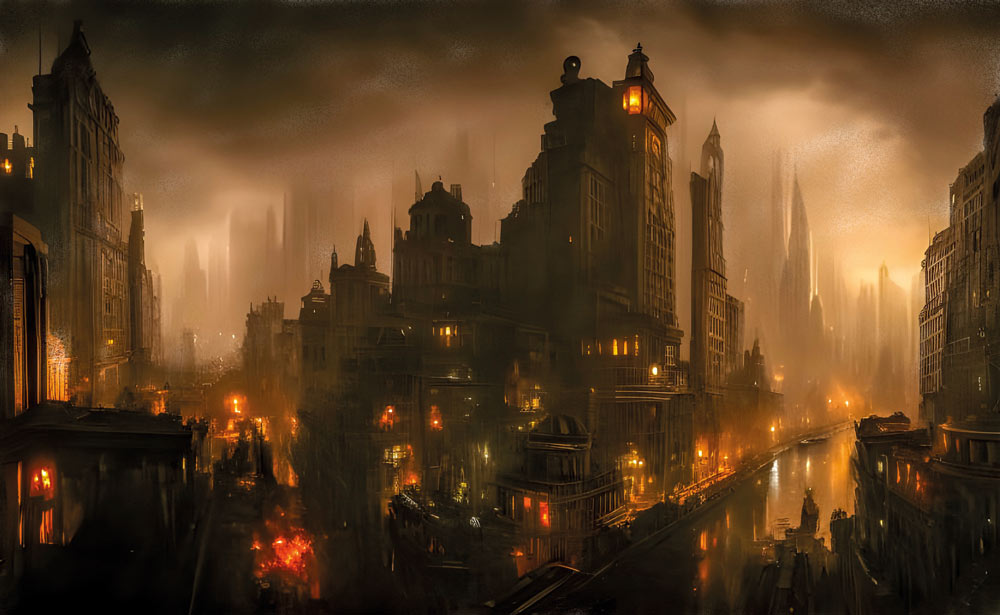
Creativity is often treated as though it is something you’re either born with or you aren’t.
Some photographers seem to have an endless supply of original ideas. They see a location, a person or a simple everyday scene and immediately imagine something that the rest of us might never have considered.
But creativity isn’t simply a natural talent. It is something that can be developed, exercised and encouraged.
And becoming a more creative photographer isn’t necessarily about learning another camera technique or buying another piece of equipment. In many cases, it starts with learning to look at the world differently.
What does creativity mean in photography?
Being creative isn’t simply doing something unusual.
Pointing your camera at an unusual angle, applying an extreme preset or using a complicated lighting setup doesn’t automatically make an image creative.
There needs to be an idea behind the decision.
A creative photograph might communicate an emotion, tell a story, challenge an assumption, make the viewer look twice or present a familiar subject in a completely different way.
The important question isn’t:
“Is this different?”
It’s:
“Why am I doing this?”
If every creative decision has a purpose, your photography is much more likely to have something meaningful to say.
Creativity starts with curiosity
One of the simplest ways to become more creative is to become more curious.
Ask questions.
Why does this photograph work?
Why does that image make you uncomfortable?
Why does one portrait feel emotional while another technically perfect portrait feels completely lifeless?
What would happen if you changed the lighting?
What if you photographed the subject from somewhere completely different?
What if you removed something from the scene?
What if you photographed it at another time of day?
What if you ignored the conventional way of doing it?
Children naturally ask questions because they are constantly discovering the world.
As photographers, we can lose some of that curiosity as we become more experienced. We learn the rules, discover what works and eventually develop familiar ways of doing things.
Experience is valuable, but it can also create habits.
Creativity often starts when you begin questioning those habits again.

Don’t confuse technique with creativity
Photography has an enormous amount of technical knowledge to learn.
You need to understand exposure, focus, lenses, lighting, composition and, increasingly, editing and post-production.
Those skills matter.
But technical competence isn’t the same thing as creativity.
A photograph can be perfectly exposed, pin-sharp and beautifully processed and still fail to communicate anything.
Think about music.
A musician who is learning a new piece has to concentrate on the notes, chords and technique. With practice, those movements become increasingly automatic.
Eventually, the musician doesn’t need to consciously think about every finger movement.
That frees their attention to concentrate on interpretation and expression.
Photography works in much the same way.
The more familiar you become with your equipment and the fundamentals of photography, the less mental energy you need to spend worrying about them.
That gives you more room for ideas.
Learn the rules — then understand when to break them
The Rule of Thirds, leading lines, symmetry, negative space and other compositional techniques are useful tools.
But they are not laws.
If you follow every photographic rule automatically, you can produce technically competent photographs that all look remarkably similar.
Instead, learn what the rules achieve.
Then decide whether they help you communicate the idea you have in mind.
For example, tilting the camera isn’t inherently creative.
But deliberately using a Dutch angle to create tension, instability or unease can be an effective creative decision.
The difference is intention.
The technique is simply the tool.
The idea comes first.
Look outside photography for inspiration
One of the most effective ways to develop your creativity is to stop looking exclusively at photographs.
Explore other creative disciplines.
Watch films.
Listen to music.
Visit galleries.
Read books.
Look at paintings.
Study graphic design.
Explore architecture.
Read poetry.
Look at fashion and advertising.
Why?
Because ideas move between disciplines.
A lighting idea from cinema might influence a portrait.
A colour combination from a painting might influence a landscape.
The composition of a poster might inspire a commercial photograph.
A piece of music might suggest an entire visual concept.
This process of combining ideas from different areas can lead to something that feels genuinely your own.
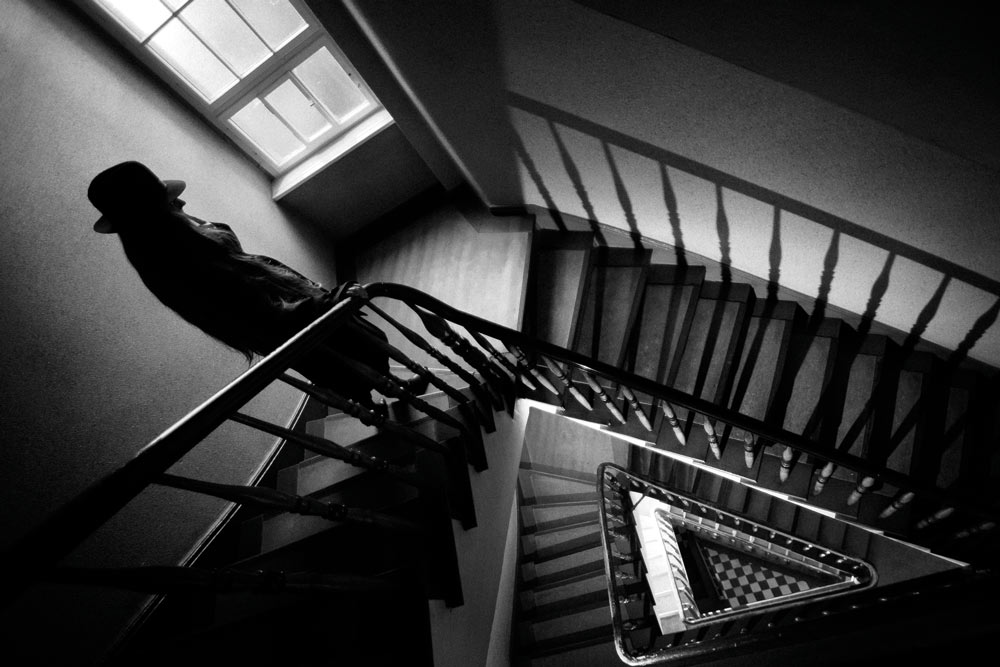
Study films like a photographer
Cinema is an especially useful source of inspiration.
Pay attention to:
- Colour
- Lighting
- Composition
- Camera angles
- Lens choices
- Shadows
- Negative space
- Set design
- Costume
- Movement
- How the image changes your emotional response
Don’t just watch the story.
Study the frame.
Ask yourself why the director and cinematographer made those particular choices.
A scene can feel warm, threatening, nostalgic, lonely or energetic before a character has even spoken.
Photography can achieve the same thing in a single frame.
Don’t become dependent on presets
Presets, LUTs and other ready-made effects can be useful tools, particularly when you need consistency or want to explore different possibilities.
But there is a danger in allowing somebody else’s creative decisions to become your own.
If you apply the same popular preset to every photograph, you may achieve a recognisable look, but you haven’t necessarily developed your own visual language.
Instead, study what the preset is actually doing.
Is it changing the contrast?
The colour temperature?
The saturation?
The relationship between highlights and shadows?
Once you understand those decisions, try creating your own interpretation.
The goal isn’t to avoid other people’s ideas.
The goal is to learn from them rather than simply copy them.
Give yourself a “Big Idea”
Before an important shoot, ask yourself:
What is the idea behind this photograph?
That question can transform the way you work.
A wedding photograph might simply record two people standing together.
Or it could communicate anticipation, intimacy, humour, chaos or the overwhelming emotion of the day.
A commercial photograph shouldn’t simply show a product.
It needs to communicate something about that product and the brand behind it.
A portrait shouldn’t merely show what someone looks like.
It can communicate their personality, profession, aspirations, relationships or emotions.
The strongest photographs often have an idea that can be understood without needing a paragraph of explanation.
Give ideas time to develop
Creativity doesn’t always happen on demand.
If you’ve ever been asked to come up with a brilliant idea in a meeting and found your mind completely blank, you’ll know what this feels like.
Sometimes ideas need time to develop.
Write down your initial idea.
Then leave it.
Come back to it later and ask:
Can I make this better?
Then do it again.
And again.
Your first idea will often be the most obvious one.
Your second might be slightly more interesting.
By the third, fourth or fifth attempt, you may find yourself moving away from the predictable solution and towards something genuinely different.
This is why keeping a notebook or digital collection of ideas can be so useful.
Don’t wait until you need an idea before starting to collect them.
Don’t be afraid of failure
Creativity involves experimentation.
And experimentation means that some ideas won’t work.
That’s not a problem.
A failed creative experiment can teach you considerably more than an idea that you never attempted.
Try something different.
If it doesn’t work, ask yourself why.
Was the concept wrong?
Was the execution wrong?
Was the lighting wrong?
Did the idea work in your head but not in the final photograph?
Those questions turn failure into information.
The next attempt can then be better.
Create for your audience, not just yourself
Creative photography isn’t about showing everyone how clever you are.
Ultimately, photography communicates.
The viewer needs to feel something.
They might be moved by a portrait, excited by a commercial image, fascinated by a landscape or unsettled by a conceptual photograph.
That’s why creativity and communication are so closely connected.
Ask yourself:
What do I want the viewer to feel?
That question can be more useful than asking:
What technique should I use?
Start with the emotion or message and then work backwards to determine how the photograph should be created.

Challenge your own habits
Experienced photographers can fall into a creative comfort zone.
You know which lens you like.
You know which aperture you normally use.
You know how you position your lights.
You know how you edit your photographs.
You know what your clients usually like.
All of that experience makes you efficient.
But efficiency isn’t always creativity.
Occasionally, deliberately make yourself uncomfortable.
Use a lens you don’t normally use.
Photograph at a time of day you would normally avoid.
Change your lighting.
Try black and white.
Try colour.
Photograph something you’ve never photographed before.
Work in a completely different genre.
Give yourself restrictions.
Constraints can actually encourage creativity because they force you to solve a problem rather than relying on familiar solutions.
Creativity is a skill you can exercise
Perhaps the biggest misconception about creativity is that creative people simply have more ideas.
In reality, creative thinking can be encouraged through curiosity, experimentation, learning and practice.
The more you look, question, experiment and connect ideas from different sources, the more opportunities you create for something new to emerge.
Think of it as a gym for your photographic brain.
You wouldn’t expect to become physically stronger by going to the gym once.
Creativity works in much the same way.
Exercise it regularly.
Challenge it.
Feed it with new experiences.
And, most importantly, give yourself permission to experiment.
Start asking better questions
The next time you’re about to take a photograph, don’t immediately ask yourself whether the exposure is correct or whether you’ve followed the Rule of Thirds.
Ask:
Why am I taking this photograph?
What do I want the viewer to feel?
What haven’t I tried before?
Can I make this more interesting?
Can I communicate the idea more clearly?
Those questions might not immediately produce a great photograph.
But they will make you a more curious photographer.
And curiosity is where creativity begins.
Take your creativity into the Photographer’s Gym
Creativity improves with practice, so don’t leave it to chance.
Set yourself small creative challenges throughout the week. Give yourself restrictions, explore unfamiliar subjects, experiment with different perspectives and deliberately look for inspiration outside photography.
In our next guide, we’ll take this idea further with practical photography creativity exercises and challenges designed to help you stretch your creative thinking and find new ways of approaching your photography.