Understanding Perspective in Photography: How Camera Distance Changes Your Images
By Dave Montizambert
Perspective is one of the most important—and often misunderstood—elements of photography.
Photographers frequently talk about how different lenses change perspective. Wide-angle lenses are said to exaggerate distance, while telephoto lenses are often described as “compressing” the scene. But there is an important distinction to understand:
Your distance from the subject is what changes perspective. The lens determines how much of the scene you can include in the frame.
Understanding this relationship can give you much greater control over your compositions, particularly when you’re photographing people against an interesting background.
Using perspective to tell a story
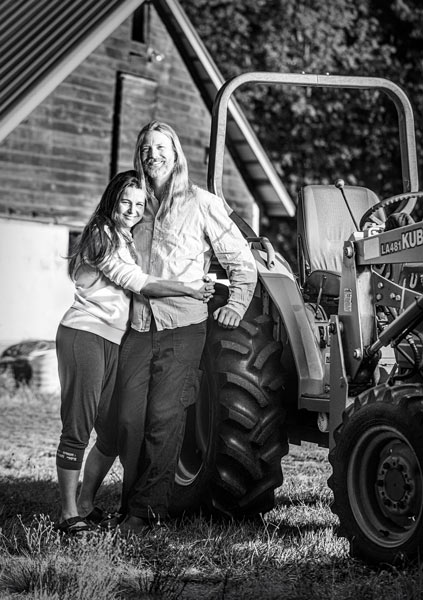
When photographing a person, it’s tempting to concentrate entirely on the subject. However, the background can be just as important—particularly in environmental portrait photography.
For example, imagine you’re photographing a farmer on their land. You could create a beautiful portrait against a generic background, but including the barn, machinery or surrounding landscape can immediately tell the viewer more about who that person is and what they do.
The challenge is finding the right relationship between your subject and the background.
This is where perspective becomes particularly useful.
Rather than immediately changing lenses, first consider where you are standing.
The simple perspective technique
Start by positioning your subject and framing the photograph.
Look carefully at the relationship between the subject and the background.
Is the background too dominant? Or is it too small to communicate the story you want?
If you need the background to appear larger in relation to your subject, move further away from the subject and use a longer focal length to maintain your framing.
If you want the background to appear smaller in relation to your subject, move closer and use a shorter focal length to achieve the framing you want.
The important point is that moving changes the perspective.
The lens is then used to achieve the framing you need.
A simple way to remember it
- Move closer: the background becomes relatively smaller.
- Move further away: the background becomes relatively larger.
- Change focal length: changes your field of view and framing.
- Crop in post: can provide another option, although excessive cropping reduces resolution.
This approach is particularly useful when photographing environmental portraits because it allows you to decide how much visual information the background contributes to the story.
Does a telephoto lens really compress perspective?
This is one of the most common photography misconceptions.
A telephoto lens does not inherently create “compressed perspective”.
Instead, photographers generally stand further away from their subjects when using a longer focal length. That change in camera position is what changes the perspective.
You can demonstrate this yourself.
Take a photograph with a telephoto lens. Without moving your camera, switch to a wider-angle lens and photograph the same scene.
Now crop the wide-angle photograph so that the subject occupies the same area of the frame as in the telephoto photograph.
The perspective and relative size of objects in the scene will be essentially the same, although depth of field and other characteristics may differ.
The key lesson is simple:
Perspective is controlled primarily by camera position, not focal length.
Use a stand-in when planning your composition
If you’re working with clients, there’s no reason to make them stand around while you experiment with composition and lighting.
A stand-in can be anything that occupies approximately the same position as your subject.
For example, a photographer working outdoors could use a vehicle, chair or assistant to establish the approximate composition before bringing the client into position.
This is particularly useful when you’re working against a deadline or when the available light is changing quickly.
The same principle works in the studio. A stand-in can allow you to establish your lighting, exposure and composition before the subject arrives.
It saves time and makes the shoot considerably less stressful.
Perspective and environmental portrait photography
When you’re photographing someone in their working environment, ask yourself what the background contributes to the photograph.
A background shouldn’t simply be there because you had nowhere else to put it.
Instead, use it to answer questions about your subject.
Where do they work?
What do they make?
What environment are they associated with?
What objects help tell their story?
Once you’ve established what needs to appear in the frame, use your camera position to control the relationship between the subject and those environmental elements.
Combining perspective with lighting
Once the composition is established, you can concentrate on lighting.
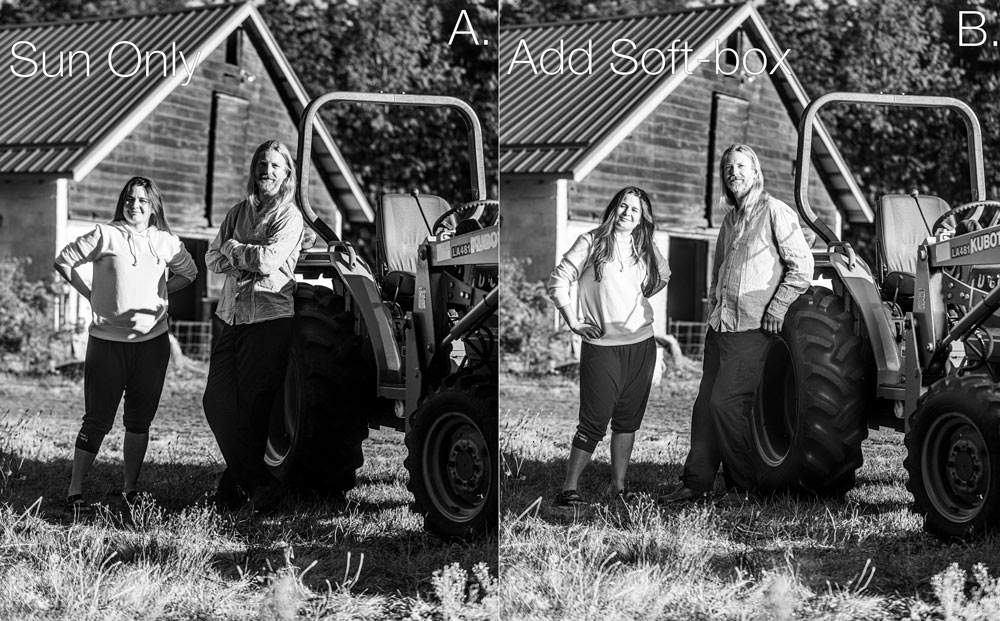
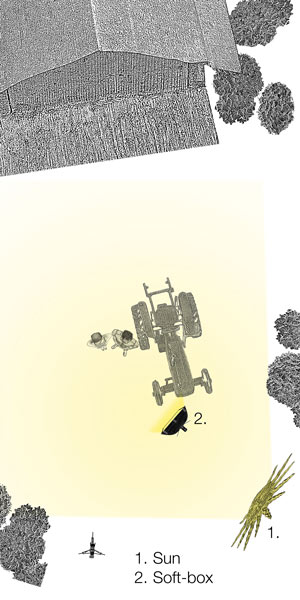
In one environmental portrait, the available light may create an attractive atmosphere but leave part of the subject’s face in shadow. A softbox or other supplementary light can be positioned to complement the existing light rather than overpower it.
The aim isn’t necessarily to make the lighting look artificial.
Instead, carefully controlled supplementary light can help shape the face while still allowing the surrounding environment to retain its natural character.
This is particularly effective during the golden hour, when the available light is changing rapidly.
Don’t forget the background
It’s easy to become so focused on the subject that the background gets overlooked.
Before pressing the shutter, scan the entire frame.
Look for:
- Distracting objects
- Bright highlights
- Poles or branches appearing to grow from someone’s head
- Unwanted vehicles
- Clutter
- Strong lines leading away from the subject
- Elements that compete with the subject for attention
Sometimes a small change in camera position can completely transform the composition.
You don’t necessarily need a different lens or a more complicated setup. You may simply need to move.
The photographer’s position is a creative tool
Understanding perspective gives you another creative control over your photography.
Instead of thinking:
“Which lens should I use?”
try asking:
“Where should I stand?”
Once you’ve established your position, choose the focal length that gives you the framing you want.
This is especially valuable for environmental portraits, commercial photography and location work, where the relationship between the subject and their surroundings can be an important part of the story.
The next time a composition doesn’t look quite right, resist the temptation to immediately change lenses.
Move first. Then reframe.
You may find that a small change in camera position produces a much bigger improvement than changing the lens ever could.