
Ironbridge Gorge Photography: A Photographer’s Guide
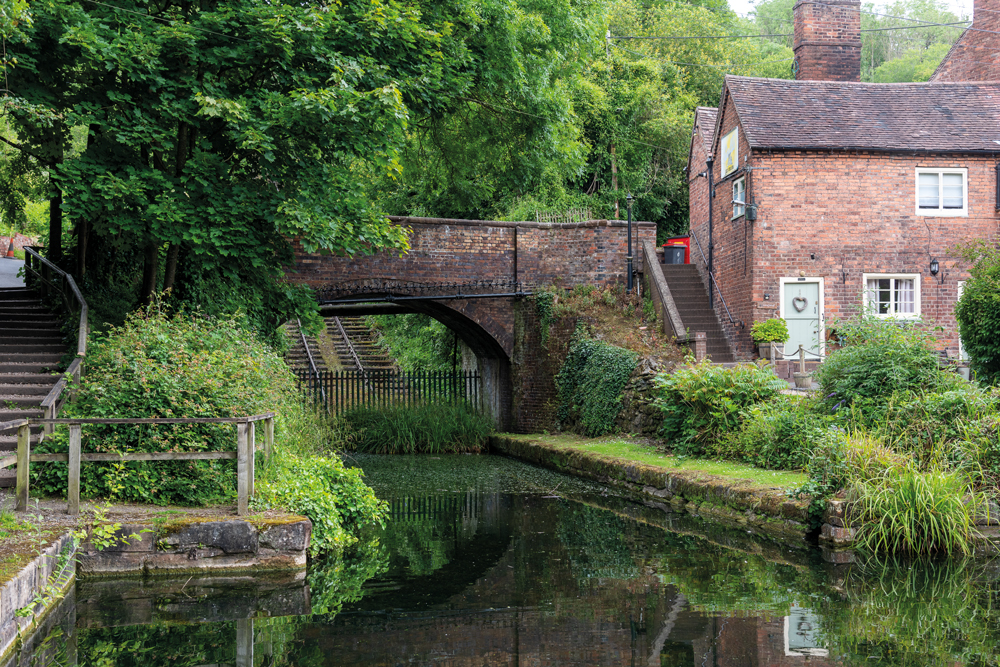
The Ironbridge Gorge is one of those places where photographers can easily spend an entire day exploring – and still leave with a list of locations they haven’t photographed.
Set in Shropshire’s Severn Valley, the gorge is packed with industrial heritage, historic buildings, museums, bridges, waterways and atmospheric locations. For photographers, it offers a particularly varied combination of architecture, landscape, documentary, street and heritage photography.
It is also a fascinating place to photograph if you enjoy creating images for composites, historical projects or period-style portraits.
Why Ironbridge Gorge is so good for photography
The history of Ironbridge is closely connected with the Industrial Revolution, and much of the surviving architecture and landscape provides an insight into the area’s industrial past.
For photographers, this creates plenty of opportunities to look beyond conventional landscapes.
You can photograph:
- Historic industrial buildings
- Tile and pottery works
- Bottle kilns
- Bridges and waterways
- Victorian architecture
- Machinery and industrial details
- Period interiors
- Museum displays
- Street scenes
- Landscapes around the River Severn
- People in period costume
- Architectural details and textures
The variety is one of the biggest attractions.
You can move from photographing a historic industrial building to a Victorian street scene, then spend time concentrating on close-up details inside a museum.
Jackfield Tile Museum
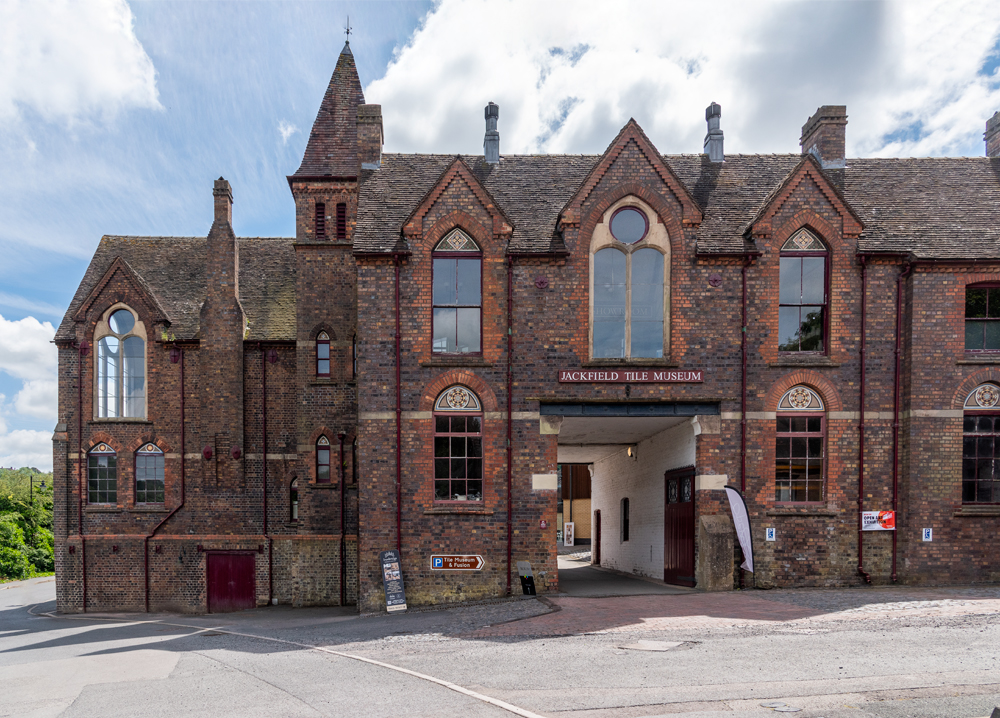
One of the highlights for photographers is the Jackfield Tile Museum, housed on the site of the former Craven & Dunnill Encaustic Tile Works.
The museum contains an impressive collection of historic decorative tiles, displayed in a variety of ways.
There are individual tiles, panels, furniture, room settings and reconstructed environments.
For photographers, this creates opportunities for several different approaches.
You could concentrate on the overall architecture and museum interiors, or work much closer to the subject and photograph individual patterns, colours, textures and decorative details.
The collection also provides an interesting opportunity to explore the relationship between photography and design.
Arts and Crafts, Art Nouveau and Art Deco influences can all be found within historic decorative work, making the museum particularly interesting for photographers who enjoy pattern, symmetry and architectural detail.
Look for the details
Don’t be tempted to photograph every display from the same distance.
Try working with different focal lengths and viewpoints.
A wide-angle photograph can establish the environment, while a longer lens can isolate individual details.
Look for:
- Repeating patterns
- Geometric shapes
- Texture
- Reflections
- Symmetry
- Contrasting colours
- Decorative borders
- Signs of age and wear
These smaller details can sometimes produce more interesting photographs than the obvious wide establishing shot.
Maw & Co Benthall Works
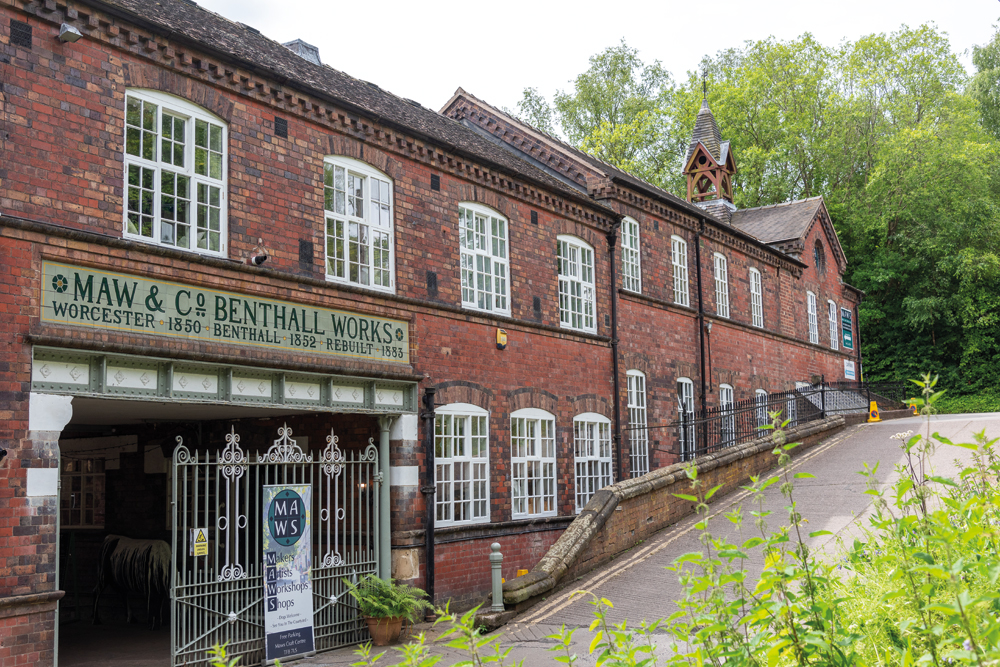
A short distance away is the former Maw & Co tile works at Benthall.
The surviving architecture provides another opportunity to photograph the area’s industrial heritage.
Historic industrial buildings are particularly rewarding subjects because they combine strong architectural shapes with texture and evidence of their previous use.
Look for doorways, brickwork, windows, roof structures and surviving signs.
Rather than simply recording the building, try to find a viewpoint that communicates something about its history.
The River Severn and Ironbridge
The River Severn provides a completely different photographic environment.
After concentrating on industrial architecture and museum interiors, the river offers the opportunity to introduce landscape photography into your visit.
Bridges, buildings and industrial structures can be combined with the river to create wider compositions.
Depending on the conditions, reflections can also become an important part of the image.
Early morning and evening can be particularly rewarding because lower-angle light can add depth and texture to historic buildings.
Cloudy conditions shouldn’t necessarily be considered a problem either.
For heritage photography, softer light can sometimes work better than harsh sunshine because it reduces distracting contrast and allows details in the buildings to remain visible.
The Hay Inclined Plane
The Hay Inclined Plane is another reminder of the engineering infrastructure that once connected the industrial sites with the canal and river network.
It was used to move tub boats between different levels, providing an ingenious solution to the problem of transporting materials through the gorge.
For photographers, the incline offers an opportunity to combine engineering, landscape and industrial history.
Try looking for strong lines and perspective.
The structure naturally lends itself to compositions using converging lines, while the surrounding landscape provides context.
Coalport China Museum
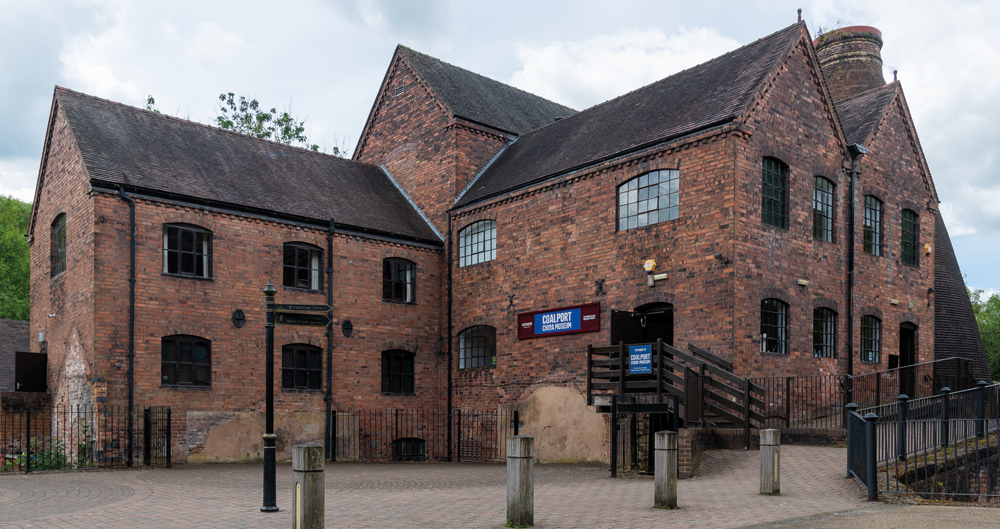
The Coalport China Museum occupies part of the former Coalport China Works.
The preserved buildings and bottle kilns provide an opportunity to photograph a very different aspect of the gorge’s industrial history.
The bottle kilns are particularly striking subjects.
Their unusual shapes make them immediately recognisable, while the brickwork provides plenty of texture and repetition.
Inside museums such as this, don’t concentrate exclusively on the major exhibits.
Look for the smaller details that reveal how the buildings and businesses operated.
Tools, machinery, workspaces and architectural features can all help tell the story of the location.
Blists Hill Victorian Town
For photographers interested in historical portraits, Blists Hill Victorian Town is particularly interesting.
The site recreates a Victorian industrial town, with shops, homes, workshops and other buildings providing the setting for period scenes.
Volunteers and staff in period clothing add another dimension to the photography.
This creates opportunities for environmental portraits rather than simply photographing buildings.
Instead of asking a subject to stand against a blank background, look for ways to incorporate the environment.
A shopkeeper inside a period shop, a worker in a workshop or a character standing outside a historic building can all produce much stronger storytelling images.
Photographing period scenes
If you are photographing people in historical settings, think about the background just as carefully as the person.
Modern objects can quickly destroy the illusion.
Look out for:
- Modern signs
- Cars
- Plastic containers
- Contemporary clothing
- Modern electrical equipment
- Visitors in modern dress
A change of viewpoint or a tighter composition can often remove these distractions.
This is also where a longer focal length can be useful, allowing you to isolate your subject from the surrounding modern world.
Broseley Pipe Museum
The Broseley Pipe Museum is a much smaller attraction, but it represents another part of the area’s industrial history.
The museum explores the local manufacture of clay tobacco pipes and provides another opportunity for detail and documentary photography.
Small museums can be particularly rewarding because they encourage a different approach.
Instead of looking for grand landscapes, concentrate on objects, textures, tools and evidence of craftsmanship.
Photographing industrial heritage
Ironbridge Gorge is an excellent location for anyone interested in industrial photography.
Old industrial sites provide many of the elements that photographers look for:
Texture: brick, stone, iron, wood and weathered surfaces.
Shape: machinery, chimneys, roofs, bridges and industrial structures.
Pattern: repeated windows, bricks, tiles and mechanical components.
Contrast: new and old buildings, light and shadow, natural and industrial environments.
Story: almost every building has a history that can become part of the photograph.
The trick is to avoid treating an industrial location simply as a collection of buildings.
Think about what those buildings represent.
Who worked there?
What was manufactured?
How did materials arrive and leave?
What remains today?
Those questions can influence the way you photograph the location.
A great location for stock and composite photography
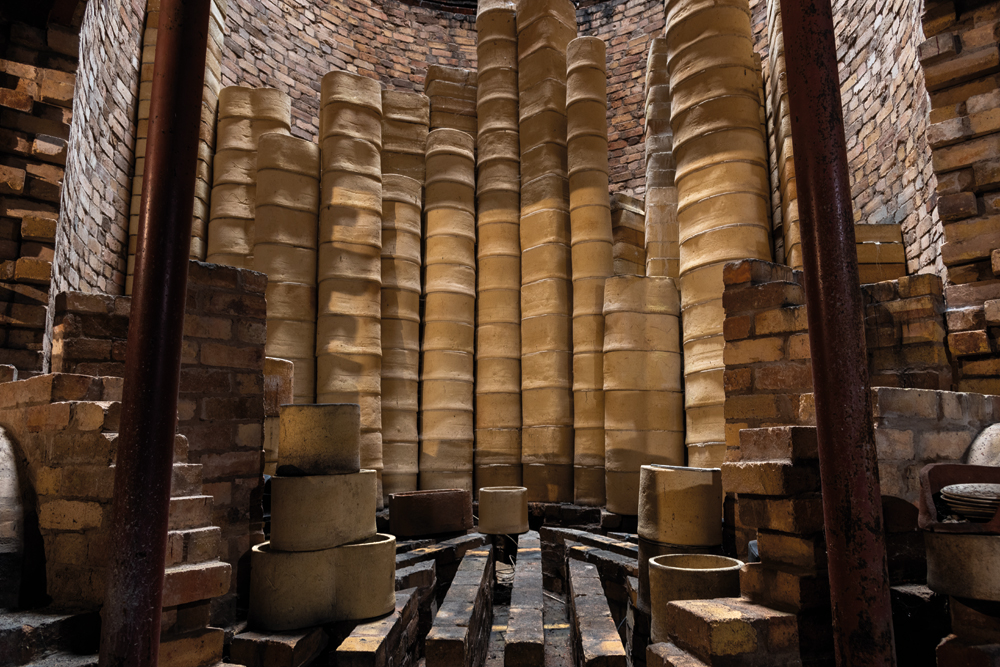
Ironbridge Gorge can also be useful for photographers who create composites or historical imagery.
Historic buildings, industrial structures, Victorian environments and period details can provide useful source material.
When photographing locations for future compositing work, consider taking more than just the obvious hero photograph.
Capture:
- Doors and windows
- Brick and stone textures
- Roof details
- Signs
- Industrial machinery
- Ground textures
- Architectural details
- Empty backgrounds
- Atmospheric skies
- Different viewpoints of the same structure
These images can become useful assets long after your visit.
Take your time
One of the biggest mistakes would be to treat Ironbridge Gorge as a quick photographic stop.
There is simply too much to see.
The various attractions and historic sites cover a substantial area, and each location offers a different photographic experience.
If photography is your main reason for visiting, allow plenty of time rather than attempting to rush through everything in a single afternoon.
A little research before your trip can also make a considerable difference.
Work out which locations interest you most and check opening arrangements, photography restrictions and access before travelling.
What camera equipment should you take?
You don’t need a huge amount of equipment to photograph Ironbridge Gorge.
A standard zoom lens is likely to be useful for general photography, while a wide-angle lens can help with architecture and larger interiors.
A telephoto or longer zoom can be useful for isolating architectural details and compressing elements within the landscape.
A tripod can also be worthwhile if you plan to photograph in lower light or create carefully controlled compositions.
Most importantly, don’t allow your equipment to dictate the photographs.
The location offers enough variety to keep almost any camera busy.
Final thoughts
Ironbridge Gorge is much more than a single viewpoint or iconic bridge.
It is a collection of historic locations, industrial buildings, museums, waterways and landscapes that provide photographers with an enormous variety of subjects.
Whether your interests lie in heritage photography, landscape photography, architecture, street photography, environmental portraits or industrial photography, there is plenty to explore.
And perhaps the biggest attraction is that the gorge rewards photographers who slow down.
Look beyond the obvious view.
Study the textures.
Find the details.
Consider the history behind the building.
Then use those observations to create photographs that communicate more than simply where you were.