
How to Choose a Photography Niche and Build a Successful Photography Business
By Kris Anderson
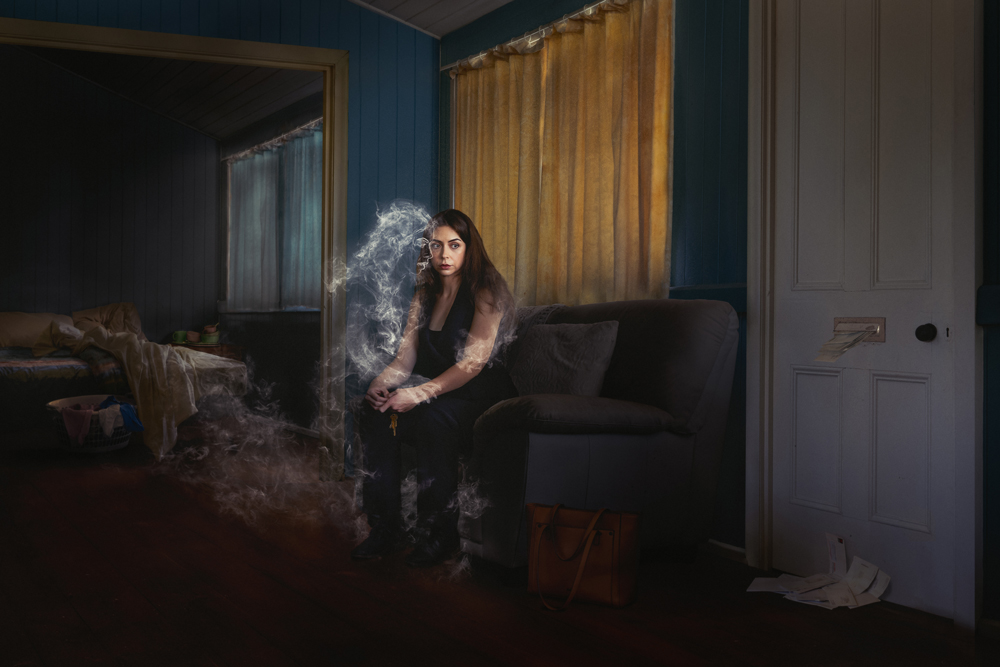
When you first start working as a professional photographer, there can be a temptation to photograph everything.
Weddings. Families. Events. Portraits. Products. Newborns. Commercial work. Anything that might bring in a booking.
There is nothing wrong with being versatile, particularly when you’re building a portfolio and learning your craft. But there can come a point when trying to appeal to everyone makes it harder for potential clients to understand exactly what you are known for.
For Australian photographer Kris Anderson, the turning point came when he realised that the work he enjoyed most was already sitting in front of him.
Rather than continuing to photograph anything and everything, he began concentrating on the performing arts — working with actors, dancers, theatre companies and performers.
That decision helped him build a much clearer identity and develop a specialist photography business around an industry he already understood.
What is a photography niche?
A photography niche is a specific area of photography, market or type of client that you choose to focus on.
Examples include:
- Wedding photography
- Family photography
- Newborn photography
- Commercial photography
- Food photography
- Property photography
- Sports photography
- Fashion photography
- Headshot photography
- Performing arts photography
- Dance photography
- Product photography
- Corporate photography
- Fine-art photography
You don’t necessarily have to photograph one subject exclusively.
A niche can also be defined by the type of client you work with.
For example, instead of simply describing yourself as a portrait photographer, you might specialise in portraits for actors, corporate executives, musicians or dancers.
The more clearly you define your ideal client, the easier it can become to build a portfolio and marketing message that speaks directly to them.
Don’t choose a niche simply because it sounds profitable
One of the biggest mistakes is choosing a photography niche based entirely on what you think will make money.
Commercial opportunity matters, of course, but it isn’t the only consideration.
Ask yourself:
What do I genuinely enjoy photographing?
Kris Anderson initially found photography through his work as a theatre musician. Being surrounded by performers gave him opportunities to experiment with lighting, posing and technique.
He eventually began photographing weddings after friends asked him to shoot theirs. He then second-shot weddings professionally and, like many photographers starting a business, began photographing a wide range of subjects.
But the work with performers kept drawing him back.
The important realisation was that the performing arts weren’t simply another type of photography he could offer.
They were the area he genuinely wanted to work in.
That distinction matters.
Look for the overlap between your interests and your experience
A strong photography niche can emerge from your existing knowledge and relationships.
Ask yourself:
- What industries do I already understand?
- Which people do I already know?
- What subjects do I naturally enjoy photographing?
- What problems do potential clients in that industry have?
- Where can my existing skills give me an advantage?
- What type of photography would I still enjoy doing several years from now?
Your previous career can be particularly valuable.
Kris’s background in the performing arts gave him an understanding of the people and organisations he wanted to photograph.
He understood the pressures faced by performers and theatre companies, including marketing, branding and ticket sales.
That meant he wasn’t simply offering photographs.
He understood why those photographs mattered.

Specialisation can make you easier to recommend
One of the advantages of specialising is that people can quickly understand what you do.
Compare these two descriptions:
“I’m a photographer and I photograph weddings, families, events, products, portraits and commercial work.”
with:
“I specialise in photography for actors, dancers and performing arts organisations.”
The second immediately tells a potential client who the photographer is for.
It also makes it easier for existing clients to recommend you.
If an actor asks another actor:
“Do you know a good photographer for headshots?”
you want your name to come immediately to mind.
That is particularly powerful in industries where people move between companies, productions and projects.
Use your network to build your niche
You don’t necessarily have to start from scratch.
Think about the communities you already belong to.
Perhaps you have worked in:
- Theatre
- Music
- Sport
- Education
- Business
- Fashion
- Hospitality
- Healthcare
- The arts
- Local government
- Manufacturing
- Technology
Your existing relationships can provide the starting point for a specialist photography business.
Kris already had strong relationships within the performing arts because he had worked as a performer himself.
Those relationships became an important foundation for his photography business.
The first clients don’t necessarily need to come from Google.
They can come from people who already know you.
Word of mouth can be incredibly powerful
Photography is a relationship-driven business.
A happy client can introduce you to another client, who introduces you to another, creating a network that gradually expands beyond your original circle.
This is particularly effective in industries where people regularly move between organisations.
For a specialist photographer, understanding the structure of an industry can therefore become a significant business advantage.
Don’t underestimate the value of being known as the photographer for a particular community.
Your specialist knowledge can become part of your brand
Specialising doesn’t just affect what you photograph.
It can influence how you position your entire business.
If you understand your target industry, you can create a portfolio, website and marketing message that demonstrate that understanding.
For example, a photographer specialising in performing arts might understand:
- How actors use headshots
- The importance of theatrical branding
- What casting professionals need
- How dancers need to present their portfolios
- How theatre companies market productions
- The importance of promotional imagery
- How performers use social media to build their personal brands
That knowledge makes your service more valuable.
You’re no longer simply saying:
“I take photographs.”
You’re saying:
“I understand your industry and I understand what you need photography to achieve.”
Build a portfolio around the clients you want
Your portfolio sends a message about the type of work you want to attract.
If you want to become a specialist photographer, don’t wait until you have dozens of paid jobs in your chosen niche before showing that work.
Create relevant personal projects.
Collaborate with people in the industry.
Test ideas.
Build images that demonstrate what you are capable of producing.
This is particularly useful when entering a new market.
Your portfolio doesn’t just document where you’ve been.
It can help determine where you go next.

Personal projects can develop commercial skills
Kris’s illustrative photography is a good example of this.
His personal projects allowed him to experiment with planning, pre-visualisation, shooting and post-production without working within a client’s brief.
That freedom can be extremely valuable.
A personal project gives you permission to try something that might not be possible on a commercial assignment.
You can experiment with:
- Lighting
- Composition
- Storytelling
- Set design
- Location
- Post-production
- In-camera techniques
- Working with a team
- Creative direction
Those skills can then transfer into commissioned work.
Personal photography doesn’t have to be separate from your business development.
It can become a laboratory for developing the skills that eventually differentiate your commercial work.
Collaborate with other creatives
Photography does not have to be a solitary profession.
Depending on your niche, consider collaborating with:
- Models
- Actors
- Dancers
- Makeup artists
- Stylists
- Designers
- Art directors
- Videographers
- Theatre companies
- Other photographers
Collaborative projects can produce better work while also expanding your network.
They can introduce you to people who may eventually become clients or recommend you to others.
They also provide an opportunity to create work that demonstrates your creative ambition.
Social media works best when it supports your niche
Social media can be particularly effective for specialist photographers because your ideal clients may already be concentrated on particular platforms or within particular communities.
But simply posting photographs isn’t necessarily enough.
Think about what you want people to remember about you.
If you specialise in performing arts photography, for example, your social media should make it immediately apparent that you understand performers and the visual language of the industry.
Kris found that collaborative posts with clients helped increase his reach and generate referrals.
That is an important distinction from simply paying for advertising.
When your client shares the work with their own audience, your photography is being introduced to people who already have a connection with the person or organisation posting it.
Don’t rely entirely on Google
Search engines can be an important source of photography enquiries, but they aren’t the only route to building a business.
For some specialist photographers, referrals, networking and social media can be much more effective.
That doesn’t mean SEO should be ignored.
A specialist photographer should still have a website that clearly explains:
- Who they photograph
- Where they work
- What services they provide
- Why they are different
- Examples of relevant work
- How potential clients can make an enquiry
The important thing is to make sure your marketing reflects the way your clients actually find photographers.
If referrals are producing most of your work, strengthen your referral network.
If Google is important in your market, invest in SEO.
If your clients spend their time on Instagram or another platform, make sure you’re visible there.
Don’t assume there is only one route to a booking.
Let your different areas of photography support each other
Specialising doesn’t mean every photograph you create has to look identical.
Kris’s illustrative work and commercial photography are different, but the skills developed in one can strengthen the other.
His personal work helped him develop techniques in visual storytelling, planning and execution that could then be applied to commercial assignments.
Your own personal work can do the same.
A photographer might have a commercial portrait business while developing a separate fine-art project.
A wedding photographer might create dramatic personal portraiture that influences their wedding work.
A commercial photographer might experiment with complex lighting setups outside client commissions.
The creative work you do for yourself can become an important source of new ideas.

Your portfolio should show how you think
A portfolio isn’t simply a collection of your technically best photographs.
It tells potential clients something about you.
Look through your work and ask:
What does this portfolio say about me?
Does it show a consistent visual approach?
Does it demonstrate the type of clients you want?
Does it show creativity?
Does it reveal a particular interest or speciality?
Does it make someone understand why they should choose you rather than another photographer?
Your portfolio can evolve over time.
Changing direction isn’t necessarily a weakness.
Experimentation can be evidence of growth.
Don’t be afraid to change direction
Choosing a niche doesn’t mean you’re locked into it forever.
Your interests will evolve.
Your market will evolve.
Your photography will evolve.
Kris’s portfolio has moved through portraiture, illustrative work, architectural photography and in-camera abstract portraiture.
The important thing is not necessarily to maintain exactly the same style throughout your career.
It’s to understand what you are learning from each stage and how it contributes to the photographer you want to become.
Competitions can help you develop your niche
Photography competitions can be useful for more than winning awards.
They encourage you to become critical of your own work.
Selecting images for competition requires you to curate your portfolio carefully and identify weaknesses that might otherwise go unnoticed.
The discipline of asking whether an image is strong enough to withstand critical judging can improve your everyday photography.
It can also encourage you to create work outside your normal commissions.
Kris combines images from his everyday work with personal projects created specifically with competition in mind.
That approach can provide useful creative constraints.
Give yourself a goal, a deadline and a specific challenge, then create a body of work around it.
Build a network of photographic peers
Running a photography business can be surprisingly isolating.
Many photographers work alone and don’t have colleagues sitting beside them every day.
That means there may be nobody to ask when something goes wrong.
Building a network of photographers and other creative professionals can make a huge difference.
Your network can provide:
- Business advice
- Creative feedback
- Technical help
- Referrals
- Encouragement
- Accountability
- New opportunities
Don’t assume every photographer in your area is a competitor.
Some may become collaborators, mentors, referral partners or friends.
A strong professional community can help you develop both your photography and your business.
Find the clients who value what you do
Ultimately, specialising isn’t about putting yourself into a smaller box.
It’s about becoming more relevant to a particular group of people.
When you understand your clients, their industry and their problems, you can create better photography and communicate its value more effectively.
You don’t need to be the photographer for everyone.
You need to become the photographer that the right clients remember.
Start with these five questions
If you’re considering choosing a photography niche, spend some time answering:
- What do I genuinely enjoy photographing?
- What industries or communities do I already understand?
- Which potential clients do I already have relationships with?
- What problems could my photography solve for those clients?
- What kind of work do I want my portfolio to be known for?
Your answers may reveal that your niche is closer than you think.
For Kris Anderson, it was already there in the performing arts community he had been part of for years.
The challenge was recognising it — and then having the confidence to build a business around it.
About Kris Anderson

Kris Anderson is an Australian photographer based in Brisbane, specialising commercially in photography for the performing arts, including actor headshots, theatrical branding, live theatre production and dancer portfolios.
He also creates illustrative photography and personal projects exploring visual storytelling and complex in-camera techniques.
His photography has achieved success in The Societies’ competitions, including winning the 20×16 Overall Portrait Photographer of the Year 2023 title.