Surreal Photography: How to Find Ideas and Create Unusual Images
By Mike Martin
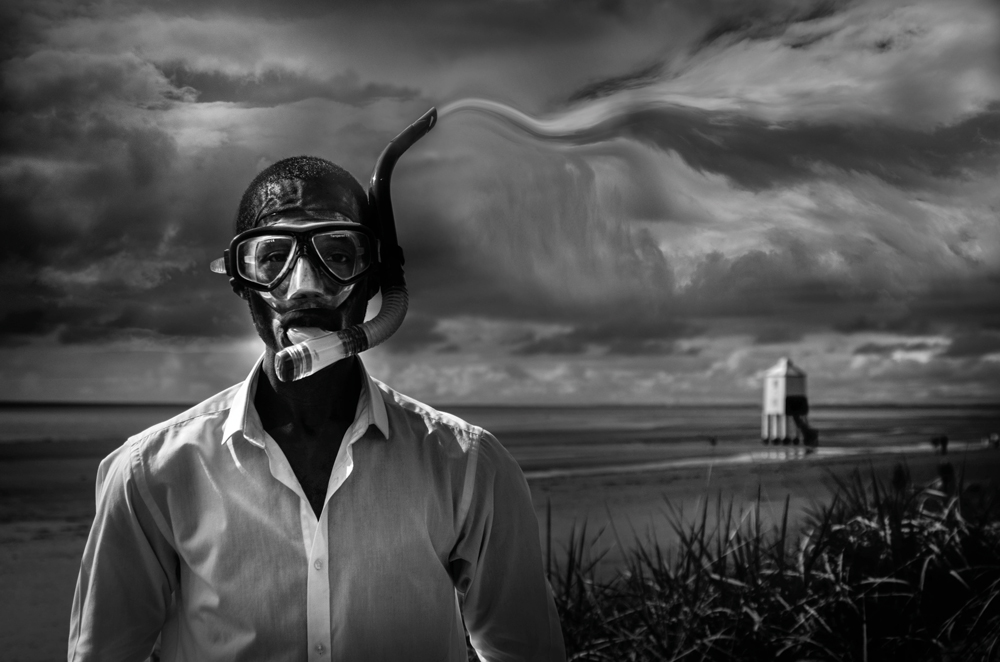
Surreal photography doesn’t necessarily begin with an elaborate Photoshop technique.
Often, it starts with an idea.
A familiar object in an unexpected place. A person doing something that shouldn’t be possible. An unusual perspective. Two unrelated images that somehow work together. Or simply a feeling that you want to turn into a photograph.
For photographer Mike Martin, surrealism has become one of the influences on his photography, but he doesn’t try to work within a single style or formula. Instead, he collects ideas from photography, art, film, television, advertising and everyday life, then combines them in unexpected ways.
That approach offers some useful lessons for anyone who wants to create more imaginative photography.
What is surreal photography?
Surrealism is associated with dream-like imagery, unexpected combinations, distorted forms, visual contradictions and ordinary objects being placed into extraordinary situations.
Artists such as Salvador Dalí, René Magritte and Joan Miró are often associated with the movement, while M.C. Escher’s optical illusions and impossible spaces have influenced generations of visual artists.
Photography can use similar ideas.
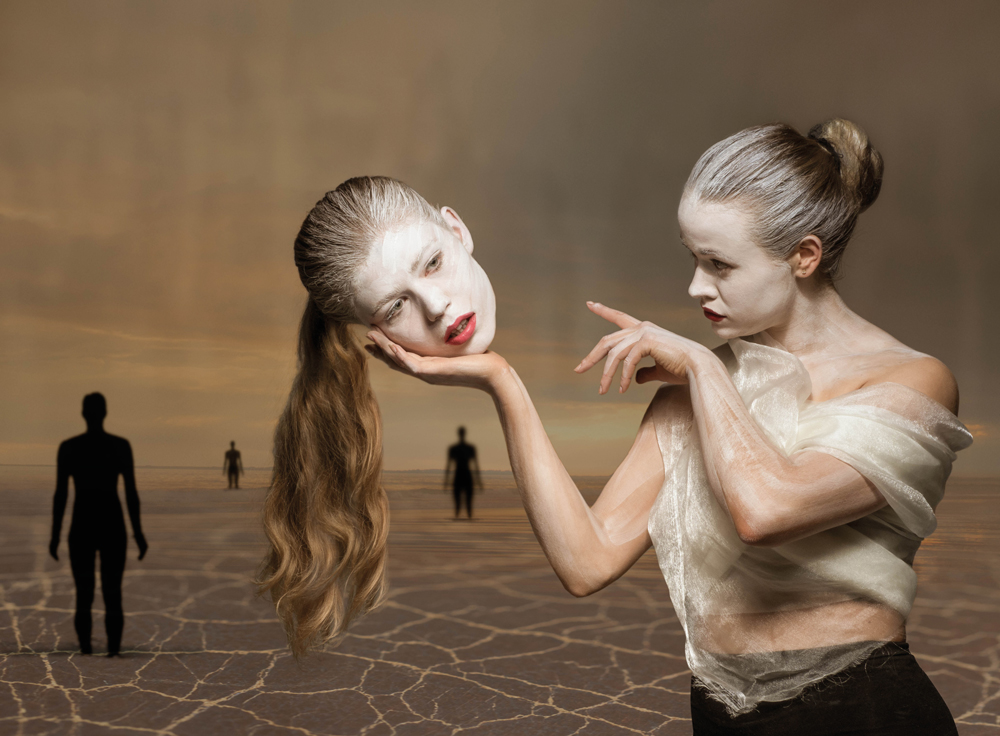
A surreal photograph might be created entirely in camera, constructed through multiple exposures, carefully staged, digitally composited from several photographs or transformed extensively in post-processing.
There isn’t one correct method.
The important part is the idea behind the image.
Build a visual memory bank
One of Mike’s most useful creative habits is to look at far more than photography.
He takes inspiration from:
- Photography
- Painting and other visual art
- Films
- Television
- Advertising
- Title sequences
- Books
- Architecture
- Everyday objects
- Places and environments
The important thing isn’t simply looking.
It’s analysing.
When you see an image or scene that catches your attention, ask yourself:
Why does this work?
Where is the light coming from?
Why has the subject been placed there?
What is the composition doing?
What colours are being used?
What makes the image feel strange, dramatic, funny or unsettling?
How would the image change if one element were removed?
Could the same idea work with a different subject?
This turns looking at images into an active learning process.
Instead of simply collecting photographs you like, you’re collecting ideas.
Don’t restrict your inspiration to your favourite genre
Photographers often become very good at looking at photography within their own speciality.
A landscape photographer looks at landscapes. A portrait photographer studies portraits. A wildlife photographer follows wildlife photographers.
That’s useful, but it can also become restrictive.
If you’re interested in creating unusual or surreal images, deliberately broaden your visual diet.
Watch a film trailer.
Look at an advertising campaign.
Study a painting.
Pay attention to the opening titles of a television programme.
Look at architecture.
Even something as simple as the credits of a film can contain interesting typography, composition, movement, lighting and visual ideas.
You don’t have to copy any of these things.
Instead, ask yourself what you can learn from them.
Pre-visualisation isn’t everything
Some photographers can see an image in their mind before they press the shutter.
Others can’t.
That doesn’t mean one approach is better.
Sometimes the final image only becomes apparent once you start working with the photographs you’ve made.
Post-processing can therefore become part of the creative process rather than simply the final stage of correcting an image.
You might start with a portrait and realise during editing that the hands would work better as a repeating pattern.
A landscape might suggest an impossible environment.
A simple architectural photograph might reveal an interesting opportunity for repetition or distortion.
The important thing is to remain open to what the image could become.
Give yourself a reason to press the shutter
Before you make an image, there should be something that motivates you to do so.
That might be the beauty of a landscape, an interesting person, an unusual piece of architecture or simply a feeling that you want to capture.
For conceptual photography, the motivation might be more abstract.
Perhaps you have seen something that suggests a visual idea.
Perhaps two unrelated thoughts have collided.
Perhaps you want to create a particular emotion.
The photograph doesn’t need to explain everything at the moment you press the shutter.
You simply need a starting point.
Make the ordinary impossible
One of the easiest ways into surreal photography is to take something familiar and introduce one element that doesn’t belong.
For example, a person standing on a beach wearing a snorkel is relatively straightforward.
What happens if clouds appear to pour into the snorkel?
Suddenly, the photograph has a completely different story.
This kind of transformation can be remarkably effective because the viewer recognises the original reality while simultaneously being presented with something impossible.
That tension is part of what makes the image interesting.
Do as much as possible in camera
Digital compositing can be incredibly powerful, but you don’t necessarily need to create everything on a computer.
Think about what you can achieve when making the photograph.
Change the camera angle.
Use an unusual lens.
Move the subject.
Change the perspective.
Introduce an unexpected prop.
Look for reflections, shadows or architectural shapes.
One example from Mike’s work uses an umbrella and a figure to create an image influenced by René Magritte. Much of the surreal effect comes from the simple decision to photograph and arrange familiar objects in an unfamiliar way.
The less you rely on post-processing to provide the entire idea, the more you may discover during the shoot itself.
Use Photoshop as a creative tool
Photoshop is often described as a tool for correcting photographs.
It can certainly do that.
But it can also be used as a visual sketchbook.
Duplicate a layer.
Change its scale.
Rotate it.
Distort it.
Mask parts of it.
Combine it with another photograph.
Then look at what you’ve created and ask:
What happens if I do that again?
This is particularly effective for surreal photography because repetition can quickly transform a recognisable object into something completely unfamiliar.
The process becomes a form of digital experimentation.
You don’t necessarily need to know the final image before you start.
Repetition can transform an image
Repeating an element is one of the simplest ways to create an unusual image.
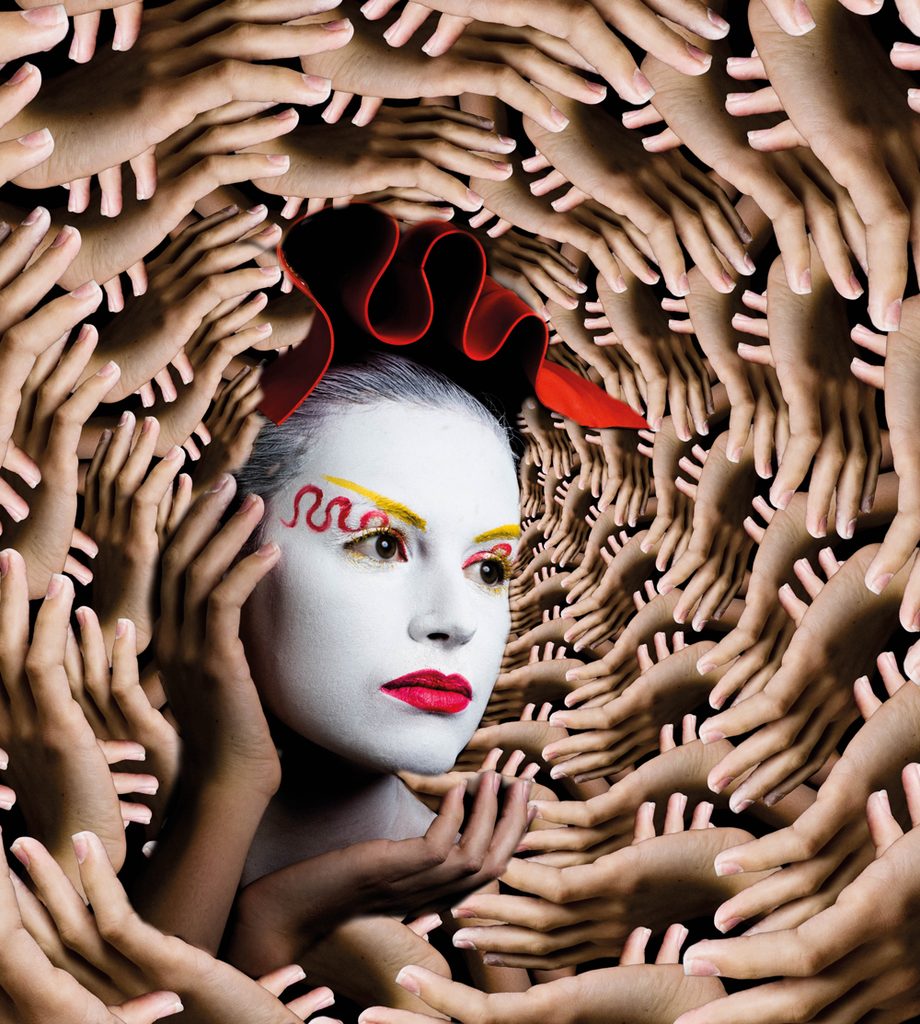
A single hand is recognisable.
Dozens of interlocking hands arranged into a spiral become something else entirely.
A face repeated into progressively smaller versions can suggest ideas about identity, memory or the mind.
A figure repeated along a staircase can create the impression of movement or an impossible sequence.
This type of effect is sometimes associated with the Droste effect, where an image contains a version of itself which contains another version, continuing recursively.
You don’t need specialist software to experiment with the basic idea.
In Photoshop, you can duplicate a layer, transform it, reduce its size, reposition it and then repeat the process.
The important part isn’t the button you press.
It’s deciding what should be repeated and why.
Compositing lets you build new environments
Another powerful approach is to combine elements from several photographs.
Instead of photographing an entire surreal scene in one location, you can create the components separately and assemble them later.
A person can be photographed in one location.
A suitable environment can come from another photograph.
Additional objects, textures, skies or architectural elements can then be introduced as required.
The challenge is making the final image convincing.
Consider:
- Perspective
- Scale
- Lighting direction
- Contrast
- Colour
- Shadows
- Depth
- Edges
- Focus
- Texture
If the elements don’t belong together visually, the viewer will often notice immediately.
Use masks rather than simply erasing everything
Layer masks are particularly useful when creating composites.
Rather than permanently deleting parts of an image, you can reveal or hide areas using a mask.
This gives you much greater flexibility while building the composition.
For example, you might place an object on its own layer, add a layer mask and gradually reveal the parts you want while keeping the original image intact underneath.
It also makes experimentation much easier.
If the idea doesn’t work, you can change the mask rather than starting again.
Know when to stop
Creative software gives you almost unlimited opportunities to add more.
That doesn’t mean you should.
One of the biggest challenges with surreal photography is knowing when the image has enough.
Try adding another object and then remove it again.
Try a stronger distortion, then compare it with the simpler version.
Look at the image at different sizes.
Ask whether every element contributes something.
More complicated doesn’t automatically mean more interesting.
Sometimes the strongest surreal image is the one where a single impossible element has been introduced into an otherwise believable scene.
Don’t worry if people don’t immediately understand it
Conceptual and surreal photography can divide opinion.
One person may immediately understand the idea.
Another may see something completely different.
Someone else may simply not understand it at all.
That doesn’t necessarily mean the image has failed.
Photography doesn’t always need to provide a single correct interpretation.
If the image creates curiosity, emotion or a reaction, it has achieved something.
Of course, if your intention is to communicate a very specific message, clarity matters.
But don’t automatically reject an image simply because everyone interprets it differently from the way you intended.
Combine influences
There is no requirement to take your inspiration from one artistic movement.
Mike’s work demonstrates how easily ideas can overlap.
Surrealism can combine with portraiture.
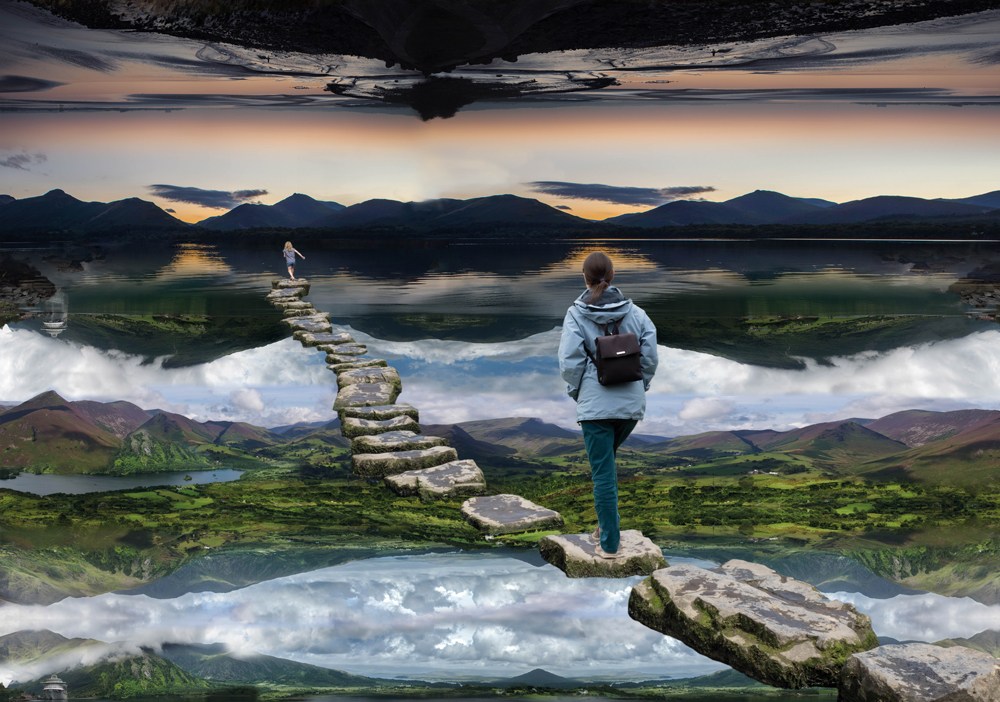
Architecture can combine with optical illusion.
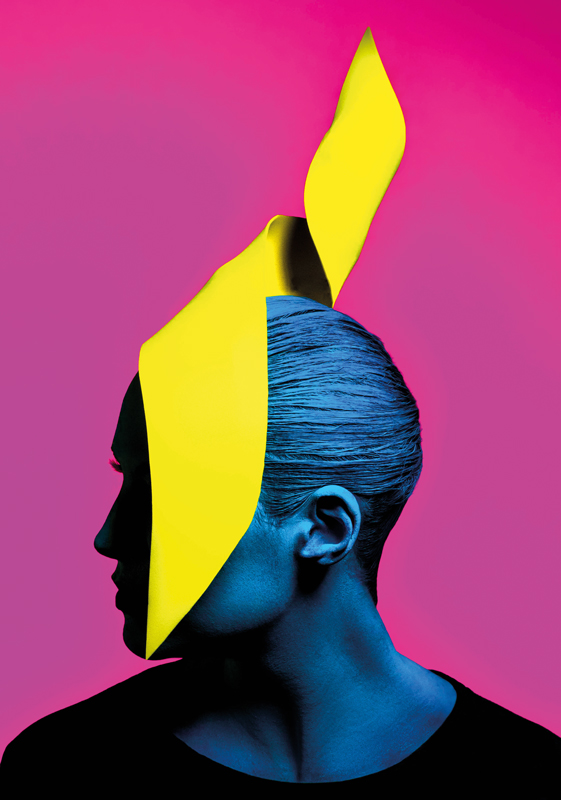
Pop Art can influence colour.
Landscape photography can become a compositing exercise.
A simple holiday photograph can become the starting point for something completely unexpected.
This is where developing a broad visual memory becomes useful.
The more ideas you collect, the more combinations become possible.
Try something without knowing whether it will work
Experimentation requires a willingness to make images that might fail.
That’s particularly important when working digitally because you can become trapped by the desire to make every photograph “good”.
Instead, try an idea simply because you’re curious.
Take the photograph.
Make the strange composite.
Try the distortion.
Repeat the object.
Change the perspective.
Then decide whether it works.
Some experiments will be terrible.
That’s fine.
They may still lead you towards the next idea.
Keep your creative projects going
A personal project can be an excellent way to develop this kind of photography.
It doesn’t need to have a commercial purpose.
You could spend a year photographing reflections.
Or unusual shadows.
Or abandoned objects.
Or repeating architectural patterns.
Or people interacting with unusual environments.
The subject is less important than the discipline of returning to an idea and seeing where it takes you.
Over time, you may find that your personal projects influence your commissioned work as well.
Print your best work
There is something different about seeing a photograph away from the computer screen.
Printing forces you to make a decision about the image.
Is the composition strong enough?
Does the colour work?
Does the image have enough detail?
Does the chosen paper suit the photograph?
A surreal image can be particularly rewarding as a physical print because the viewer has the opportunity to spend time examining the details.
Not every photograph needs to be printed.
But if you’ve invested time and imagination into creating something special, it is worth considering what happens when you take it beyond the screen.
Simple ways to find more photographic inspiration
If you’re struggling for ideas, try deliberately changing what you look at.
- Watch film trailers and television title sequences.
- Study advertising and graphic design.
- Look at photography outside your normal genre.
- Visit galleries and exhibitions.
- Study paintings and illustrations.
- Photograph ordinary objects from unusual viewpoints.
- Keep a collection of images that interest you.
- Write down ideas when they occur rather than relying on memory.
- Revisit older photographs and ask what else they could become.
- Combine two unrelated ideas and see where they lead.
Most importantly, don’t only collect things you like.
Sometimes an image you dislike can teach you just as much.
Ask yourself why you dislike it.
Understanding what doesn’t work can be as useful as understanding what does.
Keep creating
Surreal photography isn’t really about a particular Photoshop filter, camera or plugin.
The tools can help, but the creative decision still comes from the photographer.
You decide what to photograph.
You decide which elements to combine.
You decide what to repeat, distort or remove.
And you decide when the image is finished.
The best way to develop that ability is to keep looking, keep experimenting and keep making photographs.
You don’t need to know exactly where an idea is going before you start.
Sometimes the most interesting images are discovered along the way.