How to Find Commercial Photography Clients: Lessons from a Working Photographer
Angela Adams talks to Dave Wall

Getting commercial photography work isn’t simply about having a good camera and a strong portfolio. You also need to find the right clients, build relationships and give people a reason to come back to you.
For photographer Dave Wall, that has meant taking a deliberately hands-on approach to marketing, building relationships directly with businesses and developing specialist areas of photography that suit his skills.
Dave has worked as a commercial photographer for many years and now does much of his work in book-cover photography. His career offers some useful lessons for photographers trying to build a sustainable business of their own.
There is more than one route into professional photography
Dave’s route into photography wasn’t particularly conventional.
He had been interested in photography from a young age, reading photography books and magazines, before finding himself unemployed at 20. A training scheme eventually gave him the opportunity to teach photography, and when that came to an end he found work as an assistant to a commercial photographer in Manchester.
He spent several years learning the craft and the business of photography before establishing himself independently.
The important lesson isn’t necessarily to copy Dave’s route. It is that there isn’t one prescribed way to become a professional photographer.
Assisting, working alongside established photographers, studying, teaching, taking on smaller jobs and developing personal projects can all form part of a career.
What matters is continuing to learn while gradually building the skills, experience and portfolio that allow you to move towards the work you want.
Don’t wait for clients to find you
One of Dave’s strongest beliefs is that photographers need to be proactive when looking for commercial work.
He describes it simply as “knocking on doors”.
That doesn’t necessarily mean literally walking into every business in your area with a portfolio under your arm. The principle is to identify businesses that could genuinely use your photography and then make a direct approach.
This is very different from simply posting photographs online and hoping somebody notices them.
Social media can be useful, but putting an image on Instagram doesn’t guarantee that the people who need your services will see it.
Direct marketing allows you to choose who you want to talk to.
Research the client before making contact
One of the most useful points in Dave’s approach is the importance of showing potential clients work that is relevant to them.
If you’re approaching a food manufacturer, for example, a portfolio dominated by landscapes isn’t going to demonstrate what you could do for their business.
Likewise, if you want to photograph hotels, restaurants or products, your portfolio should make it easy for someone in that industry to understand how your photography could help them.
Before contacting a potential client, ask:
- What does the business actually do?
- Who are its customers?
- What sort of photography does it currently use?
- Where could better photography improve its marketing?
- Do you have examples that are relevant to that business?
- What could you offer that would solve a genuine problem?
The more relevant your approach, the less it feels like a generic sales message.

Your portfolio should make your direction clear
A portfolio isn’t simply a collection of your favourite photographs.
It is one of the ways a potential client decides whether you are suitable for a particular job.
That means your portfolio needs to communicate the type of work you want to be commissioned for.
If commercial photography is your goal, consider creating separate sections for different types of work rather than putting everything into one enormous gallery.
You might have sections for:
- Products
- People
- Food
- Interiors
- Architecture
- Editorial
- Advertising
- Book covers
The exact categories will depend on your business.
The important thing is that a client should be able to arrive at your website and quickly understand what you do.
You don’t have to be everywhere on social media
There is considerable pressure on photographers to maintain a presence on every social platform.
Dave takes a different view.
He keeps his business social media presence relatively limited and believes the value of social media depends heavily on the market you’re working in.
That’s an important distinction.
A photographer working with weddings or families may find social media particularly useful because potential clients are often discovering photographers visually and researching their style.
A commercial photographer working with businesses may find that direct relationships, referrals, networking, email marketing or industry contacts generate more useful enquiries.
There is no universal marketing channel that every photographer needs to prioritise.
Instead, look at where your potential clients actually spend their time and how they make purchasing decisions.
Build relationships, not just followers
A commercial photography business can depend heavily on relationships.
The person commissioning your photography today may recommend you to somebody else tomorrow. An art director, designer, marketing manager or agency may come back to you repeatedly if they know what you can deliver.
That makes every interaction part of your marketing.
Be professional. Be reliable. Communicate clearly. Deliver what you promised. Make the process straightforward for the client.
A photographer with 1,000 followers and a strong network of relevant industry contacts may have a more useful commercial network than someone with 50,000 followers who has no relationship with the people who commission photography.
Consider working with an agency
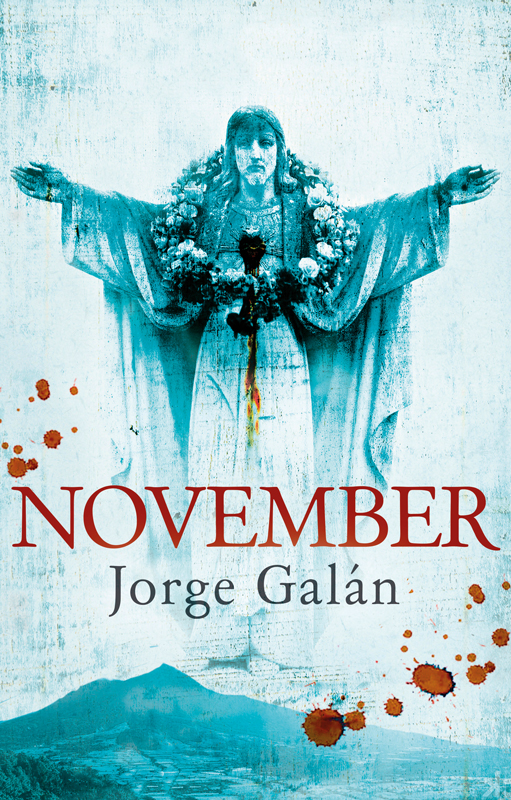
Much of Dave’s book-cover photography comes through an agency.
That arrangement means he doesn’t have to find and manage every individual client himself. Instead, he can concentrate more heavily on the photography and creative retouching.
Working with an agency isn’t right for every photographer, but it is worth understanding that photography businesses don’t all have to operate in exactly the same way.
Some photographers deal directly with every client.
Others work through agencies, production companies, publishers, designers or other creative businesses.
Some do a mixture of both.
Think about where you are strongest. If you love shooting but dislike prospecting for clients, finding appropriate partners or intermediaries may be worth exploring.
Running a photography business on your own
Dave prefers working alone and has built his business around that choice.
Being a sole photographer has advantages. You have control over your creative decisions, overheads can be lower and you don’t have the responsibility of managing employees.
But it also means you are responsible for almost everything.
Photography is only one part of the job.
You may also need to handle:
- Marketing
- Sales
- Website updates
- SEO
- Social media
- Emails
- Quotes
- Invoicing
- Accounting
- Client communication
- File management
- Retouching
- Backups
- Business development
It’s worth recognising this before setting your prices.
If you charge only for the time you spend holding the camera, you’re potentially ignoring a large part of the work required to run the business.
Getting paid is part of the business
One of the challenges Dave highlights from his commercial work is getting paid on time.
This is an important reminder that winning the job isn’t the end of the process.
Before accepting commercial work, make sure you understand:
- Who is actually commissioning you?
- What are the payment terms?
- When will you invoice?
- What happens if payment is late?
- What usage or licensing is included?
- Are expenses included?
- Who is responsible for approving the final work?
Payment terms can have a significant effect on cash flow, particularly for a small photography business.
Dave has experienced situations where agreed payment terms have stretched considerably beyond the original timeframe. That’s his experience rather than evidence that every commercial client behaves this way, but it illustrates why photographers should understand their terms before accepting an assignment.
Clear paperwork and professional invoicing won’t eliminate every payment problem, but they can make expectations much clearer.
Keep photographing for yourself
One of the most interesting parts of Dave’s work is his personal photography.
He has spent decades photographing road markings, concentrating on their lines, intersections and abstract qualities.
It may seem completely separate from his commercial work, but personal projects can be valuable for photographers.
They give you an opportunity to photograph without a client brief.
You can experiment, develop ideas and follow subjects that interest you. Over time, that can lead to a distinctive body of work that is recognisably yours.
Personal projects can also become useful portfolio material, exhibitions, books, prints or simply a way of keeping your enthusiasm for photography alive.
Don’t lose the reason you started
When asked for his best piece of business advice, Dave’s answer comes back to something surprisingly simple: don’t lose the love of photography.
That can be harder than it sounds.
When photography becomes your job, it can become surrounded by administration, deadlines, invoices, revisions, marketing and client expectations.
Making time to photograph something simply because you want to can help keep the creative side alive.
For Dave, that includes photographing at night and looking for small pools of light, as well as his long-running road-marking project.
Your own project might be completely different.
The subject isn’t necessarily important. What matters is having something that makes you want to pick up the camera.
Find your own route to commercial photography
Dave’s career demonstrates that there isn’t a single formula for becoming a successful commercial photographer.
His approach combines technical ability with persistence, direct marketing, relationships, specialist work and a willingness to keep creating.
The biggest lesson for photographers looking for more commercial work may be to stop waiting for enquiries and start thinking about the businesses and people you actually want to work with.
Research them.
Create relevant portfolio work.
Make contact.
Build relationships.
Follow up professionally.
And keep photographing the things that interest you.
Not every approach will result in a job. That’s normal. Building a commercial photography business takes time, and rejection is part of the process.
But if you know who you want to work for and make a deliberate effort to put your photography in front of those people, you have much more control over your direction than simply hoping the next social media post brings an enquiry.
About Dave Wall
Dave Wall is a commercial and book-cover photographer whose work combines photography with creative retouching. Alongside his commissioned work, he has maintained personal photography projects, including a long-running project exploring road markings and the abstract patterns created by lines on the road.
His career and working methods were originally discussed with Angela Adams for Professional Imagemaker.