Inside the Olympics: Ian Cook’s Experience as a Professional Sports Photographer
By Ian Cook
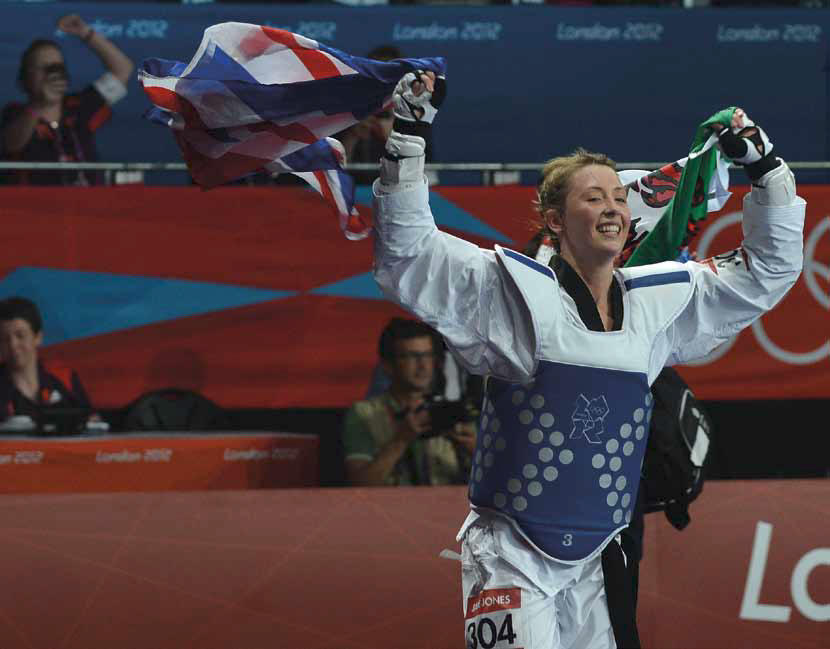
Societies member Ian Cook covered almost every day of the London 2012 Olympics, with the sort of access most people can only dream of.
As so often, however, the reality was not quite as romantic as one might expect: relentless work, heavy payloads of gear, rushing about on an empty stomach and the ever-present hassle of getting access through security systems.
Professional Imagemaker kept in touch throughout the Games and was privileged to see each day’s work as it was uploaded to the CameraSport website. At the end of it all, Mike McNamee interviewed Ian. He had recovered a little, but even then he was already back in the saddle covering soccer games.
We are indebted to Steve White of CameraSport and Ian Cook for permission to use the images in this feature.
What is it really like to photograph the Olympics?
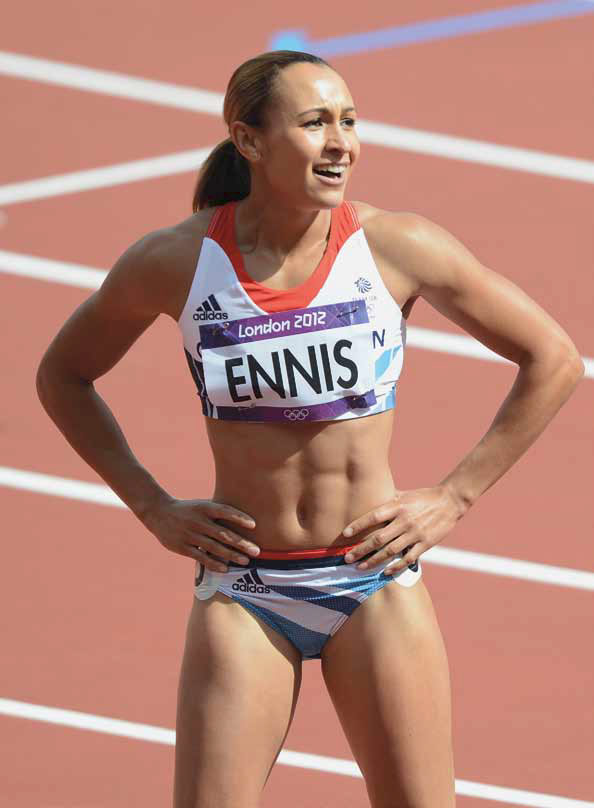
For athletes, competing in a home Olympics cannot get any better. Is the same true for photographers, and how did this assignment rate alongside others that you have covered?
Well, I have covered the Ryder Cup, football internationals, FA Cup finals, etc., but the Olympics are above all this as it’s the biggest sporting event in the world.
Like everything I do, I try to not get too caught up in the hype because it can become an unnecessary distraction. Of course, I was privileged that CameraSport saw me as one of the photographers who would represent the company at the Olympics.
If you asked a journalist friend of mine who was also there, he would probably tell you I was a miserable sod. It was not that I did not like being there; I had a job to do and wanted to get it done well despite the obstacles that inevitably arose every day.
Sorry, but that’s just me. I was the same at the Ryder Cup.
One thing that events like this are really good for is you get to meet other working photographers, and we are all in the same boat; we are all working as hard as we can and are mostly running on adrenaline.
So I got to make some new contacts and when I’m off on travels around the globe covering these events, having other photographers who you already know makes it so much easier.
Photographing the atmosphere
Most athletes reported on the wall of sound that greeted their introduction, and that this sound was further amplified as they came down the finishing stretches. Just how loud did it feel?
Whatever arena or stadium I was in, regardless of size and crowd, whenever a British name would be announced the roof would just be raised.
It was so loud in some venues that I actually used earplugs.
The atmosphere around the venues was really good, people in high spirits walking around wearing the colours of their nations.
Favourite moments from London 2012
What was your favourite moment, photographic or non-photographic?
This is a tough one to try to pin down!
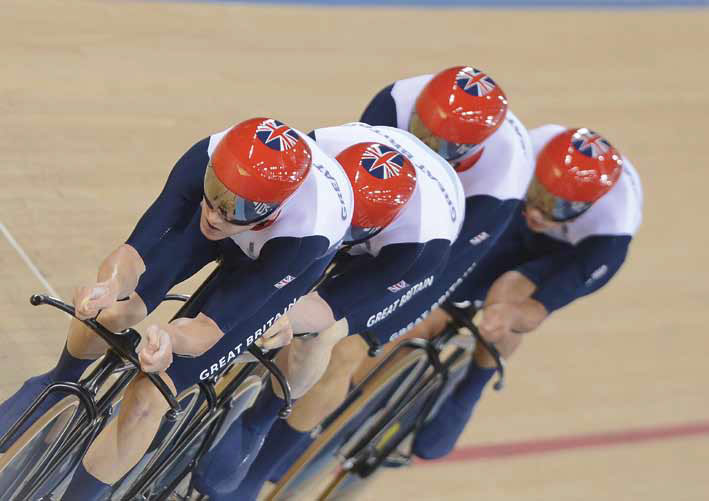
Of course, the Welsh contingent doing well, for example – getting to see and photograph Geraint Thomas win his gold and then Jade Jones.
The velodrome will always be the place I remember the most; it was electrifying in there.
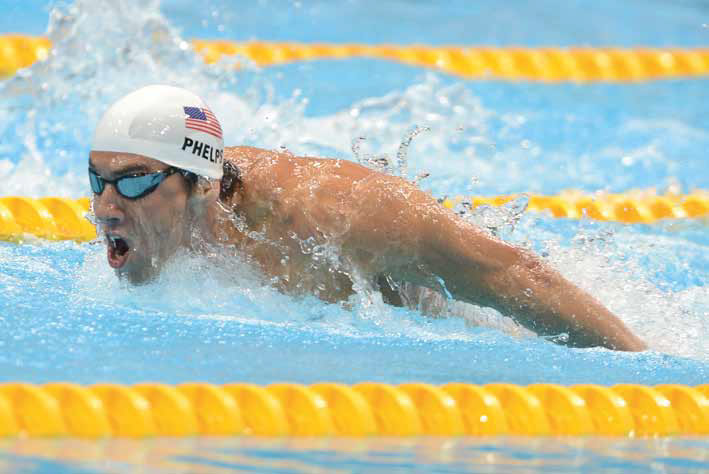
Getting nice shots of Usain Bolt winning in the 100m and 200m, Bradley Wiggins winning the time trial, Michael Phelps, the USA Dream Team basketball team, Andy Murray winning the first ever tennis gold for Britain, the equestrian men’s team taking gold.
It was a lot to take in and, to be honest, I am only just starting to think about it as a good experience. At the time I was so focused on getting the job done I didn’t think about it.
A typical working day
Describe a typical working day. What time did you get up, and when did you get time to eat and sleep?
A typical day would start by getting up between 6:00am and 6:30am, a quick shower and off to catch the bus to Stratford train station.
I then had to catch a smaller DLR (Docklands Light Railway) for one stop to Stratford International. This journey would normally take 1½ hours – could be more depending on traffic.
Airport-style security greeted me, where I had to put all loose belongings – wallet, photography vest, ID badge, money, phone, etc. – into a tray, as well as my gear, and this would go through an X-ray machine.
I would then have to walk through a metal detector and collect my belongings at the other end. If I had deodorant or bottled water/soft drink then that would be taken and binned.
After that it was just a case of jumping on a shuttle bus to the MPC (Main Press Centre).
Once at the MPC I would either get on the Olympic Park internal bus network or make my way across to the shuttle buses that would take you to venues such as ExCeL – weightlifting, table tennis, Taekwondo, boxing, etc. – or North Greenwich Arena, Wimbledon and other venues.
To be honest, most of the time I didn’t really know what day it was because most of the days were 16–18 hours and very exhausting.
In one spell I didn’t actually eat any food for a 24-hour period. I just didn’t have the time.
You would get to one venue, shoot and then race back to the transport hub to get back to the MPC or the next venue I would be covering.
The worst day for me was Thursday, which was mainly in one venue, the ExCeL. You would think this would have made life a little easier, but the ExCeL is huge and I don’t know how long the day lasted, but it seemed to go on forever!
Covering multiple events in a single day
On this day, as I was one of the few Welsh photographers, I wanted to get images of Jade Jones in the 57kg Taekwondo. I needed to get her in the preliminary rounds as it wasn’t guaranteed that she would make it through to the finals.
I did the shoot up to the point when the other British lad had fought and won his fight.
I then walked up to the wrestling arena where a British girl was fighting. This was only short as she lost her first fight and went out of the competition. I stayed for about half an hour to get stock images of some of the other competitors.
By this point I had a call from Steve White telling me to get to the boxing as Nicola Adams was in the first ever female boxing final.
So off I went, got into position, which was right at the back of the stand, and waited for her fight to begin.
Once the fight was over I needed to get back to the Taekwondo as I wasn’t sure that I had enough images of Jade Jones and she was fighting in her quarter-final.
I went back and sat in a different position as I had the referee block my sight line on the previous occasion. This time I got some decent shots of her.
At this point I basically had to catch the bus and get back over to the Olympic Park to get the best spot I could for the men’s 200m final.
Luckily I managed to get a position about level with the track. I had wanted a trench position, but they had been taken by pool photographers and those with tickets.
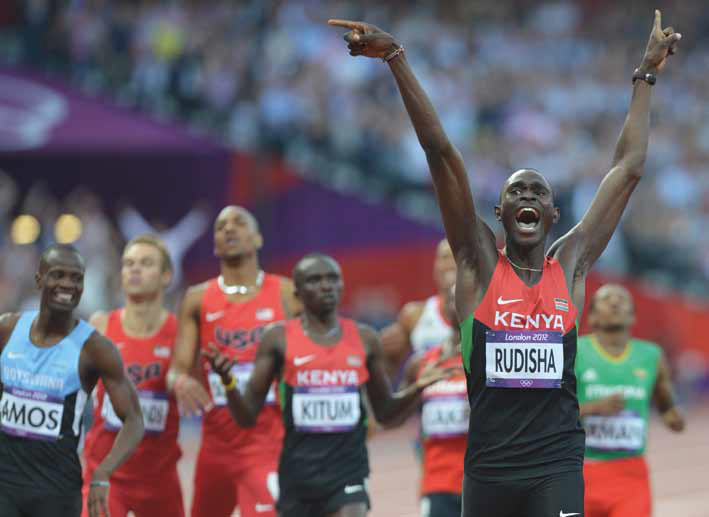
I stayed there for about two hours and got some great shots of David Rudisha of Kenya winning the men’s 800m final and smashing the world record.
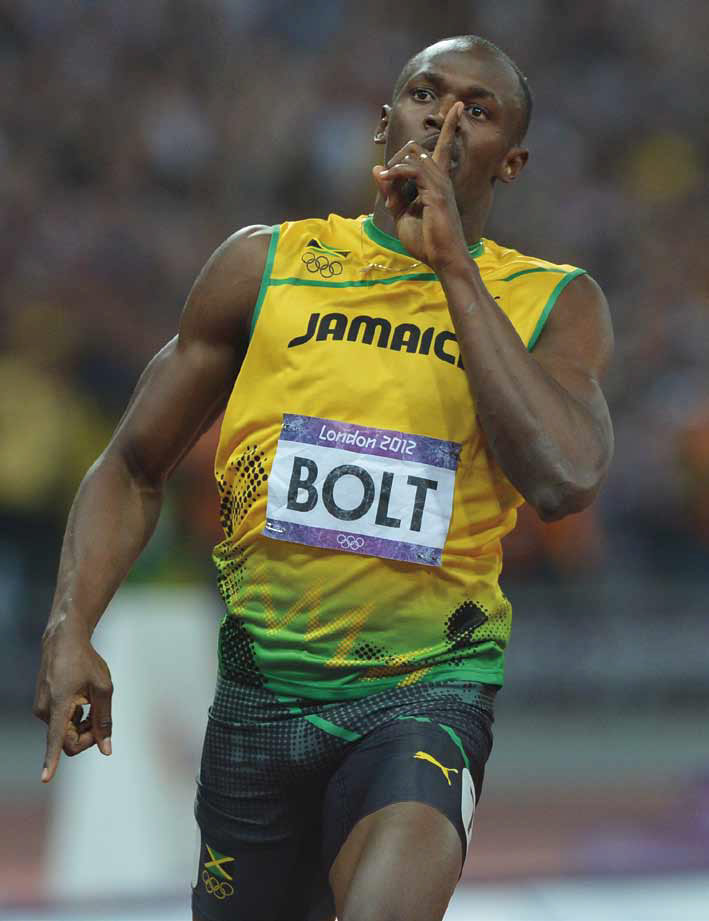
Then it was a case of getting ready for a quick race in which a guy by the name of Bolt would be running – the men’s 200m final.
As the race got under way I picked up Bolt as he came onto the straight. I got some nice shots, with all the athletes in the frame, as he crossed the line.
I focused particularly on him as I knew he had won the race by a good margin, and with his being known for some great celebrations.
At this point I ran my own race.
The men’s final was around 8:50pm and Jade Jones had made it through to the final in the women’s Taekwondo, which was back at the ExCeL, about an hour away.
So I didn’t waste any time – I was out of there and got back to the ExCeL as fast as I could. I arrived at my position at 10:10pm.
Editing and transmitting images under pressure
How did you go about processing and first-editing your images at the end of each session, or did you have to defer this until the end of the day?
We had a rule on editing: only send out five images and one of these to include medals and celebrations, if I had them.
There was no point in spending time editing as I needed to get to the different venues.
And as I was the only photographer working for CameraSport we did not have the luxury of having one photographer covering one thing and another covering another event.
I was on my own and needed to be as mobile as I could.
Often I would use the time I had on the bus back to the Olympic Park where I would download, caption and edit, then FTP them back to base.
Working alongside other photographers
How many photographers did you share each pitch with? Was it the permanent scrum it looked, or did it vary?
It varied from venue to venue.
For example, the 100m finals was rammed with photographers and we were pretty tightly packed.
But at some venues only, say, 10 photographers were there.
The scrums were when there was a medal ceremony. There would be a lot of pushing and shoving, but all in all it was OK.
How many images did you shoot?
Approximately 17,000 images.
Ian Cook’s Olympic photography kit
What kind of gear did you use and how did you drag it around?
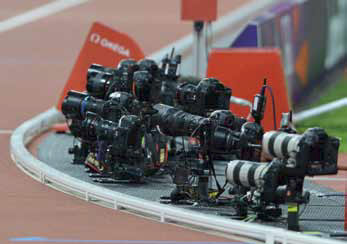
As I am a Nikon NPS member and Nikon were there with a ton of kit to hire for free, I took my chance and got whatever I could.
Nine times out of ten I would carry the following:
- Nikon D4 with a 400mm f/2.8
- Nikon D4 with a 70-200mm f/2.8
- Nikon D4 with a 24-70mm f/2.8
- 14-24mm f/2.8 in my belt pack
- 1.4x converter
- 16mm fisheye
- MacBook in its case
- 300mm f/2.8 over my shoulder
Let’s just say that was a lot of kit to carry around.
I did not generally have the luxury of leaving it in lockers. At some venues I did get that chance, but more often the whole lot was carried at all times.
Security and moving between venues
How was security when moving in and out of the venues, often in a hurry?
There was airport security at every venue.
Once in the Olympic Park it was fine to move from venue to venue, but if I went to any of the other venues, for example Greenwich for the equestrian or ExCeL, then I would have to go through more security.
The same security protocol was used at every venue.
The one Olympic moment Ian remembers most
You must choose one and only one. What was the best moment, the single thing that will remain etched in your mind?
Geraint Thomas winning gold in the men’s team pursuit.
I’ve worked with Geraint and he’s a really nice guy, and to see that performance was amazing.
Inside the Main Press Centre
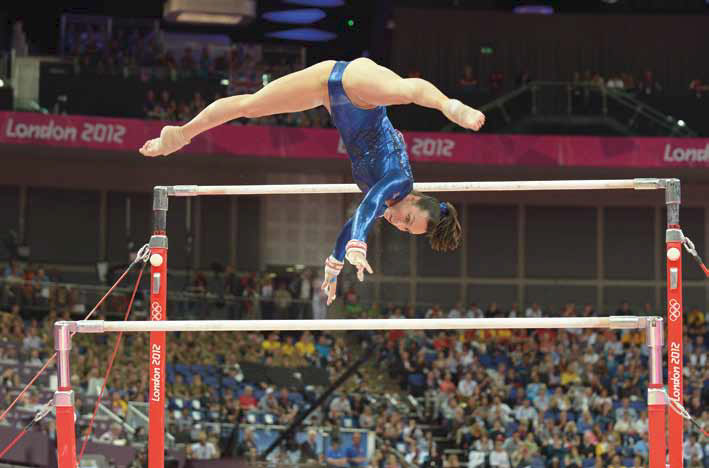
Describe the media centre for me. How big?
The media centre was huge; it was split into two areas, MPC (Main Press Centre) and IBC (International Broadcast Centre).
We had our own shops, bars, bank, hairdressers, chemist, post office, McDonald’s and catering buildings.
The MPC was four floors high, and photographers were located on the first floor.
How many desks/workstations?
There were about 250 workstations at the MPC and each venue had about 50 photographer workstations.
How many lockers?
The MPC had 288 lockers and each venue had approximately 50 lockers.
Food and drink facilities?
Each floor had a catering service, but it was very expensive so I tried not to eat there.
The MPC had a McDonald’s and various restaurants in the catering building.
Showers and rest areas?
I never found showers, but the journalists did have a quiet room, with nice bed-chairs in it.
Travelling between venues
How did you get to and from venues?
Travelling to venues was 90% bus and sometimes a bit of a walk to the media centre, but when carrying all the kit it often seemed like miles.
Planning the next day’s coverage
How did you go about planning the next day’s shoots and where did you learn what was going on at other venues?
My planning was done by CameraSport as they were able to keep track of medal hopefuls, etc.
They would let me know where I needed to be, and I used the BBC Olympics iPhone app, which was amazing – but things changed from day to day and hour by hour!
Seeing other photographers’ work
In the media centre did you get to see any newspapers to see what other photographers were making or how work was being used?
The big agencies such as Getty, PA, Reuters and AFP all had their own offices, and all had flat screens outside with a slideshow of the day’s images, and yes, some were very good.
I never got to read a paper; I did see some there, but had no time to sit and read anything.
At the Japan/Egypt soccer quarter-final, I sat next to a guy in full samurai costume, less the sword. To my left were Egyptian women in national costume and there were also a couple of geishas in the stand.
The best fan costume
What was the best get-up you saw on your travels?
I think I was about the same as you. When I was at the ExCeL there was a Japanese judo fighter and loads of Japanese fans were wearing the national dress. It was nice to see.
Working with pool photographers
Which is your own best image and why?
I don’t really have a best image. I have lots of images I’m pleased with and some have already sold, which is great.
Overall the Olympics was a little bit frustrating for many of the photographers.
We were split into two categories: pool photographers and the rest – us, basically.
Pool photographers – Getty, PA, Reuters, etc. – had blue bibs and that gave them access to areas that we weren’t allowed into, so all the best positions were already marked for pool photographers.
For example, at Wimbledon the pool photographers got to shoot the medal ceremony head-on and then they brought Murray around to the sides for us to get a shot of him with his medal.
This got on my nerves a bit, but there was nothing I could do.
At the athletics only blue bibs were allowed on the in-field, so they got shots of the field events such as the shot put, hammer, discus and javelin.
Choosing lenses for different sports
You carried both a 300mm f/2.8 and a 400mm f/2.8 most of the time. On reflection was this a good choice and how would you change it? Did either lens spend a lot of time unused? How much use did your teleconverters get?
Actually it was the only choice I had.
For example, on the day Andy Murray was in the final at Wimbledon, a 400mm was just too tight, so the preference for tennis is 300mm, 70-200mm and a 24-70mm, plus a 14-24mm for overviews of the stadium.
But then I had to race back to cover the men’s 100m final. There the 300mm was just too short, so I changed to the 400mm, which worked a treat.
In a case like this there is no time to pop back to the centre to collect different sets of gear.
Venue lighting and ISO
How were the venues’ lighting levels? What ISO did you employ indoors?
All the venue lighting was spot on; all had lighting set to 5200 Kelvin, which made it really nice.
1600 ISO was mainly used for action shots.
Captioning images under pressure
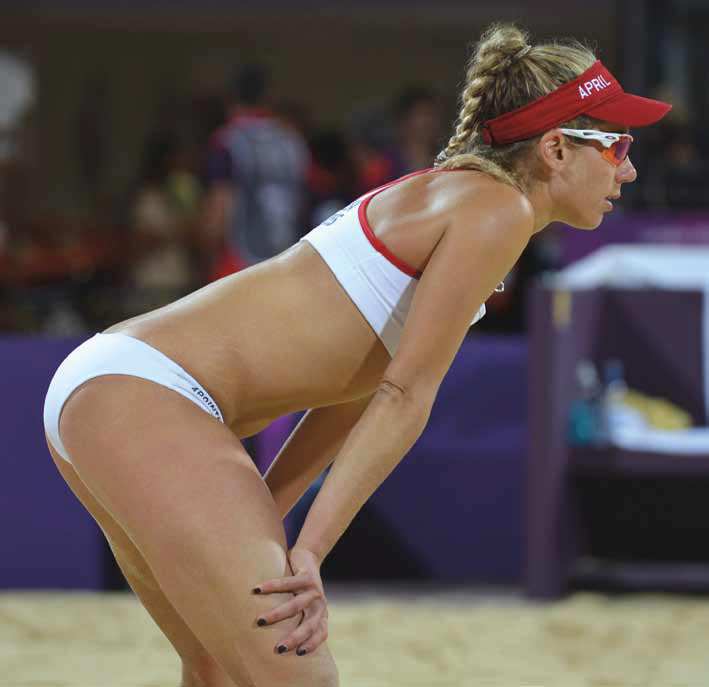
One of the more amusing incidents arose when the Daily Express put the Dutch bronze medallists on their front page instead of the victorious GB team. The error was put down to an agency mis-captioning their submissions. How did you go about captioning in the heat of battle, when did you find time to do it before filing your images? How did you find out the names of competitors?
I had a bit of help on this.
For example, every athlete either has their name on the front or at least a number, so I got this in the image or shot images around a sequence with the number showing, so I could use it later for captioning.
The problem arose during the equestrian events.
I’m not an equestrian fan at all and could not tell you the names of any competitors. So at every venue they had computers where information could be printed off so you could filter by day, event, competition, etc. and then print off sheets for captioning.
When I was captioning the equestrian I actually put the rider’s name in Google and clicked on images and basically differentiated them that way.
It was a bit long-winded but it worked and I think my images went out with the correct captions.
Also I used the iPhone app, which had a list of the events and players/competitors/athletes.
So there were plenty of options to get hold of information.
Filing images back to base
How did you go about filing your images back to base, and how long did it take on average?
I only filed when I was in transit between venues as I was on my own, so more time could be used to concentrate on shooting.
On the transport buses, where I had 40 minutes of dead time, I wired about five images – all there was time for – and the rest would just stay on my laptop.
When I got back to my campsite I would sit and chill out with a beer and start to do some more, but not many, as I wasn’t getting back to the campsite until approximately one in the morning.
You can’t be everywhere
You obviously could not be in more than one place at a time. What was the incident you most wished you had been at?
I had a couple of free days in my schedule. These were not free days but days to cover different sports to expand our coverage.
As the Games went on my schedule changed, depending on who was doing well and looked like medal candidates, etc.
I did plan to cover rowing and canoeing but that just never happened and we had success in both, so I am a bit gutted I missed those.
One of the funny memories I have of the Olympics is the call of my editor Steve White joking to me, saying:
“Can’t you split yourself in two as we have a hope in the rowing.”
As I was on my own it was just impossible to cover everything.
Looking forward to Rio, I’m hoping there are more of us, so I’ll get to cover a few more sports.
Photographing the closing ceremony
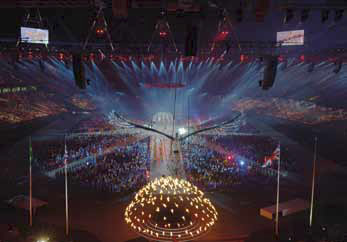
How did you find the opening and closing ceremonies?
I did not manage to cover the opening ceremony but I did get to cover the closing ceremony.
It was a let-down for me in a photographic sense. My position was up in the back row in the stands, so close to the roof I could almost touch it.
I was in line with the flame and the stage was at the opposite end, a useless position in many respects.
One: if I wanted to photograph anything on the Union Jack, centre stage, I couldn’t, due to the heat haze that was coming from the flame.
Two: they had a phoenix hanging from the roof by cables which cluttered all images, and for the fireworks I was way too high up to get anything different.
I even asked if I could go down to the middle of the stand just for the fireworks and was told no.
So I found it very frustrating on that front.
As I said to the photo marshal, I’m not here to enjoy the show. I’m here to record it.
After the Olympics
I know that you arrived home rather exhausted. Was there a feeling of letdown when it was all over or did you have to get right into the next assignment?
I got home, South Wales, at about 5.30am on the Monday, as I headed straight home after the closing ceremony.
So Monday was spent sleeping.
I was glad to be home by then. I had a couple of days off, but then it was back to work, seeing clients, the odd shoot here and there and back to sport on the Friday with Cardiff City.
So now I’m already back into soccer season mode. I have been working on the fixture lists, seeing where I need to be, etc.
As they say – no rest for the wicked!
Lessons from London and planning for Rio
Rio is four years away. Are you already starting to plan, and what are the key things you learned through your London experiences?
Yes, we have started planning for Rio, and the priority is the accommodation.
This year I knew the language, could read the signs if I got lost because it was here. In Rio I will have a language barrier to contend with, I won’t be able to read the signs, won’t know the area, so I need to have accommodation near the media hub.
Basically when I finish I’ll be on the media bus back to my hotel.
I do not want to find myself stuck out in the middle of nowhere fearing for my life.
Also I hope that we have another photographer or two, because it means we have a lot more coverage than just me struggling on my own.
But also I’m hoping to cover the World Cup in Rio in two years’ time. That should settle a few potential problems.