
Sigma 500mm f/4.5 Review: Long-Lens Photography for Sport and Wildlife
Big it up with SIGMA
By Mike McNamee
Originally published as a period equipment review.
In keeping with the sport theme, we look at some of the options from Sigma for big lenses.
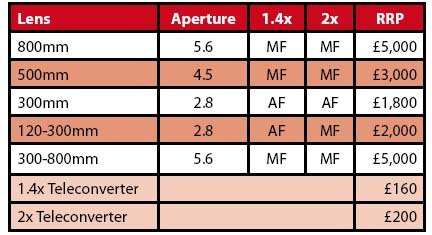
Sigma provides three super-telephoto lenses and two large telephoto zooms. This is by no means the limit of their armoury in longer focal lengths, but we list only the fast lenses. The lenses are complemented by two converters, at 1.4x and 2x extensions. These only allow manual focus on the longer lenses.
The 120-300mm was reviewed in the previous issue; this time we concentrate on the 500mm f/4.5.
This focal length is eminently suitable for cricket and wildlife, especially when used with the smaller digital sensors of the period, which extend the effective field of view to around 750mm. Add a 1.4x converter and you will get very tight framing of a single cricketer at the crease, but you will need to second-guess which way the batsman is going to move to play the ball.
With a field of view of around 3°, this is quite tricky.
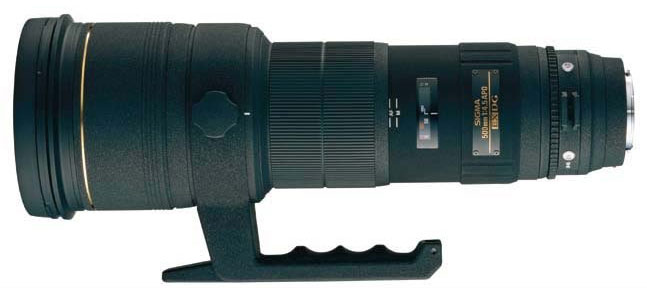
Sigma 500mm f/4.5: Specification
The lens is built with two extra-low-dispersion elements out of its 11, in eight groups.
The closest focus is 4m and the lens weighs 3.15kg. It is 123mm in diameter and 350mm long. It comes with a lens hood and sturdy carry case and strap.
These specifications and observations are retained from the original period review and should not be interpreted as current product information.
Using a 500mm Lens
A lens of this size is difficult to use. It needs good support – a monopod as a minimum requirement – and steady hands.
Any twitchy release of the shutter will be mercilessly exaggerated by the huge magnification.
As discussed in the sports feature, fast shutter speeds are required. We produced only scrap working off a tripod at 1/400s when trying the lens out on wading birds – they are much too twitchy!
At cricket we just about got away with 1/800s, providing we accepted some blur on the moving bat and ball.
Image Quality and Handling
The lens easily out-performed your shaky editor and all defective shots were the result of shake or poor focus control.
The Sigma slams into focus very smoothly; the problem comes when the subject moves.
In overcast sunlight there was no evidence at all of chromatic fringing and just a slight amount at the highlight-to-shadow boundaries.
Our test camera was the Nikon D200.
The Verdict
Overall, we loved this lens. It is superbly built and, once you develop your craft, it is a smooth operator as well.
If you need the length, it is one you have to consider.
Your other option is the 300mm f/2.8 with a 1.4x teleconverter, which would give you 420mm at f/4.0.
From Sigma, the cost for this combination was £1,000 less than the 500mm at the time of the original review, along with extra versatility – quite a difficult choice to mull over!
Looking Closely at the Images
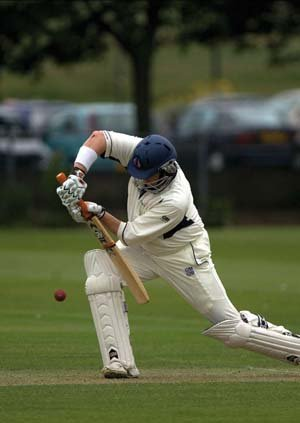
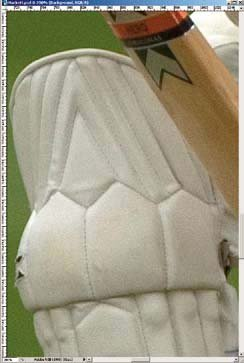
The batsman is playing forward defensive with a stationary front leg. The magnified crop of the large image on the right shows every stitch in the pads.
Great care is needed when examining the quality of images from these long lenses. Even atmospheric haze has a profound effect.
The cameraman is usually the weakest link in the chain.