How to Take Better Drone Photos: Finding Patterns, Shapes and Abstract Landscapes
Angela Adams talks to James Hutchinson
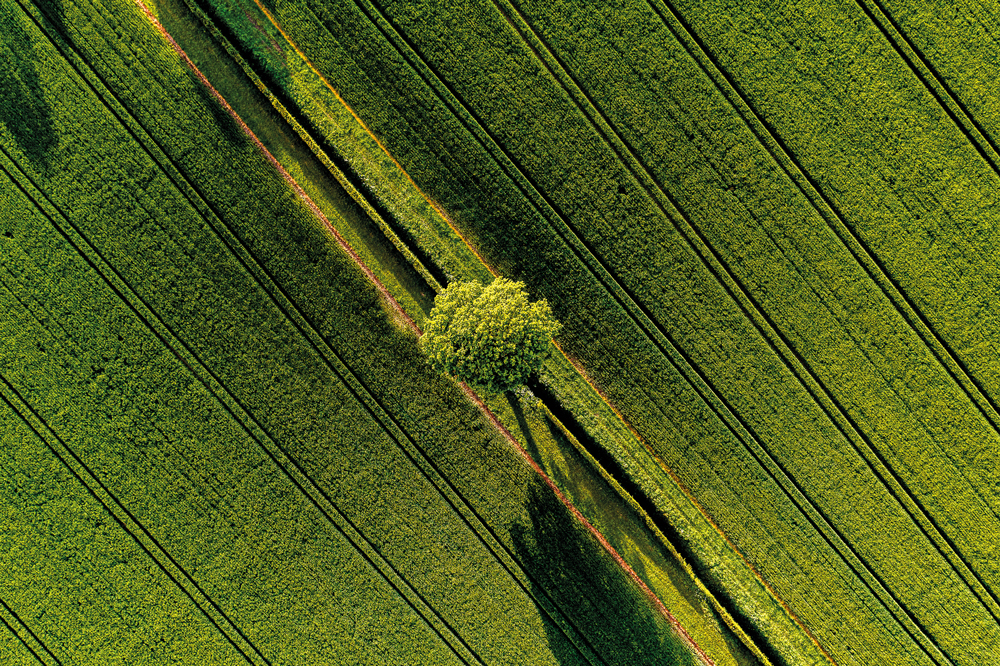
Drone photography gives photographers something that is difficult to achieve in any other way: the opportunity to completely change their viewpoint.
Instead of photographing a landscape from ground level, you can look straight down on it. Familiar places suddenly become collections of lines, shapes, textures and colours. A field can become an abstract pattern, a coastline can turn into a series of curves, and something as ordinary as a shingle bank can take on an entirely different appearance.
For aerial photographer James Hutchinson, this is one of the most exciting things about working with a drone.
James began taking photography more seriously during the 2020 lockdowns and eventually built a career around aerial photography. Alongside his commercial work, he developed a passion for creating photographic art from the landscapes he encountered from above.
His approach offers some useful lessons for anyone wanting to take more creative drone photographs.
Look for patterns rather than simply photographing the view
One of the easiest ways to make your drone photography more interesting is to stop thinking of the landscape as a landscape.
When you’re standing on the ground, you naturally look for recognisable subjects: a building, a mountain, a person, a tree or a coastline.
From the air, those same subjects can become something completely different.
James is particularly attracted to patterns in the natural landscape and in agriculture. Straight lines created by tractors moving through fields can become graphic compositions, while the movement of tides can create subtle curves and textures.
Try looking for:
- Lines created by roads, tracks, fences or crops
- Curves in rivers and coastlines
- Repeating shapes
- Contrasting textures
- Geometric patterns in buildings and architecture
- Shadows cast by structures or landscape features
- Areas where natural and man-made patterns meet
- Changes in colour across fields, water and vegetation
The key is to look beyond what the subject actually is.
A field doesn’t necessarily need to be photographed as a field. It might simply be a pattern of parallel lines.
Try looking straight down
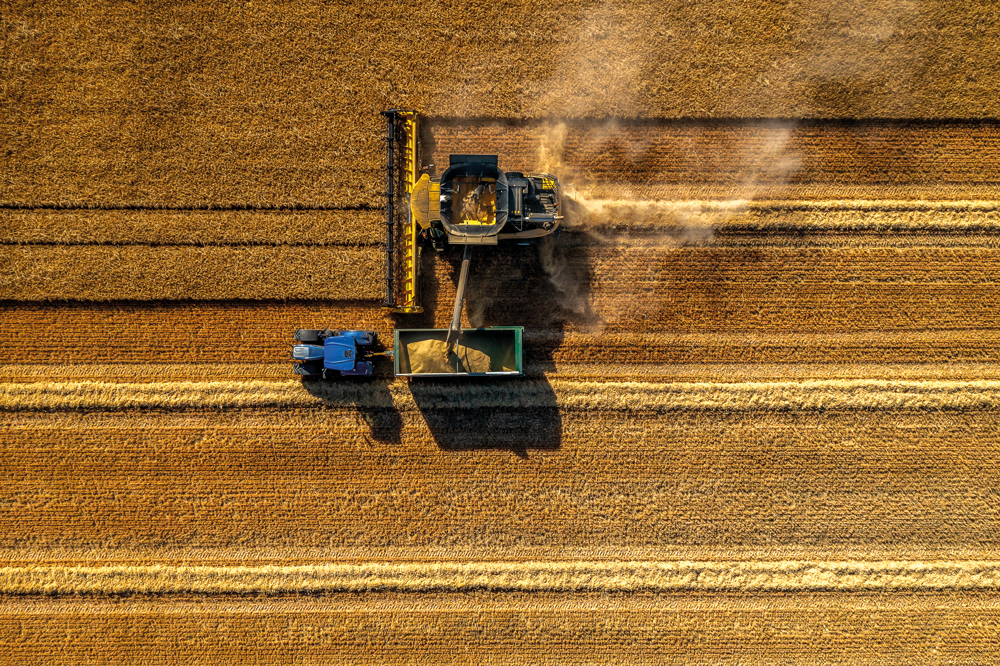
One of the biggest advantages of a drone is the ability to point the camera directly towards the ground.
This changes the way you think about composition.
A vertical photograph looking down can remove much of the information that tells the viewer where they are. There may be no horizon and no obvious sense of scale. Instead, the viewer is presented with shapes, textures and relationships between objects.
This can be particularly effective for abstract photography.
A beach might become a study in colour and texture. Water moving around rocks can create graphic shapes. Agricultural fields can become almost geometric artworks.
When you’re flying, don’t only look ahead at the scene in front of the drone. Look underneath it as well.
Some of your strongest images may be directly below you.
Use the drone to find a viewpoint that doesn’t exist from the ground
Aerial photography isn’t simply about getting higher.
The real advantage is being able to put the camera somewhere you couldn’t normally stand.
James describes the excitement of finding shapes and patterns from the air that may never have been seen from that particular viewpoint before.
That is a useful mindset for drone photographers.
Rather than asking, “What can I photograph from here?”, try asking:
“Where could I put the camera to see this differently?”
You might move higher to simplify the composition, lower to reveal more depth, or position the drone directly above the subject to create an abstract image.
Small changes in position can make a surprisingly large difference.
Pay attention to light and shadows
The direction and quality of light can completely change an aerial photograph.
Low sunlight can emphasise texture and create long shadows, while harder midday light can sometimes produce stronger graphic patterns.
Shadows are particularly interesting when photographing from above because they can become part of the composition rather than simply an unwanted consequence of the lighting.
Look for situations where:
- A building casts a strong geometric shadow
- Trees create repeating shapes
- People or vehicles create small contrasting forms
- Ridges and textures become more pronounced
- The sun highlights differences in colour or texture
- Water reflects light in a way that creates another visual element
You don’t always need dramatic golden-hour light. Sometimes the strongest image comes from relatively simple light interacting with an interesting pattern.
Think about scale
One of the challenges of aerial photography is that the viewer may not immediately understand how large or small something is.
That can work in your favour.
A tiny object can become an important compositional element when surrounded by a much larger landscape. Equally, removing obvious indicators of scale can create an abstract photograph where the viewer has to work out what they are looking at.
Try including a person, vehicle, boat or building when you want to give the viewer a sense of scale.
Alternatively, deliberately leave those clues out when you want the photograph to become more mysterious and abstract.
Don’t overlook water
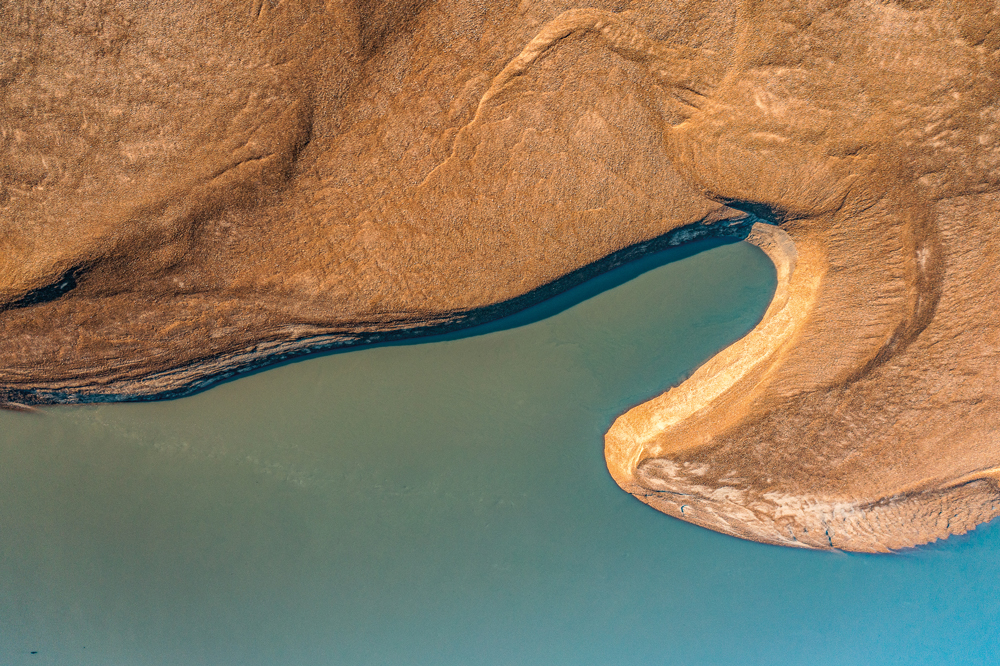
Water can be particularly rewarding from a drone.
Coastlines, tidal patterns, rivers, sandbanks and waves can all create constantly changing shapes.
James particularly enjoys photographing landscapes influenced by the movement of tides and wind. Shingle banks, for example, can form surprisingly recognisable shapes when viewed from above.
The important thing is to return to locations at different times.
A coastline isn’t necessarily the same photograph every time you visit it. Tide, weather, wind, season and sunlight can all change the patterns you’re able to find.
If you have found an interesting location, don’t think of the first flight as the end of the project. It might simply be the beginning.
Weather isn’t always the enemy
Weather is one of the practical challenges of drone photography.
Wind and rain can affect both the safety of the flight and the quality of the photographs. Conditions can change quickly, particularly in exposed coastal or rural locations.
But changing weather can also transform a scene.
Cloud movement, changing light, wet surfaces and mist can all create opportunities that simply aren’t there on a clear day.
That doesn’t mean you should fly in unsuitable conditions. Always put safe operation ahead of getting a photograph, and check the current rules and manufacturer’s guidance before flying.
UK drone regulations change over time, and the Civil Aviation Authority’s current Drone and Model Aircraft Code should be treated as the starting point for understanding where and how you can legally fly. Requirements can depend on the drone’s weight, class and the type of operation.
You should also consider privacy whenever your drone carries a camera, particularly when people or private property are involved.
Don’t just take photographs because you’re there
It is easy to come home from a drone flight with hundreds of photographs.
That doesn’t necessarily mean you’ve come home with a strong portfolio.
Before taking the photograph, spend some time looking.
Move the drone carefully. Change altitude. Try a different direction. Look straight down. Look towards the horizon. Watch how the light is falling.
Then decide what the photograph is actually about.
A strong aerial photograph doesn’t need to contain everything that was visible from the drone. In many cases, removing information makes the photograph stronger.
Develop your own way of seeing
One of the most interesting things about James’s work is that his photographs reveal what he notices.
He sees shapes in the landscape. Straight lines created by farming interest him just as much as organic forms created by water. He isn’t simply recording what is underneath the drone; he’s looking for visual ideas.
That is an important step in developing your own style.
Two photographers can fly over exactly the same location and come home with completely different photographs.
One might be interested in colour. Another might concentrate on geometry. Someone else might look for tiny details or human activity.
The equipment may be identical, but the photographs won’t be.
The more you understand what catches your own attention, the easier it becomes to recognise potential images when you’re flying.
Build a project rather than a collection of random images
Once you start finding subjects that interest you, consider turning them into a project.
You might photograph:
- The same coastline at different states of the tide
- Agricultural patterns throughout the year
- Rivers and waterways from above
- Geometric architecture
- Shadows across a particular town
- The changing shape of a beach
- Abstract patterns created by weather and water
Working this way gives your drone photography more purpose.
Instead of simply asking where you can fly next, you have a reason to return to a location and see how it changes.
It can also help when editing and presenting your work. A collection of related photographs often tells a stronger story than a folder containing hundreds of unrelated aerial images.
Your best drone photograph might be hiding in an ordinary place
You don’t necessarily need an exotic location to make an interesting aerial photograph.
James’s approach demonstrates that there can be compelling images in ordinary agricultural landscapes, beaches and waterways.
The difference is the viewpoint.
A field that looks completely unremarkable from the road might contain an extraordinary pattern from 100 metres above it. A familiar stretch of coastline might reveal shapes and textures that you have never noticed before.
That is perhaps the greatest creative opportunity offered by drone photography.
You aren’t simply taking a camera into the sky.
You’re changing the way you see the world.
And once you start looking for patterns, shapes, textures, shadows and unexpected relationships, you may find that interesting aerial photographs are all around you.