
How to Find Your Photography Niche and Stand Out
Angela Adams talks to Nicola Grimshaw
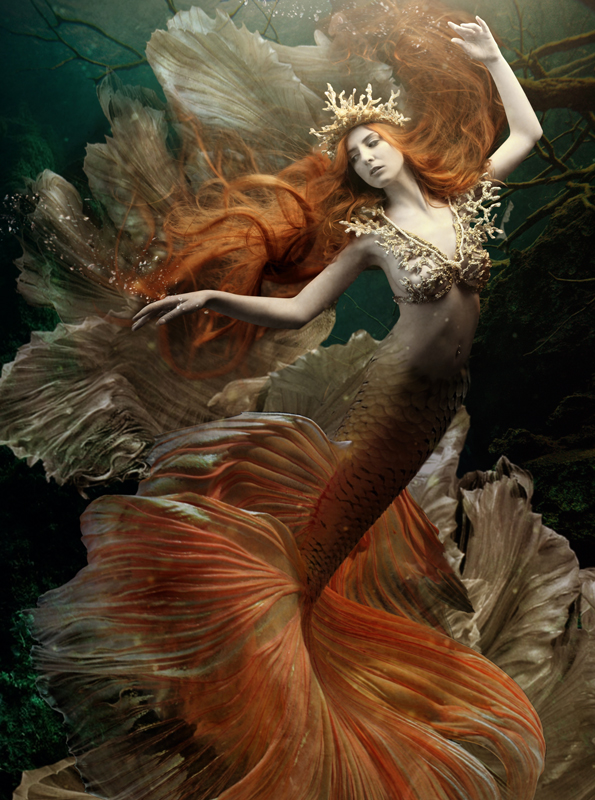
One of the hardest things about building a photography business is working out what makes you different.
There are plenty of photographers offering portraits, weddings, boudoir, family photography, commercial photography and countless other services. So how do you give potential clients a reason to choose you?
Sometimes the answer isn’t to become better at what everyone else is already doing.
It’s to do something different.
Photographer Nicola Grimshaw is a good example. Her professional career began in wedding photography before she moved into boudoir and portraiture. Then, almost by accident, she discovered an idea that would become a distinctive part of her business: mermaid photography.
It started with a model arriving for a shoot wearing a beautiful latex outfit that reminded Nicola of a mermaid. She created a fun digital image of the model as a mermaid.
The idea caught people’s imagination.
What started as an experiment developed into a specialist photography offering.
There are some useful lessons in that story for any photographer trying to find their own niche.
Don’t be afraid to experiment
Nicola didn’t begin her career with a carefully constructed plan to become a mermaid photographer.
She started as a wedding photographer in 2001, moved into boudoir and worked with models on portfolio shoots.
The mermaid idea came from something that happened during an ordinary shoot.
That is worth remembering.
Your niche doesn’t necessarily have to be something you identify before you start your photography career. It can emerge from the work you’re already doing.
Try things.
Photograph subjects that interest you. Experiment with styling, lighting, locations and post-production. Follow ideas that make you curious.
Some experiments will go nowhere.
Occasionally, one will make you think, there’s something here.
That’s the one worth pursuing.
Look for the thing that makes people curious
One reason Nicola’s mermaid photography worked was that it immediately gave people something to talk about.
Being photographed as a mermaid isn’t an everyday experience.
The idea has an element of fantasy and escapism, and that makes it different from simply booking a conventional portrait session.
This is an important marketing lesson.
You don’t necessarily need to explain why your photography is technically better than somebody else’s.
Give people a reason to be interested in it.
A distinctive concept can do that for you.
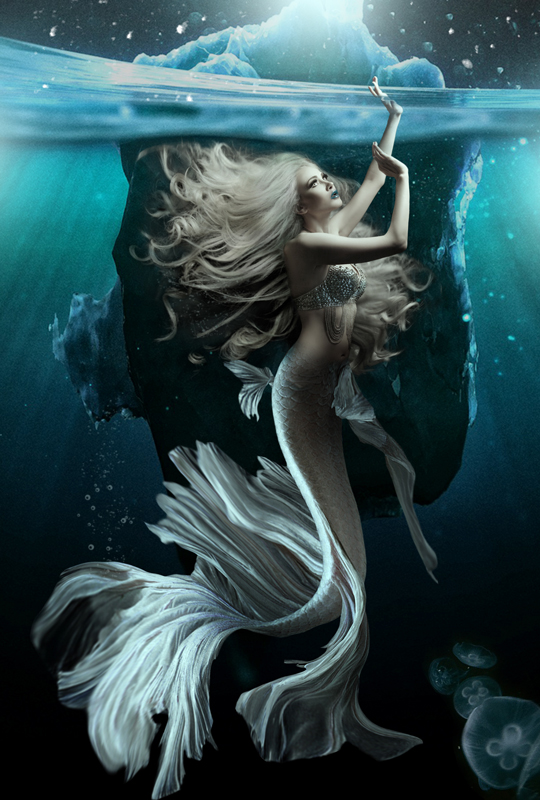
A niche doesn’t have to mean doing only one type of photography
Finding a niche doesn’t mean you have to photograph the same thing for the rest of your career.
Nicola’s portfolio included a variety of styles, including vintage-inspired boudoir, fetish and pin-up work alongside her mermaid photography.
In fact, she openly admitted that she gets bored easily and enjoys mixing things up.
That’s perfectly possible.
A niche can be a particular type of client, subject, experience, style or concept rather than a restriction to one photographic genre.
For one photographer, the niche might be photographing dogs.
For another, it might be dramatic personal branding portraits.
Another photographer might specialise in vintage-inspired portraits, food photography for independent restaurants or adventurous outdoor portraits.
The important thing is that there is something recognisable about the work.
You can create your own market
One of the most interesting things about a specialist photography idea is that you aren’t necessarily competing directly with every photographer in your area.
If you’re offering another standard portrait package, potential clients can compare you with dozens of other photographers.
But if you’re offering something unusual, the comparison becomes much harder.
That’s what makes differentiation so valuable.
Nicola noticed that she wasn’t seeing other photographers offering the same sort of mermaid experience. That gave her something distinctive to build around.
You don’t have to invent an entirely new form of photography.
You simply need to find an interesting combination of things that isn’t being offered in exactly the same way by everyone else.
Photograph what you want to sell
One of the most useful pieces of advice for any specialist photographer is simple:
Show people the work you want them to buy.
If you want to photograph dramatic portraits, your portfolio needs dramatic portraits.
If you want to photograph fashion, show fashion.
If you want to attract commercial food clients, create food photography that looks like the work those clients need.
And if you want to offer a fantasy portrait experience, create images that demonstrate what that experience can look like.
Clients are much more likely to understand an idea when they can see it.
Don’t rely entirely on telling people what you could photograph.
Show them.
You don’t always need expensive equipment
One of Nicola’s answers to the question about the piece of equipment she couldn’t live without was rather revealing.
It wasn’t an expensive camera, lens or lighting system.
It was her collection of fabrics.
That makes sense for a photographer working with stylised portraits.
A simple piece of fabric can change the shape, colour and mood of an image. It can become clothing, a background, a veil or part of a fantasy costume.
The broader lesson is that creativity doesn’t always come from buying more equipment.
Sometimes it’s about learning how to get more from simple materials.
Think about the props, fabrics, backgrounds and styling elements that could help give your own work a distinctive visual identity.
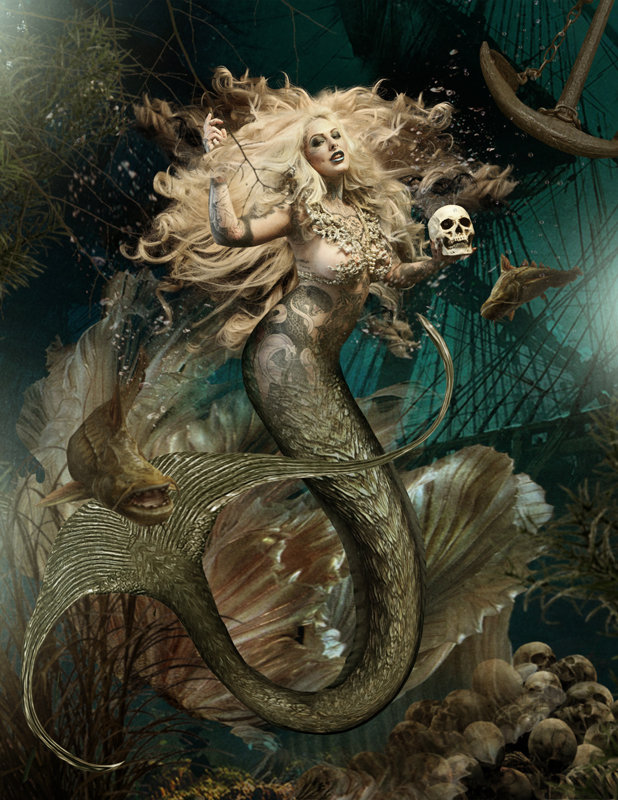
Your style can evolve
Nicola’s advice was to move with the times and be prepared to shake up your style regularly.
That’s particularly important if your work is influenced by fashion, music, film or social media.
Visual trends change.
Clients change.
The platforms through which people discover photographers change.
And photographers change too.
There is nothing wrong with developing your style as your interests evolve.
In fact, refusing to change can eventually make your work feel stale.
The trick is to evolve without simply chasing every trend that appears.
Inspiration can come from outside photography
Nicola doesn’t only look to other photographers for inspiration.
She mentioned perfume advertising, high-fashion shoots and music videos.
That’s a great habit.
If you only look at other photographers, it’s very easy for your work to become influenced by what other photographers are already doing.
Look elsewhere.
Study:
- fashion campaigns
- films
- music videos
- theatre
- painting
- graphic design
- advertising
- architecture
- magazines
- costume design
Look at how other creative industries use colour, lighting, composition, styling and storytelling.
Then think about how those ideas could influence your photography.
Your portfolio should reveal something about you
A portfolio shouldn’t simply demonstrate that you know how to operate a camera.
It should tell a potential client something about the person they’re considering hiring.
What do you enjoy photographing?
What sort of images excite you?
What visual decisions keep appearing in your work?
What would someone recognise as your photograph?
Nicola’s portfolio revealed that she enjoys working across different styles and creating highly stylised images.
That’s part of her identity as a photographer.
Your own portfolio doesn’t need to look exactly the same from one image to the next, but there should ideally be something connecting the work.
That might be your use of light, colour, posing, storytelling, humour, styling or simply the way you see people.
Use quiet periods to work on your business
Every photography business has busy and quiet periods.
One useful approach is to stop thinking of a quiet period as simply a lack of work.
Use some of that time to work on the business.
Update your portfolio.
Create new images.
Improve your website.
Write useful content.
Contact potential clients.
Build relationships.
Plan a new photography offering.
Experiment with an idea you’ve been putting off.
Marketing is much easier to ignore when you’re busy. Quiet periods give you the opportunity to build the foundations for the next busy period.
Learn to say no
This is one of the less glamorous parts of running a photography business, but it can make a huge difference.
Nicola talked about learning to say no when something doesn’t feel right for her or her business.
That is a skill many photographers take years to develop.
Not every client is the right client.
Not every job is profitable.
Not every opportunity will move your business in the direction you want it to go.
Of course, when you’re starting out, there can be good reasons for taking work that isn’t perfect.
But as your business develops, you should become increasingly clear about what you want it to be.
Saying no to the wrong work can create space for the right work.
Don’t be afraid to change direction
Nicola’s career is also a useful reminder that photographers don’t have to stay in the genre in which they started.
She began with weddings, moved into boudoir and then developed a highly distinctive fantasy-based offering.
Your first photographic business idea doesn’t have to be your last.
You might discover that you enjoy commercial photography more than weddings.
You might move from portraits into personal branding.
You might discover a passion for photographing food, products, interiors or architecture.
Or you might find a completely unexpected niche while experimenting with your existing work.
The skills you’ve developed don’t disappear when you change direction.
They come with you.
Find the overlap between what you love and what people will pay for
There’s a useful commercial question behind all of this.
What do you enjoy photographing?
What are you good at?
What are people interested in buying?
And where do those three things overlap?
That’s where an interesting photography business can develop.
Nicola was particularly passionate about photographing women and creating stylised images. She also found that people were fascinated by the idea of becoming a mermaid for a photography session.
That combination gave her something commercially useful.
Your own answer will be different.
It might be a particular type of portrait, a particular audience, a particular visual style or a completely different photographic service.
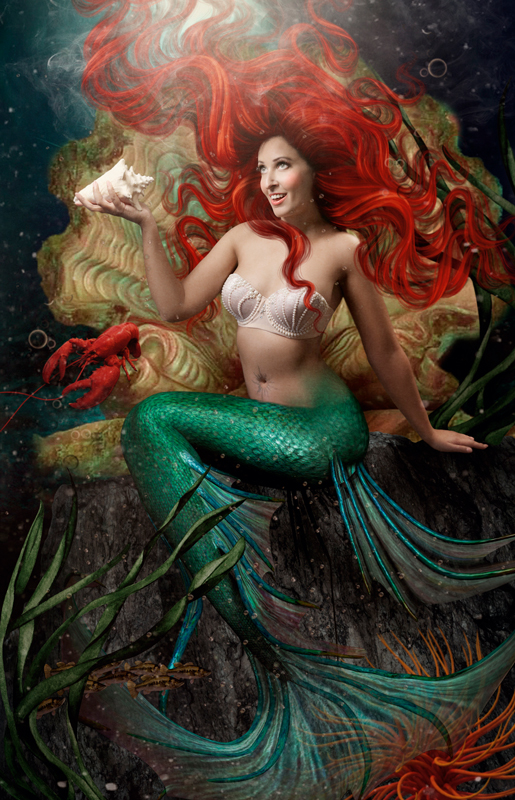
You don’t need to be the only photographer doing it
It’s tempting to think that finding a niche means discovering something that nobody else in the world is doing.
It doesn’t.
Very few photographic ideas are genuinely unique.
What matters is how you interpret the idea.
Your lighting might be different.
Your styling might be different.
Your approach to the client experience might be different.
Your personality might be different.
Your images might tell a different story.
Your business might combine several familiar ideas in an unfamiliar way.
Differentiation doesn’t always come from inventing something new.
Sometimes it comes from doing something familiar in a way that feels unmistakably yours.
Finding your own photography niche
If you’re struggling to work out what your niche might be, start with the work that makes you want to pick up your camera.
Then look for patterns.
Ask yourself:
- What subjects do I naturally gravitate towards?
- What type of work do I enjoy most?
- What do people already ask me to photograph?
- What sort of images get the strongest reaction?
- What skills or interests do I have outside photography?
- Is there a particular audience I understand particularly well?
- What could I offer that feels different from the standard local photography package?
- What work would I like to be doing more of?
- Does my portfolio actually show that work?
Don’t worry if you can’t answer all of those questions immediately.
Finding a niche is often a process rather than a single decision.
Build the business around what makes you different
Nicola’s mermaid photography is an extreme example of finding a niche, but that’s what makes it such a useful one.
She didn’t start with a grand business plan.
She experimented.
She noticed that people were intrigued.
She developed the idea.
She created images that demonstrated it.
And she built an offering around something that genuinely interested her.
You don’t have to become a mermaid photographer to take the same approach.
Look at your own photography.
What makes you curious?
What makes people stop and look?
What could you photograph that would make someone say, “I’ve never seen that before”?
That might be the beginning of your niche.
And once you find it, don’t be afraid to keep evolving it. A successful photography business doesn’t have to stand still. Your niche can develop as your photography, your clients and your interests develop too.