Julia Boggio on Shooters: How a Wedding Photographer Became a Novelist
What happens when a professional photographer turns her attention from creating images to writing stories?
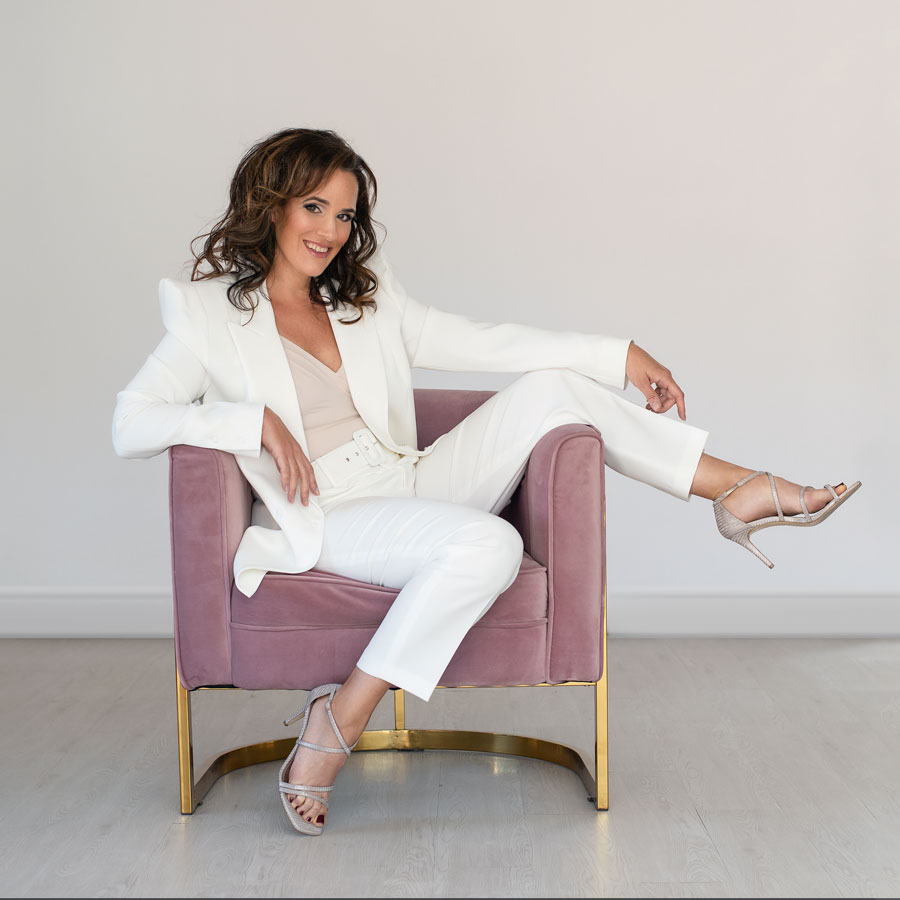
For photographer and author Julia Boggio, the answer was Shooters, a novel set in the world of wedding photography and inspired by her own experiences within the photographic industry.
The book combines photography, romance, humour, ambition and the complicated relationships that develop behind the scenes of the wedding industry. It also draws on Julia’s own knowledge of professional photography, giving readers a glimpse into a world that will be particularly familiar to photographers.
We caught up with Julia to talk about Shooters, the inspiration behind the novel, photography, writing and the creative process.
What is Shooters about?
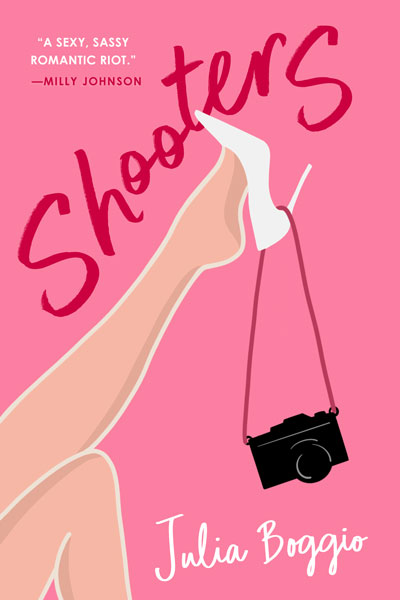
Shooters follows Stella Price, a new photographer determined to establish herself as a successful wedding photographer after an affair brings her previous career to an unhappy end.
She finds herself on a week-long photography course with Connor Knight, an exceptionally successful wedding photographer who has little interest in marriage himself.
The pair clash from the beginning, but their relationship becomes increasingly complicated as Stella gets to know the person behind Connor’s confident exterior.
The story combines romance and humour with the world of professional wedding photography, creating a fictional environment that will be particularly recognisable to photographers who have spent time working in the industry.
Where did the idea for the novel come from?
The original idea for Shooters began at a Society of Photographers Convention.
Julia had already started thinking about returning to her earlier interest in writing fiction when she discussed the idea with fellow photographer Sarah Edmunds.
Sarah suggested that Julia could become the “Jilly Cooper of photography”.
That comment proved to be the spark.
The idea of writing fiction about photographers suddenly began to take shape, and the plot, characters and title started forming in Julia’s mind.
It is a good example of how ideas can emerge from seemingly ordinary conversations — particularly when you’re already immersed in a subject you know extremely well.
Why did you decide to take time away from photography to write?
Julia had been working as a full-time photographer since 2005.
During that time she worked as a wedding photographer and also ran a busy luxury portrait studio. She eventually found that managing the studio and photography business had become exhausting, particularly alongside family commitments.
She closed her studio space and continued working without a permanent premises, renting studios when necessary and keeping her equipment and props in storage.
Although this gave her greater flexibility, she realised she needed a break from the pace of running a photography business.
The idea of spending time writing became increasingly attractive.
Taking a step away from the day-to-day demands of photography gave Julia the opportunity to return to another creative interest that had been part of her life long before she became a professional photographer.
Is Stella based on you?
There are certainly similarities between Julia and her fictional protagonist, Stella.
Both have connections with photography, and Julia also had experience working as a medical copywriter before becoming a full-time photographer.
There are references to places and interests that will feel familiar to people who know Julia.
But Stella is ultimately a fictional character, and the events that happen to her are part of the story rather than a retelling of Julia’s life.
Julia describes the first novel as inevitably containing elements of the author’s own experiences.
Her approach is summed up by the classic writing advice:
Write what you know.
And when your professional life has been spent photographing weddings and people, there is certainly plenty to know about.
How did your photography experience influence the book?
Photography provides more than just the setting for Shooters.
It gives Julia a world she understands first-hand.
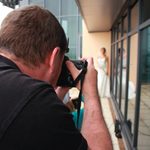
She knows the pressures of working with wedding clients, the personalities involved in the industry, the competitive nature of professional photography and the situations photographers can find themselves in while working at weddings.
That experience allows the photographic elements of the story to feel authentic.
It also demonstrates one of the advantages photographers have when moving into other creative disciplines: photographers already understand visual storytelling.
A photograph can communicate character, emotion, atmosphere and narrative in a fraction of a second.
Writing uses different tools, but the underlying desire to tell a story is remarkably similar.
Photography and writing have more in common than you might think
Julia believes her love of storytelling was part of what made her a good photographer.
Photography and fiction may appear to be very different creative disciplines, but both involve decisions about what to show, what to leave out and how to make an audience feel something.
A photographer chooses:
- the viewpoint
- the composition
- the moment
- the light
- the expression
- the details within the frame
A writer makes similar decisions using words.
They choose which characters to introduce, which details to describe, which moments to emphasise and what information to leave for the reader to discover.
In both cases, the creator is controlling the audience’s journey through a story.
Were any of the characters inspired by real photographers?
Julia admits that some characters were inspired by people she has encountered, but the characters themselves are fictional.
This is an important distinction.
Someone may provide the spark for a character, but that doesn’t mean the character is a direct representation of them.
Connor Knight, for example, was partly inspired by successful wedding photographer Jerry Ghionis, whom Julia knew and even interviewed while writing the novel.
However, Connor is very different from Jerry.
The fictional character is a highly successful wedding photographer who has very strong views about marriage — something that certainly shouldn’t be confused with the real person who inspired some of the character’s characteristics.
How much of the wedding photography in the story is real?
Julia has always been careful not to reveal too much.
Some of the details surrounding Stella’s first wedding assignment were inspired by real events.
Exactly which details are true, however, is something Julia has chosen to leave to the reader’s imagination.
That mixture of reality and fiction is part of what makes writing about an industry you know particularly well so entertaining.
Photographers reading the book may find themselves wondering which characters, situations and stories have a real-world origin.
Writing intimate scenes
Shooters is not simply a book about photography.
The novel also contains romance and intimate scenes, and Julia approached these with the same attention to storytelling as the rest of the book.
For her, the challenge was not simply describing what happens.
The important part is combining emotion, character and action so that the scene contributes to the story rather than becoming an interruption to it.
That is another example of the importance of storytelling: every scene needs to serve a purpose.
From photography to publishing
Julia’s move from photography into fiction wasn’t the end of her creative career.
Instead, it became another way of communicating with an audience.
Writing a novel also introduced her to a different side of publishing and marketing.
Like photography, publishing is not simply about producing the creative work.
You also need to understand how to reach an audience.
Julia’s experience as a photographer gave her plenty of insight into this side of the process.
The Two Lit Chicks podcast
Julia’s interest in writing also led to the creation of the Two Lit Chicks podcast, which she co-hosted with fellow author Jen Hyatt.
The idea developed while both women were waiting to hear from publishers about their books.
Rather than constantly checking with their agents for updates, they decided to create something themselves.
The podcast centred around books and conversations with writers.
Over time, it featured a range of established authors and became another way for Julia to connect with readers and promote her work.
For a photographer, there is an interesting lesson here.
Creating an audience doesn’t necessarily mean relying on one platform.
A photographer might create photographs, write articles, produce videos, host a podcast or teach workshops.
The important thing is finding ways to communicate your expertise and personality to the people you want to reach.
From photographer to author
Julia’s journey demonstrates that creative careers don’t have to follow a single path.
Photography can lead to writing, teaching, podcasting, filmmaking or any number of other creative disciplines.
In her case, the connection was storytelling.
She had spent years telling stories through photographs and eventually found another way to tell them through fiction.
That is perhaps the most interesting connection between Shooters and photography.
The equipment may be different and the creative process may take considerably longer, but the fundamental objective remains the same:
Tell a story that makes people want to keep looking — or keep reading.
What’s next?
Shooters became the first book in Julia Boggio’s Photographer’s Trilogy.
The second novel, F-STOP!, moves the story to Connor’s assistant, Krish Kapadia, as he attempts to establish his own photography business while dealing with the return of talented videographer Francesca March.
The series continues to explore relationships, ambition and the often chaotic world of professional wedding photography.
For photographers, the books offer something slightly unusual: a chance to see their own industry transformed into the setting for a work of commercial fiction.
What photographers can learn from Julia’s creative journey
Julia’s story is about more than writing a novel.
It is a reminder that the skills developed through photography can transfer into other creative fields.
Photographers already understand:
Storytelling — every successful photograph communicates something.
Character — photographing people requires an understanding of personality and emotion.
Observation — photographers spend their careers looking for details that others might miss.
Communication — working successfully with clients requires strong interpersonal skills.
Marketing — building a photography business means learning how to find and retain an audience.
Visualisation — photographers constantly imagine the finished image before creating it.
Those skills don’t disappear when you put the camera down.
They can become the foundation for an entirely different creative project.
About Julia Boggio
Julia Boggio is a professional photographer and author whose career has included wedding photography and luxury portraiture. Her experience within the photographic industry provided the inspiration and setting for her Photographer’s Trilogy, beginning with Shooters.
Her work demonstrates how experience gained through one creative discipline can provide the foundations for another — and how photographers can use their knowledge of people, character and storytelling far beyond the camera.
This article has been adapted and expanded from an interview originally published in Professional Imagemaker.