
How to Price Your Photography: A Guide to Setting Profitable Prices

Setting photography prices can be one of the most difficult parts of running a photography business.
How much should you charge for a shoot? What should you charge for prints or digital images? Should you offer packages? Should you match your competitors? And what happens when a potential client tells you that your prices are too high?
The answer isn’t simply to find out what other photographers are charging and set your prices slightly lower.
A sustainable photography business needs to understand the difference between cost, price and value. Once you understand those three things, pricing becomes much less daunting.
Cost, price and value are not the same thing
One of the biggest mistakes photographers make is assuming that the price of a product should be based primarily on what it costs to produce.
Consider a photographic print. The paper, ink and packaging might cost only a few pounds. But the client isn’t really buying a few pounds’ worth of paper.
They are paying for the photographer’s knowledge, experience, creativity, equipment, preparation, time, editing and ability to create an image that has meaning to them.
That is the difference between cost and value.
A finished photograph might represent:
- Years of photographic experience
- Time spent planning the shoot
- The photography session itself
- Equipment and studio costs
- Editing and retouching
- Insurance
- Software and subscriptions
- Marketing
- Administration
- Professional training
- The photographer’s creative ability
- The finished product and presentation
- The emotional or commercial benefit the image provides
Your price needs to reflect the whole service, not simply the physical cost of producing the final image.
What are your photography business costs?
Before deciding what to charge, you need to understand what it actually costs to run your business.
Your costs may include:
- Camera and lighting equipment
- Computers and storage
- Software and editing subscriptions
- Studio or office costs
- Website hosting and domain registration
- Business insurance
- Professional memberships
- Training and qualifications
- Marketing and advertising
- Travel and vehicle expenses
- Accountancy and bookkeeping
- Printing and presentation
- Albums and wall art
- Packaging and postage
- Telephone and internet costs
- Banking and payment fees
- Your time spent communicating with clients
- Editing and post-production
- Administration
It is surprisingly easy to forget how much time is spent on everything that happens around the photography.
If you spend two hours photographing a client but another four hours planning, travelling, editing, communicating and delivering the work, you aren’t selling a two-hour service.
You’re selling the entire experience.
Don’t base your prices entirely on your competitors
It’s useful to research your market, but copying another photographer’s prices doesn’t tell you whether those prices are appropriate for your business.
That photographer may have:
- Lower overheads
- Different equipment
- A different target market
- A different level of experience
- A different workload
- A different business model
- Different products
- Different profit expectations
They may also be pricing their work incorrectly.
Instead, understand your own costs and decide what you need your business to generate.
Competitor research should help you understand the market, not determine your entire pricing strategy.
Your time and talent have value
Photographers sometimes feel uncomfortable charging properly for their creative skills.
A client may see a digital file or a print and think about the cost of the physical product.
But the physical product is only one part of what they are purchasing.
Your ability to create the photograph is the valuable part.
You have invested time learning how to use light, compose an image, direct people, choose locations, solve problems, use equipment and create something that meets your client’s needs.
That experience has value.
Rather than apologising for your prices, become comfortable explaining what the client receives in return for their investment.
Sell the value, not just the product
Imagine two photographers offering an apparently similar service.
One says:
“You get 20 digital images.”
The other explains:
“We’ll plan the session around your brand, create a consistent set of images that you can use across your website and marketing, and provide professionally edited files ready for use.”
The number of files might be identical.
The perceived value isn’t.
This is why your photography marketing, portfolio, client experience and communication are so important. They help potential clients understand what makes your service different.
Price versus desire
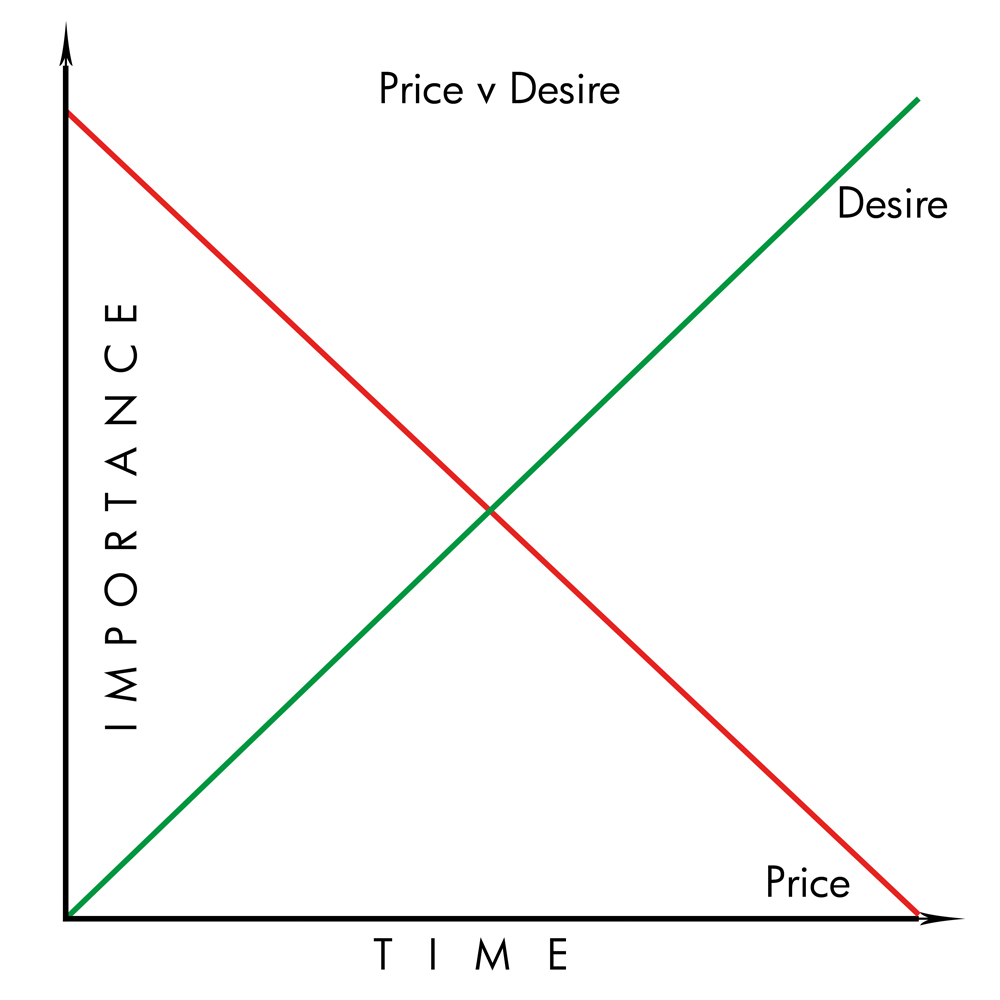
When somebody first contacts you, price may be one of the first things they ask about.
That’s perfectly normal.
But price doesn’t have to remain the most important factor in their decision.
If you demonstrate the value of your work and create genuine desire for your service, the conversation can change from:
“How much do you charge?”
to:
“How can I book you?”
This is particularly noticeable in areas such as wedding, portrait and commercial photography.
A couple may initially have a particular budget in mind. But after finding a photographer whose work, personality and experience they genuinely want, they may decide to adjust other parts of their wedding spending to make that photographer possible.
The photographer hasn’t necessarily become cheaper.
The perceived value has increased.
Your brand influences what clients are willing to pay
Pricing doesn’t exist in isolation.
Your photography style, portfolio, reputation, communication, products and overall client experience all contribute to how people perceive your value.
If your website presents you as a specialist, your work is consistent, your communication is professional and your client experience is carefully designed, you are less likely to be compared purely on price.
This is one reason finding a photography niche can be so valuable.
When you become known for something specific, clients aren’t simply looking for “a photographer”. They may be looking for you because you offer something they particularly want.
Don’t start with extremely low prices
One common strategy for new photographers is to start very cheaply and increase their prices once they become established.
This can create a difficult problem.
If your first clients choose you because you’re inexpensive, they may recommend you to other people for exactly the same reason.
Your reputation can therefore become associated with being cheap.
When you eventually increase your prices, those clients may feel that you have suddenly become expensive.
Instead, establish a sensible pricing structure from the beginning.
You don’t need to charge premium prices when you are starting out, but your prices should be consistent with your level of service, your costs and the market you are trying to build.
Be careful with discounts
Regularly discounting your photography can reduce the perceived value of your work.
If your normal price is £1,500 but your website constantly advertises a “50% OFF” offer, potential clients may begin to question whether £1,500 was ever the genuine value.
It can also train clients to wait for your next promotion.
That doesn’t mean you can never offer an incentive.
A carefully structured package, seasonal promotion or added-value offer can work well.
But there is an important difference between adding value and simply cutting the price.
Consider packages and tiers
One way to give clients choice without constantly negotiating your prices is to create different levels of service.
For example, you might offer:
Essential
A straightforward photography service designed for clients who need the basics.
Signature
A more comprehensive experience with additional images, products or time.
Premium
Your complete service, including your highest-quality products and most extensive experience.
The exact structure will depend on your genre.
The important thing is that each option should have a clear purpose and provide genuine value.
Don’t create packages simply by adding random products to make the prices different.
Add value without necessarily adding cost
Increasing value doesn’t always mean giving clients more physical products.
Think about things that are valuable to your particular clients but don’t necessarily cost you much to provide.
This could include:
- Better communication
- Expert preparation
- Location advice
- Styling guidance
- A carefully planned experience
- Faster communication
- Professional presentation
- Helpful resources
- Image selection assistance
- A more personalised service
- Additional guidance about using the finished images
Sometimes a small improvement in the experience can have a much greater perceived value than its actual financial cost.
Don’t compete by being the cheapest
There will almost always be another photographer prepared to charge less.
Trying to win every client by being cheaper is a difficult business model.
Someone else can always reduce their price further.
Instead, ask yourself:
Why should a client choose me if I’m not the cheapest?
The answer might be your style, expertise, experience, products, service, specialist knowledge, personality, reputation or the complete experience you provide.
That’s where your competitive advantage should come from.
Know who you are trying to attract
Pricing and marketing are closely connected.
You need to understand the people who value what you do.
A photographer specialising in luxury portraits is likely to have a very different pricing strategy from someone offering high-volume budget sessions.
A commercial photographer producing images that help a company sell its products is also providing something different from a photographer selling personal portraits.
The question isn’t simply:
“What price will everyone accept?”
Instead ask:
“Who values the service I provide, and what is that service worth to them?”

Finding a niche can support stronger pricing
Specialisation can make it easier to communicate your value.
If you become known for a particular genre, subject or approach, you can develop specialist knowledge that general photographers may not have.
You might specialise in:
- Weddings
- Newborn photography
- Personal branding
- Headshots
- Commercial photography
- Food photography
- Performing arts
- Automotive photography
- Architecture
- Pets
- Fine art
- Corporate photography
A niche doesn’t mean you can never photograph anything else.
It simply gives your business a clear position in the marketplace.
Put the client at the centre
Good pricing isn’t about extracting as much money as possible from every client.
It’s about creating a sustainable business while providing something that your clients genuinely value.
Ask yourself:
What problem am I solving?
What does the client want to achieve?
What will my photography mean to them?
What makes my service different?
What experience am I providing?
What will the finished images be worth to the client?
The answers will help you understand where your pricing sits.
Don’t forget profit
Covering your costs isn’t enough.
A business that simply pays its expenses isn’t necessarily sustainable.
Your pricing needs to provide enough income to allow you to:
- Pay yourself properly
- Replace equipment
- Invest in training
- Maintain your business
- Cover quieter periods
- Build reserves
- Develop new products and services
- Take time away from work
Profit isn’t something to be embarrassed about.
It is what allows a photography business to continue operating.
What should you charge for photography?
There is no single correct price for a photography service.
The right price depends on your genre, experience, location, target market, products, costs, positioning and the value you provide.
Rather than asking other photographers on social media what they think you should charge, use their experiences as one source of market information while building your own pricing model around your business.
Start with your costs.
Then consider your time.
Then consider your desired profit.
Finally, consider the value and positioning of the service you are offering.
A simple photography pricing checklist
Before publishing your prices, ask yourself:
- Have I calculated all my business costs?
- Have I included the time I spend outside the actual shoot?
- Am I paying myself a realistic amount?
- Have I allowed for profit?
- Do my prices reflect my level of service?
- Do my products and presentation support my pricing?
- Am I competing on value rather than simply price?
- Is my target client clear?
- Does my branding support the prices I charge?
- Can I explain what clients receive for their investment?
- Are my packages easy to understand?
- Am I using discounts too frequently?
- Does my pricing support the business I actually want to run?
If the answer to these questions is yes, you’ll be in a much stronger position to discuss your prices with confidence.
Price your photography for the business you want to build
There will always be photographers charging less.
There will also be photographers charging considerably more.
Your job isn’t to find the single “correct” photography price.
Your job is to build a pricing strategy that covers your costs, rewards your time and expertise, reflects the value you provide and attracts clients who genuinely appreciate what you offer.
When clients understand the experience, expertise and value behind your photography, price becomes only one part of the decision.
Don’t simply sell photographs. Build a service and experience that people want to buy.