How to Print Photography as Wallpaper: A Guide for Photographers
Turn your photographs into dramatic wall art with this guide to photographic wallpaper, large-format printing, choosing the right image and preparing files for a wall mural.
Photography doesn’t have to be confined to a frame.
One of the most striking ways to display an image is to turn it into a wall mural or wallpaper, covering an entire wall with a photograph.
For photographers, this can open up an entirely different way of presenting and selling work. A landscape can become a floor-to-ceiling feature, an abstract photograph can transform a commercial interior, or a carefully chosen nature image can create a calming atmosphere in a home.
However, printing an image at this scale requires more thought than simply enlarging a photograph and sending it to a printer.
From choosing the right image to selecting the wallpaper material and preparing the file, here are some of the key things photographers should consider.
What is photographic wallpaper?
Photographic wallpaper, sometimes called photo wallpaper or a photographic wall mural, is wallpaper printed with a photograph rather than a conventional repeating pattern.
The image is normally divided into a series of vertical panels or drops which are installed next to one another to create one continuous picture.
This allows a photograph to cover an entire wall, creating a much more immersive presentation than a conventional framed print.
Photographic wallpaper can be produced for homes, offices, hotels, restaurants, retail spaces and other commercial environments.
Choose the right photograph
Not every photograph will work well as wallpaper.
A successful wall mural needs to work at a much larger scale and from different viewing distances.
When choosing an image, consider:
- The aspect ratio of the wall
- The resolution of the original photograph
- How much cropping will be required
- Where doors and windows are positioned
- Where furniture will sit
- The viewing distance
- The colours already present in the room
- Whether the image has enough visual impact to fill a large space
Strong landscapes, architectural photographs, abstract images and photographs with clear areas of colour can work particularly well.
Think about the composition of the wall
A wall is very different from a piece of photographic paper.
When a photograph is printed as a mural, you have to consider what will physically be in front of it.
A large television might cover the centre of the image. A bed could obscure the lower section. A doorway could cut through an important part of the composition.
Before finalising the photograph, look at the wall itself.
Where are the windows?
Where are the doors?
Where will the furniture go?
Where will the most important part of the photograph appear?
This is particularly important when the image contains a person, animal, building or other obvious focal point.
You don’t want your main subject disappearing behind a wardrobe.
Measure the wall accurately
Accurate measurements are essential.
Measure the height and width of the wall, ideally in more than one place.
Older buildings can have walls and ceilings that aren’t perfectly square, so don’t assume that one measurement tells the whole story.
Also record the position and dimensions of:
- Windows
- Doors
- Fireplaces
- Alcoves
- Radiators
- Sockets
- Other permanent features
Your wallpaper supplier will be able to advise you about which dimensions need to be included when preparing the final artwork.
Understand wallpaper drops and panels
Unlike a conventional photographic print, a wall mural is usually divided into several sections.
These are commonly called drops, panels or strips.
The individual sections are printed separately and installed in sequence so that the photograph forms one continuous image.
This means that the file preparation is more complicated than simply creating one enormous JPEG.
The printer needs to know the finished wall dimensions and the required panel width.
Some suppliers provide templates or specifications for photographers to follow, while others prefer to prepare the final panel layout themselves.
Always speak to the printer before completing the final artwork.
Their requirements for dimensions, bleed, file format, colour profile and resolution can vary.
How much resolution do you need?
This is one of the most common concerns when photographers start thinking about very large prints.
The answer isn’t simply “as many pixels as possible”.
The required resolution depends on the final size of the mural and, importantly, the distance from which it will normally be viewed.
A photograph intended to be examined from 30cm away needs to withstand considerably more scrutiny than a wall mural viewed from several metres away.
Nevertheless, don’t assume that any low-resolution photograph can be enlarged indefinitely.
Look carefully for:
- Digital noise
- Excessive sharpening
- Compression artefacts
- Heavy cropping
- Fine detail that breaks down when enlarged
- Retouching that becomes obvious at large scale
If you’re unsure, send the original file and intended dimensions to the printer and ask for their advice before committing to the project.
Consider the printing material
There isn’t one universal wallpaper material.
Different products are designed for different environments and applications.
Some are smooth and relatively lightweight, while others have textured or more durable surfaces.
You may also encounter self-adhesive materials, pre-pasted wallpapers and products designed to be installed using traditional adhesive.
The right choice depends on where the mural will be installed.
Home interiors
For bedrooms, living rooms and other domestic spaces, appearance and ease of installation may be the main considerations.
Bathrooms and areas exposed to moisture
Bathrooms require materials specifically designed for environments where moisture is present.
Always check the manufacturer’s recommendations before choosing a product.
Commercial environments
Hotels, restaurants, offices, retail spaces and other public areas may require more durable wallcoverings.
Requirements can include resistance to abrasion, stains, moisture and cleaning, as well as appropriate fire performance.
Don’t assume that a wallpaper suitable for a domestic bedroom is automatically suitable for a commercial project.
Should you print it yourself?
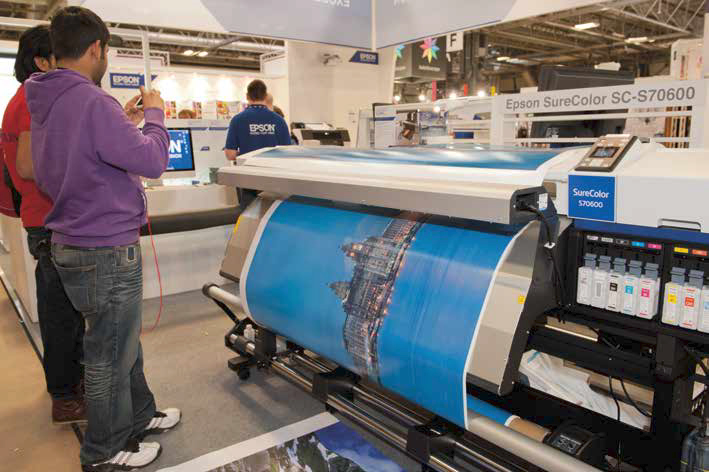
For photographers producing occasional wall murals, using a specialist printing company is usually the simplest option.
Large-format wallpaper printing requires specialist equipment and knowledge, and installation can be just as important as printing.
For an occasional project, investing in a printer, wallpaper media and installation equipment may not make financial sense.
A specialist printer can also advise on:
- Suitable wallpaper materials
- File preparation
- Colour management
- Panel dimensions
- Installation
- Finishing
- Shipping
If you’re planning to offer photographic wallpaper as a regular commercial product, however, it may be worth investigating the economics of producing it yourself.
Calculate the full cost before making that decision.
Don’t underestimate installation
Printing the wallpaper is only half of the job.
Large photographic murals can be surprisingly unforgiving during installation because every panel has to line up correctly.
A repeating wallpaper pattern may disguise a small error.
A continuous landscape won’t.
The underlying wall surface is also important. Uneven surfaces, cracks, damp or poorly prepared walls can affect the final appearance.
For expensive or large-scale projects, professional installation is often worth considering.
A beautifully printed mural can be ruined by poor preparation or installation.
Test before committing to the entire wall
If possible, produce a small test print before ordering a complete mural.
This allows you to check:
- Colour
- Contrast
- Sharpness
- Shadow detail
- Highlight detail
- Skin tones, if applicable
- The appearance of the chosen material
- Whether the image works at the intended scale
A photograph that looks perfect on a calibrated monitor can look quite different when printed on a particular wallpaper material.
The surface itself influences the appearance of the image.
Think about colour differently
When you’re selling a photograph as wall art, the photograph doesn’t exist in isolation.
It becomes part of an interior.
The colours in your image will sit alongside paint, furniture, flooring, curtains and other artwork.
That doesn’t mean photographers should simply follow every interior design colour trend.
Instead, consider how your photograph interacts with the environment in which it will be displayed.
A dramatic blue seascape might create a strong contrast against warm neutral walls. A muted woodland photograph could blend more gently into a natural interior.
The important thing is to consider the relationship between the photograph and the room.
Use room mock-ups to sell photographic wallpaper
One of the best ways to demonstrate the potential of a wall mural is to show the photograph in a realistic interior.
A room mock-up lets a potential customer see approximately how the finished wall might look.
This is particularly valuable when selling photography online because customers otherwise have no easy way of judging scale.
A good mock-up can demonstrate:
- The size of the artwork
- How the colours interact with the room
- Where the image will sit behind furniture
- How dramatic the finished result could be
For photographers selling bespoke wall art, this can become an important part of the sales process.
Think beyond the home
Photographic wallpaper isn’t limited to domestic interiors.
There are potential applications in:
- Hotels
- Restaurants
- Offices
- Retail spaces
- Reception areas
- Exhibition stands
- Creative studios
- Healthcare environments
- Hospitality venues
This can create opportunities for photographers working in commercial photography and interior design as well as those selling fine art.
A business might not want a conventional framed print in a large reception area, but a dramatic photographic mural could completely transform the space.
Photographing for large-format wall art
If you know that an image may eventually become a wall mural, consider that when you’re taking the photograph.
Leave enough room around important subjects where possible.
Think about different aspect ratios.
Consider how the photograph might look when dramatically enlarged.
Panoramic scenes can be particularly useful for wide walls, while images with strong vertical compositions may work better in narrow spaces.
You don’t need to photograph everything specifically for wallpaper, but keeping large-format applications in mind can give you more options later.
Keep colour management under control
Large-format printing makes colour management particularly important.
Your monitor, editing software, printer and wallpaper material all have their own characteristics.
Where possible, work within a controlled colour-managed workflow and follow the printer’s requirements for colour space and file preparation.
If the printer supplies an ICC profile for the chosen material, follow their instructions for soft proofing where appropriate.
Don’t make last-minute colour changes simply because the image looks different on another screen.
For valuable or large-scale projects, a proof is a worthwhile investment.
Photography wallpaper can become another product
For photographers already selling prints, photographic wallpaper can be a natural extension of an existing product range.
Instead of offering only:
Print → Frame → Wall
you can potentially offer:
Photograph → Large-format print → Wall mural → Complete interior artwork
That changes the conversation with the customer.
You’re no longer simply selling a photograph.
You’re offering a way to transform a space.
The final result starts with the photograph
The technology behind large-format printing continues to make it easier to put photographic images onto walls.
But the same principle applies as with any other form of photographic presentation: the finished result depends on much more than the equipment.
Choose the right image.
Understand the space.
Prepare the file correctly.
Use an appropriate material.
Work with an experienced printer.
And, when necessary, use a professional installer.
Done properly, a photographic wall mural can turn an ordinary wall into a dramatic piece of artwork — and give photographers another way to put their images in front of an audience.
This article is based on material originally published in Professional Imagemaker, the magazine for members of The Society of Photographers.