
Documentary Photography: Behind the Scenes with Wiltshire Air Ambulance
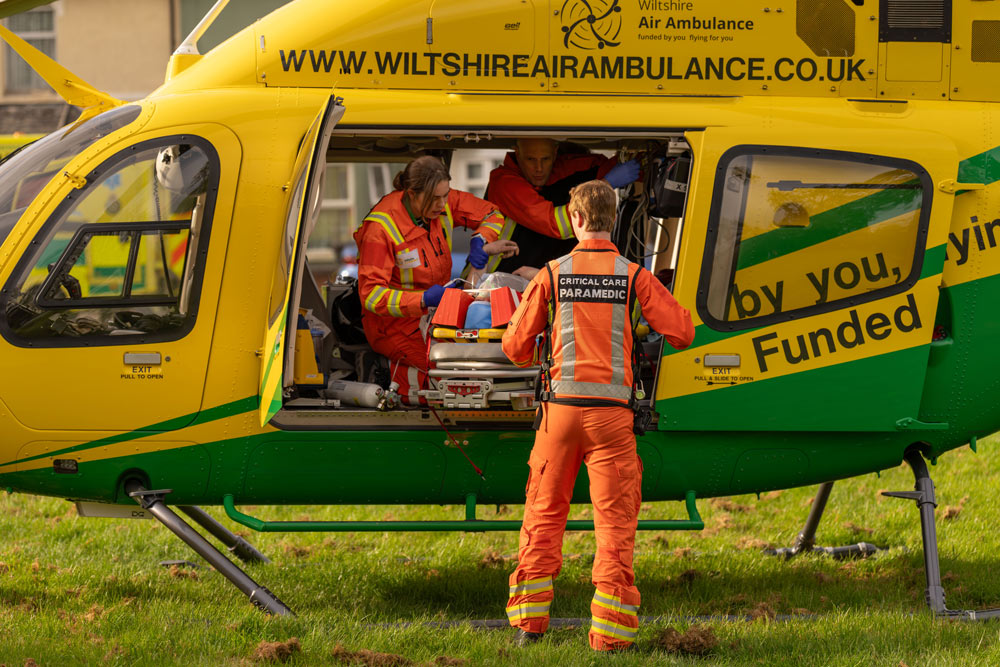
Photographer Terry Donnelly returns to his long-running documentary project with Wiltshire Air Ambulance, capturing the people, training and vital work behind the air ambulance service.
Documentary photography has the power to take us behind the scenes of organisations and communities that most of us would otherwise never experience.
For photographer Terry Donnelly, that meant spending time with the team at Wiltshire Air Ambulance (WAA), documenting the people who respond to some of the most challenging and urgent situations imaginable.
Terry first photographed the charity for Professional Imagemaker in 2021, recording the work of the air ambulance crew as they responded to serious incidents across Wiltshire and the surrounding area. The resulting body of work went on to become an exhibition, with the photographs also becoming part of the official record of the Covid pandemic.
More recently, Terry returned to Wiltshire to continue the project, turning his camera towards another important part of the story: the specialist medical professionals who work alongside the air ambulance crew.
Telling the story behind the service
A successful documentary photography project is rarely just about photographing the headline moments.
The people, preparation, training and quieter periods between incidents can be just as important in explaining what an organisation actually does.
For Terry, spending time with Wiltshire Air Ambulance provided an opportunity to explore this wider story.
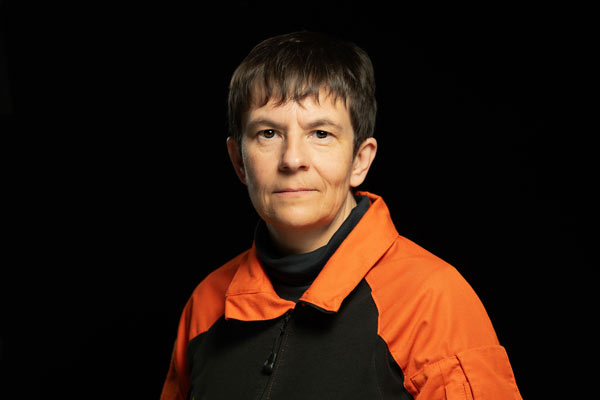
One of the people he met was Maria, the charity’s medical director. Her route into pre-hospital emergency medicine illustrates just how much specialist experience is required before a doctor can work in an air ambulance environment.
Maria trained as an accident and emergency consultant and went on to hold senior trauma roles at hospitals including Princess Alexandra Hospital in Harlow, Queen’s Hospital in Romford and Addenbrooke’s Hospital in Cambridge.
Trauma became both her specialist clinical interest and a major personal passion.
Initially, Maria worked with Wiltshire Air Ambulance for around three days each month. Her involvement gradually increased and, in early 2024, she became a full-time member of staff, allowing her to take a more direct role in clinical matters and rota cover.
For a documentary photographer, stories such as this provide an opportunity to look beyond the obvious action and explore the people who make the service possible.
The evolution of the air ambulance medical team
The medical team at Wiltshire Air Ambulance has also evolved considerably.
Before 2019, doctors working with the charity did so as volunteers. The organisation subsequently began increasing the number of shifts involving pre-hospital doctors, using a combination of paid and volunteer staff.
Pre-hospital emergency medicine is focused on treating and stabilising seriously ill or injured patients before they reach hospital.
Having a doctor available alongside critical-care paramedics can bring another level of specialist medical expertise to an emergency.
There are, however, practical challenges. A doctor who has not been trained as a technical crew member cannot necessarily assist the pilot in the aircraft, while they may also not be trained to drive the charity’s critical-care car under blue-light conditions.
Wiltshire Air Ambulance’s longer-term ambition has been to have a doctor available for as many missions as possible.
For Terry’s project, this development adds another layer to the story. The photographs aren’t simply documenting an aircraft or emergency response; they are documenting the changing nature of the people and skills involved in providing specialist emergency care.
What does an air ambulance doctor do?
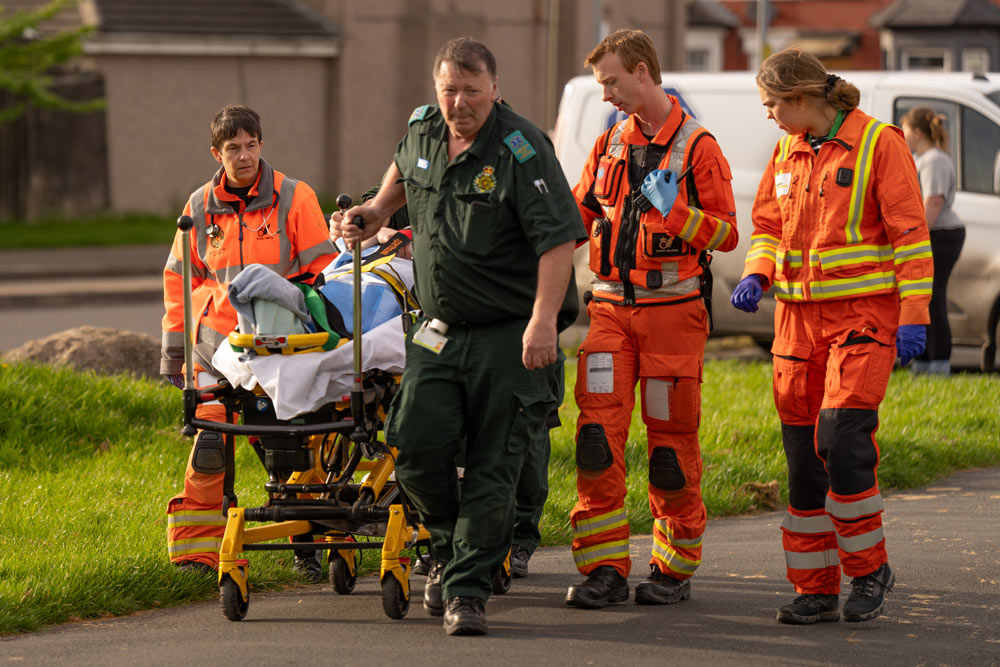
Doctors and critical-care paramedics bring different areas of expertise to an air ambulance team.
Emergency medicine doctors have extensive training in anatomy, physiology and medical sciences, while paramedics bring highly developed practical experience and specialist pre-hospital skills.
Critical-care paramedics working on air ambulances can administer medications and perform procedures that go beyond those available to standard road ambulance crews.
Doctors add further specialist expertise, including advanced surgical skills that may be required in exceptional circumstances.
Depending on the situation, this can include procedures to treat serious chest injuries, surgical intervention for severely injured patients and emergency procedures required to free or stabilise someone who is trapped.
These are extreme examples, but they demonstrate why documenting the medical team is an important part of telling the complete story of an air ambulance service.
The training behind the role
Becoming a doctor capable of working in pre-hospital emergency medicine requires many years of specialist training.
An emergency medicine doctor typically completes foundation training, followed by core and specialist training, before undertaking dedicated training in Pre-Hospital Emergency Medicine (PHEM).
In total, the pathway can take around a decade before a doctor is qualified to work as an air ambulance consultant. Doctors coming from an anaesthetic background may have a different training route and require additional specialist training.
For a documentary photographer, this provides an important reminder: the photograph is often only the visible part of a much bigger story.
A portrait of a doctor at an airbase might take seconds to capture, but behind that image can be years of education, training and experience.
Photographing the quieter moments
One of the challenges of documentary photography is knowing what to photograph when there isn’t an obvious event happening.
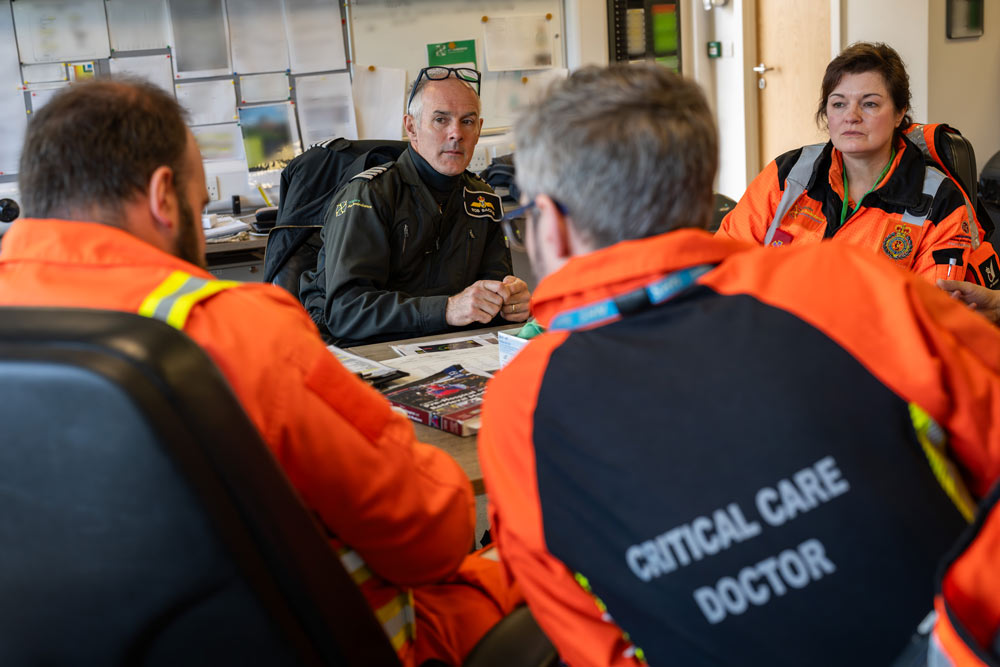
An air ambulance service is, by its nature, unpredictable. Crews can spend periods at the airbase preparing, training and completing administrative work before suddenly being called to an emergency.
Those quieter moments can be extremely valuable to a photographer.
Training sessions, conversations between colleagues, equipment checks, preparation before a shift and moments of concentration can all help communicate what it is like to work within the organisation.
They also provide visual variety.
A photo essay consisting entirely of dramatic action photographs can quickly become repetitive. By combining portraits, environmental photographs, details, preparation and moments of action, a photographer can create a much stronger narrative.
A service facing increasing demand
The nature and frequency of the incidents attended by Wiltshire Air Ambulance have changed over time.
When Maria spoke to Terry during his project, she described a service that had become increasingly busy, with a much wider range of incidents requiring specialist intervention.
The team has also been involved in particularly challenging situations, including attending premature births and responding to incidents involving serious self-harm and suicide.
This increasing demand makes the work of the air ambulance team even more important — and gives documentary photographers like Terry an opportunity to record a significant part of modern life that many people rarely see at close quarters.
Building a documentary photography project
Terry’s work with Wiltshire Air Ambulance is a good example of how a documentary photography project can develop over time.
Rather than attempting to tell the entire story in a single shoot, he has returned to the organisation and continued to build on the work he started several years ago.
That approach can be valuable for photographers considering their own long-term projects.
Look beyond the obvious subject. Spend time getting to know the people involved. Photograph the preparation as well as the action, and look for the details and quieter moments that help explain the bigger story.
Most importantly, give the project time to develop.
The strongest documentary photo essays often come from building trust with the people being photographed and returning to the subject repeatedly. Over time, the photographer gains a deeper understanding of the story — and the resulting images can become much more than a collection of individual photographs.
For Terry Donnelly, his work with Wiltshire Air Ambulance has grown into a substantial photographic record of the people behind an essential emergency service.
It is a reminder of the unique role documentary photographers can play: observing, recording and preserving stories that might otherwise go unseen.