Creative Wedding Photography: How to Create Standout Wedding Images
By Stefanie Blochwitz
Wedding photography is about much more than documenting what happened during the day. While capturing the essential moments is fundamental, creative wedding photography gives you an opportunity to produce images that are personal, memorable and unmistakably your own.
For photographer Stefanie Blochwitz, creativity is also a way of keeping wedding photography exciting. Long wedding days can be physically and mentally demanding, so experimenting with new ideas can help keep your enthusiasm alive while giving your couples something different.
Here are some of her favourite ways to bring more creativity into wedding photography.
1. Step outside your comfort zone
Creativity doesn’t always come naturally, and trying something unfamiliar can feel uncomfortable.
That’s exactly why it’s worth doing.
Make a commitment to try one new creative idea at each wedding. It could be a different lighting technique, an unusual composition, a new location or an approach you’ve never attempted before.
Inspiration can come from many places, including other photographers, films, art, social media, workshops and completely unrelated creative disciplines.
The important thing is to turn that inspiration into experimentation.
Every wedding can become an opportunity to test something new.
2. Experiment with off-camera flash
One of the most effective ways to transform your wedding photography is to move beyond relying entirely on available light.
Off-camera flash and studio-style lighting can give you much greater control over the appearance and atmosphere of your images.
Instead of waiting for perfect natural light, you can create your own.
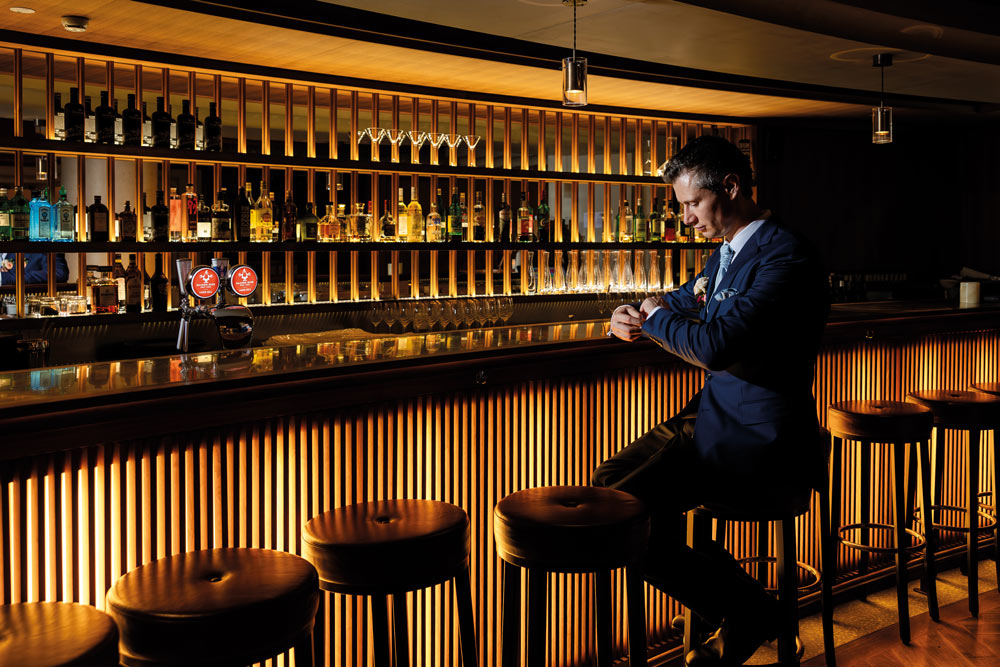
For example, during the groom’s preparations, consider looking beyond the obvious locations. Rather than photographing him simply standing in a bedroom, could you create an environmental portrait in the bar or another interesting part of the venue?
With carefully positioned flash, an ordinary location can become a dramatic portrait.
Lighting can also help you create consistency throughout the day, regardless of changing weather or available light.
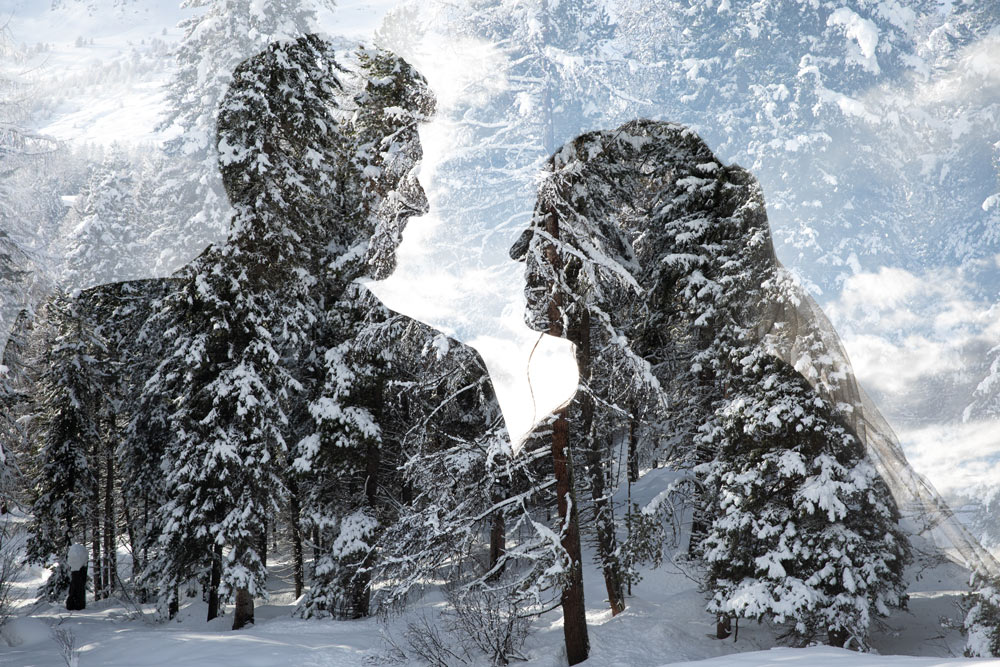
3. Try an in-camera double exposure
Double exposure is another technique that can add an artistic quality to wedding photography.
Rather than relying entirely on post-production, creating a double exposure in camera allows you to experiment while you’re shooting.
The results won’t always work—and that’s part of the fun.
Use the technique when you have enough time to experiment rather than when you’re trying to capture an important once-only moment.
The goal isn’t to make every photograph unusual. It’s to find opportunities where a creative technique genuinely adds something to the image.
4. Use silhouettes as creative starting points
A strong silhouette can be much more than a finished photograph.
It can also become the starting point for a later creative composition.
For example, photograph the couple as a striking silhouette against a beautiful sky. Later, you can consider how that shape might work with another location, texture or background.
This approach encourages you to think about individual photographs as elements that can potentially work together.
It also gives you something creative to explore when the pace of the wedding slows down.
5. Work with an assistant
A good assistant can make an enormous difference to creative wedding photography.
When you’re working with off-camera flash, complex lighting setups or multiple light sources, having another person to position and hold equipment allows you to concentrate on the subject and composition.
An assistant doesn’t simply make the photographer’s job easier. They can become part of the creative process.
A second pair of eyes can spot things you may have missed, help position lights and make it possible to try ideas that would be difficult to execute alone.
If you regularly create elaborate lighting setups, investing in a trusted assistant could be one of the best decisions you make.
6. Don’t follow every wedding photography trend
Wedding photography trends come and go.
One of the easiest ways to lose your creative identity is to constantly chase whatever style is currently popular.
Instead, think about what makes your photography different.
If everyone is producing the same type of image, ask yourself whether there is another way to approach it.
That doesn’t mean ignoring the industry or refusing to learn from other photographers. It means understanding which influences genuinely fit your own visual style.
Your clients chose you for a reason.
Your creative work should ultimately feel like your photography, rather than an imitation of whatever is currently fashionable.
7. Manage the wedding timeline carefully
Creativity requires time, and weddings don’t always provide much of it.
The first priority should always be capturing the photographs you’ve promised your clients.
Once those essential images are safely in the bag, you can start experimenting.
A useful approach is to arrive at each wedding with one creative concept in mind.
Don’t try to execute ten different ideas.
Choose one.
Give yourself enough time to make it work and accept that it might fail.
Communicate with your couple. Once they know you’ve already captured the important photographs, many will be happy to spend a few extra minutes trying something different.
That turns experimentation into a collaborative experience rather than another demand on their wedding day.
8. Make sure creativity still serves the couple
It’s easy to become carried away with creative photography.
But remember why you’ve been hired.
Your clients chose you because they like your work and your style. Your creative images should therefore complement that style rather than completely changing it.
Some experimental photographs may become your personal favourites without becoming your clients’ favourites—and that’s perfectly fine.
Creative experimentation has another purpose: it keeps you interested in photography and helps you develop.
Competition images, personal projects and experimental photographs can all feed back into your professional work over time.
9. Don’t be afraid to fail
One of the biggest barriers to creativity is the fear that an idea won’t work.
It won’t.
Not every time.
That’s completely normal.
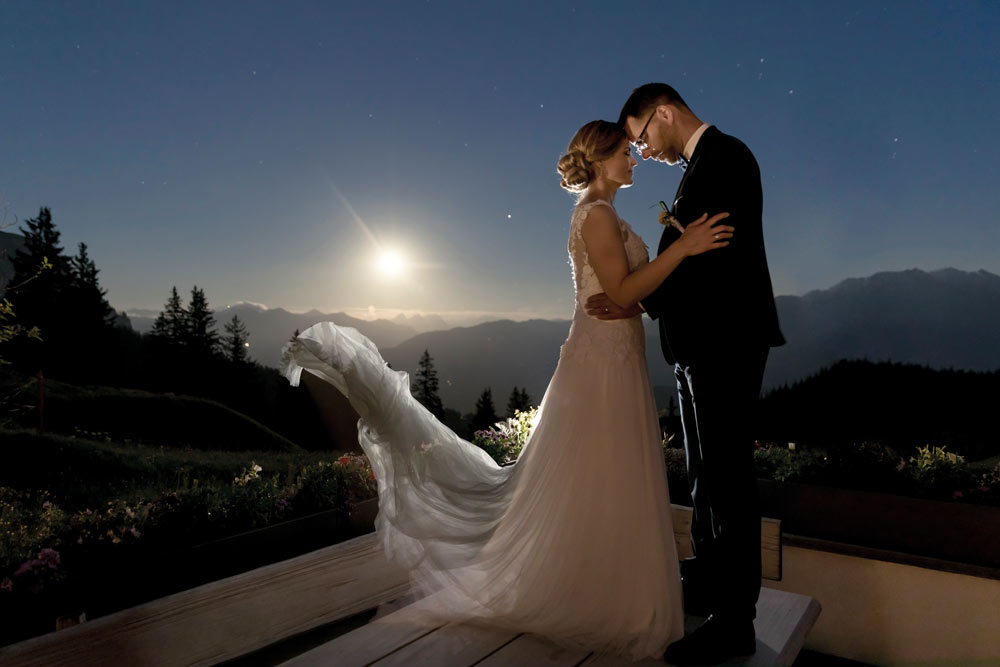
One particularly memorable experiment involved photographing a couple outside a mountain hut in the Swiss Alps as darkness fell. A flash was improvised in a flowerpot, the couple stood on a table and the best man helped create movement with the veil.
The setup may have looked ridiculous.
But the resulting photograph delighted everyone involved.
The lesson isn’t that every wedding requires an elaborate setup.
It’s that experimentation sometimes produces something wonderful precisely because you were willing to try.
Always have a plan B—a reliable technique you know you can execute successfully.
Then give yourself permission to experiment.
10. Learn from other photographers
Wanting to develop your own style doesn’t mean you need to avoid other people’s work.
Quite the opposite.
Studying photographers you admire is one of the best ways to learn.
Look closely at how they use:
- Light
- Composition
- Colour
- Posing
- Reflections
- Movement
- Perspective
- Location
Then experiment with those ideas yourself.
There is an important difference between copying an image and learning from an influence.
The photographers who inspire you can give you the starting point for your own creative exploration.
Over time, those influences combine with your experiences, preferences and ideas to help develop your individual style.
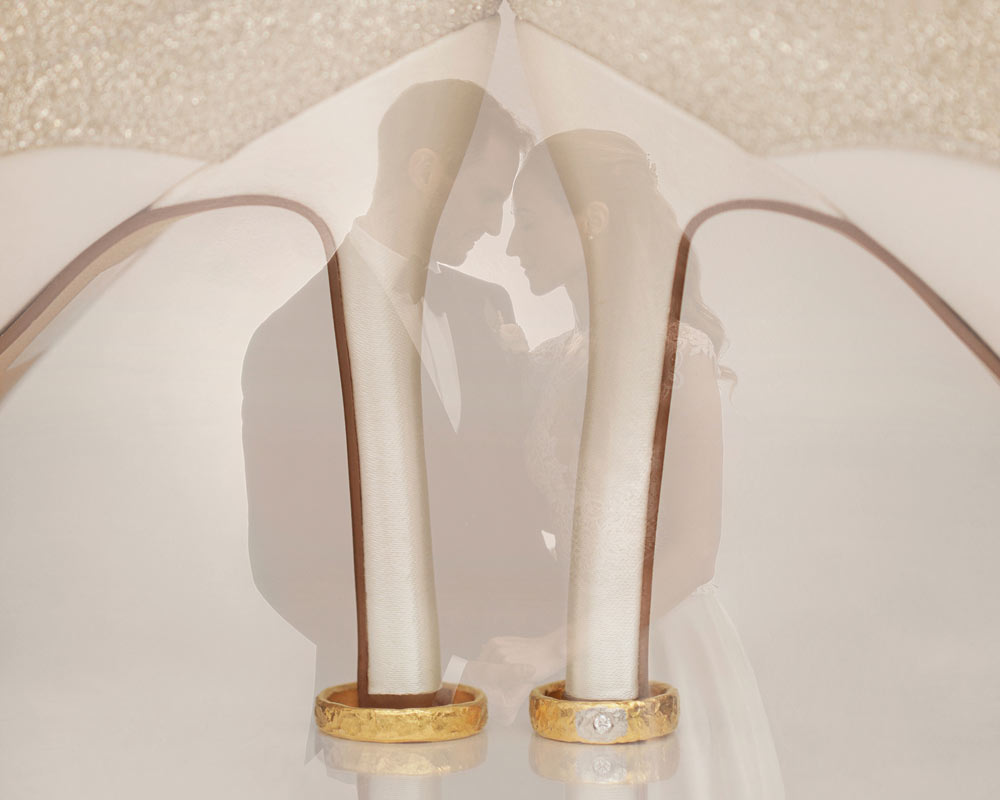
A creative wedding photographer never stops experimenting
Creativity isn’t a switch you turn on when you want to make an interesting photograph.
It’s a habit.
Keep looking for inspiration. Try new techniques. Attend workshops. Study other photographers. Experiment with lighting. Create personal projects. And most importantly, give yourself permission to make photographs that might not work.
Wedding photography can be demanding, repetitive and time-sensitive. But it can also provide enormous creative freedom.
The key is to capture the essential moments first, then look for opportunities to create something unexpected.
You don’t need every photograph to be spectacular.
You just need to keep developing your ability to see possibilities.
The best creative wedding photography isn’t necessarily the most complicated. It’s photography that feels intentional, personal and different enough to be remembered.