
How the Eye Moves Through a Photograph: Understanding Visual Flow
By Kris Anderson
When you look at a photograph, where do your eyes go first?
Do you immediately look at the person’s face? Follow a road into the distance? Read a sequence of objects from one side of the frame to the other?
Or perhaps you don’t consciously think about it at all.
As photographers, we spend enormous amounts of time thinking about where to put things inside the frame. But we don’t always stop to consider the order in which the viewer might experience those elements.
Photographer and educator Kris Anderson has spent years thinking about this idea, particularly the relationship between reading direction, visual storytelling and photographic composition.
His starting point is a deceptively simple question:
Do we read photographs from left to right?
We learn how to read
For many of us, reading is something we learned as children so thoroughly that we no longer have to think about it.
We start at one point, move across the page and then continue downwards.
If you’re reading this article in English, you’re almost certainly moving through the words from left to right without consciously deciding to do so.
But this isn’t universal.
Arabic, Hebrew and Persian are traditionally written from right to left, while several East Asian writing systems historically used vertical layouts.
That matters because the direction in which we learn to read may influence some of the ways we organise space and time mentally.
Research by Bergen and Lau, for example, investigated how writing direction affects the way people map concepts of time onto space. Their research found differences between groups associated with different writing directions.
That doesn’t prove that everyone literally “reads” a photograph from left to right.
But it does raise an interesting question for photographers:
Could the habits we learn through language influence the way we experience visual images?
We associate direction with time
Think about a timeline.
In much of the Western world, the past is conventionally represented on the left and the future on the right.
Charts showing change over time generally follow the same pattern.
Comics are usually arranged in a particular reading order.
Even films frequently use movement across the screen to help communicate progression.
A character moving from left to right can feel as though they’re progressing forwards, while movement in the opposite direction can sometimes feel like a return, resistance or disruption.
These aren’t absolute rules.
But they’re powerful visual conventions.
And conventions are useful to photographers because they allow us to communicate ideas without explaining them.
So what does this mean for photography?
This is where things get particularly interesting.
A photograph doesn’t have to contain a literal sequence of events to have a beginning, middle and end.
The arrangement of objects can create a visual journey.
A person’s gaze can lead us towards another subject.
A road can take us into the distance.
A series of figures can establish a sequence.
A change in colour, size or brightness can create a path through the frame.
All of these things contribute to visual flow.
The viewer isn’t necessarily consciously thinking:
“I’m now going to look at the left side of this photograph and then move towards the right.”
Instead, the composition simply makes certain elements easier or more natural to notice in sequence.
Left-to-right composition
Kris Anderson has noticed this principle repeatedly in his own work.
When an image contains a clear narrative that develops across the frame, arranging that narrative from left to right can create a particularly comfortable reading experience for viewers accustomed to that direction of writing.
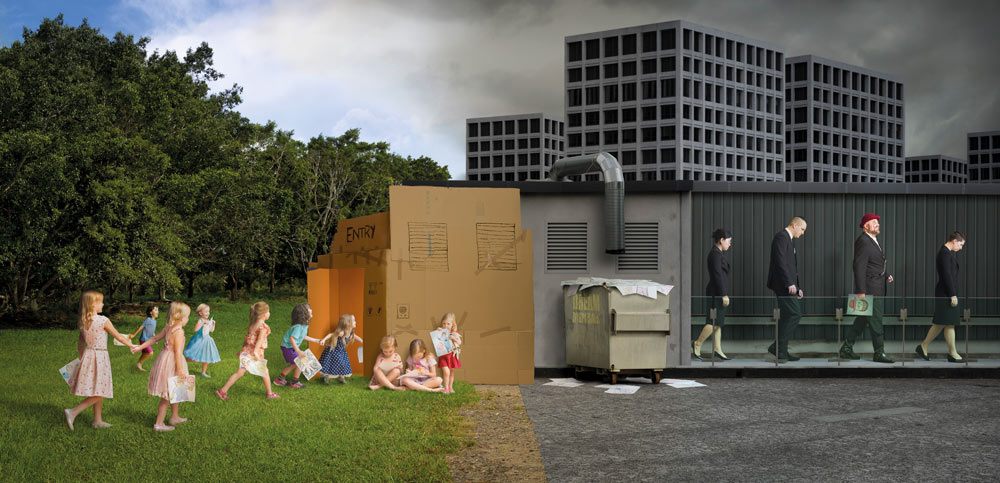
Consider an image in which children appear on the left, move through a central environment and eventually emerge as adults on the right.
The composition itself communicates progression.
The viewer doesn’t need an explanation.
Left becomes earlier. Right becomes later.
It’s a simple visual metaphor for the passage of time.
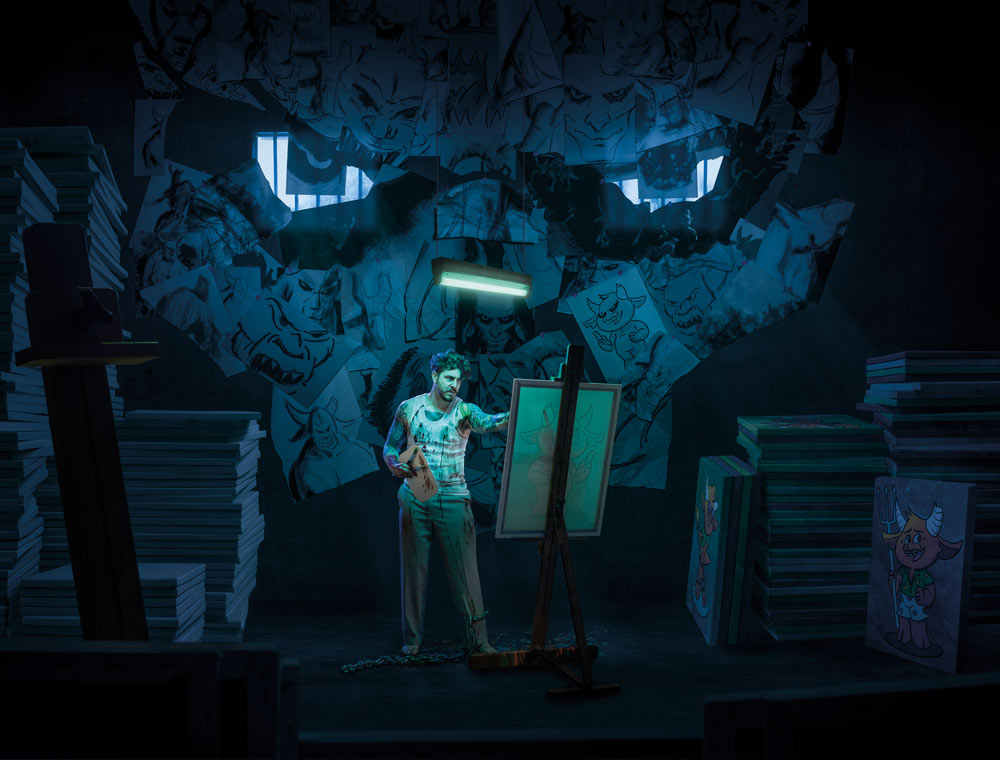
But what happens when you reverse the image?
This is where things get really interesting.
Take the same photograph and flip it horizontally.
Nothing about the subject has changed.
The people are still the same.
The lighting is the same.
The colours are the same.
The story is still technically there.
Yet the image can suddenly feel different.
For viewers accustomed to reading from left to right, reversing a photograph containing a strong narrative sequence can make the visual journey feel less natural.
It may introduce a small amount of friction.
And sometimes that is exactly what you want.
Breaking the visual rule
Composition isn’t about following rules simply because they’re rules.
In fact, breaking an established visual expectation can be an extremely effective creative technique.
If movement from left to right feels natural, deliberately moving a subject from right to left might make the image feel:
- Uncomfortable
- Rebellious
- Difficult
- Regressive
- Confrontational
- Disorientating
- Reflective
The important point is that the direction of movement can influence the emotional interpretation of an image.
It’s therefore worth asking yourself whether the direction in your photograph is helping your story or working against it.
Try flipping your photographs
Here’s a simple experiment you can perform with your own work.
Find a photograph that you’re almost happy with.
Perhaps it’s a landscape.
Perhaps it contains a person looking into the distance.
Perhaps there’s a road, path or architectural feature creating a strong direction.
Now flip it horizontally.
Don’t analyse it immediately.
Just look at it.
Does it feel different?
Sometimes you’ll prefer the original.
Sometimes you’ll prefer the flipped version.
And occasionally you’ll discover that the photograph suddenly works considerably better in reverse.
This can be particularly interesting when a person’s gaze or movement creates a strong directional cue.
If they’re looking towards the right-hand side of the frame, flipping the image makes them look left.
The entire visual balance can change.
Leading the eye through composition
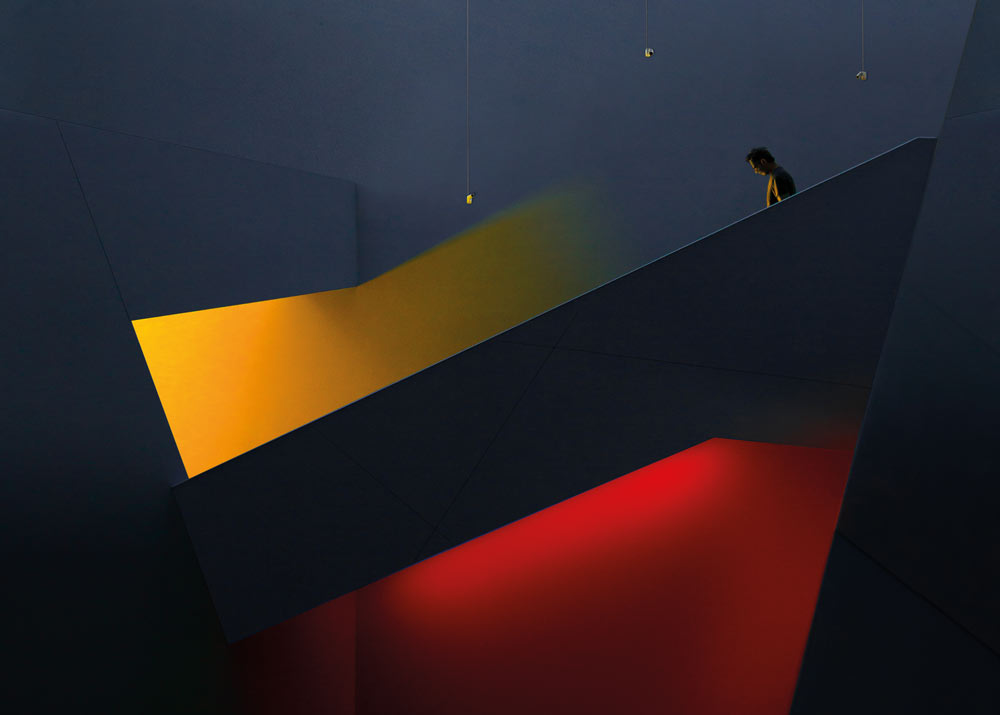
Left-to-right movement is only one way of controlling visual flow.
Photographers have many tools available for guiding the viewer’s eye.
Leading lines
Roads, paths, walls, railings and architectural lines can direct attention towards a subject.
Contrast
The brightest or darkest part of an image can attract attention before less prominent areas.
Colour
A strong colour contrast can pull the eye towards a particular part of the frame.
Faces and eyes
Human faces are naturally powerful subjects for attention, and a person’s gaze can create another directional cue.
Size
Large objects tend to command attention before smaller elements.
Focus
A sharp subject surrounded by softer areas can immediately establish a visual hierarchy.
Repetition
A sequence of repeated shapes or subjects can encourage the eye to travel through the image.
Good composition combines these elements to create a journey.
The direction a person is looking matters
One of the easiest ways to experiment with visual flow is through portrait photography.
Imagine a portrait where the subject is looking towards the edge of the frame.
If they are positioned on the left and looking towards the right, the empty space in front of them can give the photograph a sense of openness.
Reverse the composition and the same amount of empty space can suddenly feel different.
This is one reason photographers often leave “looking room” in front of a subject.
The empty space isn’t necessarily empty at all.
It becomes part of the visual story.
Don’t automatically put everything on the left
It’s important not to turn this into another photography rule.
There is no requirement for photographs to flow from left to right.
Photography is global, and viewers don’t all share the same cultural or linguistic background.
Even among people who read from left to right, individual responses to images will vary.
Familiarity with a photograph also matters.
If you’ve spent months looking at an image, flipping it may immediately feel wrong simply because your brain has memorised the original arrangement.
And sometimes the most effective composition is the one that deliberately fights against the viewer’s expectations.
Right-to-left can be powerful
Consider a person walking from right to left.
Depending on the context, this might feel like they’re moving backwards, returning somewhere or resisting the expected direction.
That can be extremely useful when you’re trying to create tension.
A photograph doesn’t always need to feel comfortable.
Sometimes you want the viewer to pause.
Sometimes you want them to question what they’re seeing.
Sometimes you want something to feel slightly wrong.
Breaking an established visual pattern can help you achieve exactly that.
Visual storytelling without words
This is perhaps the most useful takeaway.
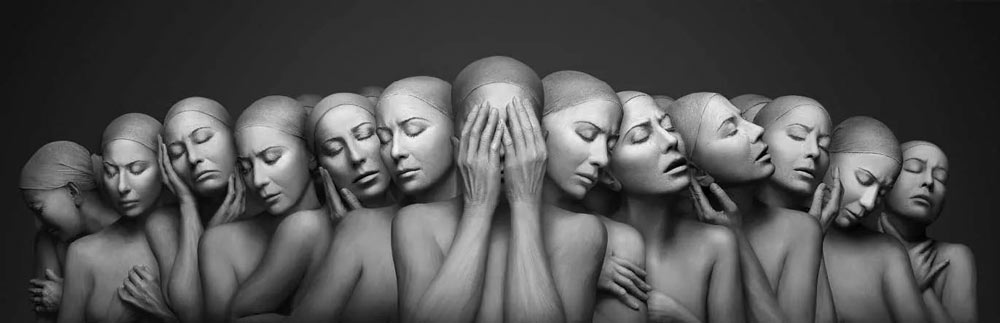
Photography is a visual language.
We don’t need to explain every relationship between the elements inside a photograph.
The composition can do some of the work for us.
A sequence can suggest time.
A direction can suggest movement.
A person’s gaze can connect two subjects.
A road can suggest a journey.
A change in scale can suggest distance.
And the position of those elements can influence the order in which the viewer encounters them.
The stronger your understanding of these visual relationships, the more deliberately you can construct your photographs.
A useful exercise for photographers
Next time you’re reviewing a photograph, ask yourself five questions:
1. Where does my eye go first?
Identify the first element that attracts your attention.
2. Where does my eye go next?
Is there a natural visual connection?
3. Is there a clear direction through the image?
Look for lines, faces, movement, repetition and changes in scale.
4. Does the direction support the story?
If your photograph represents a journey or passage of time, does the composition reinforce that idea?
5. What happens when I flip it?
This is perhaps the easiest experiment of all.
Turn the image horizontally and see whether your reaction changes.
Don’t assume one version is “correct”.
Simply observe.
The photograph as a visual journey
The idea that we read photographs from left to right isn’t a universal law.
But the broader principle is extremely useful:
Viewers don’t experience every part of an image simultaneously.
Their eyes move.
Their attention shifts.
They notice some things before others.
As photographers, we can influence that journey through composition.
Kris Anderson’s work provides an interesting reminder that even something as simple as the direction in which a subject moves can subtly influence how an image feels.
So next time you create a photograph with a strong narrative or directional element, try something different.
Flip it.
Look at it again.
Ask yourself whether the story becomes easier to understand, more uncomfortable, more powerful or simply different.
You might discover that the photograph you thought was finished wasn’t quite finished after all.
Further reading
The research referenced in Kris Anderson’s original article is:
Bergen, B. K. & Lau, T. T. C. (2012), “Writing Direction Affects How People Map Space Onto Time”, Frontiers in Psychology.
The research explores the relationship between writing direction and the way people represent time spatially.
This article is adapted from an original feature by Kris Anderson published in Professional Imagemaker. It has been rewritten for the web and expanded to focus on visual flow, photographic composition and practical applications for photographers.