Printmaking Techniques for Photographers: Exploring Traditional and Digital Processes
Photography and printmaking have always had a close relationship. While modern photographers can produce exceptional prints entirely through digital workflows, there is much to be learned from the traditional processes that have influenced fine-art printmaking for centuries.
Understanding different printmaking techniques can open up new creative possibilities for photographers, whether you’re interested in producing limited-edition artwork, experimenting with alternative processes or simply learning more about how images can be translated from one medium to another.
What is printmaking?
Printmaking covers a broad range of techniques used to create images on paper and other materials. Unlike conventional photographic printing, many traditional printmaking processes involve creating a physical surface, plate, screen or block from which an image can be transferred.
There are numerous approaches, including relief printing, intaglio, lithography, screen printing, collagraph and monoprinting. Contemporary artists may also combine several of these techniques or incorporate digital processes into their work.
This mixture of traditional and modern methods is particularly interesting for photographers, as digital technology has become increasingly accepted within the fine-art printmaking world.
Digital printing and traditional printmaking
Digital printing might seem very different from traditional printmaking, but the distinction is becoming less significant.
Modern fine-art printers can produce highly detailed, archival-quality prints using sophisticated inkjet technology, while artists increasingly combine digital images with analogue techniques.
A photographer might, for example, create an image digitally before incorporating it into a screen-printing process, transferring it to another printing surface or combining photographic elements with hand-produced marks.
For photographers looking to move beyond conventional photographic prints, this hybrid approach can provide an interesting way of creating work that feels more individual and tactile.
Screen printing
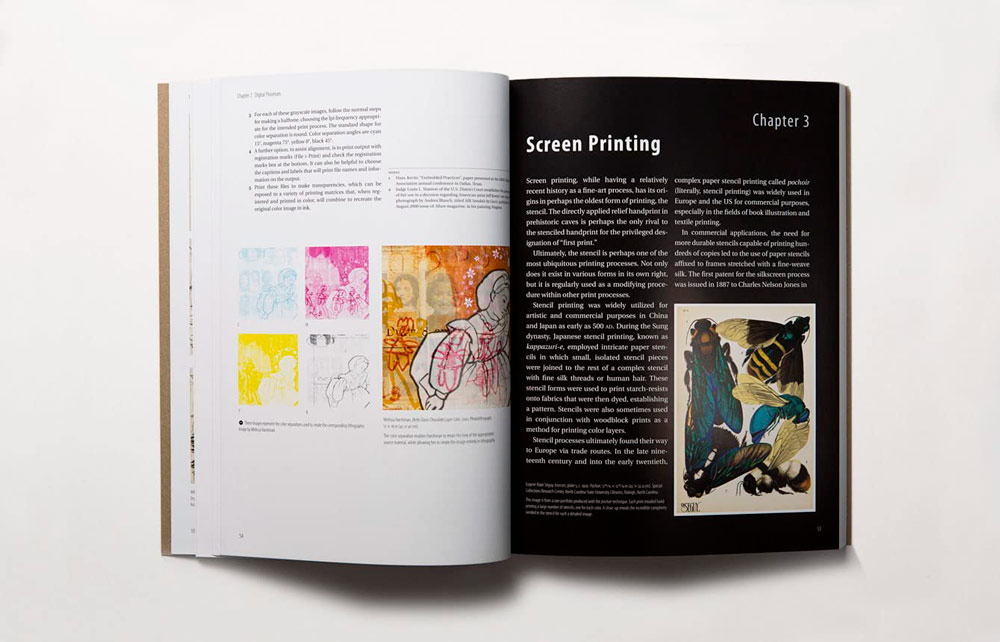
Screen printing, also known as silkscreen printing, uses a mesh screen and stencil to transfer ink onto a surface.
Although commonly associated with posters, graphic art and commercial printing, screen printing has also become an established fine-art process.
For photographers, the technique can provide an alternative way of interpreting an image. Photographs can be simplified into shapes, tones and layers, allowing the photographer to concentrate on colour, composition and graphic form rather than simply reproducing every detail of the original photograph.
Relief printing
Relief printing involves applying ink to the raised surface of a block before transferring the image to paper.
Woodcut and linocut are two familiar examples.
The process produces a very different aesthetic from a conventional photographic print. Strong lines, simplified shapes and deliberate marks become part of the finished image.
For photographers, studying relief printing can be particularly useful when considering how an image works without relying on fine detail.
Intaglio printing
Intaglio is effectively the opposite approach to relief printing. Instead of applying ink to a raised surface, the ink is held within recessed areas of a plate.
Engraving, etching and drypoint are examples of intaglio techniques.
These processes can produce highly distinctive marks and textures, offering photographers another way to think about tone, line and surface.
Collagraph printing
Collagraph is a particularly versatile printmaking technique in which materials are attached to a plate to create a textured printing surface.
Because almost any suitable material can potentially contribute to the texture, collagraph can produce highly individual results.
For photographers interested in mixed media and experimental work, this can be an appealing process because it encourages experimentation rather than precise reproduction.
Lithography
Lithography is based on the principle that oil and water repel each other.
Traditional lithographic processes can be technically demanding, but the technique has played an important role in the development of fine-art printmaking.
Its ability to reproduce both detailed marks and subtle tonal qualities has made it an important process for artists working with images.
Monoprinting
Monoprinting is sometimes confused with monochrome printing, but the two are completely different.
A monoprint is essentially a one-off print. While elements of the process can be reused, each resulting image is intended to be unique rather than part of a conventional identical edition.
This makes monoprinting particularly interesting for photographers who enjoy experimentation and want to move away from producing multiple identical photographic prints.
Hybrid printmaking
Perhaps the most interesting development for photographers is the combination of different techniques.
Printmakers have a long tradition of experimenting with whatever materials and processes are available, and contemporary artists can combine digital printing with screen printing, photographic imagery with traditional plates, or multiple analogue techniques within a single piece.
For photographers, this opens up a much wider creative vocabulary.
Rather than asking how accurately a photograph can be reproduced, the question becomes what else can be done with the image.
What can photographers learn from printmaking?
Even if you have no intention of becoming a printmaker, understanding these techniques can influence the way you approach your photography.
Traditional printmaking encourages artists to think carefully about:
- Line and shape
- Texture and surface
- Colour relationships
- Simplification
- Tonal contrast
- Physical materials
- Limited editions
- The relationship between an original image and its final print
These are all considerations that can strengthen a photographic print.
It can also be useful to remember that producing a physical artwork is not necessarily about creating the most technically accurate reproduction of a digital file. Sometimes the character of the printing process is part of what makes the finished work interesting.
From photographic print to fine-art object
For photographers looking to sell their work, experimenting with different printing techniques can also change the way an image is perceived.
A standard photographic print, a hand-finished print and a mixed-media artwork may all originate from the same photograph but can occupy very different positions within the art market.
That doesn’t mean traditional printmaking is automatically better. Instead, it gives photographers another set of tools with which to develop their own visual identity.
A useful introduction to printmaking
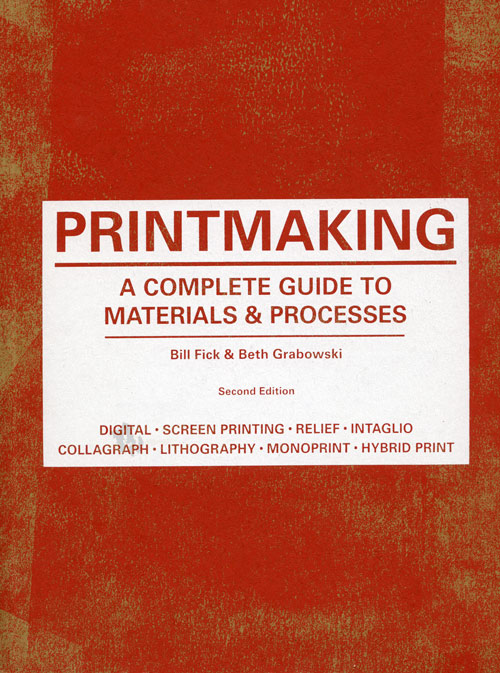
A useful reference for photographers wanting to explore these processes further is Printmaking: A Complete Guide to Materials & Processes by Bill Fick and Beth Grabowski.
The 256-page book covers paper, printmaking techniques, editioning and studio safety before exploring digital printing, screen printing, relief, intaglio, collagraph, lithography, monoprinting and hybrid techniques.
One of its strengths is that it doesn’t treat printmaking as a collection of isolated processes. The examples demonstrate how contemporary artists can combine techniques and experiment with different approaches.
For photographers, the most valuable lesson may therefore be less about learning a particular printing process and more about understanding the possibilities that exist between photography, digital printing and traditional fine-art techniques.
Exploring new ways to print your photography
Photography doesn’t have to end when the shutter is released or the digital file is processed.
The history of printmaking demonstrates just how many ways an image can be interpreted, reproduced and transformed. For photographers, exploring these techniques can provide inspiration for creating work that is more tactile, distinctive and personal.
Whether you experiment with screen printing, explore mixed-media work or simply gain a better understanding of how traditional printmakers approach their craft, looking beyond conventional photographic printing can open up an entirely different creative direction.
Book reference
Printmaking: A Complete Guide to Materials & Processes
Bill Fick and Beth Grabowski
256 pages, softback
ISBN: 978-1-78067-194-9
Published by Laurence King