
The Perimeter by Quintin Lake: Photographing the UK Coastline – Book Review
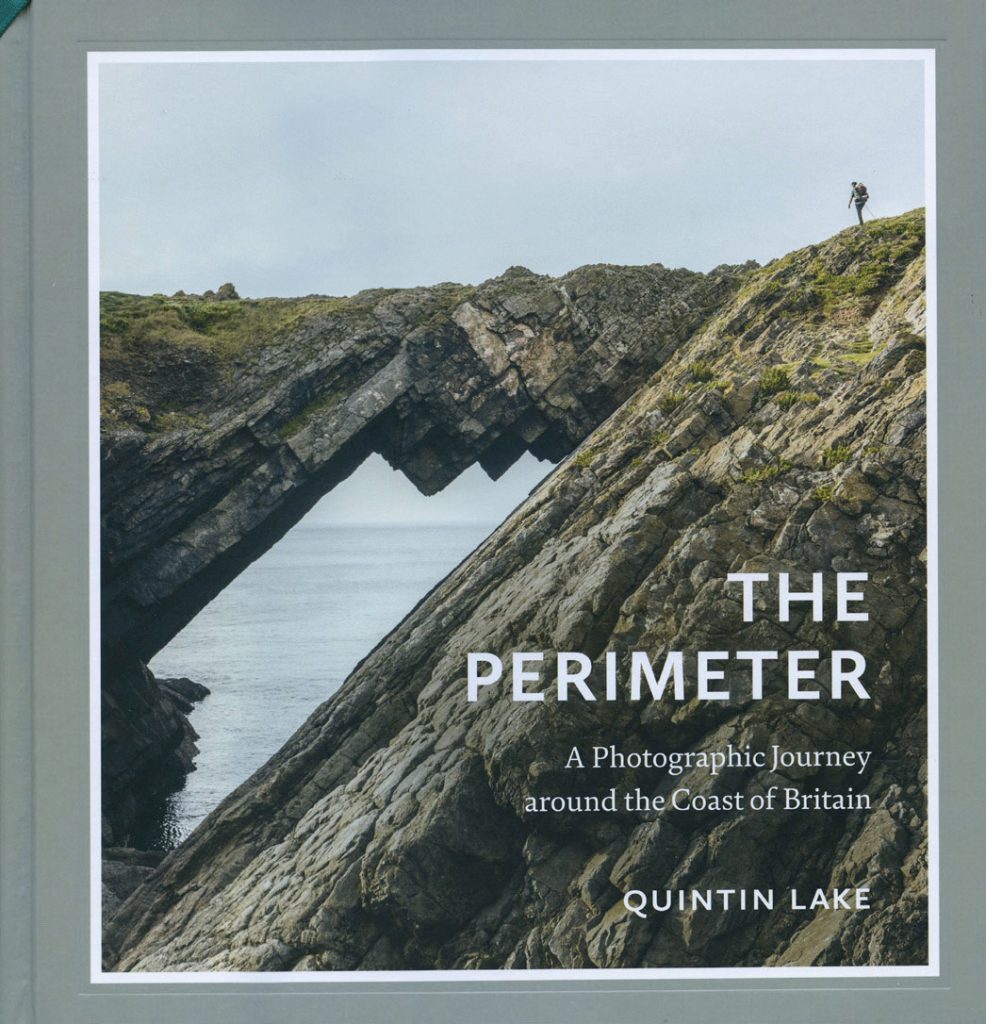
What does it take to photograph the entire coastline of the United Kingdom?
For professional photographer Quintin Lake, the answer was five years, 6,835 miles of walking and around 179,000 photographs.
The result is The Perimeter, a substantial 466-page coffee-table book documenting an extraordinary photographic journey around the UK’s coastline.
It is, quite literally, a weighty book — and one that perhaps deserves a sturdy table rather than a lap.
Walking the coastline
Walking around the entire UK coastline is an achievement in itself.
The exact distance depends on how the route is defined. Recognised versions of the walk generally follow estuaries upstream to a suitable crossing, producing a route of a little over 6,800 miles.
The Ordnance Survey’s measurement of the coastline at mean high water is considerably longer, at more than 11,000 miles.
That difference illustrates just how complicated Britain’s coastline actually is.
For anyone who has spent time walking the coast, particularly around Scotland, this will come as no surprise.
Headlands, islands, tidal inlets and deeply indented coastlines can turn a seemingly straightforward journey into an enormous undertaking.
Lake’s journey was not completed in one continuous push. Medical breaks, the Covid-19 pandemic and other commitments meant the walk was completed in sections.
That doesn’t diminish the achievement.
Quite the opposite.
Walking thousands of miles over a period of years requires extraordinary persistence.
Adding professional photography to the challenge makes it even more impressive.
The photographer’s challenge
For a photographer, a long-distance walking project presents a particular problem.
You only get one chance at many of the photographs.
The light may be wrong.
The weather may change.
You may be tired.
You may have another ten miles to walk.
And unlike a landscape photographer who can return to a location specifically for a particular sunrise or sunset, a long-distance walker has a route to follow.
You can’t necessarily wait three days for the perfect conditions.
That makes The Perimeter particularly interesting from a photographic perspective.
Lake was photographing the coastline while simultaneously travelling through it.
The book therefore becomes more than a collection of beautiful landscapes.
It is a record of what caught one photographer’s eye while moving through the country on foot.
179,000 photographs reduced to 466 pages
Perhaps one of the most extraordinary statistics surrounding the project is the number of photographs taken.
Lake made approximately 179,000 images during his journey.
The book obviously contains only a tiny fraction of those.
That selection process is fascinating in itself.
What makes one image worthy of inclusion when thousands of alternatives exist?
What catches a photographer’s attention when they are walking for mile after mile?
And how does that visual decision-making change as the landscape, weather and light change around you?
For photographers, these are some of the most interesting questions raised by the book.
Seeing familiar places differently
One of the pleasures of The Perimeter is recognising places you have visited yourself.
Most photographers who have travelled around Britain will recognise at least some of the locations.
But Lake’s perspective isn’t necessarily the one you remember.
A coastline you photographed on a family holiday may appear completely different through someone else’s camera.
That makes the book particularly enjoyable for anyone familiar with the UK’s coast.
You find yourself thinking:
I’ve been there.
And then:
But I didn’t see it like that.
That is one of the great pleasures of photography.
A photograph doesn’t simply show us somewhere.
It shows us how another photographer saw it.
The value of travelling slowly
There is also something particularly appropriate about documenting the British coastline on foot.
We are accustomed to travelling quickly.
We drive through landscapes.
We fly over them.
We arrive at a destination and photograph the obvious viewpoint.
Walking is different.
It forces you to experience the landscape incrementally.
A headland takes time to reach.
A village appears gradually.
Weather changes while you’re moving through it.
The same landscape can look completely different an hour later.
For a photographer, that slow approach creates opportunities that simply aren’t available when travelling by car.
The weight of photography
There is another fascinating aspect to the project that photographers will appreciate: the physical weight of carrying photographic equipment for thousands of miles.
Lake’s pack weight varied considerably throughout the journey.
In Scotland, his total pack could reach around 25kg, while the load was considerably lighter during sections in England and Wales.
Around 4–5kg of that was camera equipment.
That’s a significant commitment.
Every camera body, lens, tripod and accessory has to justify the effort required to carry it.
When you’re walking a few miles to a viewpoint, an extra lens doesn’t seem particularly important.
When you’re carrying it for thousands of miles, the calculation changes completely.
The project therefore raises an interesting question for photographers:
How much equipment do you actually need?
Photographing in difficult conditions
Long-distance landscape photography also removes much of the control that photographers normally have.
You can’t guarantee the weather.
You can’t guarantee the light.
You can’t necessarily return tomorrow.
Sometimes you simply have to make the photograph with what you’ve got.
That can be liberating.
Instead of waiting for perfect conditions, the photographer learns to respond to whatever is happening.
Mist becomes part of the image.
Rain becomes part of the story.
Flat light becomes a creative challenge.
And a fleeting patch of sunlight can become the photograph.
A journey through Britain’s landscapes
The geographical variety of the project is perhaps its greatest strength.
The British coastline is remarkably diverse.
There are dramatic Scottish cliffs, remote beaches, industrial coastlines, fishing communities, estuaries, harbours, islands, cliffs, dunes and densely populated seaside towns.
The journey connects landscapes that are rarely considered together.
A photograph from the northwest Highlands sits within the same overall project as images made around industrial England or the Welsh coast.
Together, they form a visual portrait of an entire country.
More than a landscape photography book
It would be easy to describe The Perimeter simply as a landscape photography book.
It is more than that.
It is part travel record, part endurance challenge and part photographic study of Britain.
For photographers, it is also a reminder that projects can give structure and purpose to our work.
Rather than photographing whatever happens to be in front of us, Lake established a clear constraint:
Walk the coastline. Photograph what you find. Keep going.
That simple premise produced an enormous body of work.
Would I recommend it?
Absolutely — particularly if you have an interest in British landscape photography, walking or the UK’s coastline.
For anyone who has explored parts of Britain’s coast, the book has an additional appeal.
You will inevitably recognise places you’ve visited, while discovering hundreds of others you’ve never seen.
It may even encourage you to return to familiar locations with fresh eyes.
For me, The Perimeter became something of a starting point for further investigation.
Maps were never far away.
I found myself looking up the places Lake had photographed, checking old Ordnance Survey maps and reading about the history and geography of the coastline.
That’s a good sign for any book.
It doesn’t simply entertain you.
It makes you curious.
The verdict
The Perimeter is an extraordinary record of an extraordinary photographic undertaking.
Quintin Lake walked approximately 6,835 miles around the UK coastline over five years, producing around 179,000 photographs along the way.
Reducing that enormous body of work to a 466-page book must have been an immense editing exercise.
The result is a fascinating visual journey through Britain’s coastline and a reminder that sometimes the best way to photograph a landscape is simply to slow down and walk through it.
For photographers, it offers something particularly valuable:
a chance to see the familiar through another photographer’s eyes.
Book details
The Perimeter
Quintin Lake
Hardback, 466 pages
Large format
ISBN: 978-1-529-15445-0
Published by Penguin
£35.00