AI Photography: Can We Still Trust Photographs?
By Dr John Nassari
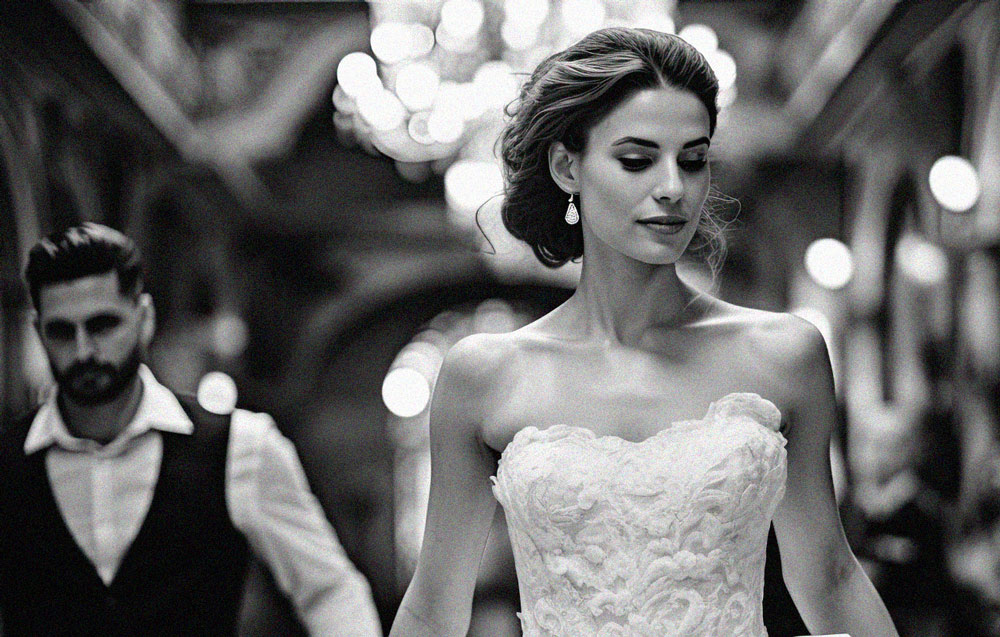
In 2023, German artist and photographer Boris Eldagsen entered the Sony World Photography Awards with an image that looked, at first glance, like a photograph.
It wasn’t.
His image, Pseudomnesia: The Electrician, had been generated using artificial intelligence. Eldagsen won the Creative category but subsequently declined the prize, deliberately exposing the fact that the image was AI-generated.
The incident caused a significant debate within photography.
Should AI-generated images be allowed to compete in photography competitions? Should they be considered photography at all? And, perhaps more importantly, how do we know what we’re looking at?
Those questions have only become more important as AI image generation has developed.
The problem isn’t simply image manipulation
Photographers have been manipulating images for decades.
Darkroom techniques allowed photographers to alter exposure, contrast and composition. Digital editing made it possible to remove objects, replace skies, smooth skin and substantially alter an image without anyone necessarily knowing.
But AI-generated imagery represents a different kind of challenge.
With traditional photography, there is at least a camera somewhere in the process.
A lens records light reflected from something that existed in front of it.
With generative AI, an entirely convincing image can be created without a camera, a lens, a location, a model or even a physical subject.
That distinction matters.
For much of photography’s history, we have operated on an implicit assumption:
something stood in front of the camera.
That doesn’t mean the resulting photograph was objective or completely truthful. Photographers have always made choices about what to include, exclude, light, frame and edit.
But there was a physical event at the heart of the process.
AI challenges that assumption.
The erosion of photographic trust
I’ve been a photographer for more than 35 years, including two decades photographing weddings.
I trained in large-format 10×8 advertising photography between 1989 and 1991 at KIAD before moving into portraiture and editorial work.
When digital photography matured and became increasingly practical for professional photography, I embraced it.
What I never expected was that technology would eventually make us question whether the photograph in front of us had ever been photographed at all.
That, to me, is the real crisis.
It isn’t necessarily that photographs have become fake.
It is that we can no longer automatically assume that they are real.
And once that assumption disappears, every image becomes questionable.
Can you spot an AI-generated photograph?
I wanted to test this idea myself.
I considered entering several AI-generated images into a photographic print competition.
The idea wasn’t to deceive the organisers or undermine the competition. I wanted to ask a straightforward question:
Could experienced photographic judges identify AI-generated images when they were printed, mounted and presented alongside conventional photographic work?
Ultimately, I decided not to submit them.
Instead, I decided to ask readers to make the judgement themselves.
The accompanying images were all AI-generated.
Could you tell?
That question is becoming increasingly difficult to answer.
And that’s the point.
AI is already changing commercial photography
This isn’t simply a theoretical discussion about the future.
AI-generated imagery is already being used commercially.
Advertising, product photography, stock imagery, fashion and corporate portraiture are among the areas where synthetic imagery can potentially replace some traditional photographic production.
I’ve experienced this personally.
In 2024, I lost a yacht campaign that I had photographed for two consecutive years.
The marketing agency chose to use AI-generated imagery instead.
From a client’s perspective, the attraction is obvious.
AI can potentially offer:
- speed
- flexibility
- unlimited variations
- reduced production costs
- no location requirements
- no physical models
- no travel
- no weather dependency
- rapid changes to concepts
For some commercial applications, that will be extremely difficult for traditional photography to compete with.
But that doesn’t necessarily mean photographers are finished.
It may mean that the value of real photography changes.
Authenticity could become the premium
When synthetic imagery becomes commonplace, genuine photography may become more valuable rather than less.
Think about other areas where authenticity has become a selling point.
Handmade products command a premium because they are not mass-produced.
Live music has value precisely because it is happening in front of you.
Film photography has experienced renewed interest partly because its physical process distinguishes it from endlessly reproducible digital imagery.
Photography may move in a similar direction.
The fact that a photograph represents something that genuinely happened could become part of its value.
For some clients, that distinction will matter enormously.
Which types of photography are most vulnerable?
Some genres appear particularly exposed to generative AI.
These include:
- advertising
- product photography
- stock photography
- fashion
- still life
- food photography
- corporate headshots
But it would be dangerous to assume that other genres are automatically safe.
Weddings, events and documentary photography might appear protected because they record real-world events.
But AI can already generate remarkably convincing scenes involving people, places and events that never existed.
So even there, the problem of trust remains.
What happens when clients can’t tell?
Imagine a potential wedding client looking at two photographs online.
One is a genuine photograph taken at a real wedding.
The other is entirely AI-generated.
If the client cannot distinguish between them, what happens to the value of the photographer’s work?
The answer may be that the photographer has to sell something beyond the image itself.
They may need to demonstrate:
This actually happened.
I was there.
These are my clients.
This is the complete wedding gallery, not a collection of five perfect images.
I can show you the work I created from start to finish.
That could make transparency increasingly important.
The importance of showing real work
One of the simplest ways photographers can build trust is by showing a substantial body of genuine work.
Don’t rely entirely on a handful of spectacular portfolio images.
Show complete projects.
Show consistency.
Show behind-the-scenes material where appropriate.
Show the reality behind the finished photograph.
For wedding photographers especially, clients can ask to see complete galleries rather than simply judging a photographer on a few carefully selected highlights.
The more convincing synthetic imagery becomes, the more valuable evidence of genuine photographic experience may become.
What about photography competitions?
This raises another difficult question.
If an AI-generated image can be printed and presented alongside traditional photographs, should it be eligible for a photography competition?
There isn’t a universal answer.
Different competitions have different purposes.
A competition celebrating photographic craft may reasonably require the image to originate from a camera.
A creative image competition may take a different approach.
The important thing is that the rules are clear.
Judges and entrants need to know what is permitted.
And if AI-generated images are allowed, they should arguably be identified as such.
Otherwise, we’re not necessarily comparing like with like.
Does this mean AI should be banned?
I’m not convinced that banning AI is the answer.
Technology rarely disappears because an industry dislikes it.
Photography itself has repeatedly changed because of technology.
Film didn’t remain dominant forever.
Digital photography didn’t disappear because some photographers preferred film.
Photoshop didn’t prevent people from continuing to take photographs.
AI will be no different.
The more useful question is:
What do we want photography to mean?
If we decide that photography is fundamentally about recording something that existed in front of a camera, then AI-generated images belong in a different category.
If we define photography more broadly as the creation of photographic-looking imagery, then the boundaries become much less clear.
Either position can be argued.
But we need to have the conversation.
The future may be about provenance
One of the most interesting developments in this area is the growing importance of image provenance — information that can help establish how an image was created and whether it has been altered.
For professional photographers, that could eventually become as important as metadata.
The question may no longer simply be:
“Who took this photograph?”
It could become:
“How was this image made?”
And that is a significant shift.
The death of photographic truth?
Perhaps photographic truth isn’t actually dying.
Perhaps we’re simply losing the assumption that photographs automatically represent reality.
That distinction matters.
Photography has never been completely objective. A photographer chooses the moment, composition, lens, exposure and perspective.
But there has traditionally been a physical connection between the photograph and the subject.
Generative AI can break that connection completely.
And once audiences understand that, something interesting may happen.
Authenticity itself may become valuable.
A real photograph of a real person, in a real place, at a real moment, may become something worth proving.
Perhaps the future photographer won’t simply be selling beautiful images.
They’ll be selling trust.
And perhaps the most important question we can ask about an image in the age of AI is no longer:
“Is this a good photograph?”
but:
“Is this actually a photograph?”
So Which of These Images Are Fake (inc hero image)?
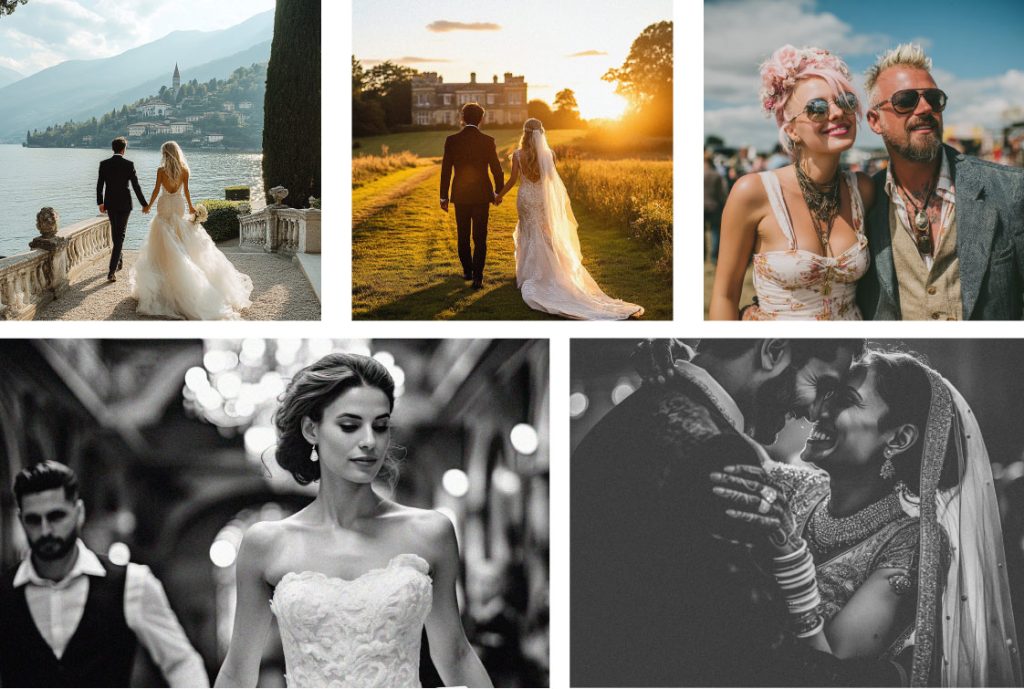
Every single one of them.
All five.
A year from now, will you still be able to tell?
Will your clients?
Will judges?
If we photographers cannot agree on what counts as a photograph, how can we expect the public to?
Perhaps the death of photographic truth will not be a dramatic event.
Perhaps it is already here – quiet, seamless, beautifully printed on Fuji Flex paper, mounted, titled, and ready for judging.
About the Author
Dr John Nassari is an award-winning photographer with more than 35 years’ experience across portraiture, advertising and documentary photography. His work has been exhibited at the National Portrait Gallery and even sent into space.
He has photographed more than 700 weddings and developed a distinctive documentary style influenced by street photography, fashion and portraiture. His career has included luxury destinations, major advertising campaigns and humanitarian projects, while his current work focuses on authentic stories and genuine moments.