Photographing the Champions League: The Career of Domenic Aquilina
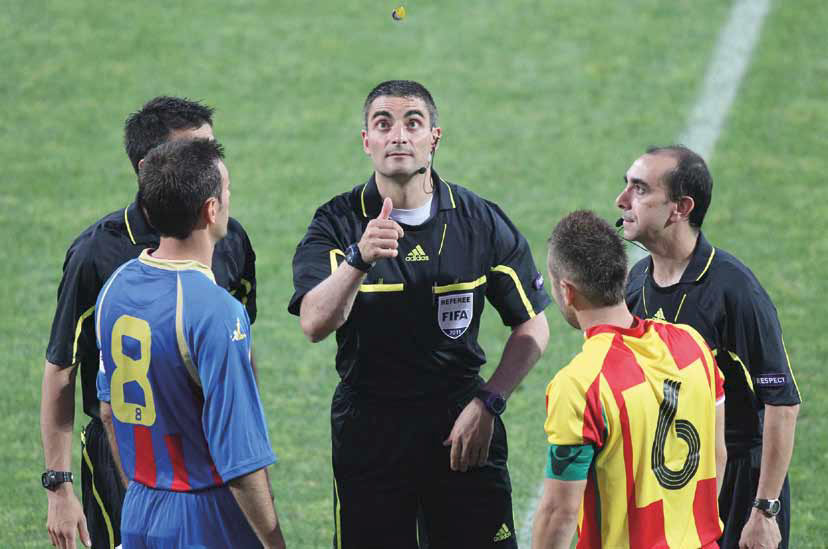
From Football Fan to Professional Photographer
Born in 1957 in Senglea, Malta, Domenic Aquilina has been involved in photography since his early twenties.
You might say he is an ‘all-rounder’ in photojournalism. Beauty, despair, humour, joy and passion are all transmitted through the Maltese photographer’s images.
Football, however, has always been one of the main driving forces behind his photographic career.
Domenic is the official Malta football writer and photojournalist and has contributed to UEFA’s official website and various UEFA publications. He has also contributed to leading international publications including Guerin Sportivo in Bologna and World Soccer in England.
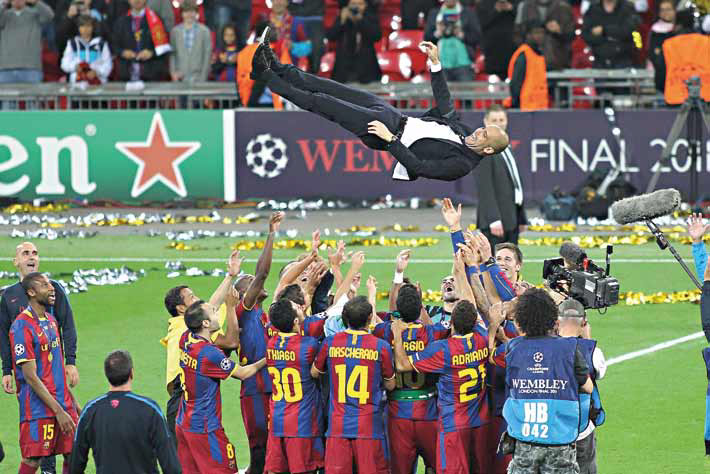
His work has taken him to some of the biggest occasions in European football, including seven consecutive UEFA Champions League finals.
Early Days
The passion for football has always been one of the key factors behind Aquilina’s photojournalistic career.
As a young football fan and collector of football club badges, Domenic remembers contacting top football clubs around the world by letter and building a collection of club badges and football magazines from across the globe.
At the age of 20, his late mother asked him what he would like for his birthday.
Domenic immediately replied that he wanted a small, compact camera.
His special birthday present was a second-hand Vivitar 602 with a Vivitar 25mm f/4 lens.
That simple gift helped set him on the path towards a professional photographic career.
His first ‘real’ accreditation as a photojournalist came soon afterwards from the UK-based international football magazine World Soccer, to which he continued to contribute football writing and photographs.
From then onwards, photography gradually became more than a hobby and increasingly developed into a part-time profession.
His love for photography and football continued to flourish, while his contact with UEFA, European football’s governing body, developed over the years.
Even so, Domenic had to wait a number of years before becoming an established photographer working for the organisation.
Approximately 10 years before this article was written, he decided to leave his full-time job and concentrate entirely on his one great love — photography.
He founded his own small photojournalistic company, FotoAquilina.
Domenic still recalls how difficult it was to make that decision.
Married with two young daughters, it was not easy to leave the security of full-time employment. However, with the support of his wife, Connie, he decided to take the opportunity.
With important homework done beforehand, Domenic never looked back.
“I do wish I’d gone freelance beforehand, but I do not regret anything I did in my life. As the saying goes, ‘as you sow so shall you reap.’ That has always been a very important phrase to me.”
The Road to UEFA
Domenic still recalls the important milestones in his career.
He will never forget the day in early 2005 when he received his official appointment to become part of the then UEFA Photographers’ Pool.
It was a milestone that Aquilina regarded as the pinnacle of his career.
“I will never forget that day. Becoming part of the UEFA family is such a big thing.”
His first taste of major international football photography was soon to follow.
In May 2005 he covered his first UEFA Champions League final, in Istanbul, where Liverpool FC faced AC Milan.
It was to become one of the most exciting Champions League finals ever played.
For the Maltese photographer, the scale of the occasion was something he could not ignore.
“To be honest I had butterflies flying around in my stomach during the morning of the match but then once the kick off went off it was all plain sailing.”
To this day, Domenic considered it one of the most memorable UEFA Champions League matches he had covered.
The match went all the way to penalties after Liverpool fought back from a three-goal deficit, eventually winning the trophy.
Recognition on the International Stage
Further recognition followed soon after his coverage of the final.
A photograph of Liverpool FC manager Rafael Benítez, taken during the team’s pre-final training session in Istanbul, was selected for the front cover of UEFA’s Technician magazine in July 2005.
Three months later, Aquilina was covering another major UEFA club final — the UEFA Super Cup Final in Monaco, between Liverpool and Russian UEFA Cup winners CSKA Moscow.
Once again, Liverpool emerged victorious after extra-time drama.
A month later, Aquilina’s photograph of stand-in Liverpool captain Jamie Carragher lifting the UEFA Super Cup appeared on the front cover of UEFA’s official flagship publication, Uefadirect.
These moments were important milestones for a photographer who had begun his journey with a second-hand camera and a passion for football.
Beyond the Photographers’ Pool
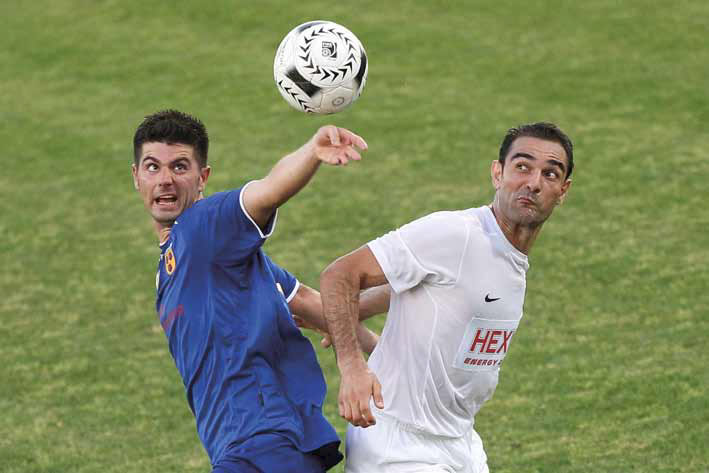
Two years after Domenic’s appointment, the UEFA photographers’ pool was abolished.
However, he retained his freelance status with European football’s governing body.
A year later, another opportunity arose.
Domenic was appointed as UEFA Media Technologies SA Officer for Malta, becoming the official football contributor from Malta to UEFA’s website.
For Domenic, the role offered an opportunity to combine two of his interests.
“I love football writing so this appointment gave me the opportunity to combine my football photography with my football writing and vice versa.”
A Photograph That Returned to Anfield
In July 2009, another photograph taken in Istanbul during the 2005 UEFA Champions League final was selected by T.E.A.M. Marketing AG, UEFA’s marketing partner for the Champions League.
The image showed Liverpool FC captain Steven Gerrard holding aloft the coveted trophy.
It was used to represent Liverpool FC on a specially designed backdrop in the VIP Champions Club area at Anfield during the club’s Champions League matches.
For a photographer, having an image displayed in such a setting represents another important stage in the journey from taking photographs to having those photographs become part of the visual history of the sport.
New Projects
Domenic’s connection with UEFA continued to develop.
Another important appointment saw him become the official UEFA Venue Data Coordinator from Malta.
The role of a Venue Data Coordinator involved sending live data from UEFA-appointed club and international matches using software developed by UEFA.
For Domenic, the progression illustrates how a career built around football photography can develop in unexpected directions.
What began with a love of the game, a collection of football badges and a second-hand camera had developed into a career involving international football, major tournaments, photography, journalism and UEFA.