How to Photograph Polo: Long-Lens Techniques for Fast-Moving Sport
By Mike McNamee
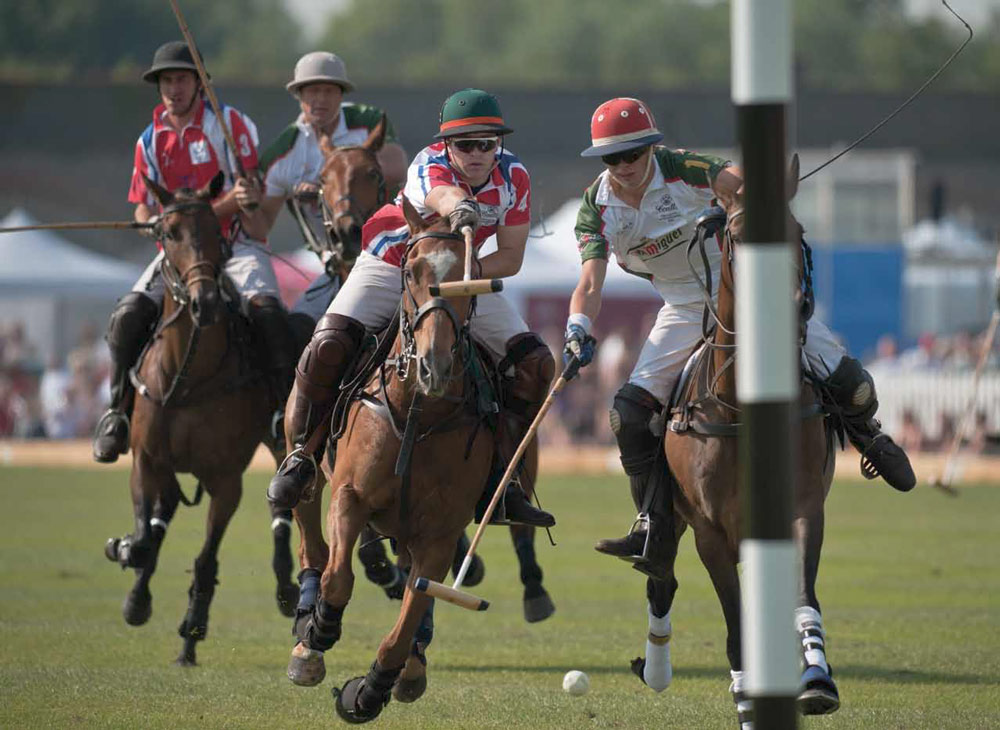
Mike McNamee and friends go to see how the other half live – and discover the challenges of photographing one of the world’s fastest equestrian sports.
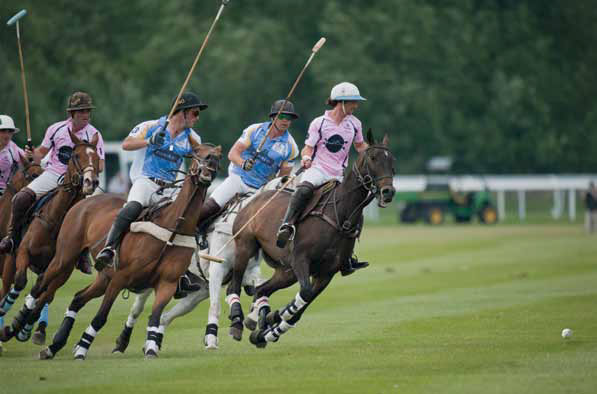
Three Societies members attended the Coutts International tournament held at the famous Chester Racecourse, the Roodee.
It was a glittering occasion, attended by around 5,000 people, most of whom were up for a party, dressed in their finest summer frocks and hats. Champagne was much in evidence.
Polo is not a sport for those of limited means. At this level, the ponies were worth around £10,000 each, and each rider brought at least four with them and probably had a few more back at base. This equated to almost a quarter of a million pounds per team.
For the writer, however, the ponies were the stars of the show. Quick, agile and intelligent, they went about their business with obvious relish – none of your prima donna thoroughbred histrionics here!
Prince William had played the day before we were there, while Harry was also a keen player, as was their father.
The Game
Polo is played on a ground 300 yards by 160 yards, with an additional 10-yard turning area outside the boards and a further 10 yards of safety margin for the spectators.
The distance problems of photographing the game are thus immediately obvious – things can be a long way away.
Each team consists of four ponies and riders. The ponies are changed at the end of each seven-minute chukka, such is the pace at which they run around.
When the ball is being chased, it is normal to reach around 35mph. The ball itself travels at up to 70mph and can be hit over 100 yards with a good strike. Ends are changed after each goal, and the goal is eight yards across.
For a match of four chukkas, the shooting time is just 28 minutes, so you need to maximise your opportunities while play is underway.
The teams we saw were a mixture of professionals and amateurs, with a smattering of Argentinians, Italians, New Zealanders and Brits. There were also a number of females in the teams.
Each player in a team has their own goal handicap, and the total handicap allowed may be limited for a particular event. Ours was an eight-handicap event with a couple of five-handicap players, so the standard was high.
Photographic Technique
Between us we had a range of gear.
Ian Stewart was using a Canon EOS-1D Mk IV with 300mm f/2.8 glass and a 1.4x converter.
Matt Adams was using a Nikon D3 with either 300mm f/4 or 70–200mm f/2.8 glass with a 1.4x converter.
McNamee used 300–800mm f/5.6 glass with a Nikon D700 and MB-10 grip.
Polo is a right-handed game. The players always move the ball on their right and are not allowed to change hands.
Left of centre of the goal, by about 10 yards, seems to be an optimum spot, while safety requires that you are 20 yards back from the actual goalmouth.
We adopted a range of holding methods. Mike stood with a gimbal-mounted lens on a Manfrotto 535MPRO; Ian sat, using a monopod, while Matt mixed sitting and standing on the ground.
You need to keep your nerve as horses charge towards you.
We were assured that, as long as we stood still, the ponies would run round us – advice that seemed only just credible on the odd occasion!
Analysing the Images
As this was a first time for us, a certain amount of post-analysis was carried out after the images were processed, using various EXIF data extraction tools and Excel spreadsheets.
All data relate to Mike McNamee’s rig of a Nikon D700 with a Sigma 300–800mm f/5.6 zoom lens.
The day was bright and the majority of exposures were made at ISO 400, with approximately 15% at ISO 800 and 20% at ISO 500.
Aperture priority was used, and the shutter speeds at f/5.6 are shown in the original analysis.
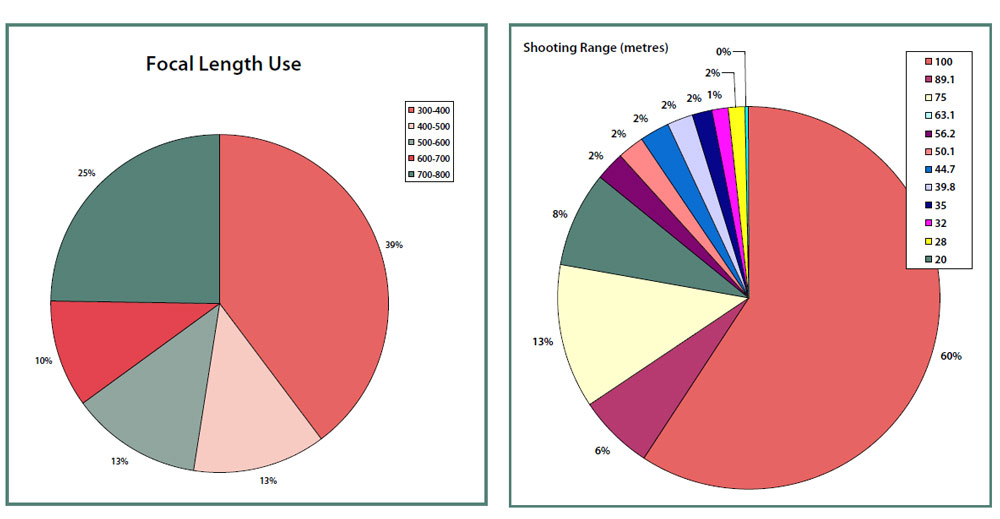
The breakdown of zoom focal length showed a preference for either end of the zoom range:
- 40% at 300mm
- 25% at 800mm
About 60% of the shots were made at greater than 90m shooting distance.
At 800mm, the width of the field of view was about six horses in the opposite goalmouth. The 300–800mm zoom therefore allowed shooting over most of the pitch, although it was a little tight in the goal nearest to us.
At 90m, an 800mm lens just covered a single horse and rider, but there wasn’t enough space for a raised stick.
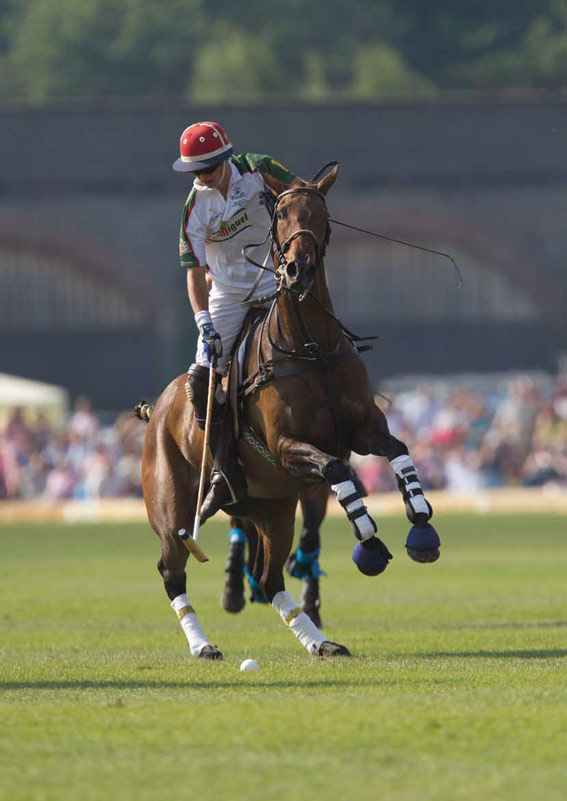
Using 500mm at 50 yards’ distance produced the most dramatic shot of the day.
All focal lengths relate to a full-frame chip.
Long Lenses, Autofocus and Camera Shake
Autofocus coped reasonably well, but camera shake is an ever-present problem with such long lenses being moved about quickly.
Of the 500 or so frames shot, only a couple were totally out of focus – sharp instead on the distant bridges of Chester.
For a first attempt at photographing polo, the combination of a very long zoom, careful positioning and subsequent EXIF analysis gave us a useful insight into what worked and what didn’t.
The biggest lesson was perhaps the simplest: polo gives you very little time to react, and the distances involved make lens choice and positioning critical.