
Remembering Wildlife: How Photography Is Helping Protect Endangered Species
Wildlife photography can do far more than create beautiful pictures.
Used effectively, it can draw attention to species that many people have never seen, tell stories about the threats they face and, importantly, help raise money for conservation.
The Remembering Wildlife book series is an excellent example.
Founded by wildlife photographer Margot Raggett MBE, the project brings together some of the world’s leading wildlife photographers to produce high-quality books celebrating endangered species. The photographers donate their images, and the profits from the books are used to support conservation projects.
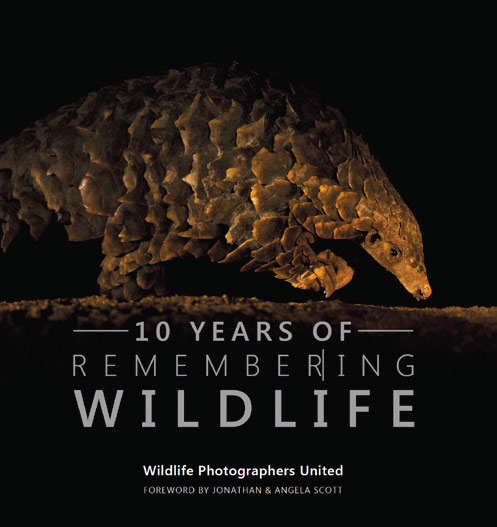
Now, the project has reached its tenth year with 10 Years of Remembering Wildlife, a special edition celebrating a decade of photography, conservation and fundraising.
Ten years of wildlife photography
The Remembering Wildlife series began with Remembering Elephants in 2016.
Since then, the series has produced books dedicated to:
- Elephants
- Rhinos
- Great Apes
- Lions
- Cheetahs
- African Wild Dogs
- Bears
- Leopards
- Tigers
Each book focuses on a single species and brings together photographs from wildlife photographers working around the world.
The books are substantial productions, printed in large format and filled with high-quality colour photography.
The tenth-anniversary book takes a slightly different approach.
At around 200 pages, it is the largest book in the series so far, combining a major focus on one of the world’s most threatened and least understood mammals with a retrospective of the previous ten years.
Why pangolins?
The new book puts pangolins at its heart.
For many people, pangolins are an unfamiliar animal. They are rarely encountered outside specialist wildlife programmes, zoos or conservation projects.
Yet they are among the world’s most heavily trafficked mammals.
There are eight species of pangolin, found across Africa and Asia, and their populations are under severe pressure from illegal hunting, trafficking and habitat loss.
Their scales are particularly sought after in illegal wildlife markets, despite having no scientifically established medicinal value.
Their meat is also consumed in some regions.
The scale of the problem is difficult to comprehend.
Pangolins have existed for millions of years, but human activity has placed enormous pressure on them in a remarkably short period.
An extraordinary animal
Pangolins are unusual even by the standards of the natural world.
Their bodies are covered in protective scales and, when threatened, they curl themselves into a tight ball.
Against a natural predator such as a lion or hyena, this can provide an effective defence.
Against humans, however, it leaves the animal extremely vulnerable.
A curled-up pangolin can simply be picked up.
Different species have adapted to different environments.
Some are primarily terrestrial, while others are adapted for climbing trees. Their powerful front claws allow them to dig into the ground and tear into bark in search of food.
Their diet consists largely of ants and other insects, with an individual pangolin capable of consuming millions of ants during a year.
It is a remarkable animal that remains largely unknown to the general public.
That makes photography particularly important.
Giving endangered species a face
Conservation statistics can be difficult to connect with.
Numbers describing habitat loss, population decline or illegal trafficking are important, but they can feel abstract.
A photograph changes that.
A powerful wildlife photograph allows the viewer to see the individual animal rather than simply thinking about a species as a statistic.
That is one of the strengths of the Remembering Wildlife project.
The photographers involved aren’t simply documenting animals.
They are helping to tell their stories.
The images create an emotional connection between the viewer and the subject, which can turn awareness into action.
Some of the world’s leading wildlife photographers
Almost 300 photographers from around the world have contributed images to the Remembering Wildlife books.
The tenth-anniversary edition includes work from photographers including Marsel van Oosten, Frans Lanting, Greg du Toit and Jonathan and Angela Scott, who also contributed the foreword.
For aspiring wildlife photographers, this makes the books particularly interesting.
They provide a remarkable collection of approaches to photographing wildlife, from intimate portraits to environmental images that place animals within their habitats.
There is no single definition of a great wildlife photograph.
Some images rely on dramatic action.
Others depend on extraordinary light, composition or timing.
Some are technically demanding images captured under difficult conditions, while others succeed because they reveal something about the character of the animal.
Together, they demonstrate just how varied wildlife photography can be.
Photography with a purpose
One of the most interesting aspects of Remembering Wildlife is that the photographers donate their images.
That changes the relationship between photographer and project.
Rather than simply producing photographs for personal portfolios or commercial clients, the photographers are contributing their skills to a larger objective.
The books then provide a way for those photographs to reach an audience while simultaneously generating funds for conservation.
According to the project, more than 55,000 books have been sold worldwide since the first title was published.
More than £1.23 million has been donated to conservation projects in 34 countries.
That demonstrates the potential of photography when it is connected to a clear purpose.
The importance of wildlife photography
Wildlife photographers often spend considerable amounts of time and money creating their images.
Travel, equipment, guides, permits and long periods waiting for the right moment can all form part of the process.
The finished photograph, however, may look effortless.
A single frame can represent hours, days or even weeks of preparation.
Conservation photography adds another dimension to that work.
The photograph has to succeed aesthetically, but it also needs to communicate something about its subject.
It may need to make the viewer curious.
It may need to create empathy.
And sometimes it simply needs to make someone stop scrolling and look.
In a world where we are exposed to thousands of images every day, that is increasingly difficult — and increasingly valuable.
From beautiful photograph to conservation message
There is sometimes a perception that conservation photography has to be bleak.
It doesn’t.
Showing an endangered animal at its most beautiful can be incredibly powerful.
A photograph can celebrate an animal’s character and beauty while simultaneously reminding us that its future is uncertain.
That is particularly relevant to pangolins.
Their strange appearance, unusual behaviour and distinctive scales make them fascinating photographic subjects.
But the beauty of the photograph has a purpose.
It encourages the viewer to care about what happens to the animal.
A decade of Remembering Wildlife
The tenth-anniversary edition doesn’t only look forward.
The final section of the book looks back across the previous decade, bringing together a selection of photographs from the earlier books alongside new work from a competition.
For anyone familiar with the series, it provides an opportunity to revisit some of the strongest wildlife photography produced for the project.
For anyone discovering Remembering Wildlife for the first time, it provides an introduction to ten years of conservation photography.
And that retrospective is perhaps the most powerful part of the project.
The individual books each focus attention on one species.
Together, they tell a much larger story about the pressures facing wildlife around the world.
Why photographers should care about conservation
Photographers have a unique ability to influence how people see the natural world.
A written report can explain that a species is threatened.
A photograph can make the viewer feel something about it.
That doesn’t make photography a substitute for scientific research or conservation work. It does, however, make it a powerful communication tool.
For photographers considering how they might use their work for a cause, Remembering Wildlife provides an interesting model.
The project demonstrates that high-quality photography can be commercially produced, widely distributed and used to generate meaningful support for conservation.
A book that celebrates photography — and the animals behind it
10 Years of Remembering Wildlife is ultimately more than a collection of beautiful photographs.
It is a celebration of what can happen when photographers, publishers, conservationists and audiences work towards the same objective.
The photography provides the initial attraction.
The stories create the connection.
And the sales help turn that attention into practical conservation support.
For wildlife photographers, it is a reminder that the value of an image isn’t necessarily limited to its artistic or commercial worth.
Sometimes a photograph can help people care about something they might otherwise never have noticed.
And in the case of the pangolin, that could be particularly important.
10 Years of Remembering Wildlife
Edited by Margot Raggett MBE
200 pages, large-format hardback
ISBN: 978-1-9996433-9-3
Published by Wildlife Photographers United.