DJI Mavic 3 Pro for Photography: A Professional Photographer’s Review
Drone photography has transformed what photographers can capture. Aerial images that once required a helicopter, specialist aircraft or expensive equipment can now be produced from a remarkably compact flying camera.
But for photographers, the important question isn’t simply how good a drone is at flying. It is how good it is as a camera system.
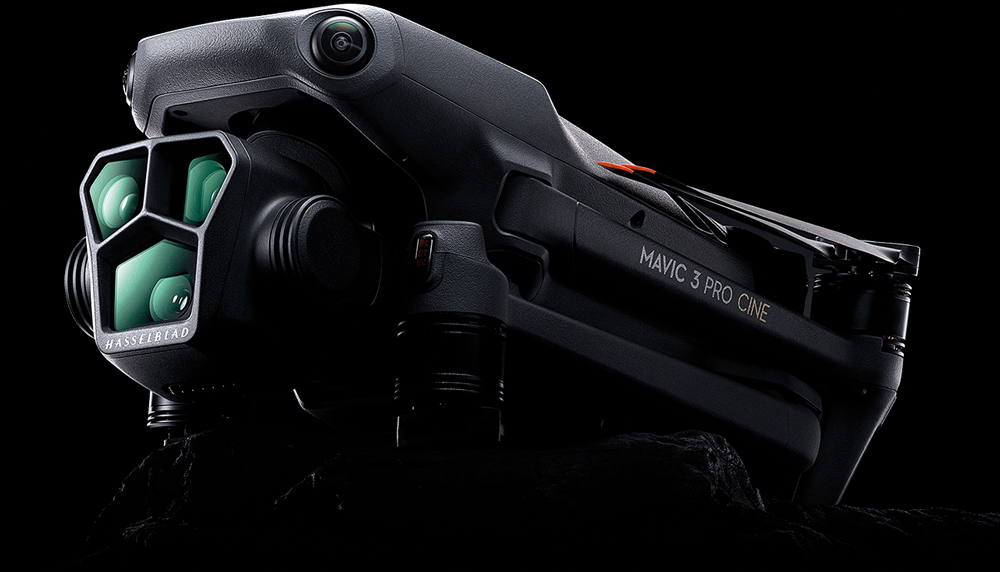
The DJI Mavic 3 Pro is particularly interesting because it combines three cameras with different focal lengths in one aircraft. That makes it possible to change perspective without moving the drone closer to the subject – something that can be particularly valuable when photographing buildings, landscapes and other subjects where your position in the air matters.
This review looks at the Mavic 3 Pro from a photographer’s perspective, including image quality, focal lengths, stability, low-light photography and its use on professional assignments.
A camera system that happens to fly
The first thing that strikes you about the Mavic 3 Pro is how compactly everything has been integrated.
Older camera drones often had a more obvious separation between aircraft and camera, with the camera hanging beneath the body on a gimbal. The Mavic 3 Pro instead incorporates its triple-camera system into the front of the aircraft.
The three-axis mechanical gimbal is an impressive piece of engineering. It keeps the camera remarkably stable while the aircraft is moving and compensates for the movement of the drone during flight.
For photographers, that stability matters.
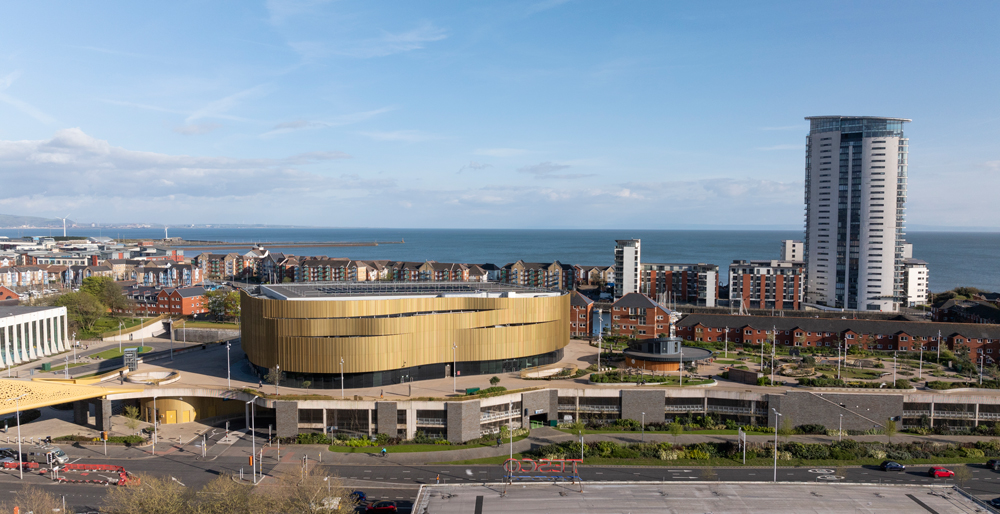
It means the Mavic 3 Pro isn’t restricted to fast shutter speeds simply because it is flying. In suitable conditions, the combination of a stable aircraft, mechanical gimbal and careful technique makes slower exposures possible, opening up opportunities for dusk and low-light architectural photography.
Three cameras, three different perspectives
One of the biggest attractions of the Mavic 3 Pro is its triple-camera system.
The three cameras provide approximately:
| Camera | Sensor | 35mm equivalent | Aperture | Resolution |
|---|---|---|---|---|
| Hasselblad wide | 4/3 CMOS | 24mm | f/2.8–f/11 | 20MP |
| Medium tele | 1/1.3-inch CMOS | 70mm | f/2.8 | 48MP |
| Telephoto | 1/2-inch CMOS | 166mm | f/3.4 | 12MP |
DJI’s current specifications confirm the three focal lengths and sensor sizes, with the 24mm Hasselblad camera offering the largest sensor and variable aperture. All three cameras can also produce RAW still images.
The differences between the cameras are important because the extra lenses aren’t simply there to provide more digital zoom.
They change the way you photograph.
24mm: the wide-angle view
The 24mm-equivalent Hasselblad camera is the natural choice for large buildings, landscapes and scenes where you need to show the relationship between the subject and its surroundings.
The larger 4/3 sensor also gives it an advantage when image quality is the priority.
For architectural photography, this is likely to be the camera that gets the most use.
70mm: a particularly useful middle ground
The 70mm-equivalent camera is arguably one of the most interesting additions for a photographer moving up from an earlier Mavic.
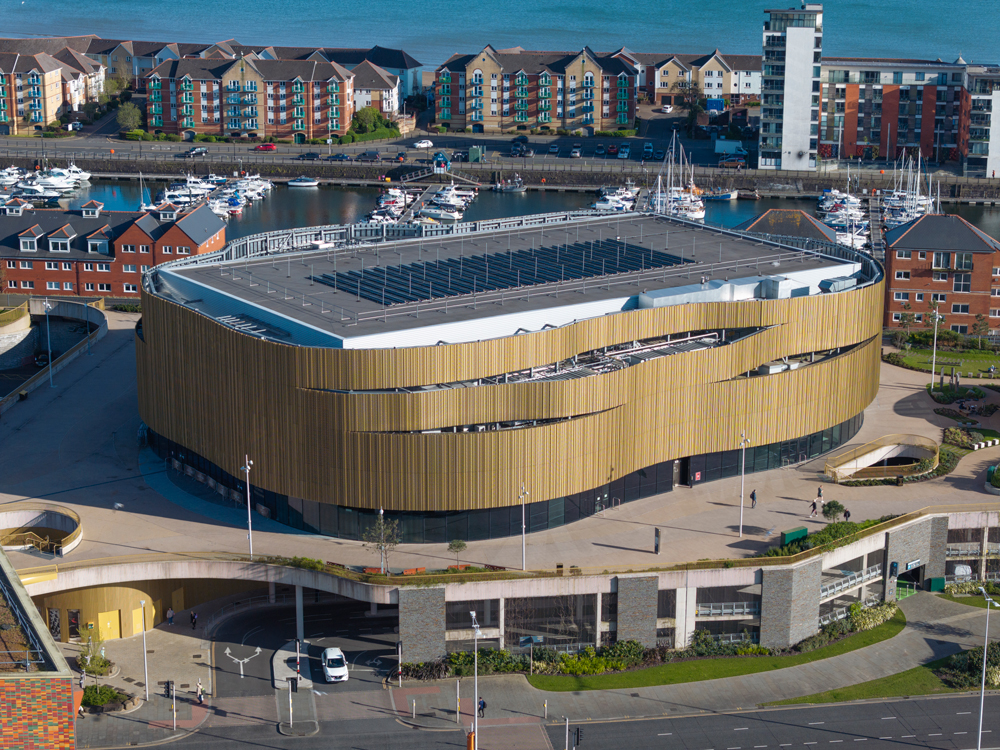
A longer focal length allows you to change your composition without physically moving the aircraft.
That can be extremely useful when photographing buildings in environments where moving closer isn’t desirable or practical.
For example, an architectural photographer working around a busy road may be able to obtain the required composition using the 70mm camera while keeping the drone in a safer position.
This is one of those features that sounds less exciting on a specification sheet than it actually is when you’re working on location.
166mm: compression and detail
The 166mm-equivalent telephoto camera gives you another way of looking at the landscape.
Longer focal lengths compress perspective, allowing distant features to appear closer together. This can produce a very different visual result from the wide-angle camera.
It is also useful for picking out architectural details or isolating subjects within a larger scene.
The smaller sensor means it isn’t simply a replacement for the main Hasselblad camera, but having the focal length available can make shots possible that would otherwise require repositioning the aircraft.
Image quality: does it work for serious photography?
For photographers, megapixels are only part of the story.
Sensor size, lens quality, exposure, dynamic range, colour accuracy, atmospheric conditions and the stability of the platform all contribute to the final image.
The 20MP Hasselblad camera is the key camera in the system. It uses a 4/3 CMOS sensor and has a variable aperture from f/2.8 to f/11. DJI also supports JPEG and DNG RAW still photography.
That makes the camera much more interesting to photographers who want to process their images rather than simply post a JPEG directly from the drone.
The 70mm camera can also produce 48MP images, although photographers should remember that a higher pixel count does not automatically make a smaller sensor equivalent to the larger 4/3 camera.
In practical terms, the choice of camera should be based on the image you are trying to create rather than simply selecting the highest available resolution.
Colour accuracy
One particularly interesting part of the original testing was a colour audit using a Macbeth SG chart.
The test involved shooting the chart under overcast, north-light conditions and correcting the exposure and white balance before measuring colour error.
The results were encouraging. The tested cameras produced colour accuracy comparable with what might be expected from a professional DSLR under good lighting conditions. Creating an ICC profile reduced the measured errors considerably further.
For most photographers, however, creating a custom ICC profile for a drone camera would be unnecessary.
Normal RAW processing, accurate white balance and sensible exposure correction should be more than sufficient for everyday photographic work.
The more important conclusion is that the system is capable of producing files with enough colour information and consistency to be taken seriously as a photographic tool.
Stability and photographing at dusk
One of the real advantages of using a modern camera drone is that the aircraft itself becomes part of the image-making system.
When the drone is hovering steadily, the camera can remain remarkably stable.
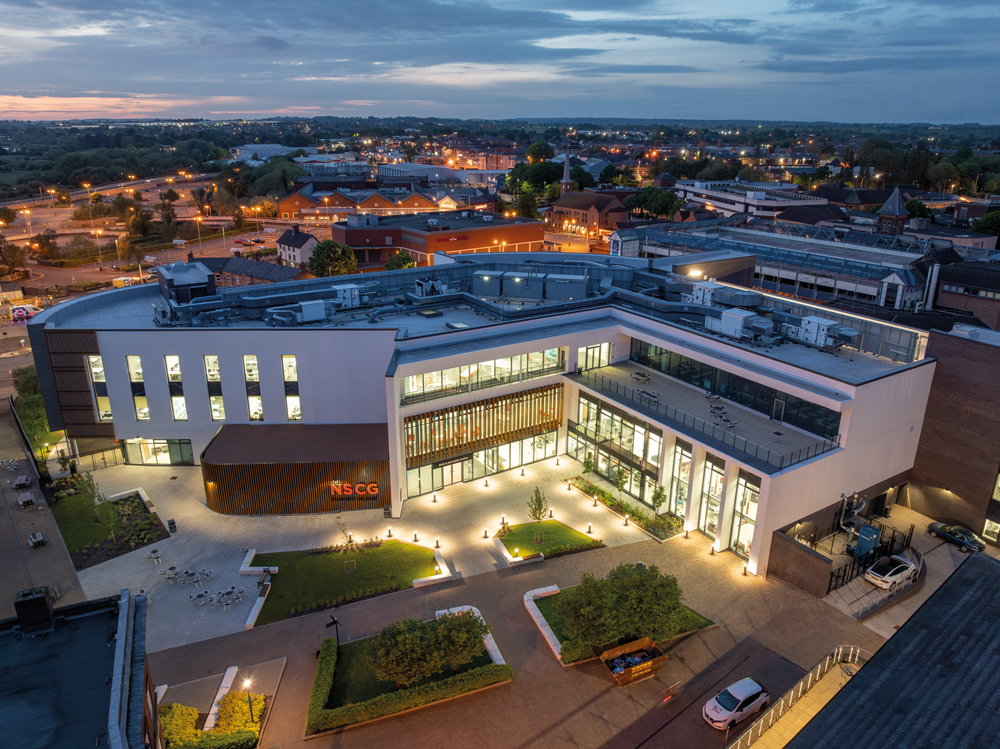
That becomes particularly useful around sunset and during the blue hour, when architectural subjects can look their best but available light is falling rapidly.
A slower shutter speed can allow you to keep ISO under control and retain cleaner files.
Of course, a slow exposure doesn’t freeze everything in the scene. Moving trees, people, traffic and other subjects can still introduce motion blur.
But when the subject is static and the aircraft is stable, slower shutter speeds become a practical part of the photographer’s toolkit.
Why focal length matters so much in aerial photography
It is tempting to think of aerial photography as simply photographing everything from a higher viewpoint.
The reality is more interesting.
Changing height, position and focal length all alter the relationship between objects in the frame.
A wide-angle camera can emphasise foreground and create a strong sense of scale. A medium telephoto can produce a more controlled composition without requiring the aircraft to move. A longer telephoto can compress distant layers and isolate details.
This gives the Mavic 3 Pro something approaching a traditional photographer’s lens selection – but without carrying a bag full of lenses.
The three cameras therefore aren’t just a convenience. They provide three different ways of seeing.
Architectural photography with the Mavic 3 Pro
For an architectural photographer, a drone can be much more than an alternative camera angle.
It can solve problems.
A conventional camera on the ground might require you to stand in a particular position, but the view may be blocked by roads, buildings, trees or other obstacles.
A drone allows the photographer to explore viewpoints that simply aren’t available from ground level.
The Mavic 3 Pro’s 70mm camera is particularly useful in situations where getting physically closer to a building would create an undesirable or potentially difficult flight.
That ability to change focal length while remaining in approximately the same position can also make working on a commercial commission considerably more efficient.
The controller matters too
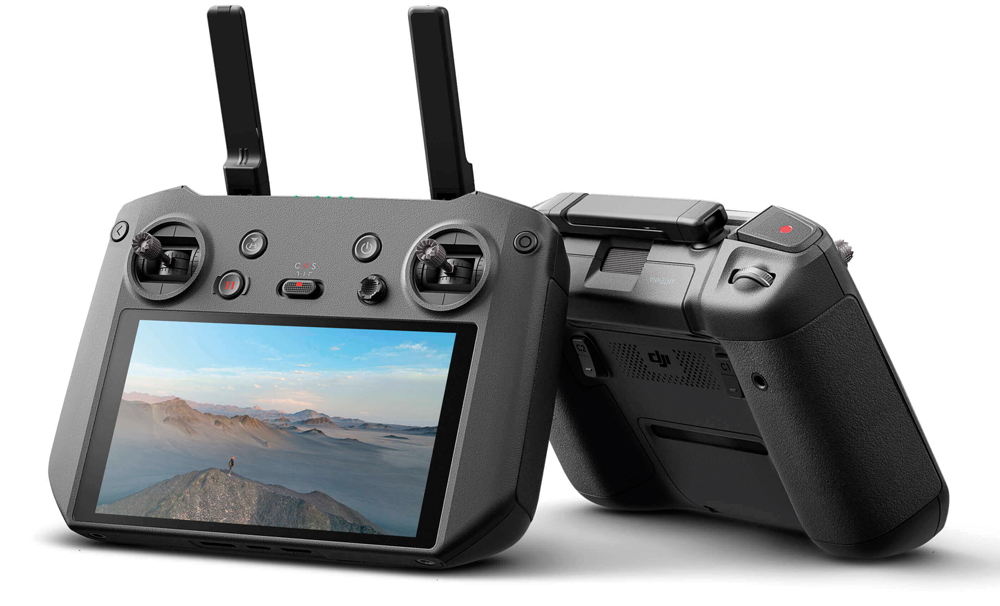
The controller is effectively the photographer’s interface to the camera.
The Mavic 3 Pro can be supplied with DJI’s RC controller, while the RC Pro provides additional functionality and a brighter screen.
A bright built-in display can be particularly useful when working outdoors.
Anyone who has tried to judge a camera screen in strong sunlight will appreciate that this isn’t a minor consideration. When you’re trying to position an aircraft accurately and simultaneously assess composition, exposure and focus, a screen that remains readable can make the whole process easier.
Flight time
DJI specifies a maximum flight time of up to 43 minutes for the Mavic 3 Pro under controlled test conditions. Actual flight time will vary depending on conditions, battery state, wind, temperature and how the aircraft is being operated.
In real photography, you should never think of the advertised maximum as 43 minutes of usable shooting time.
Battery management, take-off, positioning, return-to-home reserves and changing conditions all reduce the practical shooting window.
Nevertheless, good battery life makes a significant difference on location.
What about video?
Although this is primarily a photography review, the Mavic 3 Pro is also a capable video platform.
The Hasselblad camera can record up to 5.1K video, while all three cameras provide 4K recording options. The Cine version adds Apple ProRes recording and substantially more onboard storage.
For photographers who occasionally need aerial footage for a commercial client, having capable video built into the same aircraft can be a useful bonus.
The biggest consideration: you can’t just take off and fly
This is the section that every prospective drone photographer needs to take seriously.
A camera drone isn’t simply another camera accessory.
In the UK, drone operations are subject to aviation regulations, and the requirements depend on the aircraft, its class, where you are flying and the nature of the operation.
The Mavic 3 Pro weighs 958g, putting it firmly above the 250g threshold. DJI lists it as a C2-class aircraft in its European specifications.
Current CAA rules require pilots and operators to meet the relevant registration and competency requirements. The CAA states that a Flyer ID is required for drones weighing 100g or more, while an Operator ID is required for drones weighing 250g or more, with additional requirements depending on the type of operation.
Commercial and organisational use can involve additional requirements, including appropriate competency, operational authorisation where applicable and insurance.
The rules can and do change, so photographers should always check the current CAA guidance before flying rather than relying on an old magazine article or online forum post.
CAA drone guidance: UK Civil Aviation Authority – Drone Code
Is the Mavic 3 Pro suitable for professional photographers?
For the right photographer, absolutely.
The important word is photographer.
If you are primarily interested in recreational drone flying and want the smallest possible aircraft, a sub-250g model may be a more convenient choice.
But if your priority is photographic flexibility, the Mavic 3 Pro’s three-camera system is extremely useful.
The 24mm Hasselblad camera provides the best foundation for serious still photography, while the 70mm and 166mm cameras add perspectives that would otherwise require a different position in the air.
For architectural work in particular, the 70mm camera can be genuinely valuable.
What I would look for before buying
Rather than simply asking whether the Mavic 3 Pro is a good drone, ask whether it fits the kind of photography you actually do.
Consider:
Do you need three focal lengths?
If most of your work is wide-angle landscapes, a simpler drone may be enough.
Do you photograph buildings professionally?
The ability to change perspective without moving the aircraft can be extremely useful.
Do you regularly work at dawn, dusk or in low light?
The stability of the aircraft and gimbal can make slower exposures practical.
Do you need the best possible image quality?
The 4/3 Hasselblad camera is the most important part of the system to consider.
Are you prepared for the regulations?
This is just as important as the camera specification.
Final thoughts
The Mavic 3 Pro demonstrates how quickly drone photography has developed.
What was once essentially a remote-controlled aircraft carrying a camera has become a sophisticated photographic platform, combining multiple focal lengths, RAW capture, mechanical stabilisation and automated flight technology in a compact package.
For photographers, the most compelling feature isn’t necessarily the headline flight time or the number of megapixels.
It is the ability to change your viewpoint without necessarily changing your position.
The 24mm camera gives you the broad view. The 70mm camera gives you a more controlled perspective, while the 166mm telephoto opens up opportunities for compression and detail.
For architectural and commercial photographers in particular, that flexibility can make the difference between a drone being an interesting gadget and becoming a genuinely useful part of the working kit.
As with any specialist photographic equipment, however, the best results will come from understanding the tool rather than simply owning it.
The drone gives you the viewpoint.
The photographer still has to create the picture.
About the original test
This article has been substantially rewritten and updated from a Professional Imagemaker review of the DJI Mavic 3 Pro, including practical flight testing and colour testing. The original flight testing was carried out by architectural photographer Paul McMullin, who had extensive experience with earlier DJI aircraft and used the Mavic 3 Pro on commercial assignments.
Specifications and UK regulatory information should always be checked against the manufacturer’s latest information and current CAA guidance.