Dog Photography Safety: How to Prevent Choking During Treat-Catching Photos
By Jim Barrett-Smith
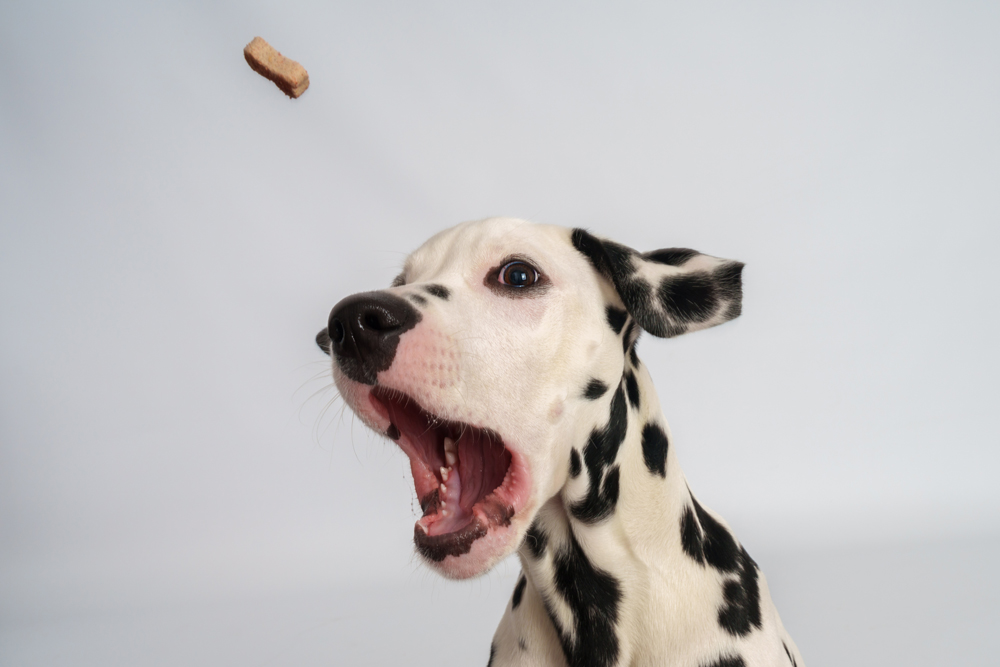
Treat-catching photographs can produce some of the most dynamic and entertaining images in dog photography. A dog leaping into the air after a favourite treat can capture personality, movement and expression in a single frame.
But there is an important safety consideration that every dog photographer should take seriously: choking.
When you are asking a dog to catch food in the air, you are deliberately encouraging it to grab and swallow something quickly. Most of the time everything goes perfectly, but accidents can happen, and photographers need to understand the risks and know how to respond if something goes wrong.
For this article, photographer Jim Barrett-Smith spoke to vet Chris Tomlinson of Rackheath Veterinary Surgery in Norfolk about reducing the risk of choking during treat-catching photography and being prepared for an emergency.
Why treat-catching can be a choking risk
Dogs don’t necessarily chew food in the same way that people do. When excited about a treat, some dogs will attempt to swallow it very quickly.
That means the size, shape and texture of the treat matter.
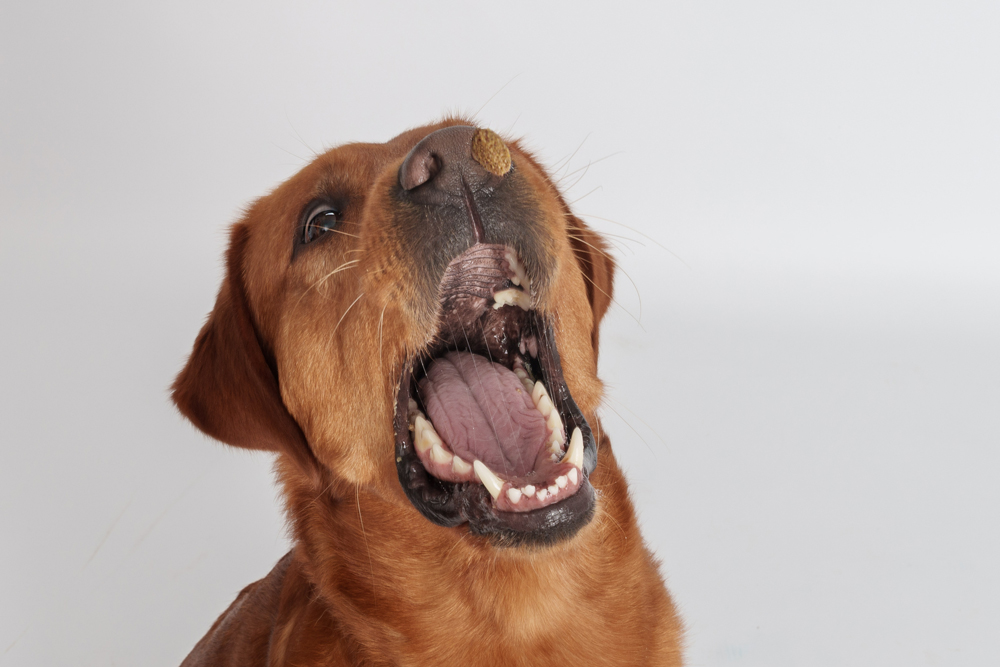
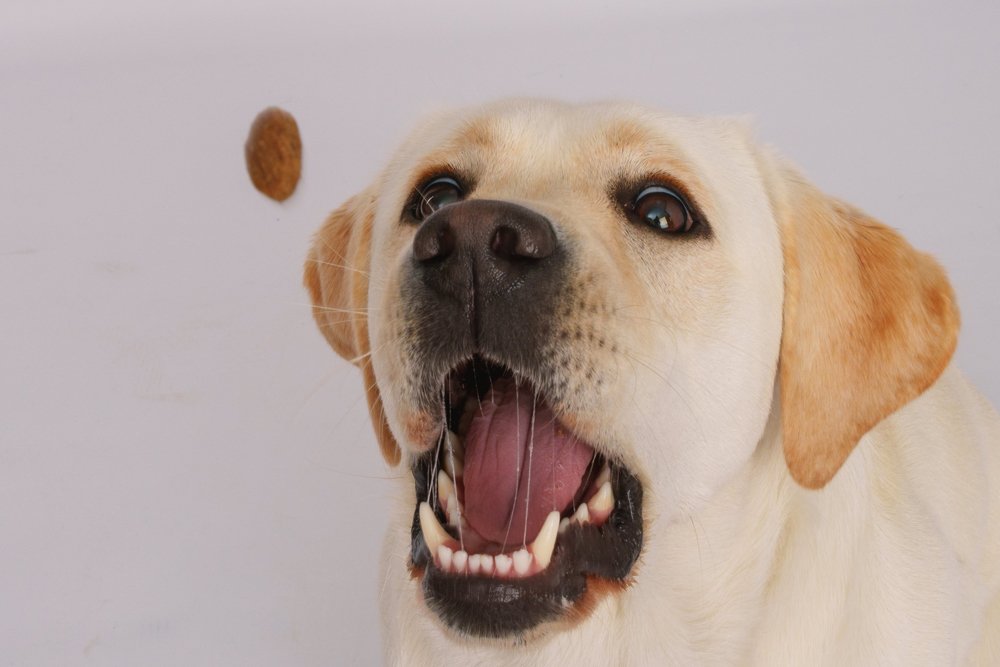
A treat that is perfectly safe when eaten slowly from the floor may present a different risk when it is being caught in mid-air.
Veterinary guidance also recommends avoiding situations where dogs are encouraged to catch food in the air, because of the risk of choking.
For photographers, that doesn’t necessarily mean abandoning the technique altogether. It does mean that the dog’s welfare has to come before getting the shot.
Choose treats carefully
If you are going to use treats during a session, consider using small, soft pieces that are easy for the dog to manage rather than large, hard or awkwardly shaped treats.
Chris Tomlinson recommends smaller and softer morsels for treat-catching photographs because they are easier for the dog to break down and swallow.
The treats should also be appropriate for that individual dog. If the owner has brought treats that the dog is accustomed to eating, that’s generally preferable to introducing an unfamiliar food during a photography session.
And remember that every dog is different.
A treat that one dog handles easily may be unsuitable for another.
Don’t prioritise the photograph over the dog
This is perhaps the most important point.
If a dog is becoming over-excited, struggling to catch treats, repeatedly swallowing without properly managing the food, or showing any sign of distress, stop the sequence.
There is no photograph worth putting a dog at unnecessary risk for.
You can often achieve the same visual effect in other ways. Ask the owner to hold the treat close to the dog’s face, use a toy instead, photograph the dog jumping towards something safer, or create movement through positioning and timing rather than repeatedly throwing food.
A professional dog photographer should always be prepared to abandon a particular shot if the dog’s welfare requires it.
Know the difference between coughing and choking
One of the most important things to recognise is that coughing and choking are not necessarily the same thing.
A coughing dog can usually still move air. A choking dog may struggle to breathe and can show signs such as choking noises, pawing at the mouth or changes in the colour of the gums or tongue.
If you suspect a dog is choking, treat it as an emergency.
Stay calm and get veterinary help immediately.
What should you do if a dog is choking?
First, keep yourself and the dog as calm as possible.
A frightened or distressed dog may bite, even if it is normally extremely friendly. Veterinary guidance specifically warns against putting your fingers into the mouth of a conscious choking dog because you could be bitten.
If you can clearly see an object in the dog’s mouth and can safely remove it without pushing it further into the throat, this may be possible. If the obstruction cannot be removed, contact a vet immediately and follow their instructions.
There are emergency techniques for attempting to dislodge an obstruction, including modified Heimlich-type manoeuvres, but the correct technique depends on the circumstances and the size and position of the dog. Veterinary sources provide different approaches for conscious and unconscious animals.
For that reason, photographers should not rely on an internet article as their only preparation for an emergency.
Learn practical pet first aid
If you regularly work with dogs, consider taking a veterinary-led pet first-aid course.
Knowing how to recognise an emergency and having practised the appropriate techniques beforehand is much better than trying to learn them for the first time when a dog is in distress.
PDSA also recommends veterinary advice or veterinary-led first-aid training for people who want to learn how to respond safely to emergencies involving pets.
After a choking incident
Even if the obstruction appears to have been cleared and the dog seems to recover, veterinary advice should be sought.
A choking incident can be serious, and a dog that has experienced breathing difficulties may need further assessment.
The priority is always the dog’s health rather than getting back to the photography session.
Prepare before the photography session
A little preparation can significantly reduce the risk of an emergency becoming worse.
Before photographing a dog, consider:
- Asking the owner about the dog’s normal treats and any known sensitivities.
- Using small, soft treats where treats are appropriate.
- Avoiding large, hard or unsuitable pieces of food.
- Keeping potentially dangerous toys and objects out of reach.
- Having the owner’s contact details and veterinary practice information available.
- Knowing where the nearest emergency veterinary practice is located.
- Learning basic pet first aid from a qualified provider.
- Making sure the owner remains nearby during the session.
- Stopping immediately if the dog becomes distressed or unwell.
This preparation is especially important when working in a studio, where you may be responsible for creating a controlled environment for an animal that is unfamiliar with the surroundings.
The photograph is never more important than the dog
Treat-catching photography can create fantastic images, but it should always be approached as an optional technique rather than something that has to be completed at every session.
The best dog photographers understand that their responsibility extends beyond exposure, composition and autofocus.
You are working with a living animal that may be excited, nervous, distracted or simply unfamiliar with what you are asking it to do.
Good photography means recognising those circumstances and adapting your approach accordingly.
If you regularly photograph dogs, take the time to understand the potential hazards, prepare for emergencies and learn appropriate pet first aid.
Hopefully you’ll never need to use those skills.
But if something does go wrong, being prepared could make all the difference.
Editor’s note: This article is intended as general safety information for photographers and is not a substitute for veterinary advice or professional pet first-aid training. If a dog is choking or struggling to breathe, contact a vet or emergency veterinary service immediately.