Claire Osborne: Creativity, Competition and Finding Your Voice as a Photographer
Angela Adams talks to Claire Osborne
Angela Adams talks to Claire Osborne about building a photography career, finding creative freedom through competitions and the importance of continually learning.
When you look at Claire Osborne’s professional photography, it is easy to see a photographer who understands emotion.
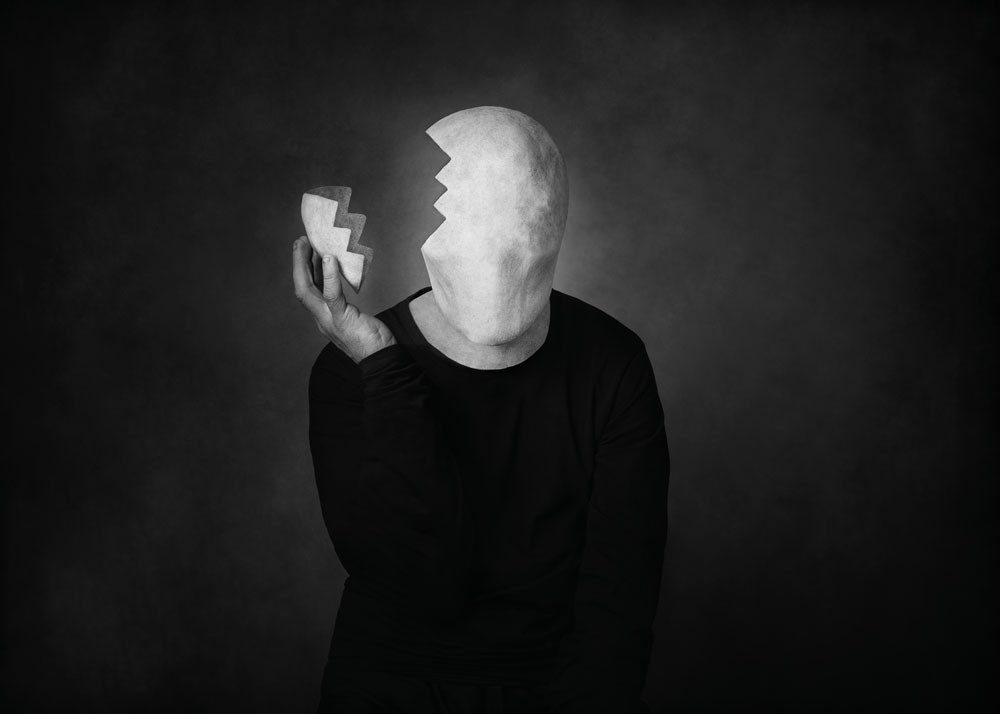
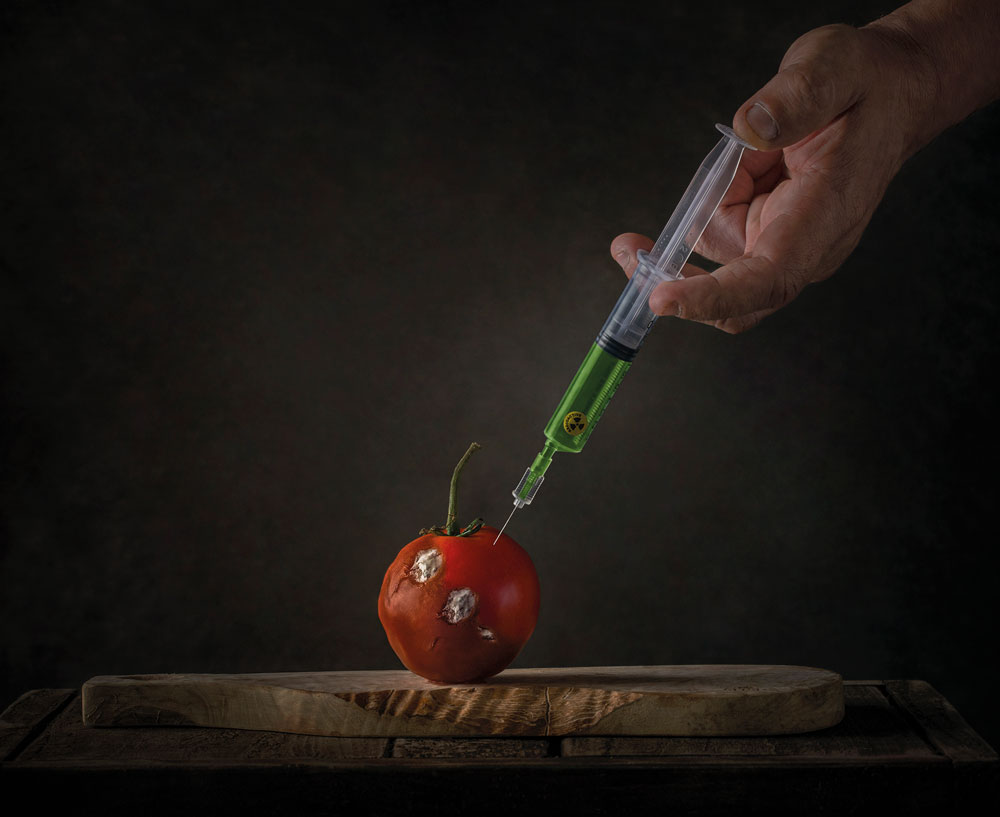
Her day-to-day work focuses on newborn, maternity and young family photography, creating images that capture connection, affection and genuine moments. But Claire has another creative side – one that is considerably darker, more experimental and sometimes deliberately uncomfortable.
That contrast became particularly apparent when Claire presented her Fellowship panel. The 20-image body of work was deeply personal and explored the raw emotions and thoughts of her husband as he worked through the effects of PTSD.
As one of the judges on Claire’s Fellowship panel, I had an opportunity to see the thought, trust and creativity behind the project. Her husband had supported the work by allowing Claire to create images based on some intensely personal experiences, making the resulting panel both challenging and highly individual.
The panel received a unanimous pass, demonstrating not only Claire’s technical ability but also her willingness to push herself creatively.
So, what drives a photographer who can move between beautiful family portraits and much darker conceptual work?
How did you get started in photography?
Claire’s journey into professional photography began with motherhood.
“Definitely the arrival of my first child. I always loved photography and my father was a keen amateur too, but my love for capturing emotions through my lens was born when my three children arrived.”
Each child brought a new camera, and what started as a passion gradually became a career.
After spending more than a decade working in an office environment, Claire took a five-year career break following the birth of her third child. By the time that break came to an end, she knew she didn’t want to return to her previous working life.
An opportunity then presented itself when she was offered voluntary redundancy. The resulting payout gave her the financial breathing space to take photography seriously and build a new career.
For Claire, the pieces seemed to fall into place.
“It was as though all the pieces had fallen into place and I’ll be forever grateful to have this amazing job and the lifestyle that goes with it.”
Building a photography business from scratch
Claire didn’t establish her photography business overnight.
In 2013, she deliberately took time to build a portfolio, photographing friends, family and people they knew. Much of this work was completed for little or no fee, but it provided something more valuable at that stage: experience and a growing portfolio.
That eventually developed into a busy full-time photography business.
Her commercial work now concentrates on newborn, maternity and young family photography.
Rather than relying entirely on traditional advertising, Claire allows her photography to do much of the marketing.
She also recognises the importance of maintaining a strong social media presence to attract potential clients and showcase her work.
Using existing skills to manage the business
Claire has an unusual advantage when it comes to the technical side of running a photography business.
Before becoming a photographer, she worked in IT. That experience gave her a working knowledge of HTML and website development, allowing her to take control of much of her own online presence.
Today, Claire manages her own website, SEO, marketing, social media and PR.
For photographers starting out, this highlights an important point: skills from a previous career don’t necessarily become irrelevant when you move into photography. They can become valuable tools for building the business.
What does Claire love about photography?
For Claire, photography is ultimately about storytelling and emotion.
“Nothing else out there can capture a real moment as photography does.”
That ability to make a single image communicate something beyond the moment itself is what continues to drive her.
Whether she is photographing a newborn, a family or creating a highly conceptual competition image, she wants the photograph to tell a story and communicate emotion.
It is also why her portfolio can look so different depending on the project.
Two very different sides to her photography
Claire’s professional work is filled with warmth, affection and family connection.
Her personal creative work can be something else entirely.
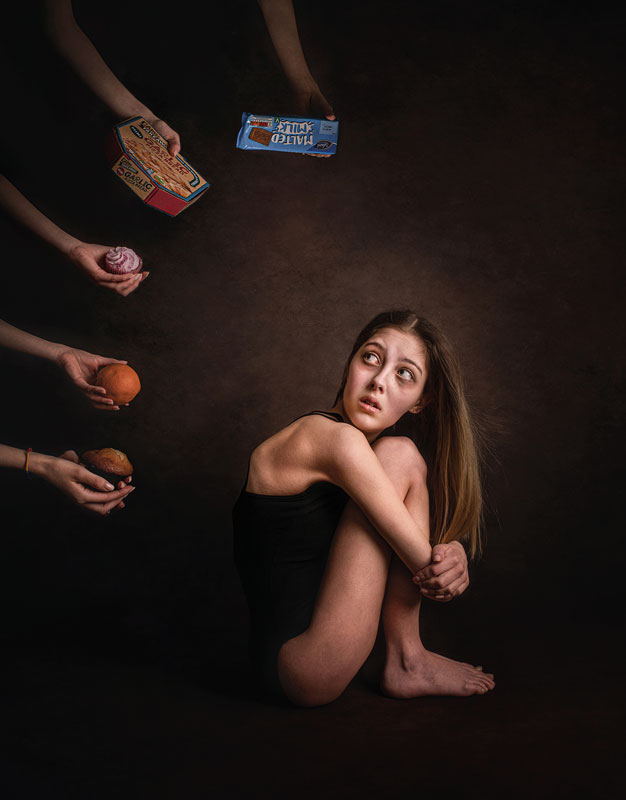
“I shoot cute and loving pictures in my day job, but let my creativity loose and the creative me is the total opposite; it’s quite disturbing at times but it truly reflects both sides of my personality.”
That contrast is one of the most interesting aspects of Claire’s photography.
It is a reminder that a professional photographer doesn’t have to be defined by the type of work they are paid to produce.
Your commercial photography can serve your clients while your personal photography gives you space to explore ideas, emotions and subjects that wouldn’t necessarily have a place in your everyday business.
Why photography competitions matter
Claire is a keen competition photographer and deliberately creates images specifically for competitions.
For her, entering competitions is about much more than awards.
“I feel, at times, when working full-time at photography that we can lose passion because what was once a hobby has become a job.”
Competition photography gives Claire an opportunity to make photographs for herself.
That distinction is important.
When photography becomes a profession, deadlines, client expectations and commercial considerations inevitably influence the work. Creating an image simply because you want to explore an idea can bring back some of the freedom that existed when photography was a hobby.
For Claire, competitions provide that creative outlet.
They also push her to experiment, develop ideas and work outside her normal comfort zone.
Finding the confidence to create
Interestingly, one of Claire’s biggest challenges isn’t equipment, marketing or finding clients.
It’s herself.
“I will always doubt how far I’ve come and what I’m capable of. I’m my own worst enemy sometimes, and imposter syndrome can be tough to deal with.”
Self-doubt is something many photographers experience, particularly when comparing their work with photographers they admire.
Claire’s approach demonstrates why continuing to create and enter competitions can be useful. The process itself provides an opportunity to test your ideas, receive feedback and discover what you are capable of producing.
Sometimes the biggest barrier to a photographer’s next step isn’t technical ability. It’s believing they are ready to take it.
The importance of continuing to learn
If Claire has one piece of business advice for photographers, it is simple:
Keep learning.
She makes use of educational videos, online training, events and conventions, while particularly valuing face-to-face learning.
“There’s always something new to discover, something new to learn.”
Photography is an industry that continually changes. New cameras and software arrive, but so do new approaches to lighting, posing, business, marketing and creative storytelling.
For Claire, continuing to learn isn’t something that stops once you become established. It remains part of developing as a photographer.
Inspiration close to home
One of Claire’s biggest sources of inspiration is also one of her most important supporters: her husband.
He has appeared in many of her creative ideas and, according to Claire, has never refused one of her more unusual requests to model for an image.
His support was particularly important for the Fellowship project, where the trust between them enabled Claire to create an intensely personal body of work.
It also demonstrates how important collaboration can be in photography.
Even if you’re a sole trader, you don’t necessarily have to create everything alone.
What equipment can’t a photographer live without?
The answer isn’t another lens, lighting system or piece of expensive camera equipment.
It’s white noise.
Claire uses it to help soothe babies during newborn sessions – and admits that it helps her sleep too.
It’s a wonderfully practical reminder that sometimes the most useful tool in a photographer’s kit is the one that solves a problem rather than the one that costs the most money.
A creative career with no sign of slowing down
After more than a decade as a professional photographer, Claire says she still loves what she does.
That enthusiasm is perhaps the strongest theme running through her story.
She has built a successful business around newborn, maternity and family photography, but she hasn’t allowed commercial photography to become the limit of her creativity.
Competitions provide a space to experiment. Personal projects allow her to explore ideas. Education keeps her developing. And her willingness to step outside her comfort zone has resulted in work that is very different from her day-to-day client photography.
Her Fellowship panel is perhaps the clearest example.
It required trust, creativity and a willingness to explore difficult subject matter – qualities that are just as valuable to a photographer as technical knowledge.
Claire Osborne’s advice for photographers
Looking at Claire’s career, several lessons stand out:
1. Start with the opportunities you have
Claire built her early portfolio by photographing friends, family and their contacts. You don’t need a huge client list before you start producing professional-looking work.
2. Keep learning
Photography is an ongoing journey. Workshops, conventions, online education and practical experience can all help you develop.
3. Make time for personal photography
Don’t let client work become the only photography you do. Personal projects and competitions can help reignite your creativity.
4. Push beyond your comfort zone
Your most interesting work may be found outside the style you are most comfortable producing.
5. Don’t let self-doubt define you
Imposter syndrome can affect photographers at every level. The answer isn’t necessarily to wait until you feel confident. Sometimes you have to create the work first and allow the results to build your confidence.
6. Let your personality come through
Claire’s portfolio demonstrates that commercial work and personal creativity don’t have to look the same. Your photography can contain different sides of your personality.
Beyond the camera
Claire Osborne’s story is ultimately about more than becoming a professional photographer.
It is about recognising when an old career no longer fits, taking a chance on yourself and continuing to evolve once you’ve made the leap.
Her family photography business provides her with a career she loves, while competitions and personal projects give her the freedom to explore another side of her creativity.
And perhaps that’s one of the most important lessons for any photographer: don’t allow your business to become the boundaries of your creativity.
There should always be room to experiment, learn, fail, try again and create something purely because you want to see where the idea takes you.
More about Claire Osborne
You can find out more about Claire Osborne and view her photography through her website.
This article has been adapted and expanded from an interview originally published in Professional Imagemaker magazine.