
PermaJet Production Range: Affordable Professional Printing Media for Photographers
Professional photography printing doesn’t always have to mean premium-priced media. For photographers producing work in volume, supplying galleries or selling prints directly to clients, the cost of paper can become a significant part of the overall production budget.
Mike McNamee takes a first look at PermaJet’s Production Range, a collection of competitively priced printing media designed for photographers who need professional results while keeping production costs under control.
Why printing costs matter to professional photographers
For photographers who sell physical prints, the cost of the paper is only one part of the equation.
There are also inks, printers, packaging, mounting, framing, studio time, exhibition costs, gallery commissions, taxes and the photographer’s own time to consider.
For a photographer producing occasional fine art prints, the cost of the paper may not be particularly significant. But when you’re producing hundreds or even thousands of prints, the cost per sheet or metre can quickly have an impact on profitability.
The same is true for galleries and professional print producers.
Not every gallery operates in a major city where customers are willing to pay premium prices for limited-edition artwork. Smaller galleries and locally based businesses may need to balance print quality with realistic production costs.
This is where production-oriented media can make sense.
What is the PermaJet Production Range?
PermaJet developed its Production Range as a portfolio of competitively priced media aimed at photographers and businesses producing photographic work in volume.
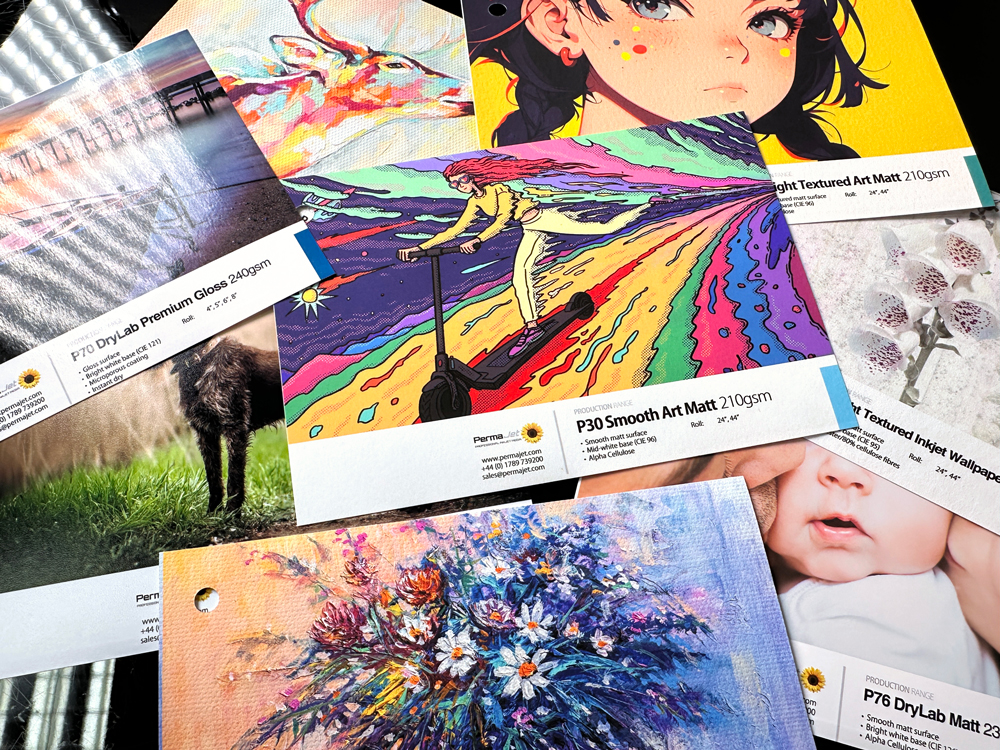
The range covers a broad selection of surfaces and applications, including:
- Gloss photographic paper
- Lustre photographic paper
- Matte art paper
- Textured art media
- Canvas
- Inkjet wallpaper
- DryLab media
The range is designed to cover a variety of professional printing requirements rather than concentrating exclusively on traditional fine art papers.
For photographers, that means there are options for everything from everyday photographic prints through to canvas artwork and specialist applications.
A choice of photographic printing surfaces
One of the most useful aspects of the Production Range is the variety of surfaces available.
Gloss photo paper
Gloss media provides a smooth, reflective surface that can work particularly well for photographs where strong colour, contrast and fine detail are important.
It can be particularly effective for commercial photography, portraits and images where the photographer wants a more vibrant presentation.
Lustre photo paper
Lustre is a popular choice for professional photographers because it sits between glossy and matte finishes.
It provides good colour reproduction and detail while reducing some of the reflections associated with highly glossy surfaces.
For photographers producing prints for clients, exhibitions or portfolios, lustre can be a versatile all-round option.
Matte and art papers
Matte surfaces offer a very different appearance.
They reduce reflections and can produce a softer, more tactile presentation. Depending on the image and the paper, matte fine art media can be particularly effective for black-and-white photography, portraits, landscapes and images where a more understated presentation is desirable.
The Production Range includes smooth and lightly textured art matte options, giving photographers further control over the appearance and feel of the finished print.
Canvas printing
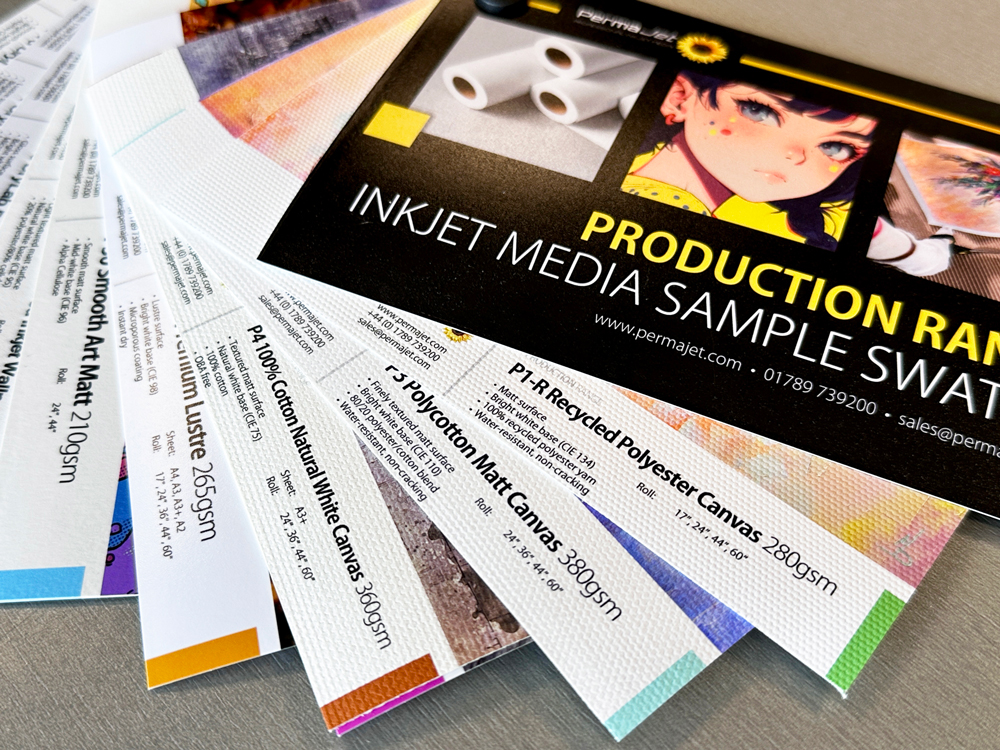
Canvas remains an important option for photographers selling wall art.
The Production Range includes several canvas options, including recycled polyester, polycotton and cotton-based media.
Canvas can provide a completely different presentation from a conventional photographic print, particularly when stretched and displayed as wall art.
For professional photographers, canvas can also provide another product option to offer clients.
Rather than selling a single image in a single format, photographers can potentially offer a range of finishes and sizes to suit different budgets and interiors.
Inkjet wallpaper
One of the more unusual options in the range is inkjet wallpaper.
Wallpaper printing opens up possibilities beyond conventional photographic prints and canvas.
For commercial photographers, interior designers, businesses and creative projects, large-format printed wallpaper can turn photography and artwork into an entire environment rather than a single piece displayed on a wall.
It is another example of how modern inkjet technology can be used for applications that go well beyond traditional photographic printing.
DryLab printing media
The range also includes DryLab media in gloss, lustre and matte finishes.
DryLab printing has become increasingly important in professional photographic production, particularly where speed and efficiency are priorities.
For photographers, labs and businesses producing high volumes of images, media designed for DryLab systems can provide another route to efficient print production.
Rolls for high-volume printing
A major consideration for production environments is the format of the media.
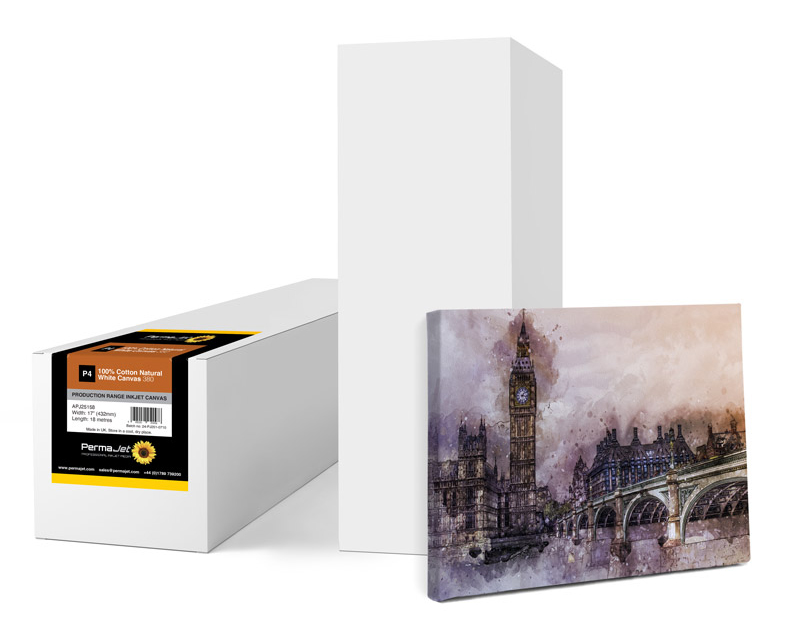
While photographers producing occasional prints may primarily work with sheet paper, professional production often means moving to rolls.
Roll media allows photographers and print businesses to produce larger prints and can be considerably more practical when producing multiple images in succession.
The Production Range includes a selection of roll formats across its different media, although the available widths vary depending on the product.
For high-volume photographers, that flexibility can make a significant difference to production efficiency.
Does cheaper printing paper mean lower quality?
Not necessarily.
The important distinction is between buying the right paper for the job and simply buying the cheapest paper available.
A photographer producing a museum-quality limited edition may have very different requirements from a photographer producing hundreds of client prints, a school photographer producing large volumes of images or a commercial photographer creating promotional displays.
There is no single “best” photographic paper for every application.
The right choice depends on the intended use, the image, the printer, the ink system, the required longevity and the price the customer is willing to pay.
For production work, a competitively priced professional media can therefore make considerable sense.
Choosing the right paper for your photography
Before choosing a photographic printing paper, consider:
What are you printing?
A detailed landscape may benefit from a very different surface to a high-key portrait.
Consider the colours, contrast, detail and overall character of the image.
Where will the print be displayed?
A print destined for a gallery, a client’s home, a portfolio book or a commercial display may have completely different requirements.
Think about lighting conditions, reflections and how the finished image will be viewed.
How much are you producing?
If you’re producing one or two exhibition prints, the cost of the paper may be relatively unimportant.
If you’re producing hundreds of prints, however, the cost per print becomes much more significant.
This is where production media can become particularly attractive.
What does your printer support?
Always check that the media you choose is suitable for your printer and printing system.
Paper profiles are also important when producing accurate colour. Using the correct ICC profile and appropriate printer settings can make a significant difference to the final result.
What does the client expect?
The most expensive paper isn’t automatically the best choice.
If the finished product meets the client’s expectations, provides the required quality and produces a healthy margin, it may be a better commercial choice than using a premium paper simply because it carries a prestigious name.
The economics of professional photo printing
For professional photographers, printing should be viewed as part of the business rather than simply a technical exercise.
A print has a production cost, but it also has a selling price and contributes to the overall profitability of a photography business.
The paper is therefore one part of a much bigger calculation.
Photographers should consider:
- Paper and media costs
- Ink consumption
- Printer maintenance
- Equipment depreciation
- Mounting and framing
- Packaging
- Shipping
- Time spent producing the print
- Gallery or marketplace commissions
- VAT and other business costs
- The final price paid by the customer
A small reduction in the cost of producing each print can become meaningful when multiplied across hundreds of sales.
Is the PermaJet Production Range right for you?
For photographers who need a broad selection of professional printing media without automatically moving to the most expensive specialist papers, the Production Range is an interesting option.
Its selection of photographic, art, canvas, wallpaper and DryLab media means it is aimed at a wide variety of production requirements.
The key is to choose the surface according to the job rather than assuming that one paper will suit every photograph.
For photographers producing work in volume, the economics can be just as important as the visual characteristics of the finished print.
And ultimately, the best printing media is the one that gives you the quality your client expects while allowing you to produce the work at a price that makes sense for your business.
A note on product specifications
The PermaJet Production Range and its available formats may change over time. Photographers should check the manufacturer’s current product information, available sizes, printer compatibility and ICC profiles before purchasing.