
Tree Photography: Photographing Trees Through the Seasons
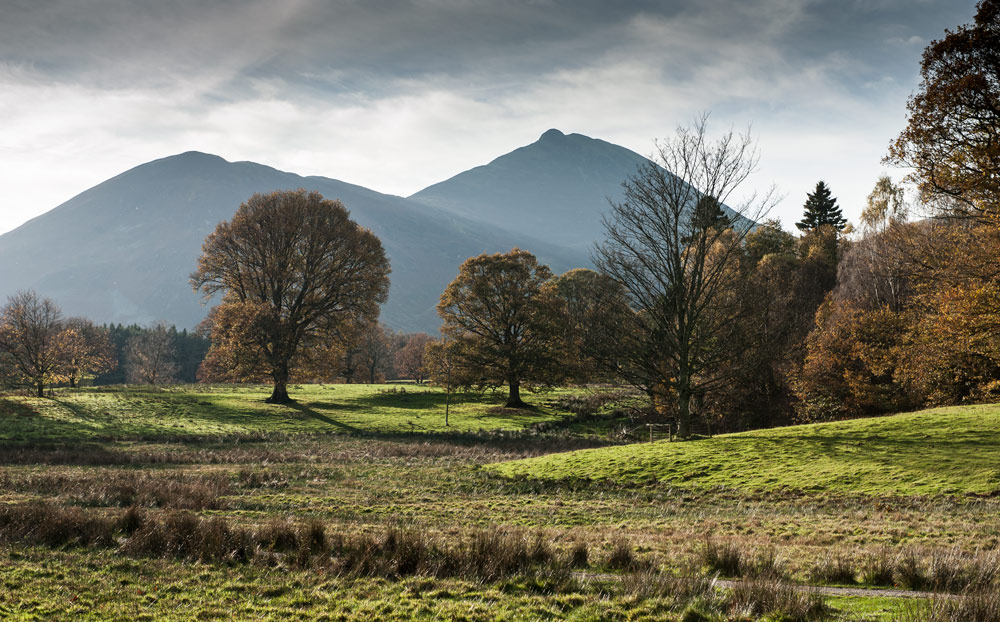
Trees are among the most rewarding subjects for photographers.
They can dominate a landscape, provide a natural frame, create a strong focal point or become a simple graphic shape within an otherwise minimalist image. They also change dramatically throughout the year, offering almost endless opportunities for different approaches to photography.
From misty winter mornings and backlit spring foliage to the rich colours of autumn, trees give photographers something to work with in almost every season.
And sometimes, the best tree photograph is simply one that makes you stop and look.
Why trees make such good photographic subjects
Trees have an advantage that many photographic subjects don’t: they don’t move.
Well, mostly.
Wind can make photographing trees in full leaf challenging, but the tree itself isn’t going anywhere. With a tripod and a little patience, you can wait for the breeze to drop and capture a sharper image.
Their permanence also makes trees interesting subjects for longer-term photographic projects.
A single tree can be photographed throughout the year, revealing completely different shapes, colours and moods as the seasons change.
A bare winter tree might become a study in structure and silhouette, while the same tree in autumn could become an explosion of colour.
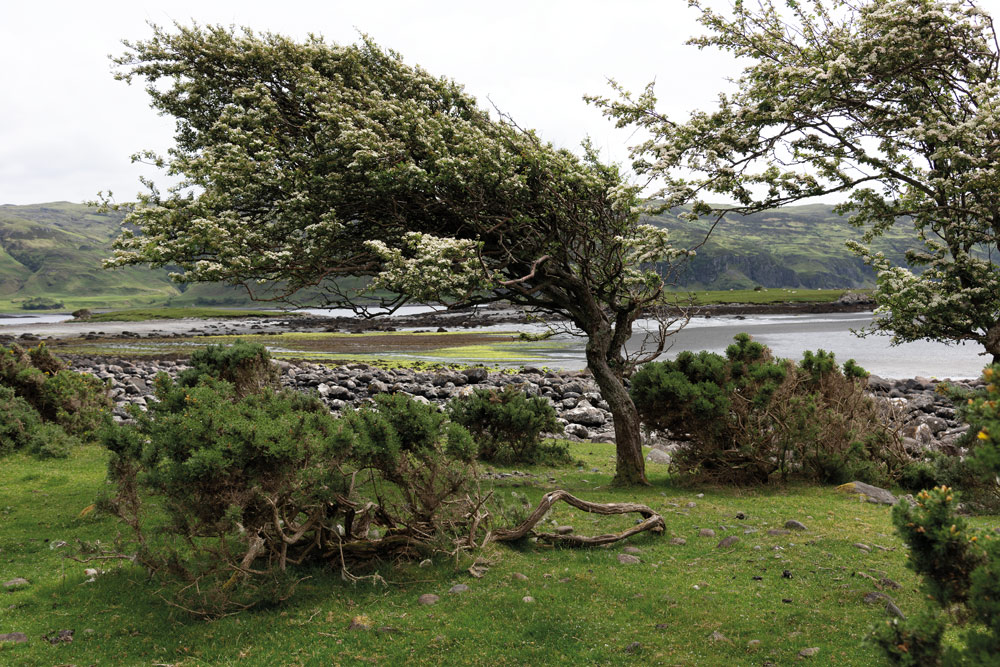
Look for trees with character
You don’t necessarily need an impressive forest or spectacular landscape to create a good tree photograph.
Sometimes an isolated tree in a field can be far more effective.
Look for trees with:
- Interesting shapes
- Twisted or unusual trunks
- Strong branching patterns
- Distinctive silhouettes
- Seasonal colour
- Interesting textures
- A relationship with the surrounding landscape
- Historical or cultural significance
A lone tree can also act as a natural focal point in a minimalist landscape.
Try moving around the subject rather than photographing it from the first position you find. A few metres to the left or right can completely change the relationship between the tree, horizon and background.
The best light for tree photography
Light is one of the most important factors in successful tree photography.
Low-angle sunlight is particularly useful because it creates long shadows and can emphasise the texture of bark, branches and surrounding vegetation.
Early morning and late afternoon are therefore excellent times to photograph trees.
Backlighting can also produce spectacular results.
When sunlight passes through leaves, it can illuminate the foliage and create a strong sense of depth. Bare branches can become graphic silhouettes, while mist or haze can help separate layers of trees within a woodland.
Don’t automatically avoid overcast weather, either.
Soft, diffused light can be ideal for woodland photography because it reduces harsh highlights and shadows and allows you to concentrate on shape, texture and colour.
Photograph trees in every season
One of the simplest ways to develop a tree photography project is to return to the same location throughout the year.
Spring
Spring brings fresh foliage, blossom and softer colours.
Look for the contrast between new leaves and darker branches, or use a telephoto lens to isolate individual branches against a simple background.
Summer
Trees are at their fullest during summer, making this a good time for woodland photography.
Look for shafts of sunlight passing through the canopy, patterns created by leaves and opportunities to use the trees as natural frames.
Autumn
Autumn is perhaps the most obvious season for tree photography.
Changing foliage provides colour and contrast, but don’t restrict yourself to wide landscape views. Look closely at individual leaves, trunks and branches, or use a long lens to compress layers of colourful trees.
Low autumn sunlight can add another dimension, particularly when combined with mist.
Winter
Winter strips trees back to their basic structure.
Without foliage, the shape of the trunk and branches becomes much more important. This makes winter an excellent season for minimalist photography and graphic compositions.
Fog, frost, snow and low sunlight can all add atmosphere.
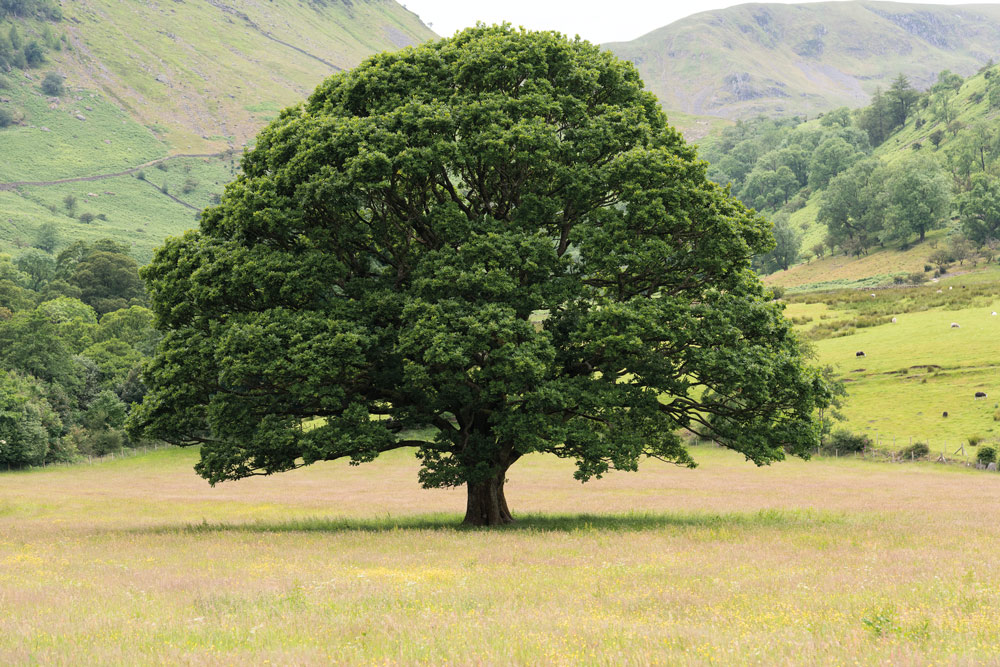
Use composition to make the tree stand out
Trees frequently appear in landscape photographs without actually being the main subject.
A line of trees can lead the eye towards a distant building or mountain. A branch can create a natural frame around the main subject, while a lone tree can provide a visual anchor in an otherwise empty scene.
Try deliberately simplifying the composition.
Ask yourself:
Is the tree the subject, or is it supporting the subject?
That distinction can help you decide whether to use a wide-angle lens to include the surrounding landscape or a longer lens to isolate the tree.
Photographing trees isn’t just about landscapes
There are many different approaches to tree photography.
A wide-angle lens can exaggerate the height of a tree and place it within its environment.
A telephoto lens can compress several rows of trees together, producing graphic patterns and layers.
A macro or close-focusing lens allows you to concentrate on leaves, bark, buds and other details.
You can also experiment with intentional camera movement, multiple exposures, silhouettes and monochrome processing.
The important thing is not to assume that a tree photograph has to look like a traditional landscape.
Creating a tree photography project
Trees can provide the basis for a substantial long-term photography project.
One simple idea is “Trees of [your location]”.
You could photograph the significant, unusual or historic trees within a town, village, park, estate or wider geographical area.
The project could include:
- Ancient trees
- Veteran trees
- Landmark trees
- Trees with unusual shapes
- Historic trees
- Trees associated with local stories
- Different native species
- Seasonal changes
- Trees under threat
- Newly planted trees
Such projects can also develop into documentary or environmental photography.
Local organisations, councils, estates, environmental groups and tree-planting organisations may all have an interest in good-quality photographs documenting their work.
Photographing ancient and historic trees
Some trees are particularly fascinating because of what they have witnessed.
Ancient trees can survive for hundreds or even thousands of years, making them a tangible connection with the past.
The UK’s ancient yews are particularly interesting. Many are associated with churchyards and have accumulated stories, legends and folklore over centuries.
Historic trees can also have an important role in photographic research.
Trees don’t move location in the way buildings can be demolished or roads can be altered. If a tree can be accurately dated, it can sometimes help establish whether it was present when an older photograph was made.
This makes trees potentially valuable witnesses to history.
The famous witness trees of Gettysburg provide a fascinating example. Some trees that were present during the 1863 battle have survived and have been identified and documented alongside historical photographs, helping researchers understand the locations and landscapes associated with the fighting.
For photographers interested in history, landscape and documentary work, this opens up another way of thinking about trees.
Photographing trees through history
Trees have inspired photographers, painters and writers for centuries.
Artist David Hockney developed a particular fascination with trees and landscapes around Warter in East Yorkshire. His enormous 2007 painting Bigger Trees Near Warter was constructed from 50 individual canvases.
Hockney’s work demonstrates an important point for photographers: returning to the same landscape repeatedly can reveal far more than a single visit.
Instead of searching constantly for a new subject, consider spending time with one.
Photograph it at different times of day.
Return in different weather.
Visit throughout the seasons.
The resulting collection can be far more interesting than a series of unrelated landscape photographs.
Can you identify the trees you’re photographing?
If you’re interested in documenting trees rather than simply photographing them, identification becomes useful.
Leaves are generally one of the most useful features for identifying broadleaf species, although bark, buds, flowers, branching structure, location and habitat can all provide additional clues.
Traditional identification keys remain useful because they guide you through a series of observations to narrow down the possibilities.
There are also numerous smartphone apps that attempt to identify trees from photographs.
These can be useful starting points, but AI-based identification shouldn’t automatically be treated as authoritative. If accurate identification matters, particularly for scientific or environmental work, verify the result using a reliable reference source.
Don’t forget the weather
Wind is probably the biggest practical problem when photographing trees.
Leaves and small branches can move significantly, particularly when using longer exposures.
A tripod can help, but it doesn’t eliminate movement within the tree itself.
If you’re photographing a static composition, watch the branches and wait for a lull in the wind.
Alternatively, embrace the movement.
A deliberately longer exposure can turn moving foliage into an abstract blur while the trunk remains relatively sharp.
A tree photography project can be surprisingly rewarding
One of the simplest photographic projects is to choose a single tree and photograph it regularly.
You could record it:
- Once a month
- In different weather
- At sunrise and sunset
- Through all four seasons
- From the same viewpoint
- Using different focal lengths
- In colour and monochrome
Over time, you’ll build a visual record of something that most people walk past without noticing.
And that may be one of the greatest advantages of photographing trees.
They encourage us to slow down.
Final thoughts
Trees offer almost limitless photographic possibilities.
They can be landscape subjects, abstract subjects, documentary subjects, environmental subjects or simply beautiful things to photograph.
You don’t need exotic locations or expensive equipment.
Find an interesting tree. Study its shape. Look at how the light falls across it. Return in different seasons and weather conditions.
Most importantly, don’t just photograph the tree.
Photograph what makes that particular tree interesting.
That might be its shape, age, history, relationship with the landscape or simply the way light passes through its branches.
Sometimes the best photographic projects are hiding in plain sight.